

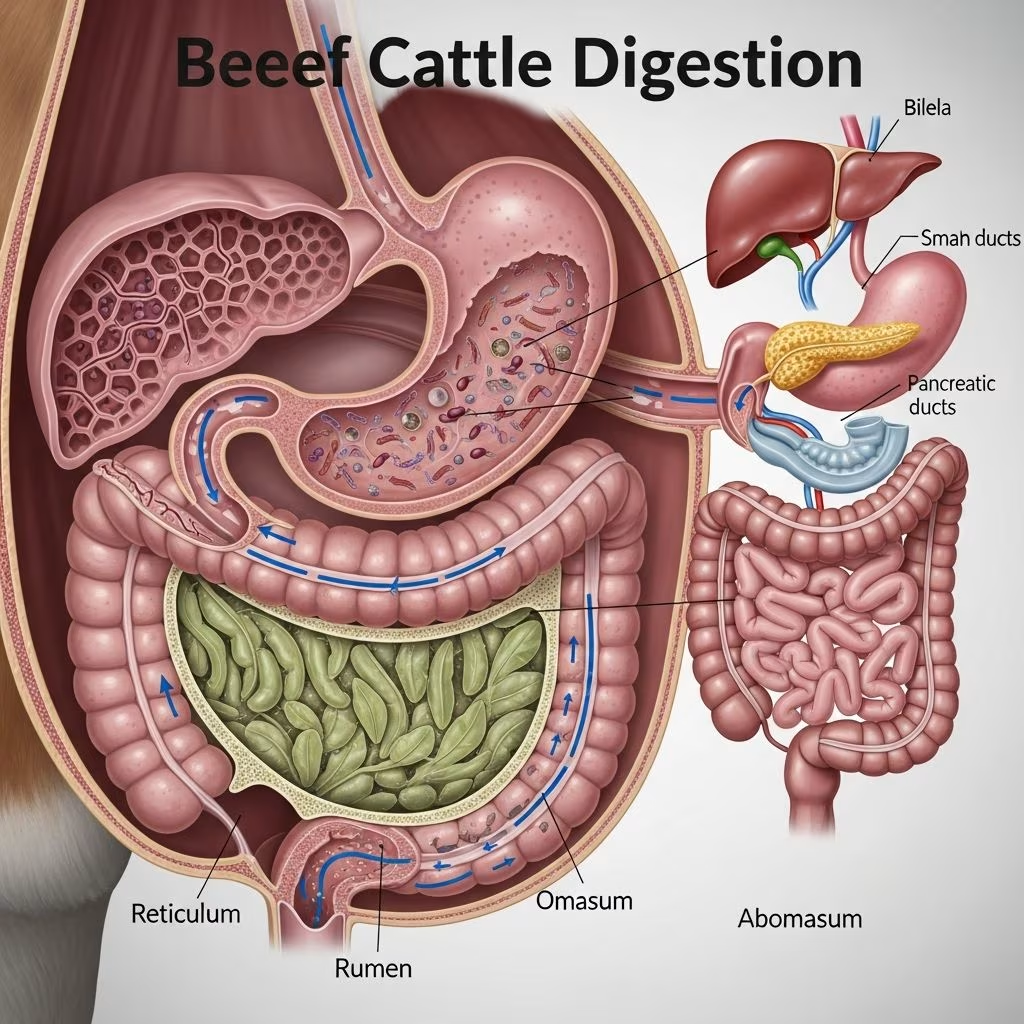
Beef cattle possess a highly specialized digestive system adapted for extracting maximum nutrition from fibrous plant materials like grasses and hay. Unlike simple-stomached animals, their rumen-based digestion relies on symbiotic microorganisms to ferment feed, producing energy-rich compounds that sustain growth and production.
Overview of Ruminant Gastrointestinal Anatomy
The core of beef cattle digestion centers on a compound stomach divided into four distinct compartments: the rumen, reticulum, omasum, and abomasum. This setup allows for sequential processing of ingested feed. Preceding the stomach, the mouth and esophagus prepare boluses, while post-stomach regions including the small and large intestines handle final breakdown and absorption. The liver and pancreas contribute essential secretions throughout.
- Rumen: Largest compartment, serving as primary fermentation site.
- Reticulum: Assists in particle sorting and rumination initiation.
- Omasum: Absorbs water and volatile compounds.
- Abomasum: Functions as the glandular ‘true’ stomach with acid-pepsin digestion.
This multi-stage system enables cattle to convert low-quality forages into high-value body tissues, a key advantage in pasture-based beef production.
Oral Processing and Salivary Contributions
Ingestion begins in the mouth, where cattle use their mobile lips and tongue to grasp forage, followed by grinding between dental pads and molars. Salivary glands produce copious saliva—up to 150-200 liters daily in adults—which moistens feed, buffers rumen pH, and supplies mucins for protection.
Key salivary components include:
- Bicarbonate ions to neutralize fermentation acids.
- Phosphate buffers for pH stability.
- Xerostomia-minimizing mucoproteins.
Initial mastication is coarse, as cattle prioritize intake volume over thorough grinding, relying on later rumination for refinement.
The Fermentation Powerhouse: Rumen Dynamics
Swallowed boluses enter the rumen, a voluminous sac occupying much of the left abdominal cavity, holding 100-200 liters in mature cattle. Here, diverse microbes—bacteria (over 50 species), protozoa, and fungi—ferment carbohydrates into volatile fatty acids (VFAs): acetate (energy storage), propionate (glucose precursor), and butyrate (rumen epithelium fuel).
| VFA Type | Production (%) | Primary Role |
|---|---|---|
| Acetate | 60-70 | Fat synthesis, milk production |
| Propionate | 20-30 | Glucose formation via gluconeogenesis |
| Butyrate | 8-15 | Ruminal wall maintenance |
Microbial activity peaks at pH 6.0-7.0, with fiber-digesting bacteria thriving on cellulose and hemicellulose. Gases like CO2 and methane are eructated to prevent bloat. VFAs diffuse across the rumen wall into portal blood, providing 60-80% of cattle’s energy needs.
Reticulum’s Role in Feed Selection and Rumination
Adjacent and interconnected to the rumen, the reticulum features honeycomb-like walls that trap large particles (>0.5 cm). It coordinates regurgitation: reticular contractions reverse esophageal flow, bringing cud to the mouth for rechewing—up to 8 hours daily in grazing cattle.
Rumination enhances particle size reduction, increasing surface area for microbes and mixing with saliva to optimize fermentation. Disruptions like acidosis reduce cudding, impairing efficiency.
Omasum: Water Regulator and Nutrient Filter
Finely particulate digesta (<1 mm) passes via the reticulo-omasal orifice to the omasum, a spherical organ with leaf-like papillae. It absorbs 20-50% of rumen fluid, VFAs, and sodium, while mechanically grinding solids.
This dehydration step concentrates nutrients for downstream processing, preventing overload in the abomasum. Omasal transport is pulsatile, syncing with rumen cycles.
Abomasum: Enzymatic Breakdown Zone
The abomasum mirrors monogastric stomachs, secreting hydrochloric acid (pH 2-3) and pepsin for protein hydrolysis. Microbial protein from upstream fermentation is digested here, alongside any bypassed soluble feeds.
Chyme exiting the abomasum enters the duodenum, triggering bile and pancreatic enzyme release for lipid emulsification and starch hydrolysis.
Intestinal Absorption and Final Processing
The small intestine, spanning 40-50 meters, is the primary absorption site. Villi and microvilli amplify surface area 600-fold, uptake amino acids, peptides, glucose, and fatty acids. Pancreatic amylase, lipase, and bile salts complete digestion.
In the large intestine (cecum, colon), microbial fermentation of residual fiber yields minor VFAs, with water reabsorption forming feces. The liver processes absorbed nutrients: detoxifying ammonia via urea cycle, storing glycogen, and synthesizing plasma proteins.
Developmental Shifts in Calf Digestion
Neonatal calves start monogastric-like, with milk shunted via esophageal (reticular) groove directly to abomasum, bypassing underdeveloped forestomachs. Groove closure is reflex-mediated by suckling.
Rumen maturation accelerates with solid feed introduction (weaning ~2-3 months), populating microbes and elongating papillae. By 6 months, full ruminant function emerges, but early mismanagement risks ‘rumen overload’.
| Age Stage | Dominant Pathway | Key Changes |
|---|---|---|
| Newborn | Esophageal groove (milk) | Minimal rumen volume |
| 1-2 months | Transition (solids) | Microbial colonization |
| >3 months | Full rumen | Papillae development, VFA production |
Factors Influencing Digestive Efficiency
Optimal digestion demands balanced diets: effective fiber (NDF >28%) for rumination, adequate energy to avoid acidosis (rumen pH <5.5). Forage particle size affects sorting; excessive fines reduce chewing time.
- High-grain diets risk lactic acidosis, suppressing fiber digestion.
- Parasites or stress impair motility and absorption.
- Water access critical for saliva and omasal function.
Beef producers monitor fecal consistency, cudding rates, and body condition to gauge health.
Nutritional Strategies for Enhanced Digestion
For growing steers, rations blending forages (60%) with concentrates optimize rumen fill and gain (1.5-2 kg/day). Ionophores like monensin shift VFA profiles toward propionate, boosting efficiency 5-10%.
Calves benefit from texturized starters promoting papillae growth. Mature cows on pasture leverage natural rumination, supplemented in winter for mineral balance (Ca:P 2:1).
Common Disorders and Management
Hardware disease: Reticulum impalement by metal, prevented by magnets.
Frothy bloat: Legume-induced foam; poloxalene mitigates.
Acidosis: Gradual adaptation to grains essential.
FAQs
How much can a beef cow’s rumen hold?
Up to 150-200 liters in adults, varying with size and feed.
Why do cattle chew cud?
To reduce particle size, enhancing microbial access and digestion.
When does a calf develop a functional rumen?
Around 3 months with solid feed and microbial establishment.
What provides most energy to cattle?
Volatile fatty acids from rumen fermentation (70%).
Can beef cattle digest grain like horses?
Limited; excess starch ferments rapidly, risking acidosis.
References
- The Digestive System of Beef Cattle — Merck Veterinary Manual. 2023. https://www.merckvetmanual.com/management-and-nutrition/nutrition-beef-cattle/the-digestive-system-of-beef-cattle
- The Ruminant Digestive System — University of Minnesota Extension. 2021-10-25. https://extension.umn.edu/dairy-nutrition/ruminant-digestive-system
- The Ruminant Digestive System — LSU AgCenter. 2023. https://www.lsuagcenter.com/articles/page1728411297432
- Cow’s Digestive System — Texas A&M Beef Skillathon. 2022. https://beefskillathon.tamu.edu/cows-digestive-system/
- How Cows Eat Grass — U.S. Food and Drug Administration. 2023-05-12. https://www.fda.gov/animal-veterinary/animal-health-literacy/how-cows-eat-grass
- Ruminants: A Digestive Powerhouse — South Dakota State University Extension. 2022-08-15. https://extension.sdstate.edu/ruminants-digestive-powerhouse



