

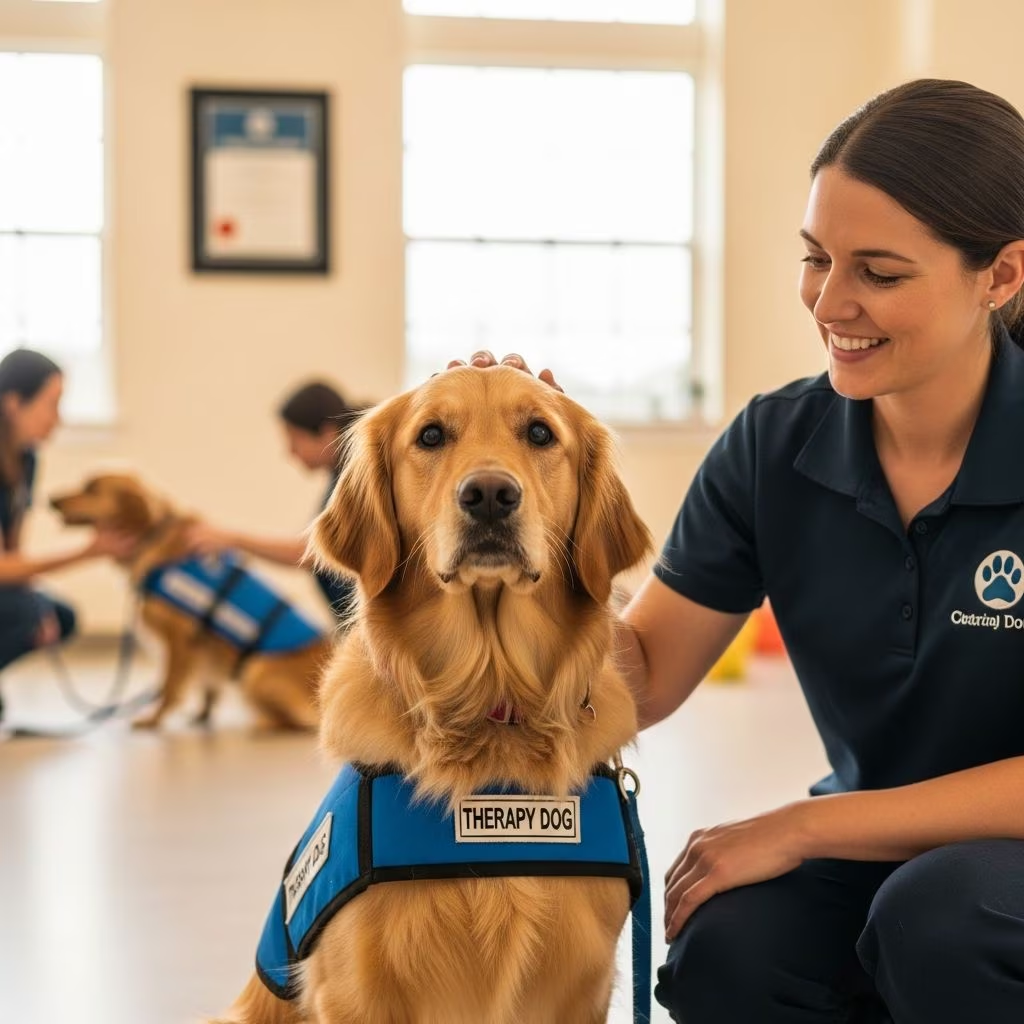
The journey to establishing your dog as a certified therapy animal is a rewarding path that combines proper training, health standards, and organizational registration. Therapy dogs play a vital role in improving the emotional and mental well-being of individuals in hospitals, nursing homes, schools, and other facilities. Understanding the comprehensive requirements and structured pathways available will help you and your canine companion prepare effectively for this meaningful role.
Understanding What Makes a Therapy Dog
A therapy dog is fundamentally a well-trained, temperamentally sound canine that has been evaluated and certified to interact safely with vulnerable populations in therapeutic settings. Unlike service animals, which perform specific tasks for individuals with disabilities, therapy dogs work to provide comfort and emotional support to multiple people in clinical and institutional environments.
The primary distinction between a pet dog and a therapy dog rests not on breeding or pedigree, but rather on training, behavior, health status, and formal certification. Any dog—whether purebred or mixed breed—can potentially become a therapy dog if it possesses the right temperament and completes the necessary preparation. The defining characteristics include friendliness, stability under stress, responsiveness to handler commands, and comfort with unfamiliar environments and people.
Initial Preparation and Prerequisites
Age and Basic Temperament
Before investing significant time in training, your dog must meet fundamental age and behavioral prerequisites. Most therapy dog organizations require dogs to be at least one year old before they can pursue certification. This age requirement ensures the dog has reached sufficient physical and psychological maturity to handle the demands of therapy work consistently.
Beyond age, your dog should demonstrate an inherent friendly disposition and willingness to interact with people. While some behavioral traits can be developed through training, fundamental temperament—such as a dog’s baseline confidence level and sociability—plays a significant role in determining suitability for therapy work. A dog that shows anxiety in new situations or aggressive tendencies will face substantial challenges in this role.
Basic Obedience Foundation
Every potential therapy dog needs solid obedience training as a foundation. Basic obedience training teaches your dog essential commands that form the bedrock of reliable behavior in public settings. These commands typically include:
- Sit and down positions on command
- Stay in place for extended periods
- Come reliably when called
- Walk appropriately on a leash without pulling
- Accept handling and touch from strangers
The purpose of basic obedience extends beyond simple command compliance. These skills demonstrate that your dog can be controlled reliably and will respond to your guidance even in unfamiliar or stimulating environments. This control is absolutely essential when your dog will be interacting with vulnerable populations who may have limited mobility, fear of animals, or unpredictable reactions.
Advanced Training and Specialized Preparation
Intermediate Obedience Development
After mastering basic commands, many dogs benefit from intermediate obedience training that refines responsiveness and builds upon foundational skills. This level of training improves your dog’s ability to maintain focus despite distractions and demonstrates more sophisticated behavioral control. Intermediate training often includes off-leash work, longer duration commands, and increasingly complex behavioral chains.
The Canine Good Citizen Program
The American Kennel Club’s Canine Good Citizen (CGC) program represents a standardized evaluation framework that many therapy dog organizations specifically recommend or require. This program assesses your dog’s ability to demonstrate good manners in public environments and includes:
- Accepting a friendly stranger
- Sitting politely for petting
- Allowing grooming and examination
- Walking on a loose leash through crowds
- Sitting and staying in designated positions
- Coming when called
- Reacting calmly to other dogs
- Handling distractions such as loud noises and sudden movements
The CGC serves as an excellent preliminary validation that your dog possesses the behavioral foundation necessary for further therapy dog training. Many handlers find that preparing for and passing the CGC test clarifies whether their dog is genuinely suited for therapy work before investing in more specialized training.
Desensitization and Environmental Acclimation
Desensitization training prepares your dog for the unique sensory and environmental challenges present in therapy settings. Hospitals, nursing homes, and rehabilitation facilities present stimuli that differ dramatically from typical home environments. Your dog needs systematic exposure to these conditions:
- Medical equipment sounds and smells (monitors, respirators, antiseptics)
- Loud and unexpected noises (alarms, intercoms, machinery)
- Strong chemical odors and cleaning agents
- Crowded spaces with multiple people
- Wheelchairs, walkers, and mobility devices
- Extended periods of standing in unfamiliar locations
- Interaction with people exhibiting unusual behaviors or movements
Effective desensitization involves gradual, controlled exposure rather than forcing your dog into overwhelming situations. The goal is to build your dog’s confidence and habituation so that these previously novel stimuli become predictable and non-threatening.
Health Requirements and Veterinary Standards
Registration organizations maintain strict health requirements to protect both therapy dogs and the vulnerable populations they interact with. Before pursuing certification, verify that your dog meets all health prerequisites established by your target organization.
Core Health Documentation
Your dog must have current health documentation from a licensed veterinarian:
- An annual wellness examination within the past year
- Current rabies vaccination (1, 2, or 3-year vaccine as appropriate)
- Complete initial series of core vaccinations including distemper, hepatitis, and parvovirus
- Negative fecal examination within the past year
- Negative heartworm test within the past year (or within two years if on continuous preventative medication)
These health requirements exist to minimize transmission of infectious diseases to vulnerable populations in medical facilities. Individuals receiving therapy may have compromised immune systems, open wounds, or other health conditions that make them susceptible to infections that a healthy person could easily resist.
Selecting and Understanding Therapy Dog Organizations
Multiple national organizations certify therapy dog teams, each with slightly different requirements, evaluation processes, and specializations. Understanding the options available helps you select an organization aligned with your goals and local availability.
Major Certification Organizations
| Organization | Primary Focus | Key Requirements | Evaluation Type |
|---|---|---|---|
| Therapy Dogs International (TDI) | Hospital and facility visitation | Rigorous temperament evaluation, formal testing, handler background check | Formal evaluation by certified evaluator |
| Pet Partners | Healthcare settings and community support | Health screening, handler requirements, team evaluation | Professional evaluation with specific protocols |
| Alliance of Therapy Dogs | Multiple therapeutic settings | Temperament assessment, three supervised facility visits | Observer assessment plus in-facility performance |
| American Kennel Club (AKC) | Recognized titles and documentation | CGC completion, documented therapy visits | Visit-based progression with title advancement |
Your selection may depend on factors including geographic location, desired therapy setting (hospitals versus schools versus retirement communities), and whether your organization of choice has evaluators available in your area.
The Registration and Evaluation Process
Standard Registration Pathway
The typical registration process involves several sequential steps. First, you complete the application provided by your chosen organization, which usually requires documentation of training completion, health records, and handler information. Next, you schedule an evaluation with a certified evaluator who will assess both you and your dog as a team. This evaluation typically examines your dog’s response to handling, behavior around strangers, and reaction to environmental stimuli.
Some organizations, such as the Alliance of Therapy Dogs, combine formal evaluation with supervised facility visits where your dog’s actual performance in therapy settings is observed. This practical assessment provides evaluators with direct evidence of how your dog performs in real therapeutic situations rather than relying solely on controlled testing scenarios.
Limited Registration Options
For handlers in areas without nearby evaluators, organizations offer limited registration pathways that substitute alternative documentation. In the United States, this may involve submitting graduation certificates from accredited obedience schools, veterinary recommendations, and letters of support from institutions where you plan to work. International applicants follow similar processes but may substitute formal obedience judge evaluations for standard evaluator assessments.
Handler Responsibilities and Requirements
Certification focuses not only on canine behavior but equally on handler capabilities and responsibility. Organizations often require handlers to pass background checks to ensure the safety and integrity of therapy sessions. Your role as a handler encompasses:
- Maintaining current certification and health documentation
- Ensuring consistent training and skill maintenance
- Responding appropriately to facility protocols and patient needs
- Managing your dog’s behavior and preventing inappropriate interactions
- Understanding and respecting privacy and confidentiality requirements
- Recognizing signs of stress or fatigue in your dog
- Adapting your approach based on individual patient circumstances
The handler-dog team functions as a unified unit, and your effectiveness as a handler directly impacts your dog’s ability to provide therapeutic benefit safely and appropriately.
Training Resources and Support
While some organizations provide training courses, most do not offer comprehensive therapy dog training programs. Your responsibility is locating qualified instruction either through independent trainers specializing in therapy dog preparation or through local obedience schools. Many organizations can provide referrals to trainers in your community who understand therapy dog requirements and can prepare your dog appropriately.
Local American Kennel Club clubs often maintain networks of members involved in therapy dog work and can connect you with experienced handlers, trainers, and evaluators. These connections provide invaluable guidance based on real-world experience in your specific geographic area and with your target facilities.
Certification Progression and Maintenance
Achieving initial certification is not the conclusion of your therapy dog journey but rather the beginning. Many organizations offer tiered title levels that recognize increasing experience and performance levels. The AKC, for example, awards progressive titles starting with Therapy Dog Novice (THDN) after 10 documented visits, advancing through Therapy Dog (THD), Therapy Dog Advanced (THDA), Therapy Dog Excellent (THDX), and ultimately Therapy Dog Distinguished (THDD).
Maintaining certification typically requires periodic renewal evaluations, updated health documentation, and ongoing training to ensure your dog remains behaviorally sound and physically healthy. This commitment to continuous development ensures that your therapy dog team remains effective and safe throughout your working years together.
Frequently Asked Questions
Can any breed become a therapy dog?
Yes, breed alone does not determine therapy dog suitability. Any dog—purebred or mixed breed—can become a therapy dog if it possesses the appropriate temperament, receives proper training, and meets health and registration requirements.
How long does the certification process take?
The timeline varies considerably depending on your dog’s prior training, available training resources, and evaluator availability. Generally, handlers should expect several months to a year from beginning formal therapy dog preparation through achieving initial certification.
What is the difference between a therapy dog and a service dog?
Service dogs are individually trained to perform specific tasks for people with disabilities, working with one person throughout their daily life. Therapy dogs provide comfort to multiple people in institutional settings under the handler’s direction and are not protected by the same legal accommodations as service animals.
Do I need to use a specific organization for registration?
Different facilities may recognize different organizations. Research the therapy settings where you hope to volunteer and determine which organizations they accept for credential verification.
What costs are associated with therapy dog certification?
Costs include obedience and training classes (typically $200-$500), CGC evaluation ($100-$200), veterinary health documentation, organization registration fees, and evaluation fees. Budget planning should account for these expenses before pursuing certification.
References
- Testing Requirements – Therapy Dogs International — Therapy Dogs International. Accessed February 2026. https://www.tdi-dog.org/HowToJoin.aspx
- Three Steps to Making Your Dog a Therapy Dog — American Kennel Club. https://www.akc.org/products-services/training-programs/canine-good-citizen/
- How Do I Get My Dog to be a Certified Therapy Dog? — Alliance of Therapy Dogs. https://www.therapydogs.com/therapy-dog-certification/
- Pet & Therapy Animal Handler Requirements — Pet Partners. https://petpartners.org/volunteer/requirements/
- The Evaluation and Certification Process for Therapy Dogs — Carrara Treatment. https://carraratreatment.com/the-evaluation-and-certification-process-for-therapy-dogs/



