

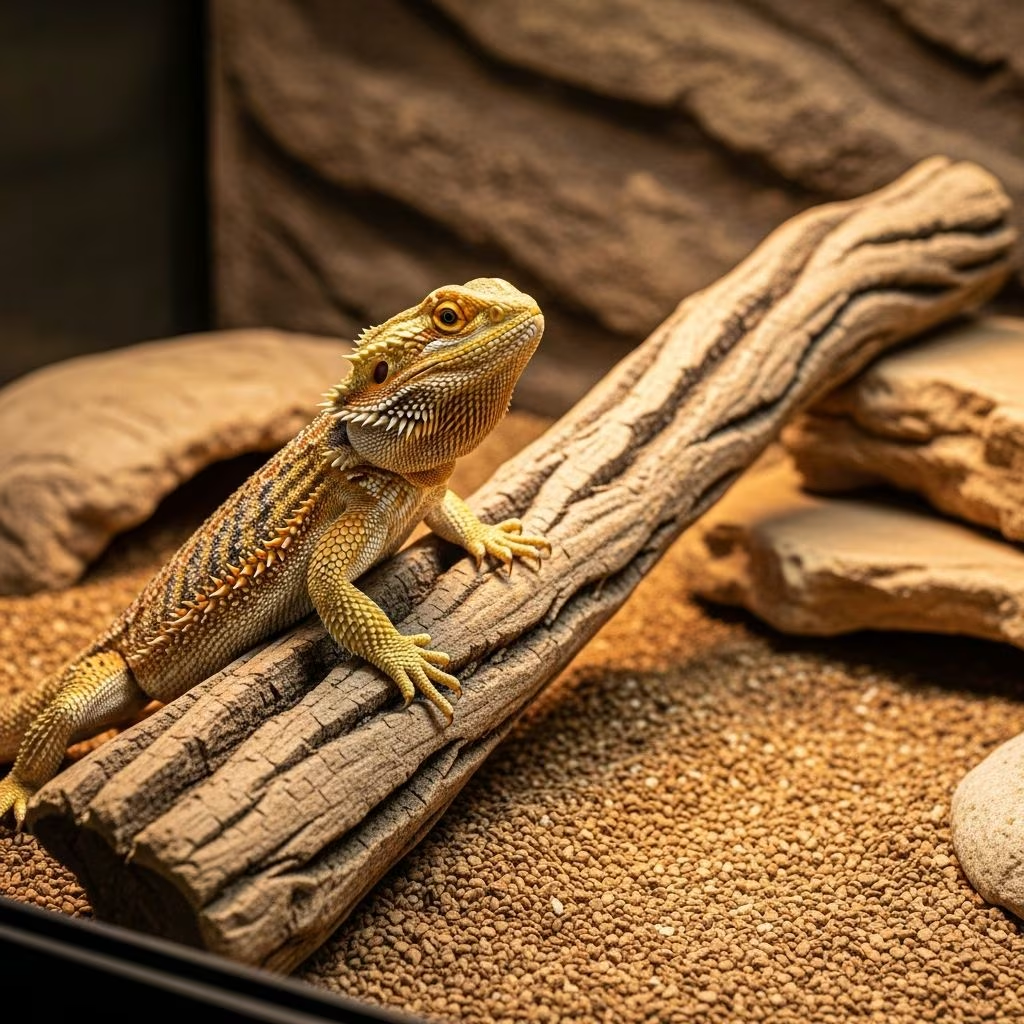
What Size Tank Does a Bearded Dragon Need?
Choosing the right tank size is one of the most critical decisions you’ll make as a bearded dragon owner. These fascinating reptiles require adequate space to move, bask, explore, and thermoregulate effectively. Understanding the appropriate tank dimensions for your bearded dragon’s age and size will help ensure a healthy, stress-free life for your scaly companion.
Understanding Tank Size Requirements by Life Stage
Bearded dragons grow significantly from hatchling to adulthood, and their housing needs change accordingly. Providing an appropriately sized enclosure at each stage prevents stress, promotes healthy growth, and reduces behavioral issues like glass surfing. Let’s examine the specific requirements for each life stage.
Hatchling Bearded Dragons (Under 10 Inches)
Baby bearded dragons are tiny when they first hatch, but they grow remarkably fast. Many new owners are tempted to start their hatchlings in small tanks to save space and money, but this approach can lead to problems as the dragon rapidly outgrows its enclosure. A 20-gallon tank provides adequate space for hatchlings and gives them room to acclimate to captivity without feeling overwhelmed by excessive space. While hatchlings don’t require the full dimensions of an adult enclosure, providing them with at least basic floor space helps establish good behaviors and reduces stress from the beginning.
Juvenile Bearded Dragons (10 to 16 Inches)
As your bearded dragon enters the juvenile stage, typically between 10 and 16 inches in length, it’s time to upgrade to a 40-gallon breeder tank. This standard tank measures 36 inches long by 18 inches wide by 18 inches deep, providing significantly more floor space than the hatchling enclosure. At this stage, your dragon is developing its personality and needs room to explore, climb, and establish basking territories. The 40-gallon breeder tank is considered the minimum standard for housing juvenile dragons and allows for proper temperature gradients essential for digestion and overall health.
Adult Bearded Dragons (16 Inches and Larger)
Adult bearded dragons typically reach 18 to 24 inches in total length, making the 40-gallon tank inadequate for their long-term housing. While a 40-gallon tank might technically fit an adult dragon, many adults become stressed in this confined space. The recommended minimum for adults over 16 inches is a 75-gallon tank, with 120 gallons being the ideal size. A 120-gallon tank measures approximately 48 inches long by 24 inches wide by 24 inches tall, providing ample space for natural behaviors and proper temperature regulation.
Optimal Tank Dimensions and Why They Matter
Tank size isn’t just about the total gallon capacity—dimensions are equally important. Bearded dragons are ground-dwelling reptiles that benefit more from horizontal space than vertical space, unlike tree-dwelling reptiles such as chameleons.
Why Floor Space Trumps Height
Bearded dragons are naturally semi-arboreal but primarily spend time on the ground hunting, basking, and exploring. They cannot utilize tall enclosures as effectively as other reptile species. Prioritizing floor space allows your dragon to establish territories, regulate body temperature by moving between warm and cool zones, and engage in natural behaviors. Tall, narrow tanks restrict the dragon’s ability to thermoregulate and can contribute to stress and behavioral issues.
Minimum Dimension Guidelines
When selecting a tank for an adult bearded dragon, ensure the enclosure meets these minimum dimension requirements:
– Length: At least 48 inches (4 feet)- Width: At least 24 inches (2 feet)- Height: At least 24 inches (2 feet)
These dimensions provide the foundation for creating proper thermal gradients, where your dragon can move between warmer basking areas and cooler zones. The width of at least 18 inches allows your dragon to comfortably turn around and engage in natural movement patterns.
Larger Is Better
While a 4’x2’x2′ (120-gallon) enclosure meets minimum requirements, larger is always better. Some experts recommend even larger dimensions of 6’L x 2’W x 2’H for optimal space, as this provides increased room for enrichment, better temperature regulation, and reduced stress. A larger enclosure also makes it easier to maintain proper humidity levels and create distinct zones for different temperatures and activities.
Tank Dimensions Comparison Chart
| Life Stage | Size Range | Dimensions | Notes |
|---|---|---|---|
| Hatchling | Under 10″ | 20 gallons minimum | Starting size; expect rapid growth |
| Juvenile | 10-16″ | 40 gallons (36″x18″x18″) | Standard minimum for developing dragons |
| Adult | 16-20″ | 75+ gallons (48″x18″x21″) | Larger floor space recommended |
| Adult | 20″+ (Large) | 120 gallons (48″x24″x24″) | Ideal minimum for most adults |
Why Proper Tank Size Is Essential for Health
Tank size directly impacts your bearded dragon’s physical and psychological well-being. Understanding the connection between proper housing and health outcomes helps justify the investment in an appropriately sized enclosure.
Thermoregulation
Bearded dragons are ectothermic reptiles, meaning they rely on external heat sources to regulate body temperature. A larger tank with proper dimensions makes it easier to establish and maintain the necessary temperature gradient. Your dragon can move from the basking spot (around 95-110°F for adults) to cooler areas (75-85°F) as needed. In smaller tanks, maintaining this gradient is more difficult, and dragons may experience temperature stress that affects digestion, immunity, and overall health.
Stress Reduction
Inadequate space causes stress, which manifests as glass surfing (repeatedly pressing against tank walls), aggression, and reduced appetite. A properly sized enclosure with adequate floor space allows your dragon to establish territories and exhibit natural behaviors, significantly reducing stress levels. Stressed dragons are more prone to illness and behavioral problems.
Physical Exercise and Natural Behaviors
Bearded dragons are active animals that enjoy exploring, hunting, and basking. Larger enclosures provide room for these essential activities, promoting muscle development and mental stimulation. They can establish territories, navigate multiple levels through climbing opportunities, and engage in natural foraging behaviors.
Prevention of Health Issues
Chronic stress from inadequate housing can lead to metabolic bone disease, respiratory infections, and digestive problems. Providing proper space and environmental conditions supports your dragon’s immune system and reduces disease susceptibility.
Tank Setup Considerations Beyond Size
While size is crucial, other factors complement proper tank dimensions to create an ideal bearded dragon habitat.
Substrate and Floor Space
The substrate should be safe and easy to maintain. Avoid sand, which can cause impaction, and instead use reptile carpet, tile, or newspaper. Ensure the tank has adequate open floor space (at least 50% of the enclosure’s footprint) for movement and basking opportunities.
Basking Surfaces
Provide a secure basking platform where your dragon can perch under the heat lamp. This platform should be sturdy and positioned to allow your dragon to rest while basking without risk of falling or burns.
Hiding Spots
Despite being visible creatures, bearded dragons appreciate having a hide or shelter where they can retreat when stressed or simply want privacy. Both warm and cool hides should be available throughout the enclosure.
Enrichment Elements
Larger tanks allow space for climbing structures, branches, rocks, and decorative elements that encourage natural behaviors. Enrichment reduces stress and keeps your dragon mentally stimulated.
Common Tank Size Mistakes to Avoid
Many new bearded dragon owners make housing decisions based on misconceptions or cost considerations. Understanding these common mistakes helps you make better choices for your pet.
Starting Too Small with Hatchlings
While a 20-gallon tank is appropriate for hatchlings, some owners choose even smaller enclosures. This severely limits your dragon’s growth and can stunt development or cause permanent health issues. Additionally, the quick upgrade cycle becomes expensive and stressful for your pet.
Choosing Tall Over Wide Tanks
Tall, narrow aquariums are inappropriate for bearded dragons despite their availability. These vertical tanks don’t provide the floor space your dragon needs and can trap heat at the top where your dragon rarely spends time. Always prioritize horizontal dimensions over height.
Using 55-Gallon Tanks
Standard 55-gallon tanks measure approximately 48 inches long by 13 inches wide by 20 inches deep. The width of only 13 inches is inadequate—your dragon cannot turn around comfortably, making this size unsuitable regardless of the gallon rating.
Underestimating Adult Size
Many owners are shocked when their bearded dragon grows from a small hatchling to a 20+ inch adult. Assuming a 40-gallon tank will suffice for the dragon’s entire life leads to problems. Budget for upgrades in advance, or start with a 75-gallon enclosure even for juvenile dragons to avoid multiple purchases.
Planning Your Space Requirements
Before purchasing a tank, assess your home for the physical space needed. A 120-gallon tank (48″x24″x24″) requires substantial floor space and a sturdy surface to support its weight when filled with substrate, decorations, and water. Consider:
– Available floor space in your chosen room- Structural support for the tank’s weight (filled tanks can exceed 500 pounds)- Access for cleaning and maintenance- Proximity to windows and heat sources- Room for power cords and equipment
Frequently Asked Questions
Q: Can I house multiple bearded dragons together?
A: No, bearded dragons are solitary animals and should never be housed together. Even dragons of the same size or age will fight, stress each other, and potentially sustain serious injuries. Each dragon requires its own separate enclosure.
Q: Is a 40-gallon tank ever appropriate for an adult bearded dragon?
A: While a 40-gallon tank was once the standard recommendation, current best practices recommend at least 75 gallons for most adults and 120 gallons as the ideal minimum. Some smaller adult dragons (under 18 inches) may tolerate a 40-gallon tank temporarily, but 75+ gallons is strongly recommended for long-term housing.
Q: How can I tell if my bearded dragon’s tank is too small?
A: Signs of inadequate space include glass surfing (frantically rubbing against walls), aggression, reduced appetite, stress-darkening of colors, and lethargy. If you notice these behaviors, upgrading to a larger enclosure should be a priority.
Q: Can I use a custom-built enclosure instead of a standard tank?
A: Yes, custom enclosures are an excellent option if they meet the minimum dimension requirements. Many experienced keepers prefer PVC or wooden enclosures with glass or acrylic fronts, as they allow complete customization and often provide larger dimensions than commercial tanks.
Q: Should tank size change as my bearded dragon ages?
A: Yes, you should upgrade your dragon’s tank as it grows. Move from a 20-gallon hatchling tank to a 40-gallon juvenile tank, then to at least a 75-gallon adult tank. This staged approach allows your dragon to grow comfortably without feeling lost in excessive space as a baby.
Q: Is outdoor housing an option for bearded dragons?
A: Outdoor enclosures are possible in appropriate climates but require careful design to maintain temperature gradients, prevent predation, and ensure security. Most keepers use indoor enclosures for better environmental control and safety.
Conclusion
Providing the right tank size is fundamental to responsible bearded dragon ownership. Starting with a 20-gallon tank for hatchlings, upgrading to 40 gallons for juveniles, and providing at least 75-120 gallons for adults ensures your dragon has room to thrive. Prioritize floor space and horizontal dimensions over height, and remember that larger is always better when it comes to bearded dragon housing. By investing in appropriate accommodations from the start, you’ll prevent stress-related health issues and provide your bearded dragon with the best foundation for a long, healthy, and happy life.
References
- How Big of a Tank Does a Bearded Dragon Need? — Bearded Dragon Forum. 2025. https://www.beardeddragon.org/threads/how-big-of-a-tank-does-a-bearded-dragon-need.260918/
- The Ultimate Bearded Dragon Tank Size Guide: Ensuring a Comfortable Home for Your Scaly Friend — Talis US. 2025. https://talis-us.com/blogs/news/the-ultimate-bearded-dragon-tank-size-guide-ensuring-a-comfortable-home-for-your-scaly-friend
- Bearded Dragon Tank Setup 101: How to Create the Best Home for Your Dragon — Dragon’s Diet. 2025. https://dragonsdiet.com/blogs/dragon-care/bearded-dragon-tank-setup-101
- Bearded Dragon Enclosure Size & Cohabitation — ReptiFiles. 2025. https://reptifiles.com/bearded-dragon-care/bearded-dragon-terrarium-size/
- What Size Enclosure Does A Bearded Dragon Need? — Zen Habitats. 2025. https://www.zenhabitats.com/blogs/reptile-care-sheets-resources/what-size-enclosure-do-bearded-dragons-need
- Bearded Dragon Care Sheet — PetMD. 2025. https://www.petmd.com/reptile/bearded-dragon-care-sheet



