

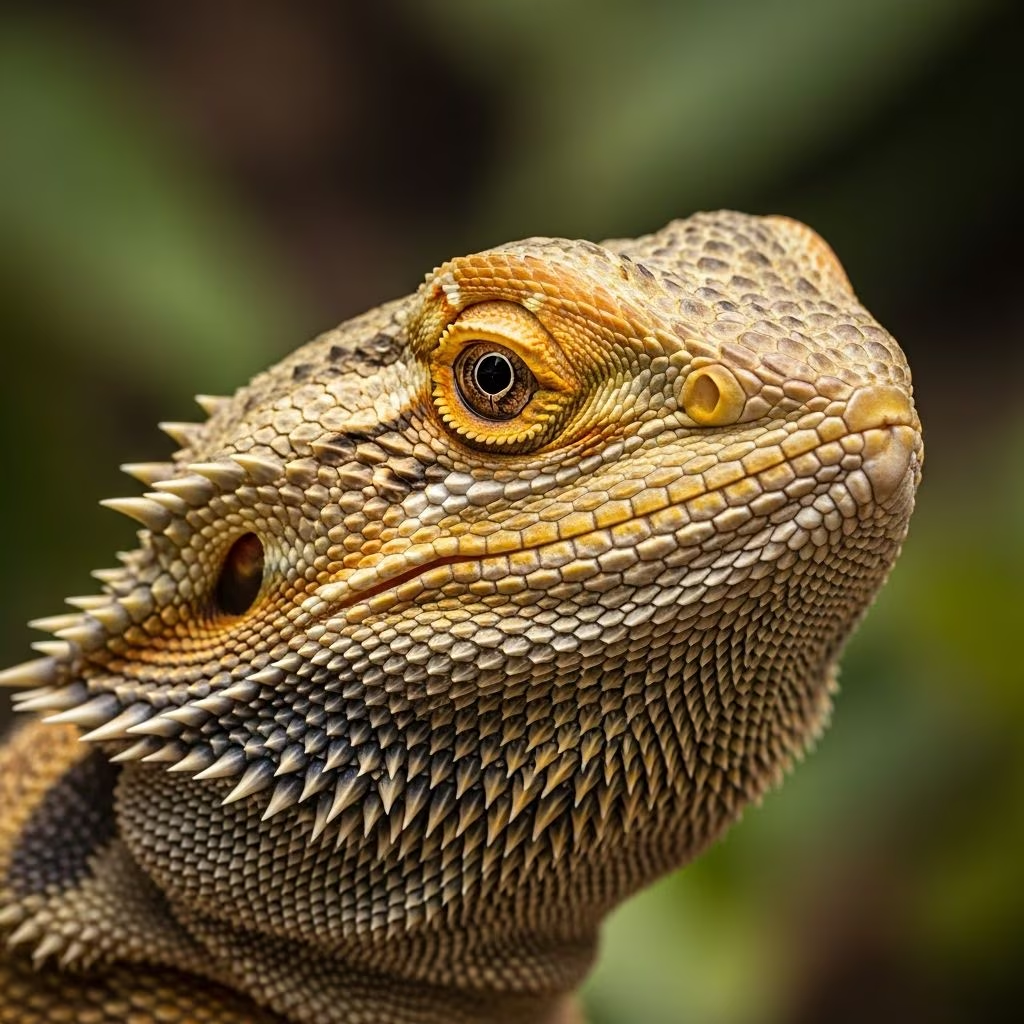
Dark lines or spots appearing on a bearded dragon’s belly, chin, or beard often alarm new owners, but these stress lines serve as a natural communication method. While they can signal discomfort, they frequently occur during routine activities like hunting or basking, helping owners fine-tune care for optimal well-being.
Recognizing Stress Lines on Your Bearded Dragon
Stress lines manifest as irregular dark streaks, patches, or geometric patterns primarily on the ventral side. Unlike uniform pigmentation, these markings darken in response to physiological changes, resembling tiger stripes or abstract designs. Young dragons display them more prominently due to immature color regulation, with lines fading as they age into adulthood.
Observe the context: transient lines during feeding excitement differ from persistent ones. A solid black beard alongside lines indicates heightened arousal, potentially from threats or environmental issues.
Normal Reasons for Dark Markings
Not every appearance warrants concern. Bearded dragons use chromatophores—specialized skin cells—to adjust coloration for various adaptive purposes.
- Hunting Instinct Activation: Anticipating prey like insects triggers adrenaline, causing temporary darkening to blend or energize.
- Thermoregulation: Under basking lamps, dragons darken to absorb heat efficiently, mimicking wild sun-soaking behavior.
- Shedding Process: As old skin loosens, patterns emerge before sloughing off completely.
- Breeding Displays: Males may show lines when spotting females, part of courtship signaling.
- Juvenile Patterns: Babies retain bold markings that naturally lighten over months.
These scenarios highlight stress lines as a versatile tool rather than solely negative indicators.
When Dark Lines Signal Real Problems
Persistent or intense markings paired with behavioral shifts demand attention. Key triggers include:
| Issue | Description | Action Needed |
|---|---|---|
| New Habitat | Unfamiliar tank setup overwhelms senses, causing lines for days. | Dim lights, cover sides for security. |
| Temperature Imbalance | Basking zone below 95°F or cool side above 85°F stresses metabolism. | Check gradients with infrared thermometer. |
| UVB Deficiency | Lack of proper lighting leads to metabolic bone disease precursors. | Replace bulbs every 6-12 months. |
| Excessive Handling | Rough or frequent sessions exhaust solitary reptiles. | Limit to 10-15 minutes daily. |
| Predator Presence | Cats, dogs, or birds nearby provoke defensive responses. | Secure enclosure away from pets. |
Monitor duration: lines lasting over hours, especially with glass surfing or hiding, suggest intervention.
Other Behavioral Cues of Distress
Stress lines rarely appear alone. Comprehensive observation reveals a fuller picture.
- Appetite Decline: Refusal of staples like dubia roaches or greens signals unease.
- Inactivity: Avoiding basking spots or burrowing excessively.
- Aggressive Displays: Hissing, tail whipping, or rapid head bobbing toward owners.
- Posture Changes: Flattening body or gaping mouth without thermoregulating.
- Color Shifts: Full-body darkening beyond beard.
These amplify stress line concerns, prompting habitat audits.
Distinguishing Stress from Illness
Some signs overlap with health issues, requiring vet differentiation.
- Lethargy + Discharge: Eye/nasal goo with lines may indicate respiratory infection.
- Spots/Discoloration: Yellow/red/black unrelated to lines suggest MBD or parasites.
- Digestive Woes: Diarrhea or impaction (no poop for days) from diet/stress.
- Neurological Symptoms: Twitching/seizures point to adenovirus.
Annual herp vet exams prevent escalation. Sudden weight loss or wheezing mandates immediate care.
Creating a Low-Stress Environment
Proactive husbandry minimizes lines altogether.
Optimize Enclosure Setup
- 40-75 gallon tank for adults with hides on both sides.
- Basking 95-110°F, cool 75-85°F, night drop to 65-75°F.
- 10-12% UVB tube spanning length, replaced biannually.
- Substrate-free or tile/paper for hygiene.
Feeding and Handling Protocols
Offer variety: 80% veggies/20% insects for adults, dusted with calcium/D3. Handle gently post-meal, building trust gradually.
Daily Routines
Maintain 12/12 light cycle, mist for humidity under 40%, and enrich with climbs/branches. Quarantine new pets.
Step-by-Step Stress Reduction Plan
- Assess Habitat: Verify temps/lighting with gauges.
- Observe 24 Hours: Note line persistence and behaviors.
- Adjust Triggers: Relocate from noise/pets, reduce handling.
- Enhance Security: Add foliage hides, background.
- Monitor Progress: Lines should fade in 1-3 days.
- Vet if Needed: For ongoing issues or illness signs.
This systematic approach restores balance effectively.
FAQs on Bearded Dragon Stress Lines
Do stress lines hurt my dragon?
No, they are painless skin responses, like blushing in humans.
Why do baby beardies have constant lines?
Immature control; they diminish by 6-12 months.
Can diet cause stress lines?
Indirectly via poor nutrition stressing health, but not directly.
How long until lines disappear?
Moments to hours in healthy scenarios; longer signals problems.
Are black beards always stress?
Often, but also dominance or cold.
Long-Term Health Strategies
Beyond acute fixes, foster resilience through variety: rotate feeds, provide puzzles, and track growth quarterly. Community forums offer peer insights, but prioritize vet advice.
Understanding stress lines empowers owners to interpret subtle cues, preventing minor issues from compounding. With attuned care, your bearded dragon displays vibrancy over distress.
References
- Bearded Dragon Stress Marks: Divining the Dark Side of Your Beardie — The Bug Shed. 2023. https://thebugshed.com/bearded_dragon_stress_marks/
- Signs of Distress in Your Bearded Dragon — Symton BSF. 2024. https://symtonbsf.com/blogs/blog/signs-of-distress-in-your-bearded-dragon
- 5 Signs How To Tell That Your Bearded Dragon Is Stressed — YouTube (Reptile channel). 2022-10-15. https://www.youtube.com/watch?v=Gv7lFSizVik
- Permanent stress marks??? — BeardedDragon.org Forum. 2023. https://www.beardeddragon.org/threads/permanent-stress-marks.235272/
- Is Your Bearded Dragon Stressed Out? 8 Signs You Should Be… — YouTube (Elles Reptiles). 2023-05-20. https://www.youtube.com/watch?v=wwofZmp45_I



