

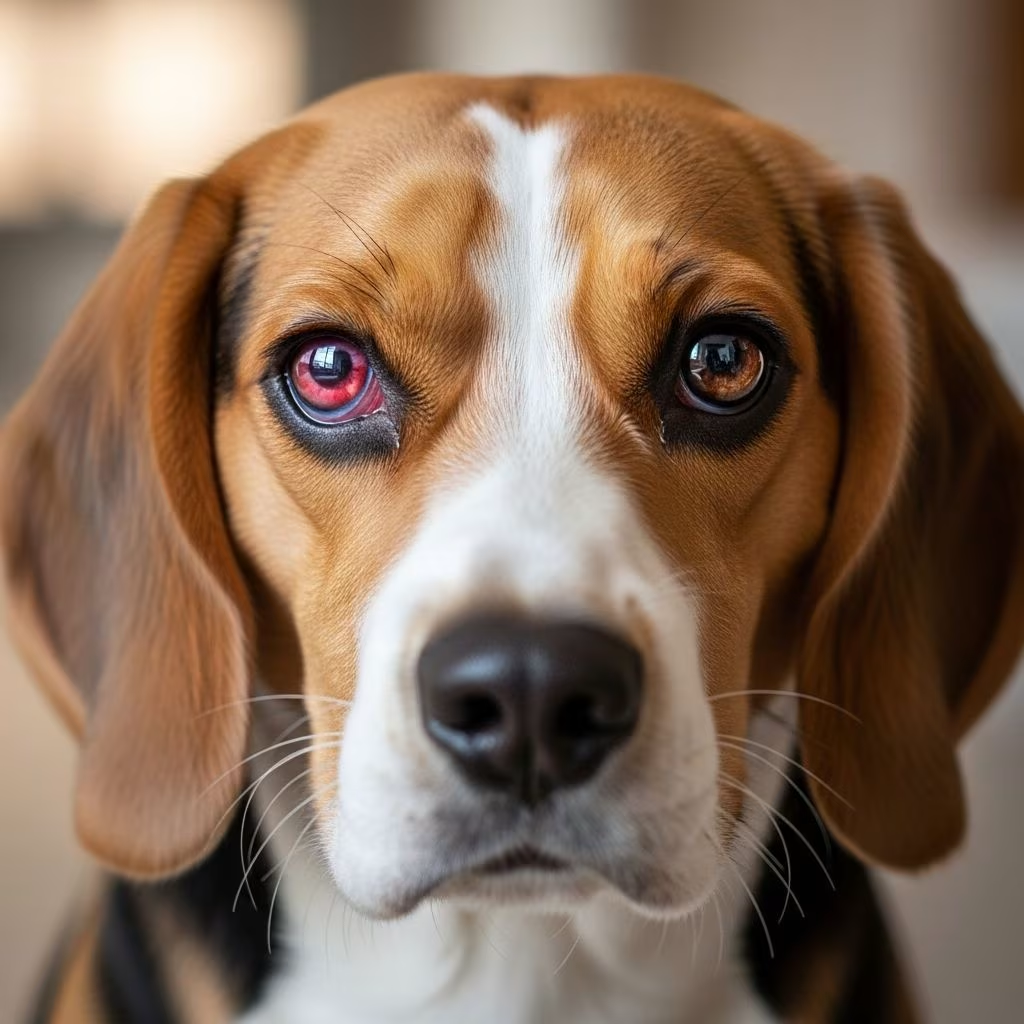
Beagles are beloved companions known for their charming personalities and distinctive features, but like many dog breeds, they are susceptible to certain hereditary eye conditions. One condition that frequently affects beagles is cherry eye, a visible eye abnormality that can be alarming when first noticed. This condition involves the prolapse of the tear gland associated with the third eyelid, resulting in a distinctive red or pink swelling at the corner of the eye. Understanding this condition is crucial for beagle owners who want to maintain their pet’s ocular health and prevent complications.
What Is Cherry Eye and How Does It Develop?
Cherry eye refers to the prolapse or protrusion of the gland associated with the third eyelid, a structure that exists in dogs but not in humans. Dogs possess three eyelids rather than two: the upper lid, the lower lid, and a third eyelid located in the inner corner of the eye. This third eyelid contains a specialized tear-producing gland that plays a vital role in maintaining ocular moisture and protection. When the connective tissue that anchors this gland weakens or fails to maintain proper tension, the gland can slip out of its normal position and become visible as a bulbous, reddish mass.
The third eyelid gland produces approximately 30 to 50 percent of a dog’s tear film, making it essential for maintaining adequate ocular lubrication. When this gland prolapses, the eye loses a significant portion of its natural tear production, which can lead to complications if left untreated. The condition gets its colloquial name from the cherry-like appearance of the exposed gland, though the formal medical terminology is prolapse of the nictitating membrane gland.
Breed Predisposition and Risk Factors
While cherry eye can theoretically develop in any dog breed, certain breeds show significantly higher predisposition. Beagles are among the most commonly affected breeds, along with Cocker Spaniels, Bulldogs, French Bulldogs, Pugs, Boston Terriers, and Shih Tzus. A comprehensive study examining over 900,000 dogs found that purebred and brachycephalic (flat-faced) dogs had substantially higher odds of developing cherry eye compared to mixed breed dogs and those with medium-sized skulls, suggesting a strong hereditary component.
Age is another critical factor in cherry eye development. Research indicates that most cases occur in dogs under two years of age, with many cases appearing in puppies and juvenile dogs during their first year. This timing correlates with periods of rapid growth and facial development, when connective tissues throughout the body are undergoing significant changes.
Identifying the Symptoms and Signs
Recognizing cherry eye early is essential for prompt veterinary intervention. The condition typically presents with several distinctive signs:
- Red or pink mass — The most obvious indicator is a visible, bulbous red or pink swelling protruding from the inner corner of the eye, resembling a small cherry or smooth lump
- Excessive tearing or discharge — The affected eye may produce abnormally high amounts of tears or develop ocular discharge as the eye attempts to compensate
- Pawing and rubbing behavior — Dogs experiencing discomfort may frequently paw at, rub, or scratch the affected eye against furniture or the ground
- Inflammation and redness — The area surrounding the prolapsed gland becomes inflamed, causing visible redness in the sclera (white of the eye)
- Squinting and excessive blinking — Dogs may blink more frequently or squint due to eye discomfort
- Swollen eyelid — The eyelid surrounding the affected area may become noticeably puffy or enlarged
- Intermittent appearance — In early stages, the prolapsed gland may disappear and reappear, making the condition seem to come and go
It is important to note that cherry eye can affect one or both eyes, and the condition may appear suddenly, causing understandable concern among pet owners. Some dogs show minimal discomfort initially, but as the gland becomes increasingly irritated and swollen, symptoms typically become more pronounced.
Understanding the Underlying Causes
Genetic Factors
The primary cause of cherry eye is genetic weakness in the connective tissue that anchors the third eyelid gland in place. Some beagles are born with inherently weaker structural support around this gland, making prolapse more likely, particularly during periods of growth, excitement, or facial development. The connective fibers may be underdeveloped or structurally compromised, reducing their ability to withstand normal stress or strain.
Inflammation and Environmental Irritation
Chronic inflammation or irritation around the eye area can significantly contribute to cherry eye development in susceptible dogs. Various environmental and health factors can trigger inflammation, including allergies, environmental irritants, dust, or exposure to substances that cause eye irritation. When inflammation persists, it gradually weakens and damages the connective fibers anchoring the gland, eventually allowing prolapse to occur. Younger dogs are particularly prone to allergies as they adjust to new environments, and if the gland becomes swollen from allergic reactions, it tends to remain swollen and is more likely to prolapse.
Age-Related Development
The rapid growth and development that occurs during puppyhood creates an especially vulnerable period for cherry eye. As facial structures and connective tissues undergo significant changes, the gland’s attachment may not form properly, creating conditions favorable to prolapse. This explains why the vast majority of cases occur in dogs under two years of age.
Other Contributing Factors
Beyond the primary genetic and developmental causes, several secondary factors may increase risk in susceptible beagles, including dehydration, excessive dry air exposure, poor nutrition, and certain medications. Less common associations include tear duct blockage, canine distemper, canine diabetes, and various neurogenic diseases.
Complications That Can Arise Without Treatment
While cherry eye may seem like a minor cosmetic issue, the condition can lead to serious ocular complications if left untreated. The exposed gland becomes increasingly irritated and swollen, and the dog’s natural instinct to rub or paw at the uncomfortable eye causes additional damage. This rubbing can result in bleeding, infection, and conjunctivitis (inflammation of the conjunctiva).
The most significant long-term consequence is the development of dry eye disease, also known as keratoconjunctivitis sicca (KCS). Since the prolapsed gland fails to function properly, it cannot produce adequate tears, reducing overall tear production and leading to chronic dry eye that typically requires lifelong medication and is usually irreversible. A large cherry eye can also prevent the dog from completely closing their eye, causing prolonged corneal exposure and progressive ocular damage that may ultimately result in vision loss.
Diagnostic Procedures and Evaluation
When a beagle owner suspects cherry eye, a veterinarian will perform a thorough eye examination. In addition to visual inspection of the obvious prolapsed gland, diagnostic testing may include a Schirmer tear test, which measures the level of tear production to assess for dry eye. Fluorescein stain testing combined with a Wood’s lamp examination can detect corneal abrasions or ulcerations. The veterinarian may also perform bacterial culture testing to check for infection.
Treatment Options and Management Strategies
Treatment approaches for cherry eye vary depending on the severity, duration, and individual circumstances of each case. In some instances, particularly when allergies are involved, the gland may spontaneously reduce over time without intervention. However, the majority of cases require veterinary treatment.
Surgical Correction
Surgical repair is the most common and reliable treatment for cherry eye. The primary surgical goal involves repositioning the prolapsed gland back into its normal location and securing it with sutures to prevent recurrence. Modern surgical techniques focus on gland preservation rather than removal, as the gland plays an important role in maintaining tear production.
Post-Operative Care
Following surgical correction, careful post-operative management is essential. This typically includes antibiotic eye drops, anti-inflammatory medications, and protective measures such as an Elizabethan collar to prevent the dog from rubbing the surgical site. Owners must ensure their beagle avoids vigorous activity and water exposure during the healing period.
Management of Secondary Conditions
If dry eye develops following cherry eye or as a complication, lifelong medication will likely be necessary. Management typically involves prescription eye drops, oral medications to stimulate tear production, or other therapeutic interventions as recommended by a veterinary ophthalmologist.
Prevention Strategies for Beagle Owners
While the genetic predisposition to cherry eye cannot be eliminated, beagle owners can take preventive measures to minimize risk factors. These include maintaining proper nutrition, minimizing environmental irritants, and managing allergies promptly to reduce chronic eye inflammation. Avoiding excessive dry air exposure and ensuring adequate hydration may also help reduce risk in susceptible individuals.
When to Seek Veterinary Care
Beagle owners should contact their veterinarian immediately upon noticing any red or pink swelling in the corner of the eye. Prompt evaluation and treatment can prevent progression to more serious complications and improve long-term outcomes. Early intervention is particularly important, as the condition can cause increasing discomfort and secondary damage to ocular structures.
Frequently Asked Questions
Can cherry eye resolve on its own?
In some cases, particularly when allergies are the underlying cause, the gland may reduce spontaneously. However, most cases require surgical intervention to prevent complications.
Is cherry eye painful for dogs?
While not immediately severe, cherry eye causes progressive discomfort as the gland becomes more irritated and swollen. The condition motivates dogs to paw and rub at the eye, causing additional pain and damage.
Can both eyes be affected?
Yes, cherry eye can affect one or both eyes. Many beagles develop the condition in both eyes over time.
What is the prognosis after surgery?
Surgical correction typically has excellent outcomes, with most beagles recovering well and maintaining good ocular health with proper post-operative care.
References
- What is Cherry Eye in Dogs? 6 Symptoms You Should Watch Out For — AZ Vet Direct. 2024. https://azvet.direct/low-cost-pet-surgery-in-mesa-and-the-entire-southeast-valley-of-phoenix/what-is-cherry-eye-in-dogs-6-symptoms-you-should-watch-out-for/
- Beagle Cherry Eye and Dry Eye — BeaglePro. 2024. https://www.beaglepro.com/beagle-cherry-eye-and-dry-eye
- Cherry Eye in Dogs: Signs, Symptoms, Treatments — American Kennel Club. 2024. https://www.akc.org/expert-advice/health/cherry-eye-in-dogs/
- Cherry Eye in Dogs — Riverside Animal Medical Center. 2024. https://www.riversideanimal.net/site/blog/2024/06/15/cherry-eye-dogs
- Cherry Eye in Dogs — Cornell University College of Veterinary Medicine. 2024. https://www.vet.cornell.edu/departments-centers-and-institutes/riney-canine-health-center/canine-health-topics/cherry-eye-dogs
- Pet Cherry Eye in Spring, TX — North Houston Vet Ophthalmology. 2024. https://nhvophtho.com/pet-cherry-eye-spring-tx/
- Cherry Eye in Dogs — Joii Pet Care. 2024. https://www.joiipetcare.com/blogs/health-conditions/cherry-eye-in-dogs



