

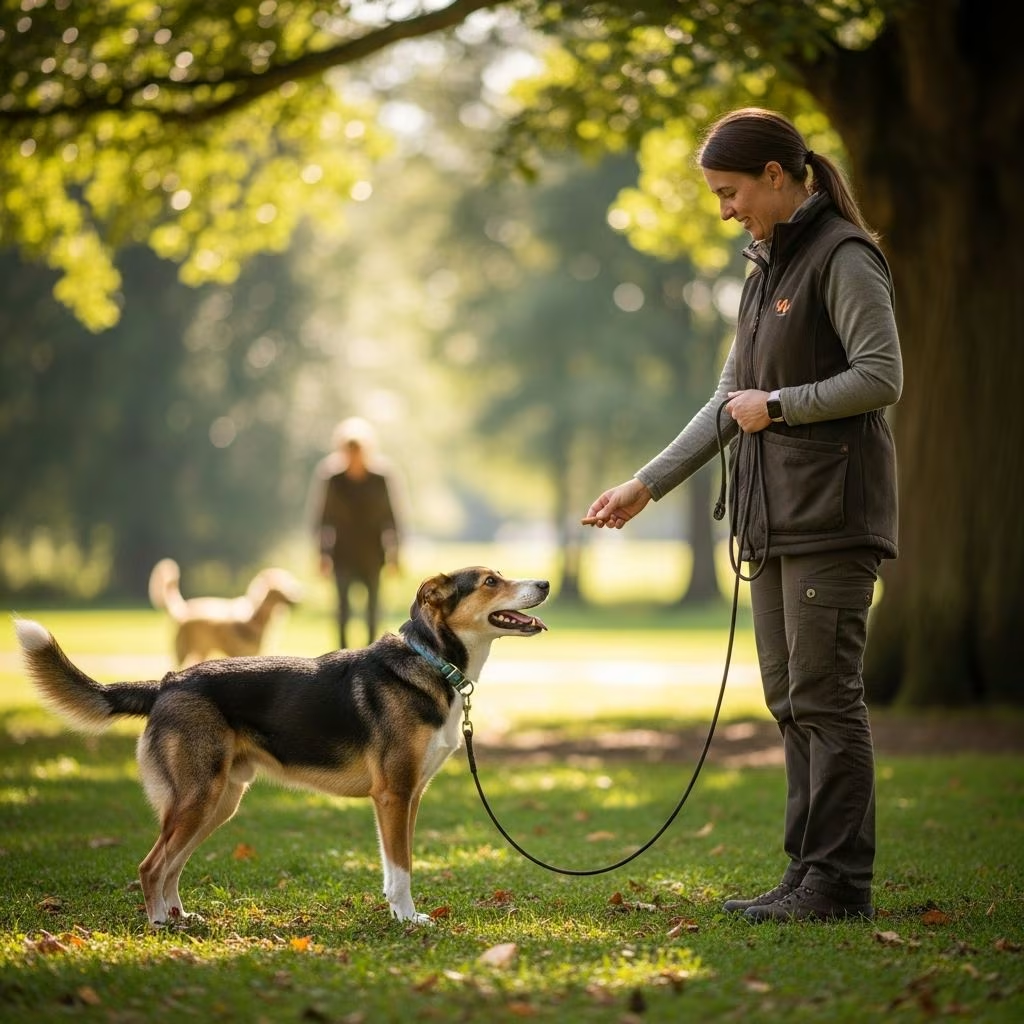
A better idea is to use a proactive training method called Behavior Adjustment Training (B.A.T.), which helps desensitize your dog to triggers like an energetic puppy or approaching strangers. If your dog gets frustrated, anxious, or fearful in social situations, B.A.T. offers a structured yet empowering approach worth exploring. This article provides a comprehensive primer on B.A.T., covering its principles, components, and practical applications to help your dog thrive.
What is behavior adjustment training (B.A.T.)?
Behavior Adjustment Training (B.A.T.) is a force-free, proactive method designed to help dogs manage their emotional responses to triggers by allowing them to explore and learn at their own pace. Unlike reactive training that intervenes after a problem arises, B.A.T. sets up controlled scenarios similar to real-life triggers but sub-threshold—meaning just different or distant enough that the dog remains calm and can investigate without stress.
B.A.T. provides dogs with a ‘reality check’ through ‘expectancy violation.’ When a dog anticipates a negative outcome (like a scary stranger lunging) but experiences something neutral or positive instead, it rewires their emotional association. For instance, a dog terrified of strangers might gradually learn that people are sources of fun and affection rather than threat, transforming fear into confidence.
One key differentiator of B.A.T. from other positive reinforcement techniques is its emphasis on dog-led exploration. Behavior serves a purpose: to influence the environment and ensure safety. B.A.T. fulfills this by granting dogs agency over stressors, leading to benefits like enhanced focus, superior social skills, a bolstered immune system, and greater stress resilience. Research supports that empowerment reduces cortisol levels and improves overall welfare in animals.
Traditional training often positions the handler as the ‘leader’ with treats as the focal point, but B.A.T. flips this: hide the treats, follow your dog’s lead, and let them dictate the pace. This counterintuitive approach maximizes empowerment, fostering independence and trust. Dogs in B.A.T. sessions appear relaxed, sniffing and exploring naturally, building positive associations organically.
The Three Components of B.A.T.
B.A.T. revolves around three interconnected pillars: Leash Skills, Survival Skills, and B.A.T. Set-Ups. Together, they create a framework where dogs gain tools for self-regulation, ensuring safe progression toward real-world confidence.
1. Leash Skills
Mastering leash handling is foundational in B.A.T., enabling dogs to move freely while maintaining safety. These skills apply to all dogs, from puppies in socialization to adults reducing leash pulling. There are approximately 10 core techniques, practiced progressively:
- Shorten without tangling: Arc the leash smoothly to gather slack without jerking.
- Stay out of the way: Position yourself behind or to the side, avoiding blocking your dog’s path.
- Secure grip: Wrap the leash in a figure-eight to prevent accidental drops.
- Soft attention cues: Use gentle leash strokes to redirect focus without force.
- Gentle stops: Apply subtle pressure to halt movement calmly.
Practice these in low-distraction environments first, gradually increasing complexity. Leash skills ensure the dog feels unhindered, promoting natural investigation.
2. Survival Skills
Survival Skills act as safety nets for situations beyond your dog’s current threshold. They prevent setbacks without relying on constant treats, building a communication bridge where dogs signal when they need help. Examples include:
- Environmental management: Cross the street or arc around a trigger like a barking child.
- Attention cues: Soft verbal prompts or looks to refocus.
- Temporary rewards: High-value treats during close passes, phased out as confidence grows.
Unlike lifelong counter-conditioning, B.A.T. transitions dogs to handling triggers independently after sufficient set-ups. This fosters reliability: your dog will check in naturally when challenged.
3. B.A.T. Set-Ups
B.A.T. Set-Ups are the heart of the method—controlled, positive interactions with triggers. Start with a Certified B.A.T. Instructor (find via Grisha Stewart’s official directory) for safety and precision. Here’s a step-by-step example for a dog reactive to children:
- Preparation: Choose a quiet park. Recruit a calm child helper at 50-100 feet distance (sub-threshold).
- Enter casually: Walk your dog on a long line, following their lead without directing toward the child.
- Observe and follow: Let your dog sniff, explore routes. If they glance at the child and return to sniffing, praise softly—no treats.
- Adjust distance: If stress signs appear (stiffening, staring), increase space via an arc.
- End on success: Quit when your dog disengages calmly, building positive momentum.
Repeat sessions 2-3 times weekly, closing distance gradually. To observers, it looks like casual sniffing, but it’s deliberate empowerment. Variations include puppy playdates or stranger approaches.
Why B.A.T. Outshines Reactive Methods
Reactive training punishes or distracts post-trigger, potentially heightening fear. B.A.T. is proactive, addressing root emotions. Studies from animal behaviorists like Grisha Stewart, B.A.T.’s founder, show reduced aggression and improved welfare. Empowerment aligns with ethological needs, mimicking wild canid learning.
| Aspect | Reactive Training | B.A.T. (Proactive) |
|---|---|---|
| Approach | Intervene after reaction | Prevent via set-ups |
| Dog’s Role | Passive recipient | Active explorer |
| Long-term Outcome | Temporary suppression | Lasting confidence |
| Tools Needed | Treats, corrections | Leash skills, observation |
Getting Started with B.A.T.: Tips for Success
Begin with self-assessment: identify triggers via a reactivity journal. Invest in a 15-30 foot long line. Attend workshops or online courses from certified pros. Track progress with videos. Common pitfalls: rushing distance, using treats prematurely, leading the dog. Patience yields results—many see improvements in weeks.
For multi-dog homes, train individually first. Integrate play post-session to boost retention, as play reinforces learning.
Frequently Asked Questions (FAQs)
Q: Is B.A.T. suitable for aggressive dogs?
A: Yes, when done correctly with professional guidance. It reduces reactivity by addressing fear, not suppressing it.
Q: How long until I see results?
A: Varies by dog; noticeable changes in 2-6 weeks with consistent set-ups.
Q: Do I need special equipment?
A: Primarily a long leash; no prongs or e-collars.
Q: Can B.A.T. help with leash pulling?
A: Absolutely—leash skills teach loose-leash walking naturally.
Q: What’s the difference from positive reinforcement?
A: B.A.T. emphasizes dog autonomy over handler-led rewards.
References
- The B.A.T. Dog Training Method Is What’s Up — Kinship. 2023. https://www.kinship.com/dog-behavior/bat-proactive-training-gives-dogs-tools-they-need-succeed
- Positive Reinforcement Dog Training — Kinship. 2023. https://www.kinship.com/dog-behavior/positive-reinforcement-dog-training
- Playing With Dogs Improves Their Training Success — Kinship. 2023. https://www.kinship.com/dog-behavior/play-improves-dog-training-success
- Behavior Adjustment Training Official Site (Primary Source) — Grisha Stewart (via PMC/Academic Reference). 2022-10-15. https://pmc.ncbi.nlm.nih.gov/articles/PMC11557872/



