

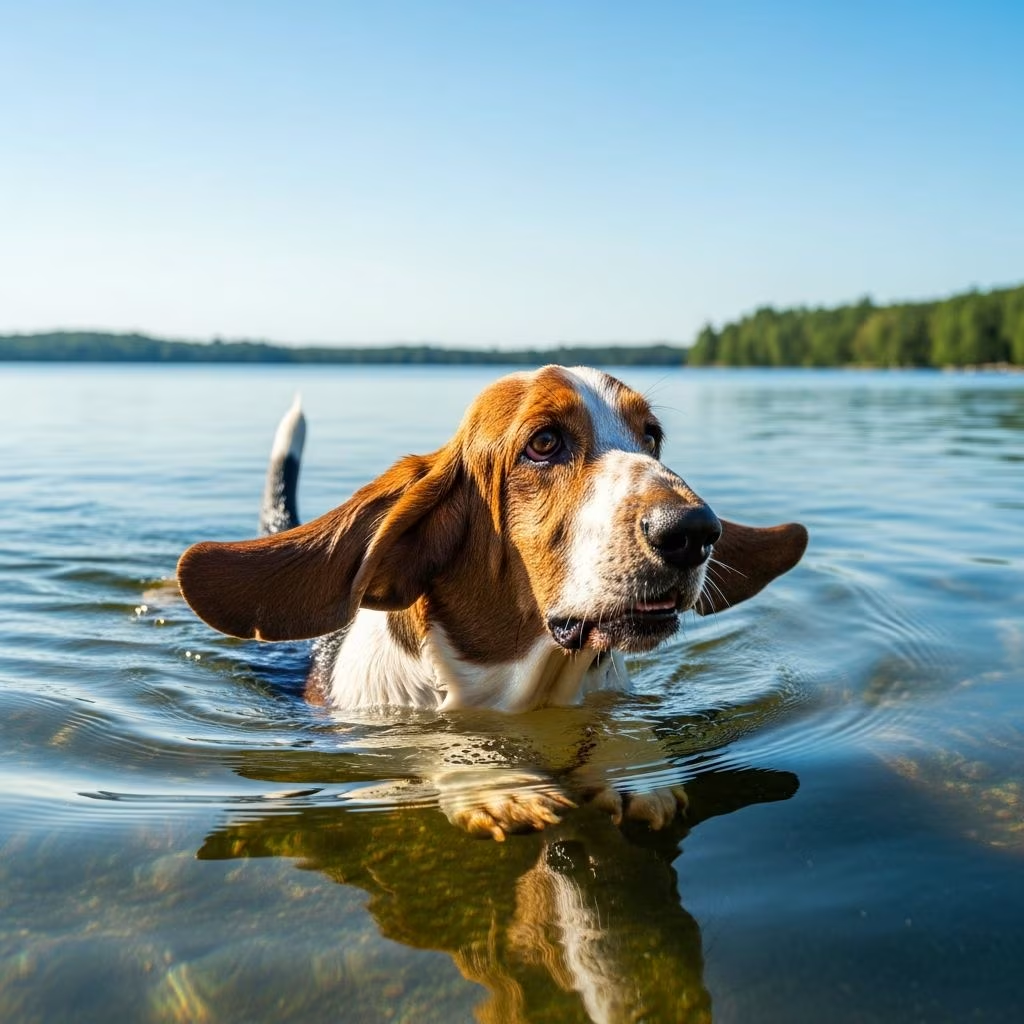
Basset Hounds possess a distinctive physique that significantly impacts their swimming proficiency, making them prone to fatigue and imbalance in water. Despite this, with proper precautions and gradual training, owners can help their pets develop basic water confidence while prioritizing safety.
The Unique Anatomy Hindering Basset Hound Swimmers
Basset Hounds were originally bred in France for scent-driven hunting on land, not for aquatic pursuits. Their long, low-slung bodies, combined with short legs, create an unstable foundation for swimming. The front-heavy structure—featuring a large head, broad chest, and heavy skeletal mass accounting for about half their body weight—causes the rear to sink rapidly, forcing constant upward head tilting that exhausts them quickly.
Short, stumpy legs provide minimal paddling power, resulting in inefficient strokes. Unlike water-retrieving breeds with webbed feet, Bassets have spongy paws that offer little propulsion. Long ears, while not directly impeding movement, trap moisture and heighten infection risks post-swim.
- Key anatomical drawbacks: Low center of gravity leads to tipping; heavy bone density promotes sinking; limited leg length reduces thrust.
- Endurance limitation: They tire faster than agile swimmers due to disproportionate energy demands on strained muscles.
Assessing Natural Water Affinity in Basset Hounds
Unlike Labrador Retrievers or Portuguese Water Dogs, Basset Hounds typically exhibit wariness toward water. Their hunting heritage emphasized ground tracking over swimming, fostering a general aversion rather than enthusiasm. Many resist entry into pools or lakes, requiring patient encouragement rather than innate eagerness.
Individual temperament varies; some may tolerate shallow splashes, but most lack the joy seen in water-loving breeds. Owners report that without intervention, Bassets often panic or disorient in deeper water, underscoring the need for supervision.
Essential Safety Gear for Water Activities
Never allow a Basset Hound near water without a properly fitted canine life jacket. These vests provide buoyancy to keep the head above water, countering their sinking tendency and preventing exhaustion-induced struggles.
| Life Jacket Feature | Benefit for Basset Hounds |
|---|---|
| Full torso support | Lifts rear end to maintain balance |
| Handle for rescue | Allows quick owner intervention |
| Reflective strips | Enhances visibility in open water |
| Adjustable straps | Ensures secure fit on long bodies |
Additional precautions include ear drying post-exposure to avert infections and thorough rinsing after chlorinated swims to protect skin.
Step-by-Step Training Approaches
Training builds water tolerance through positive reinforcement, always using a life jacket. Begin only with calm, exercised dogs to minimize stress. Two primary methods suit different environments.
Backyard Pool Progression Method
- Set up a shallow kiddie pool with toys or treats in a floating holder to lure voluntary entry.
- Repeat until comfortable, praising lavishly for small achievements like paw dips.
- Transition to a larger pool, entering water first to demonstrate safety.
- Gently guide paws in paddling motion; instincts often take over with support.
- End sessions promptly to avoid fatigue; bathe afterward if chlorinated.
Natural Water Body Introduction
- Select calm, shallow lakeside spots.
- Don life jacket, enter water yourself, and coax with voice and treats.
- Gradually venture deeper as confidence grows, supporting underbelly.
- Practice short paddles, rewarding progress.
- Monitor for signs of distress like heavy panting.
Consistency yields results, though full proficiency is rare. Sessions should last 5-10 minutes initially.
Recognizing Breeds with Similar Swimming Challenges
Basset Hounds share vulnerabilities with other brachycephalic or low-bodied breeds. Comparative analysis highlights shared risks:
| Breed | Main Swimming Issue | Safety Recommendation |
|---|---|---|
| Basset Hound | Long body, short legs, heavy front | Mandatory life jacket, shallow only |
| Bulldog | Muscular build, flat face | Supervision, avoid deep water |
| Dachshund | Elongated torso, stubby limbs | Buoyancy aid essential |
| Pug | Short snout, low endurance | Limited exposure, constant watch |
These traits universally demand extra caution around pools, boats, or beaches.
Health Risks and Post-Swim Care Protocols
Swimming exacerbates joint strain in Bassets, prone to hip dysplasia. Overexertion risks hypothermia from low body fat or ear infections from trapped water. Post-swim routines include:
- Towel-drying ears thoroughly with vet-approved solutions.
- Inspecting for skin irritations or lethargy.
- Providing rest and monitoring hydration.
- Avoiding swims in cold or rough waters.
Real-World Scenarios: Boating and Beach Outings
For boating families, Bassets require constant leashing near edges. Beach trips demand life jackets for sudden waves. Anecdotes show some Bassets enjoying supervised dips, but risks persist without gear.
Alternatives like gentle walks or dry play maintain activity without water hazards.
Common Myths Debunked
- Myth: All hunting dogs swim well. Fact: Scent hounds like Bassets prioritize tracking over aquatics.
- Myth: Ears cause sinking. Fact: Body proportions are the culprit; ears pose infection risk.
- Myth: They can swim indefinitely with practice. Fact: Structural limits cap endurance.
Frequently Asked Questions (FAQs)
Can Basset Hounds ever enjoy swimming?
Some adapt with training, but most remain neutral or averse; focus on tolerance over enthusiasm.
What if my Basset panics in water?
Immediately rescue with life jacket handle, end session, and rebuild slowly to prevent phobia.
Are there breed-specific life jackets?
Yes, select models for long-bodied, short-legged dogs for optimal support.
How often should training occur?
2-3 short sessions weekly, progressing based on comfort.
Is swimming beneficial for Basset health?
Low-impact if supervised; aids arthritis but risks outweigh for many.
Final Guidance for Responsible Ownership
While Basset Hounds can paddle briefly, their design deems unsupervised swimming unsafe. Equip with life jackets, train patiently, and opt for land-based fun to safeguard their well-being.
References
- Can Basset Hounds Swim? Here’s How to Teach Them — Hepper. 2023. https://articles.hepper.com/can-basset-hounds-swim/
- How Well Can a Basset Hound Swim? Facts & Training Methods — Dogster. 2023. https://www.dogster.com/dog-health-care/how-well-can-a-basset-hound-swim
- Why These Dog Breeds Can’t Swim — Sit Means Sit Dog Training. 2022. https://sitmeanssit.com/dog-training-mu/north-baltimore-dog-training/why-these-dog-breeds-cant-swim/
- Can Basset Hounds Swim? — AtCharlie. 2023. https://www.atcharlie.com/objective-subjective/basset-hounds-do-not-swim/
- Heartwarming Basset Hound Beach Adventure Shows Joy — GreaterGood. 2024. https://greatergood.com/blogs/news/heartwarming-basset-hound-beach-adventure-shows-joy



