

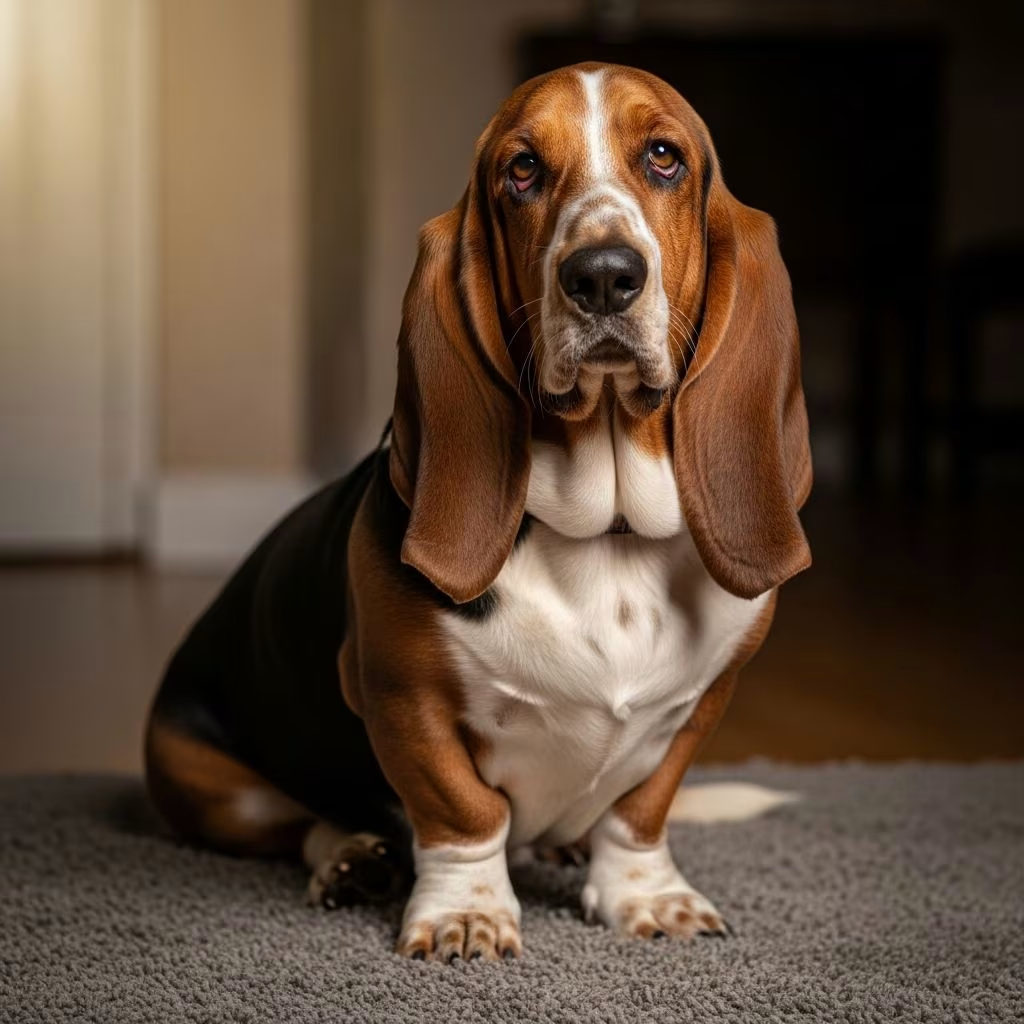
The Basset Hound stands out as a distinctive breed known for its long body, short crooked legs, and unparalleled sense of smell. Originating from France centuries ago, these dogs were crafted for tracking small game on foot, making them ideal companions for hunters without horses. Today, they captivate pet owners with their soulful eyes, droopy ears, and laid-back personality.
Ancient Beginnings in French Monasteries
Basset Hounds trace their lineage to around 700 C.E. at the Abbey of St. Hubert in Belgium’s Ardennes region, near France. St. Hubert, the patron saint of the hunt, developed strains of hounds resembling modern Bloodhounds. A genetic mutation in these lines produced the short-legged Basset, perfect for hunters pursuing rabbits and hares through thick underbrush on foot.
Monasteries during the medieval era served as hubs for breeding superior hunting dogs for nobility. Monks selectively bred for traits like low stature and powerful scenting, ensuring the dogs could stay close to the ground while moving slowly enough for human followers. By the 16th century, standards had refined to about 16 inches in height, with descriptions in texts like The Art of Hunting (1561) noting variations in leg crook and coat types.
This dwarfism, termed achondroplasia, results in stunted limbs and disproportionately heavy bone mass—up to 25% of body weight. These features, while giving the Basset its signature look, also enhance stability and ground-scent capture.
Refinement Across Europe and Arrival in England
The breed gained prominence in France among aristocrats pre-Revolution, then among commoners needing foot-friendly hunters. In 1874, English sportsman Everett Millais imported the first French Basset, named Model, sparking interest. Dissatisfied with its lean frame, Millais crossed it with Bloodhounds to amplify head size, ear length, and overall robustness, defining the modern type.
By the late 19th century, English breeders addressed inbreeding via outcrosses, including Beagle mixes and Bloodhound infusions. This cemented traits like the “Bloodhound head”—long ears, wrinkled skin, and noble expression—until the standard evolved in 1956. The Basset Hound Club of England formed, and packs hunted rabbits, showcasing the breed’s endurance at about seven miles per hour.
In America, the breed took root post-1885 AKC recognition. Pioneers like Lynwood and Margaret Walton’s Lyn Mar Acres kennel in 1943 emphasized superior front assembly, body length, and head quality, influencing global pedigrees. Dogs like Lyn Mar Acres Dauntless revitalized English lines in the 1950s-60s.
Signature Physical Characteristics
Basset Hounds embody a long, low profile optimized for scent work. Key standards include:
- Head: Resembling Bloodhound’s—long, narrow, peaked with minimal stop; square muzzle, flews, dewlap; deep-set brown eyes showing haw for affectionate, intelligent gaze.
- Ears: Long, velvety, low-set to trap scents; overlap nose when drawn forward.
- Body: Deep chest nearly touching ground, long back, strong ribs/loins; hindquarters muscular.
- Legs/Feet: Crooked forelegs from powerful shoulders, turning inward at knees; stout thighs, turned-out paws.
- Coat: Smooth, close, weather-resistant with gloss; colors like black/tan/white, tri-color.
These traits prioritize hunting: parallel skull planes funnel scents, ears/wrinkles concentrate odors, low build keeps nose grounded. At 40-65 pounds and 11-15 inches tall, they’re sturdy yet compact.
| Feature | Description | Function |
|---|---|---|
| Height | 11-15 inches | Allows ground-level tracking |
| Weight | 40-65 lbs | Heavy bone for endurance |
| Ear Length | Extremely long | Sweeps/scents air |
| Leg Structure | Crooked, short | Slow pace for foot hunters |
Temperament and Behavioral Traits
Renowned for gentle, sociable natures, Basset Hounds thrive with families, children, and other pets. Their affectionate, tolerant demeanor masks a stubborn streak rooted in selective breeding—prioritizing scent over instant obedience. Ranked low in “working intelligence” (71st/79 by AKC), they often ignore commands sans motivation like treats, reflecting hunting independence.
At home, they’re couch-loving loungers with melodious baying—clear, bell-like voices signaling scent finds. Social butterflies, they dislike solitude, prone to vocalizing when bored. Train with patience, positive reinforcement; their prey drive demands secure fencing.
Health Considerations and Lifespan
Bassets live 10-12 years but face breed-specific issues from structure:
- Ear Infections: Long ears trap moisture; clean weekly.
- Joint Problems: Elbow/hip dysplasia, patellar luxation from crooked legs.
- Obesity: Low activity + voracious appetite; monitor diet.
- Back Issues: Intervertebral disc disease due to long spine.
- Eye Conditions: Glaucoma, entropion from deep-set eyes.
Regular vet checks, weight control, and moderate exercise mitigate risks. Avoid over-jumping to protect joints.
Grooming and Daily Maintenance
Low-maintenance coat needs weekly brushing to remove dead hair. Bathe monthly or as needed. Focus on:
- Ear cleaning to prevent infections.
- Nail trims bi-monthly.
- Dental care via brushing/chews.
- Skin fold wipes to avoid irritation.
Shed moderately; their oiliness resists weather.
Nutrition and Exercise Needs
Feed high-quality, large-breed puppy food transitioning to adult formulas. Adults require 2-3 cups daily, split meals to curb bloat risk. Prioritize joint supplements (glucosamine), omega-3s for skin/coat.
Exercise: 30-60 minutes daily walks/sniffing sessions suit their pace. Avoid intense runs; swimming aids low-impact fitness. Mental stimulation via scent games taps instincts.
Training Tips for Success
Start early with puppy classes. Use food rewards, short sessions. Teach recall vital for scent wanderers. Consistency counters willfulness; scent discrimination training excels.
Ideal Living Environments
Bassets adapt to apartments if exercised, but prefer yards. Not ideal for hot climates due to short muzzle. Family homes with patient owners suit best.
Fun Facts and Cultural Impact
- Bred for boar too, per French lore.
- Iconic in media: Droopy Dog, cartoons.
- AKC scent hound group members.
Frequently Asked Questions (FAQs)
Are Basset Hounds good with kids?
Yes, their gentle patience shines with children.
How often do they bark?
Baying on scents; train to minimize indoors.
Do they drool a lot?
Moderately, from flews; towel handy.
Best for first-time owners?
With commitment to training/exercise, yes.
How to stop counter-surfing?
Supervise, train “leave it,” secure food.
References
- Basset Hound History: Where the Breed Originated — American Kennel Club (AKC). 2023. https://www.akc.org/expert-advice/dog-breeds/basset-hound-history/
- Basset Hound History — Basset Hound Club of Southern California (BHCSC). 2024. https://www.bhcsc.com/basset-info/basset-hound-history-x.html
- History of the Basset Hound — Basset Hound Club of America (BHCA). 2023. https://basset-bhca.org/about-bassets/history-of-the-basset-hound/
- Basset Hound Breed Guide: Characteristics, History & Care — Pawlicy Advisor. 2025. https://www.pawlicy.com/blog/basset-hound-dog-breed/
- History of the Basset Hound — Bixbi Pet. 2024. https://bixbipet.com/history-of-the-basset-hound/
- Breed History — Meet the Basset Breeds. 2023. https://www.meet-the-basset-breeds.co.uk/breed-history



