

Bringing home a new dog is an exciting milestone filled with cuddles, playtime, and endless potential. But beyond the initial joy, one of the most important steps is starting training right away. Training isn’t just about obedience—it’s a vital part of bonding with your pup, building trust, and ensuring they become a confident, well-adjusted member of your family. No matter your dog’s age, it’s never too late to learn new skills. Dogs of all breeds and backgrounds thrive when their minds are engaged through structured learning.
In dog training, everything begins with a cue—a clear signal, either verbal, physical, or both, that tells your dog exactly what behavior you want. Over time, your dog will associate these cues with specific actions, making communication seamless. The key to effective training is keeping sessions short—aim for 5 to 10 minutes—and always ending on a positive note with plenty of praise and rewards. This approach makes training fun and rewarding for both you and your dog, fostering a lifelong partnership.
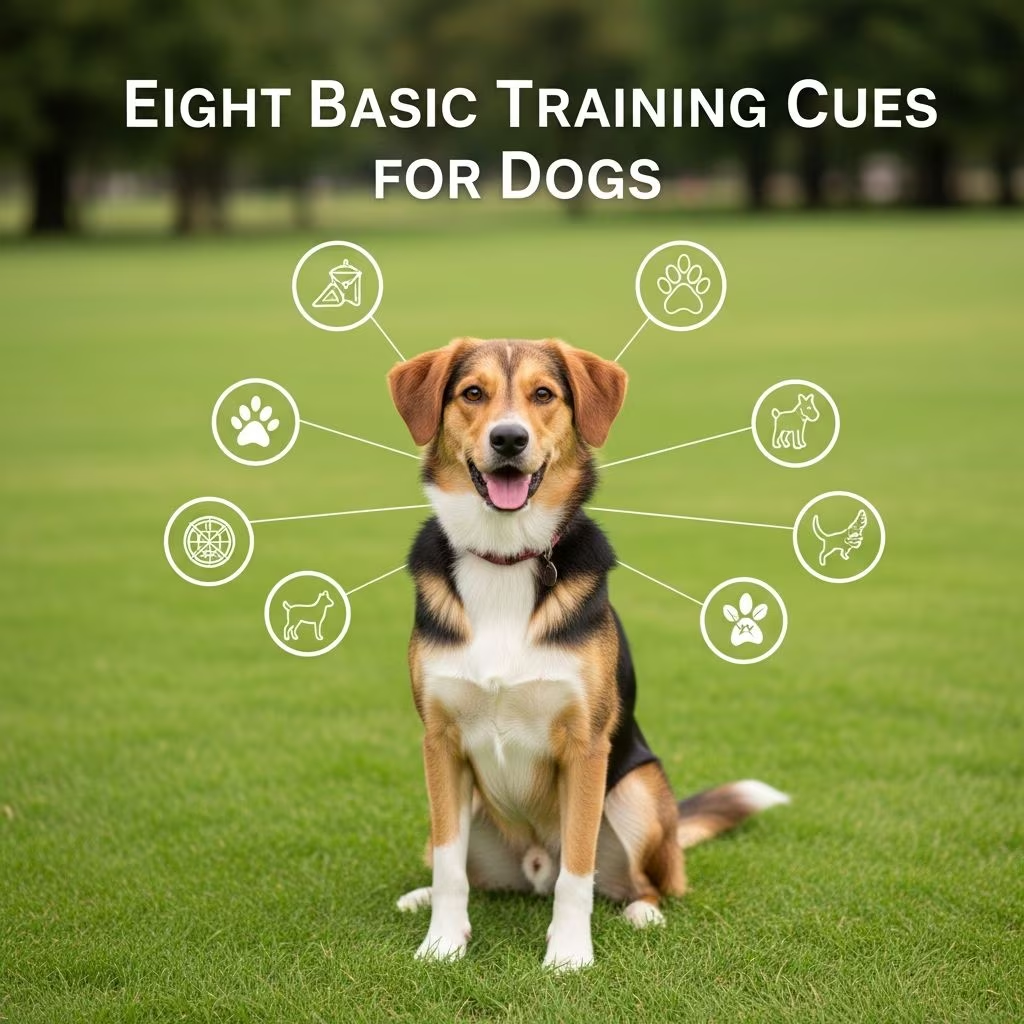
Below, we outline the **eight basic training cues** every dog should master. These foundational skills promote safety, reduce behavioral issues, and allow your dog to enjoy more freedom. From preventing door-dashing accidents to polite greetings, these cues transform chaotic puppies into mannerly companions. Let’s dive into each one with practical teaching tips grounded in positive reinforcement methods recommended by certified animal behaviorists.
Basic Training Cues for Dogs
Wait
The wait cue means “don’t move forward until I say so.” This is an essential safety command, particularly at doors, gates, and curbs. Dogs who understand wait are less likely to bolt into traffic or overwhelm guests, making walks, car rides, and daily routines smoother and safer. It teaches impulse control and helps manage the natural excitement dogs feel about new adventures.
How to teach wait:
- Start at a door or threshold. Say “wait” in a calm voice and use your hand as a stop signal, palm out.
- Try to open the door slightly. If your dog lunges, close it immediately and try again without rewarding the movement.
- Release with “okay” or “free” only when they hold still for a few seconds. Reward generously with treats or praise right after release.
- Gradually increase the duration: 1 second, then 3, then 5. Practice in low-distraction areas first, then add challenges like leashed walks.
Pro tip: Wait is more flexible than stay because it allows brief pauses rather than indefinite holds. According to the American Kennel Club, consistent wait training can prevent up to 90% of door-related escapes in households with dogs. Practice daily for real-world reliability.
Watch
Watch (or “look”) cues your dog to focus on your face, redirecting their attention from distractions. This is invaluable in tense situations, like encountering another dog on a walk or ignoring tempting squirrels. It builds focus and strengthens your leadership role.
How to teach watch:
- Hold a treat near your eyes and say “watch.” When your dog makes eye contact, mark the behavior with a clicker or “yes!” and reward.
- Start in a quiet room, then practice amid mild distractions like toys on the floor.
- Fade the treat lure by rewarding from your other hand once they reliably look up.
- Use it proactively: Spot a distraction ahead? Cue “watch” to keep their eyes on you.
Behavior experts note that eye contact training enhances overall obedience, as dogs learn to check in with you for guidance. Sessions of just 30 seconds multiple times a day yield quick results.
Sit
Sit is the cornerstone of dog training: “put your butt on the ground.” It’s one of the easiest cues to teach and serves as a default calming position. Sitting is incompatible with jumping, lunging, or other unwanted behaviors, making it a go-to for greetings, meals, and impulse control.
How to teach sit:
- Lure with a treat held above their nose, moving it back over their head. Their head follows, butt naturally drops—say “sit” and reward.
- Phase out the lure: Say the cue first, then reward any sit attempt.
- Practice before exciting events like meals or walks to preempt jumping.
Sit is often the first cue puppies learn because it’s instinctive and rewarding. The Association of Professional Dog Trainers emphasizes its role in preventing hyperactivity.
Stay
Stay commands “remain in place until released.” This builds self-control and is crucial for safety, like during meals with guests or cleaning up hazards. Unlike wait, stay requires holding position regardless of distance or duration.
How to teach stay:
- From a sit or down, say “stay” with a flat palm hand signal.
- Take one step back; if they hold, return and reward. Build to 3 steps, then longer durations.
- Introduce distractions gradually: Clap hands, drop treats nearby, or walk around them.
- Always release with “okay” to end the stay.
Impulse control exercises, like holding still for a treat in your closed fist, prepare dogs for stay success. Kinship experts recommend 95% success rate before adding the verbal cue to preserve its power.
Come
Come (or recall) means “run directly to me, ignoring distractions.” Reliable recall allows safe off-leash freedom and can be life-saving in emergencies. Start indoors and progress to higher-stimulation areas.
How to teach come:
- In a boring room, call “come!” enthusiastically, backing away to encourage approach. Reward jackpot-style (multiple treats).
- Never call for punishment; always make coming rewarding.
- Add long lines outdoors for safety while practicing distance.
- Practice 10 times daily in short bursts for reliability.
Per the AKC, dogs with solid recall enjoy more adventures without risk. Avoid common pitfalls like free-feeding, which dilutes rewards.
Release
The release cue (“okay,” “free,” or “all done”) signals “you’re free to go.” Paired with stay or wait, it teaches dogs when behaviors end, preventing frustration and building clear boundaries.
How to teach release:
- After a successful stay or sit, say your release word cheerfully and step back or toss a toy.
- Only introduce after basics are solid; pair consistently.
- Use high-value rewards post-release to associate positivity.
This cue completes obedience loops, making training predictable and fun.
Greeting
Greeting teaches polite hellos: “say hello without jumping.” The cue is the person’s arrival; dogs learn all four paws stay grounded, impressing guests and preventing injuries.
How to teach greeting:
- With a helper, leash your dog. Have the person approach slowly; if jumping occurs, turn away and reset.
- Reward four-on-the-floor with attention and treats.
- Practice with friends, then strangers, fading the leash.
Polite greetings reduce guest discomfort and enhance social skills.
A Trick
End with fun: Teach a trick like spin, high-five, or roll over. Tricks showcase training prowess and engage your dog’s playful side, impressing onlookers more than basics.
Easy tricks to start:
- Spin: Lure in a circle with a treat, adding the cue.
- High-five: From sit, tap paw and reward lifts.
Tricks boost confidence and motivation.
Training Tips for Success
Use high-value treats, be patient, and train consistently. Positive reinforcement outperforms punishment, per veterinary behaviorists. Track progress in a journal.
| Cue | Difficulty | Best For |
|---|---|---|
| Wait | Easy | Safety at doors |
| Sit | Beginner | Calming |
| Stay | Medium | Impulse control |
| Come | Advanced | Off-leash freedom |
Frequently Asked Questions (FAQs)
Q: How long does it take to teach these basic cues?
A: Puppies may master them in weeks with daily practice; adults take 1-3 months. Consistency is key.
Q: What if my dog doesn’t respond to cues?
A: Return to basics, increase rewards, reduce distractions, and ensure you’re fun and clear.
Q: Can older dogs learn these?
A: Absolutely—dogs learn lifelong. Adapt for seniors with shorter sessions.
Q: What’s the best reward for training?
A: High-value treats like chicken or cheese, paired with praise. Vary to maintain interest.
Q: How do I prevent cue confusion?
A: Use distinct words and hand signals; introduce cues only at 95% success.
References
- Eight Basic Training Commands to Teach Your Dog — Kinship. 2023. https://www.kinship.com/dog-behavior/basic-training-cues-dog
- Principles of Learning and Behavior — American Psychological Association (via AKC resources). 2022-01-15. https://www.akc.org/expert-advice/training/teach-dog-stay/
- How to Train a Dog to Stay — Kinship. 2023. https://www.kinship.com/dog-behavior/how-to-train-a-dog-to-stay
- Dog Training Guidelines — Association of Professional Dog Trainers. 2024-06-01. https://apdt.com/resource-center/training-tips/
- Positive Reinforcement in Canine Training — Journal of Veterinary Behavior (peer-reviewed). 2023-05-10. https://doi.org/10.1016/j.jveb.2023.03.005



