

Basic Dog Training Commands: Stay
The stay command is one of the most fundamental and valuable skills you can teach your dog. Whether you’re protecting your pet from dangerous situations, maintaining order in your home, or simply establishing yourself as a calm and confident leader, teaching your dog to stay is an essential part of responsible dog ownership. This comprehensive guide will walk you through the process of training your dog to stay, breaking down the methodology into manageable steps that work for dogs of all ages and temperaments.
Why the Stay Command Matters
Before diving into the training process, it’s important to understand why the stay command is so critical. The stay command can literally save your dog’s life by preventing them from bolting into traffic, running after other animals, or engaging in other dangerous behaviors. Beyond safety, the stay command is a building block for many other advanced obedience skills and helps establish a structured environment where your dog understands boundaries and expectations. A well-trained dog that can stay on command is also a more welcome guest in social situations, whether at the veterinarian’s office, a friend’s home, or during family gatherings.
Understanding the Three D’s of Dog Training
The foundation of teaching any dog command, particularly the stay command, relies on understanding and properly implementing the three D’s: Duration, Distance, and Distraction. These three elements work together to create a comprehensive training framework that helps your dog build the necessary skills gradually and without becoming overwhelmed.
Duration: Building Staying Power
Duration refers to how long your dog maintains the stay position. When beginning training, duration should be your primary focus. Start with very short intervals—just one to two seconds—and gradually increase the time as your dog demonstrates reliability. This approach prevents frustration and sets your dog up for success rather than failure. The key is to add approximately one second at a time to the duration, ensuring minimal mistakes and building confidence in both you and your dog. Once your dog can reliably stay for about ten seconds in both sit and down positions, you can begin adding other elements of training.
Distance: Expanding Your Dog’s Awareness
Distance refers to how far away you are from your dog while they maintain their stay. Many handlers make the mistake of adding distance too quickly, which confuses the dog and creates unnecessary failures. Start by taking just one or two steps away from your dog before returning and rewarding. Repeat this pattern multiple times, then gradually increase the distance over many training sessions. It’s crucial to master duration before significantly increasing distance, as the combination of both elements simultaneously can be overwhelming for your dog.
Distraction: Maintaining Focus
Distraction refers to any environmental factors that might pull your dog’s attention away from the stay command. This can include other people, animals, toys, sounds, or exciting events happening nearby. The final stage of training involves gradually introducing distractions to help your dog learn that the stay command takes precedence over environmental temptations. However, distraction training should only begin once your dog has mastered both duration and distance in a controlled environment.
Preparing for Training
Before you begin teaching your dog to stay, gather the necessary supplies and create the right conditions for success. You’ll need high-value treats—small pieces of food that your dog finds extremely rewarding. Many trainers recommend using treats that are different from everyday training treats, something your dog only receives during stay training sessions. Choose a quiet location with minimal distractions for initial training sessions, such as your living room or a low-traffic area of your yard.
Timing is also important. Train your dog when they’re alert but not overly energetic. Avoid training sessions right after exercise or when your dog is tired and unmotivated. Sessions should be short—five to ten minutes maximum—to maintain your dog’s focus and enthusiasm. Consistency is critical; practice several short sessions throughout the day rather than one long session.
Step-by-Step Training Guide
Step 1: Teaching the Position
Begin by having your dog sit or lie down. Either position works well for stay training, though many trainers recommend starting with the down position as it naturally encourages a more settled state. Use your regular sit or down command to get your dog into position. Ensure your dog is comfortable and calm before proceeding. Some trainers find it helpful to practice in both positions eventually, as this helps the dog generalize that “stay” means “hold whatever position you’re in,” regardless of whether they’re sitting or lying down.
Step 2: Introducing the Verbal Cue and Hand Signal
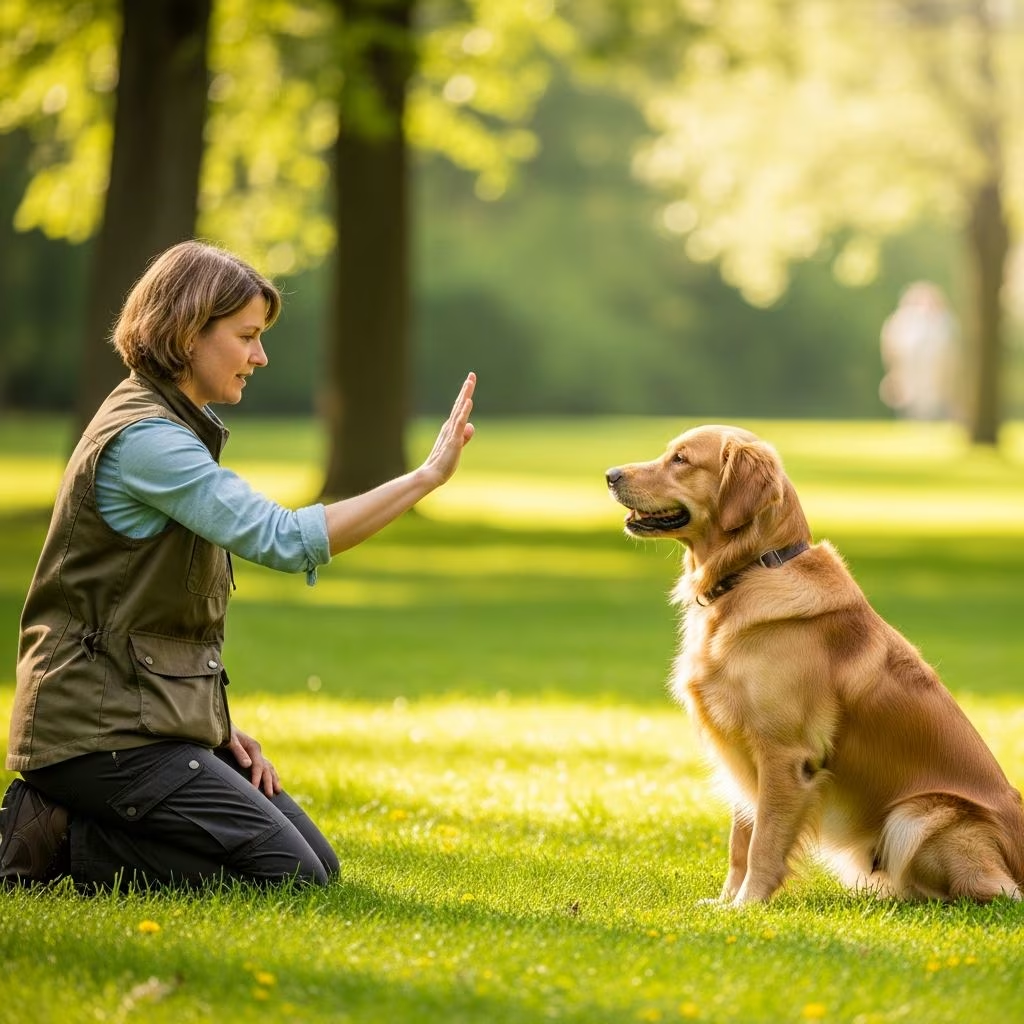
Once your dog is in position, introduce the stay command. Say “stay” in a calm, confident voice while simultaneously giving a hand signal—traditionally an open palm held in front of your dog like a stop sign. The combination of verbal cue and hand signal helps your dog understand the command from both auditory and visual perspectives. This is particularly useful in situations where your dog might not hear you clearly, such as at a distance or in noisy environments.
Step 3: Immediate Reward Protocol
Here’s the critical part: immediately after saying stay and giving the hand signal, reward your dog while they remain in position. Initially, you might reward after just one or two seconds. The key is to say a marker word—such as “yes” or “good”—the instant your dog demonstrates the correct behavior, then quickly deliver the treat. Importantly, your dog should not break position to receive the reward. Deliver treats directly to your dog’s mouth while they’re still sitting or lying down. This teaches them that staying in place is the pathway to rewards.
Step 4: Introducing the Release Cue
It’s essential to establish a clear release cue that tells your dog when the stay is finished and they’re free to move. Common release cues include “okay,” “free,” or “release.” After rewarding your dog for holding their stay, deliver the release cue in a happy, encouraging voice, then allow them to get up. You might toss a treat slightly away from them as you say the release word, which encourages them to move out of position. This creates the “on and off switch” that’s crucial for reliable stay training. Without a clear release cue, dogs may become confused about when they’re actually free to move.
Step 5: Building Duration Gradually
Once your dog understands the basic stay with reward cycle, begin gradually extending the duration. Add approximately one second each training session. So on day one, reward after two seconds; on day two, after three seconds, and so forth. This incremental approach is crucial for success. If your dog breaks the stay before you deliver the reward, calmly guide them back to position and start again without any frustration or correction. There’s no benefit to scolding—your dog is learning, and mistakes are part of the process.
While building duration, do not step away from your dog or add distance. Keep your feet planted and reward your dog multiple times during a single stay session. For example, you might re-cue the stay three to five times before giving your final release cue. This helps your dog understand that the stay might continue even after they’ve been rewarded, preparing them for the distance phase of training.
Step 6: Adding Distance Progressively
Only after your dog can reliably stay for approximately ten seconds should you begin adding distance. Start by taking just one or two steps away from your dog, then immediately return and reward. Repeat this pattern multiple times before gradually increasing your distance over many sessions. The slow progression is vital—don’t expect your dog to stay while you leave the room on day one. Instead, progress in small increments: one step, then three steps, then five steps, then to the other side of the room, and eventually to other rooms in your home.
When adding distance, it’s helpful to remember that it takes time to walk away from and back to your dog. Therefore, practicing a ten-second stay duration before adding distance helps the dog adjust to both elements in a balanced way.
Step 7: Introducing Controlled Distractions
The final stage of training involves gradually introducing distractions. Only begin this phase after your dog has mastered both duration and distance in a controlled environment. Start with mild distractions and work your way up to more challenging scenarios. For example, you might have a family member walk past while your dog stays, then progress to having another dog nearby, or training in a park with minor distractions.
An important tip: learn to recognize signs that your dog is about to break their stay, and reward them before they do. If you notice your dog’s weight shifting or their eyes tracking a distraction, mark and reward the moment before they break. This proactive approach sets your dog up to win rather than fail.
Common Mistakes to Avoid
Understanding common training mistakes helps you avoid derailing your progress. One frequent error is progressing too quickly through the three D’s. Trainers often add distance before the dog has mastered duration, or introduce distractions before the dog can handle distance reliably. Moving slowly is always the better approach.
Another mistake is allowing your dog to break the stay without calmly resetting. If your dog gets up before the release cue, simply lead them back to their original position without frustration and try again. Inconsistency in release cues can also create problems. Always use the same word or phrase so your dog clearly understands when they’re free to move.
Additionally, some handlers reward too late or don’t deliver rewards while the dog is still in position. Timing is crucial—the dog must connect the reward with holding the position, not with getting up or moving. Finally, practicing exclusively in controlled environments can create a dog that stays reliably at home but fails in real-world scenarios. Once basic training is solid, regularly practice in different locations and with varying levels of distraction.
Training in Different Positions
While sit and down are the most common stay positions, you can also train your dog to stay in a stand position. Stand stay is particularly useful in grooming situations or veterinary examinations. The training methodology remains the same: introduce the position, add the verbal cue and hand signal, reward while the dog remains in position, introduce the release cue, and gradually increase duration and distance.
Frequently Asked Questions
How long should stay training sessions be?
Keep training sessions short—five to ten minutes maximum—to maintain your dog’s focus and enthusiasm. Multiple short sessions throughout the day are more effective than one long session. Dogs learn through repetition and consistency, so frequent, brief practice is ideal.
What if my dog keeps breaking their stay?
If your dog frequently breaks their stay, you’re likely progressing too quickly. Return to shorter durations or closer distances and rebuild the foundation. Ensure you’re rewarding immediately and consistently. Never scold your dog for breaking—simply reset and try again. Breaking usually indicates the dog isn’t yet ready for the current level of difficulty.
Can I use any release cue?
Yes, you can use any release cue that makes sense to you and is distinct from other commands. “Okay,” “free,” “release,” or “break” all work well. The important thing is consistency—use the same word every time so your dog clearly understands when the stay is finished. Avoid using common words like “good” since you’ll use this as a marker during training.
How long does it typically take to train a reliable stay?
Timeline varies based on individual dogs, but a basic stay with moderate duration and distance typically takes four to eight weeks of consistent practice. A highly proofed stay that works reliably in all situations may take several months. Patience and consistency are key.
Should I use corrections if my dog breaks the stay?
No. Positive reinforcement-based training is far more effective and humane. If your dog breaks the stay, it indicates they’re not yet ready for that level of difficulty. Simply reset and practice at an easier level. Corrections create fear and confusion, whereas rewards build enthusiasm and clear understanding.
Can I teach stay to an older dog?
Absolutely. Dogs of any age can learn the stay command. The training methodology remains the same regardless of age. Older dogs sometimes learn even faster than puppies because they have better impulse control naturally. Age is not a barrier to learning this valuable skill.
References
- How to Train Your Dog to Stay: Step-by-Step Guide — Happy Hounds Dog Training. 2024. https://happyhoundsdogtraining.ca/how-to-train-your-dog-to-stay-step-by-step-guide/
- Training ‘stay’ vs. ‘wait’ — Cornell University College of Veterinary Medicine, Riney Canine Health Center. 2024. https://www.vet.cornell.edu/departments-centers-and-institutes/riney-canine-health-center/canine-health-information/training-stay-vs-wait
- Train Your Dog To Stay — RSPCA (Royal Society for the Prevention of Cruelty to Animals). 2024. https://www.rspca.org.uk/adviceandwelfare/pets/dogs/training/stay



