

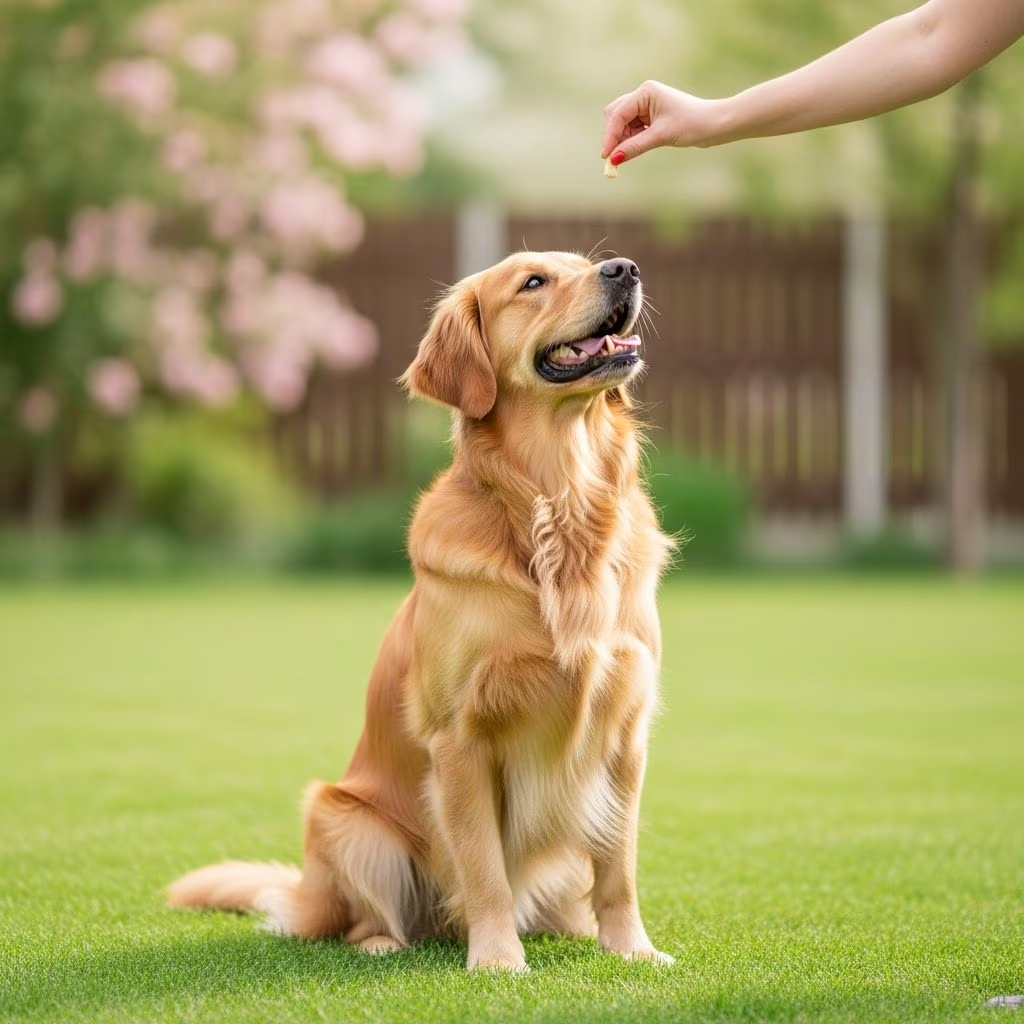
Basic Dog Training Commands: Teaching Your Dog to Sit
The “sit” command is one of the most fundamental and essential commands in dog training. It serves as the foundation for many other behaviors and is often the first command dog owners teach their pets. Whether you have a new puppy or an adult dog, mastering the sit command opens doors to more advanced training and creates better communication between you and your furry companion.
Why Teach Your Dog to Sit?
Teaching your dog to sit provides numerous practical benefits for both you and your pet. A dog that knows how to sit on command can be better controlled in various situations, from greeting guests at the door to waiting patiently at the veterinarian’s office. The sit command also helps establish you as a leader and builds a stronger bond between you and your dog through positive reinforcement and clear communication.
Beyond practical applications, the sit command serves as an excellent starting point for obedience training. Once your dog masters sitting, they’re better equipped to learn additional commands like “stay,” “down,” and “come.” This foundational command teaches dogs to focus on you and respond to your cues, which is essential for their safety and your peace of mind.
Understanding the Sit Command
Before diving into training methods, it’s important to understand what the sit command actually means. When you give the “sit” command, you’re asking your dog to lower their rear end to the ground while keeping their front legs straight. This position is natural for dogs, which makes it an ideal command to start with during training.
The beauty of the sit command is that dogs naturally sit throughout the day. Your job as the trainer is to capture this behavior, label it with a verbal cue or hand signal, and reinforce it so your dog performs it on command. Understanding this natural behavior makes teaching sit much easier and more effective.
Preparation Before Training
Successful dog training requires proper preparation and the right tools. Before you begin teaching your dog to sit, gather the following essentials:
- High-value treats that your dog loves and will work for
- A clicker device (optional but highly recommended)
- A quiet, distraction-free training space
- Patience and a positive attitude
- Short training sessions (5-10 minutes)
Choosing the right treats is crucial for successful training. Select small, soft treats that your dog can eat quickly without much chewing. This allows for faster reinforcement and more repetitions in each training session. Consistency in treat type helps your dog stay motivated throughout the training process.
Method 1: Luring Technique
The luring technique is one of the most popular and effective methods for teaching a dog to sit. This method uses a treat to guide your dog into the sitting position naturally.
Step-by-Step Luring Process
Step 1: Position Yourself and Your Dog
Stand in front of your dog in a relaxed position. Hold a treat close to your dog’s nose, just out of their reach. Make sure you have their full attention before proceeding.
Step 2: Lure the Sit Position
Slowly move the treat upward toward the top of your dog’s head. As your dog’s nose follows the treat, their rear end will naturally lower toward the ground due to the physics of their body movement. Most dogs will sit as they watch the treat move upward. The moment their rear touches the floor, mark the behavior with a word like “yes” or use a clicker if you have one.
Step 3: Reward Immediately
The instant your dog’s bottom touches the ground, give them the treat and praise enthusiastically. Timing is critical in dog training—the faster you reward the behavior, the clearer the connection becomes for your dog.
Step 4: Release and Repeat
Encourage your dog to stand up by stepping backward or moving away. Once they’re standing, repeat the process. Aim for 5-10 repetitions per training session to keep your dog engaged and motivated.
Method 2: Capturing the Sit Behavior
Capturing is an alternative method that takes advantage of your dog’s natural sitting behavior throughout the day. This method is particularly effective for dogs who already sit frequently.
How to Capture:
Simply watch your dog during their normal activities. When they sit naturally—whether they’re waiting for something or settling down—immediately mark the behavior with your marker word or clicker and reward them with a treat. Repeat this process consistently throughout the day whenever you notice your dog sitting naturally.
After several days of capturing the sit behavior, start saying the word “sit” just as your dog begins to sit naturally. Eventually, your dog will make the connection between the word and the action, and they’ll respond to your verbal cue.
Using Clicker Training for Sit
Clicker training is a science-backed method that uses a distinctive clicking sound to mark the exact moment your dog performs the desired behavior. A clicker provides precise timing that helps dogs understand exactly which action earned them a reward.
Getting Started with Clicker Training:
First, establish the clicker as a predictor of rewards. Click the device and immediately give your dog a treat. Repeat this 10-15 times over several sessions until your dog associates the click sound with incoming rewards.
Applying the Clicker to Sit Training:
Once your dog understands that the clicker means a reward is coming, use it during sit training. As soon as your dog’s rear touches the ground, click immediately and follow with a treat. The click precisely marks the moment of good behavior, making it crystal clear to your dog what they did right.
Clicker training accelerates the learning process because of this precision. Dogs trained with clickers typically learn commands faster than those trained with only verbal markers, as the distinct clicking sound is easier for them to distinguish and remember.
Adding the Verbal Cue
Once your dog reliably sits in response to the lure or capturing method, it’s time to add the verbal cue “sit.” This step teaches your dog to respond to your voice command.
Introducing the Verbal Cue:
Before giving the hand signal or lure, say the word “sit” clearly and enthusiastically. Immediately follow with your established hand signal or lure. When your dog sits, mark the behavior and reward. Repeat this sequence many times over several training sessions.
Transitioning to Voice Alone:
Gradually reduce your reliance on the hand signal. Start saying “sit” and give a smaller, less obvious hand gesture. Eventually, your dog will respond to the verbal cue alone without needing the lure or hand signal. This transition should happen gradually to ensure your dog doesn’t become confused.
Hand Signals and Visual Cues
Many dogs respond exceptionally well to hand signals, which can be particularly useful in noisy environments or at a distance. Teaching a hand signal for sit involves similar principles to verbal training.
Developing a Hand Signal:
Choose a clear, consistent hand motion for sit. A common signal is lifting your hand upward with an open palm or using a subtle upward movement. Pair this hand signal with the verbal cue “sit” during training, and gradually phase out the verbal cue as your dog becomes more reliable with the hand signal alone.
Hand signals can be particularly valuable for situations where verbal communication is difficult, such as training a dog in a noisy environment or working from a distance.
Building Duration in the Sit
Teaching your dog to sit is one thing; getting them to hold the sit position is another. Building duration—the length of time your dog stays sitting—is crucial for practical applications.
Gradual Duration Training:
Start by rewarding your dog for very short sits—even just a second or two. Use the “ABC method” by mentally singing the alphabet while your dog sits, gradually working through more letters before rewarding. This creates a natural progression that doesn’t overwhelm your dog.
The Release Cue:
Introduce a release word like “okay” or “free” to indicate when your dog can get up from the sit. Consistently using a release cue prevents your dog from assuming they can break position whenever they want. Always reward your dog for holding the sit position until you give the release cue.
Adding Distance to the Sit
Once your dog can sit and hold the position for several seconds, you can gradually increase the distance between you and your dog during training.
Distance Training Steps:
Start by placing your dog in a sit position, moving one step away, and immediately rewarding. Gradually increase the distance to two steps, then three, working up to greater distances over multiple training sessions. If your dog breaks position, simply reset and try from a shorter distance.
Building distance teaches your dog that the sit command applies regardless of where you are, making it a more reliable and practical command in real-world situations.
Adding Distractions
Real-world situations rarely involve quiet training rooms free from distractions. Training your dog to sit amid distractions is essential for practical obedience.
Progressive Distraction Training:
Begin with minimal distractions and gradually increase them as your dog becomes more reliable. Start in quiet rooms, then progress to busier areas of your home, your yard, and eventually public spaces like parks. Introduce visual distractions like toys, movement, or other people only after your dog reliably sits in quieter environments.
Maintaining Success:
When adding distractions, ensure your dog can still succeed reliably. If they struggle with sit amid certain distractions, go back to a less distracting environment and rebuild from there. The goal is continuous progress without overwhelming your dog.
Common Training Mistakes to Avoid
Several common mistakes can hinder your dog’s learning process and make training less effective:
- Physically forcing the sit: Never push your dog’s rear down into a sitting position. This can be confusing or even cause injury, and it prevents your dog from learning to make the choice to sit on their own.
- Inconsistent rewards: Randomly rewarding sometimes and not others confuses your dog about when sitting is worthwhile. Be consistent with reinforcement during the learning phase.
- Poor timing: Rewarding too late or too early can cause your dog to associate rewards with the wrong behavior. Practice marking and rewarding quickly.
- Unclear verbal cues: Use the same word and tone each time. Saying “sit” in different ways or changing the word to “sit down” confuses your dog.
- Training sessions that are too long: Dogs have limited attention spans. Keep training sessions short and end on a positive note.
- Skipping the release cue: Without a clear release cue, your dog never learns when they can break position, making the command less reliable.
Troubleshooting Sit Training Challenges
My dog won’t sit even with treats:
If your dog isn’t sitting despite your luring efforts, try using higher-value treats they’re more motivated by. You might also be moving the treat too fast—slow down and make the motion more deliberate. Some dogs respond better to capturing their natural sit rather than luring.
My dog sits but keeps breaking position:
This indicates your dog hasn’t fully grasped the duration aspect of sit. Return to rewarding very short sits and gradually build from there. Make sure you’re using a clear release cue so your dog knows when they’re allowed to stand.
My dog sits for treats but ignores the command without them:
Your dog may be too dependent on visible treats. Practice the hand signal without showing the treat first, or lure the sit while the treat is hidden in your other hand. Gradually transition away from treating every single sit as reliability increases.
My dog sits unevenly or with poor form:
If your dog is sitting at an angle or not fully sitting, adjust your treat lure to come straight up from their nose rather than at an angle. Some dogs naturally sit at slight angles, which is fine—don’t obsess over perfect form for basic sit training.
The Implied Stay in Sit
An important concept in dog training is understanding that “sit” should inherently include a stay component. A dog that sits for only a second before popping back up hasn’t truly learned the command’s practical application. Train your dog to understand that “sit” means “sit and wait” until given a release cue.
This implied stay makes the command far more useful in real-world situations like greeting guests, waiting at doors, or sitting patiently during veterinary exams. Building this duration from the beginning creates better habits than teaching sit and stay as completely separate commands.
Transitioning From Training to Daily Life
Once your dog reliably sits on command in training sessions, start incorporating the command into daily life. Ask for a sit before meals, during walks, or when greeting people. This reinforces the command and makes it second nature for your dog.
Consistency is key during this transition. Everyone in your household should use the same cue word and reward your dog consistently when they sit on command. Mixed signals from different family members can confuse your dog and slow their progress.
Advanced Sit Training Applications
Once your dog masters the basic sit, you can apply this foundation to more advanced training. The sit command can be combined with other cues like “stay,” “come,” and “down” to create more complex behavioral chains. Some dogs even learn to sit at a distance or sit in specific contexts like sitting before meals or before going outside.
Frequently Asked Questions About Teaching Your Dog to Sit
Q: At what age can I start teaching my puppy to sit?
A: You can begin teaching puppies to sit as early as 8 weeks old. Puppies have short attention spans, so keep sessions brief (5 minutes or less) and use high-value treats to maintain their interest.
Q: How long does it typically take to teach a dog to sit?
A: Most dogs can learn the basics of sit within a few training sessions, but it can take weeks to generalize the command across different environments and with various distractions. Consistency and repetition are key factors in the timeline.
Q: Can older dogs learn to sit?
A: Absolutely. Dogs of any age can learn to sit. Senior dogs may require more patience and joint-friendly positioning, but the training methods remain the same. There’s no age limit to dog training.
Q: Should I use treats forever when training sit?
A: Not necessarily. Once your dog reliably sits on command, you can gradually reduce treat frequency. Intermittent rewards (giving treats randomly rather than every time) actually help maintain behavior longer-term than constant reinforcement.
Q: What if my dog already knows sit but doesn’t do it reliably?
A: Go back to basics and retrain from scratch as if your dog never learned the command. Use higher-value treats and practice in distraction-free environments. Build back up to reliability before adding distractions again.
Q: Is clicker training necessary to teach sit?
A: Clicker training is not necessary but can be helpful due to its precision in marking behavior. You can teach sit successfully using just verbal markers like “yes” or “good,” though the clicker can accelerate learning for some dogs.
References
- Teach Your Puppy These 5 Basic Cues — American Kennel Club. Retrieved 2025-11-28. https://www.akc.org/expert-advice/training/teach-your-puppy-these-5-basic-commands/
- Top 5 Basic Dog Commands — Best Friends Animal Society. Retrieved 2025-11-28. https://bestfriends.org/pet-care-resources/top-5-basic-dog-commands
- My List of Commands — Obedience Road. Retrieved 2025-11-28. https://www.obedienceroad.com/blog/my-list-of-commands
- Waiting isn’t a Command; It’s a Mindset — Sadie’s Rules K9 Training. Retrieved 2025-11-28. http://www.sadiesrulesk9training.com/blog-posts/wait-command-and-stay-command
- The Art of Teaching Tricks: Fun and Useful Commands for Dogs — Come Sit Stay USA. Retrieved 2025-11-28. https://www.comesitstayusa.com/the-art-of-teaching-tricks/



