Barn Hunt: Unleash Your Dog’s Hunting Instincts
Discover Barn Hunt, the thrilling dog sport that taps into natural hunting skills with safe, fun challenges for all breeds and abilities.
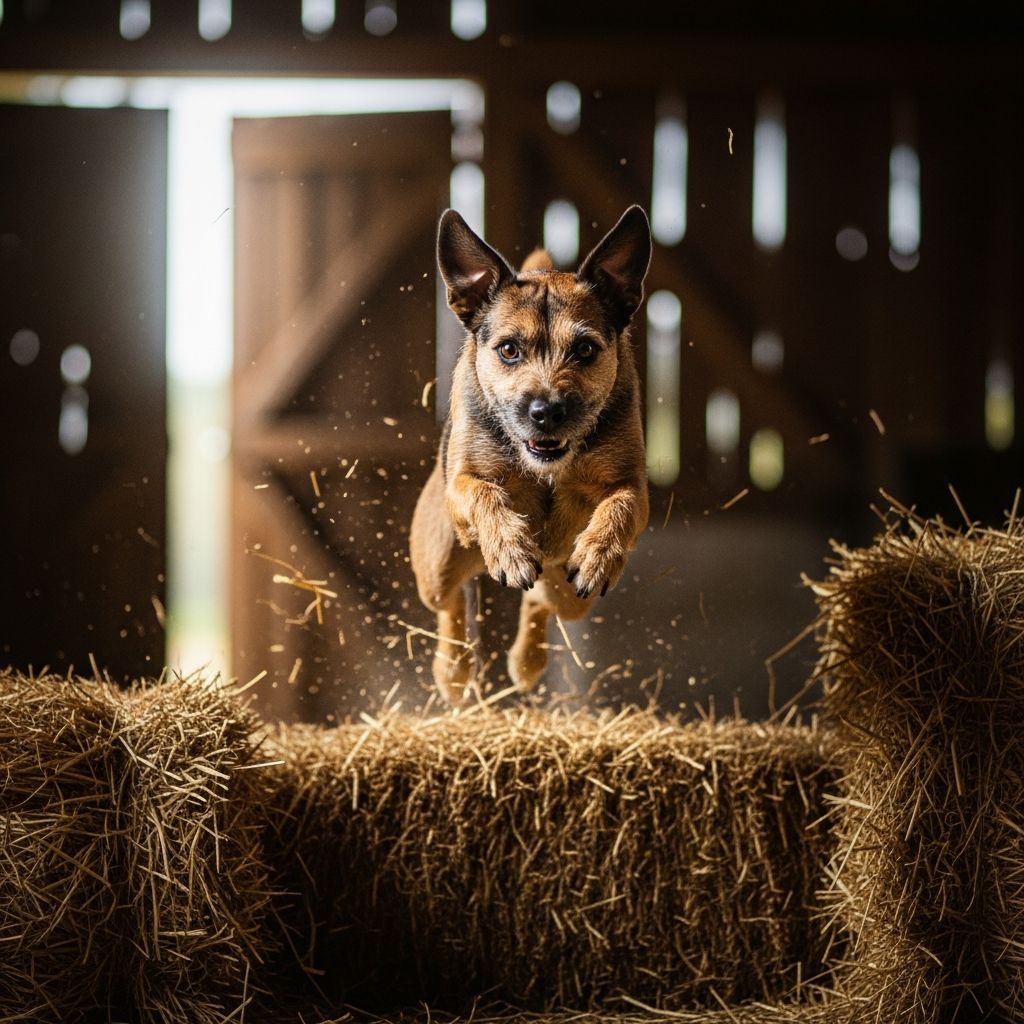
Barn Hunt is an engaging canine sport that simulates the age-old task of vermin control on farms, allowing dogs to use their innate abilities to detect scents, navigate obstacles, and work closely with their handlers. Dogs search through structured mazes of straw or hay bales to locate live rats safely contained in ventilated PVC tubes, combining elements of scent detection, physical agility, and mental focus. This activity is accessible to dogs of any breed, size, or age over six months, as long as they can navigate a tunnel approximately 18 inches wide by 20-22 inches tall.
The Origins and Appeal of Barn Hunt
Developed in 2013 by Robin Nuttall, Barn Hunt emerged as a solution for smaller breeds excluded from traditional earthdog events, drawing inspiration from historical rat catchers who cleared farms of pests using working dogs. The sport quickly gained traction for its inclusivity, welcoming purebreds, mixes, seniors, juniors, spayed/neutered dogs, and even those with disabilities like blindness or mobility aids, provided they meet basic navigation requirements.
What makes Barn Hunt stand out is its emphasis on partnership between dog and handler. Unlike competitive agility where speed trumps all, success here hinges on accurate scent identification and clear communication. Handlers must read subtle cues from their dogs to declare finds correctly, fostering a deep bond. The controlled environment ensures no harm to rats or dogs, with rats being hand-raised, treated well, and rotated to prevent stress.
Core Skills Tested in Barn Hunt
Barn Hunt evaluates a range of canine talents essential for effective hunting:
- Scent Detection: Dogs pinpoint rat-scented tubes hidden under straw amid distractors like empty tubes or bedding.
- Agility and Surefootedness: Navigating bale tunnels, climbs, and elevated paths demands balance and confidence on unstable surfaces.
- Speed and Endurance: Completing tasks within time limits tests stamina in a physically demanding course.
- Handler Responsiveness: Dogs must respond to cues without leads, relying on voice and body language.
- Climbing Ability: Specific levels require scaling bale heights to access hides.
These elements make Barn Hunt ideal for high-drive dogs but adaptable for laid-back pets through introductory classes.
Barn Hunt Competition Levels Explained
Trial structures progress from basic introductions to advanced challenges, with each level specifying rat counts, tunnels, climbs, and time limits. Qualification requires completing all elements without false alerts.
| Level | Rats to Find | Tunnels | Climbs | Max Time | Key Challenges |
|---|---|---|---|---|---|
| Instinct (INT) | 1 | 1 straight | 1 specific bale | 5 min | Pass/fail intro; no title. |
| Novice (NOV) | 1 | 1 straight | 1 specific bale | 8 min | Basic course; empty tubes as distractors. |
| Open (OPN) | 2 | 1 straight, 1 specific bale tunnel | 2 specific bales | 8 min | Added complexity in hides. |
| Senior (SGN) | 3 | 2 specific bale tunnels | 3 specific bales | 8 min | More distractors, varied elevations. |
| Master (MST) | 4-5 | 3 specific bale tunnels | 4 specific bales | 8 min | High difficulty; path choices. |
Teams earn legs toward titles by qualifying multiple times. Placements reward speed among qualifiers, but titling is non-competitive. AKC recognizes titles from Barn Hunt Association (BHA) events since 2013, recording them on dog records with a registration number.
Essential Rules for Competitors
To maintain fairness and safety, BHA enforces strict guidelines outlined in their official rulebook. Dogs compete “naked”—no collars, leashes, toys, or dangling items inside the ring. Leashes are removed in the start area and handed off.
- Eligibility: Dogs 6+ months, able to tunnel 18×20-22 inches. Includes bitches in season (with protocols), blind dogs (except certain classes), cart-assisted, or minor wounds (judge’s call). Lame/ill dogs are dismissed.
- Handler Rules: No coaching from outside; stay within bounds. Call “rat” only on clear indications, then restrain dog for safe tube extraction. False calls end the run non-qualifying (NQ).
- Rat Safety: Rats in aerated PVC tubes with treats; monitored and swapped as needed. Handlers prevent rough handling of tubes.
- Sportsmanship: Honesty, respect required. Aggression leads to dismissal; smoking banned near bales.
Clubs host trials with multiple rings; entry requires BHA membership ($32 one-time).
Getting Started: Training Your Dog for Barn Hunt
Preparation builds confidence in scent, tunnels, and bales. Start at home:
- Instinct Building: Use rat-scented toys or tubes in familiar spaces to encourage nose work.
- Tunnel Training: Set up mini straw piles; lure through with high-value treats, gradually increasing height/length.
- Bale Climbs: Stack safe platforms; reward bold exploration, desensitizing to textures.
- Indication Training: Teach a clear “find” signal like sit/stare/bark; proof with blanks.
- Distraction Proofing: Introduce empty tubes, litter to mimic trials.
Practice in 3-5 minute sessions, 3-4 times weekly. Clubs offer fun tests or instinct trials for low-pressure debuts. Video trials to study handler reads.
Benefits for Dogs and Owners
Barn Hunt provides mental stimulation rivaling puzzle toys, burning energy equivalent to long hikes. It boosts confidence in shy dogs via successes and channels prey drive safely, reducing unwanted chasing. Owners gain skills in observation and timing, strengthening teamwork. Social events foster community with like-minded enthusiasts.
For seniors or reactive dogs, lower levels offer achievable goals. Data from BHA shows broad participation, with titles earned by mixes and giants alike.
Hosting and Participating in Events
Trials are affordable, using rentable bales and volunteer rat wranglers. Regional events follow BHA rules; nationals have elite criteria. Find via barnhunt.com calendar. Enter online; bring proof of BHA/AKC number for titling.
Frequently Asked Questions (FAQs)
What if my dog is afraid of heights or tunnels?
Start slow with positive reinforcement; many overcome fears through gradual exposure.
Are the rats harmed?
No—rats are safe in ventilated tubes, rotated, and pampered with treats.
Can large breeds like Labs compete?
Yes, if they fit the tunnel; Newfoundlands have succeeded.
How much does it cost?
Membership $32; trials $20-30/run. Bales reusable.
What’s the dress code for dogs?
Naked—no collar/leash in ring.
Advanced Strategies for Titling Success
High-level handlers pattern courses, use verbal markers like “good search,” and proof against stress. Track times; aim under 4 minutes for placements. Cross-train with nosework for scent reliability.
References
- Official Barn Hunt Competitor Rulebook 2025 — Barn Hunt Association. 2025. https://www.barnhunt.com/rules/barnhunt_competitorrules_2025.pdf
- A Fun Sport for All Dogs: Barn Hunt — American Kennel Club. 2023-04-01 (updated). https://www.akc.org/canine-partners/a-fun-sport-for-all-dogs-barn-hunt/
- Barn Hunt Title Recognition — American Kennel Club. 2023. https://www.akc.org/sports/title-recognition-program/barn-hunt/
- Barn Hunt Rules Simplified — The Jungle Pack (Mackenzie Patterson). 2023. https://thejunglepack.substack.com/p/barn-hunt-rules-simplified
- Barn Hunt for Dogs — Whole Dog Journal. 2023. https://www.whole-dog-journal.com/lifestyle/barn-hunt-for-dogs/
- What is Barn Hunt? — Dogs On Call, Inc. 2023. https://dogsoncall.org/news/what-is-barn-hunt/
- What is Barn Hunt? A Growing Scent Work Dog Sport — Wear Wag Repeat. 2023. https://wearwagrepeat.com/what-is-barn-hunt/
Similar Articles





Read full bio of Sneha Tete