

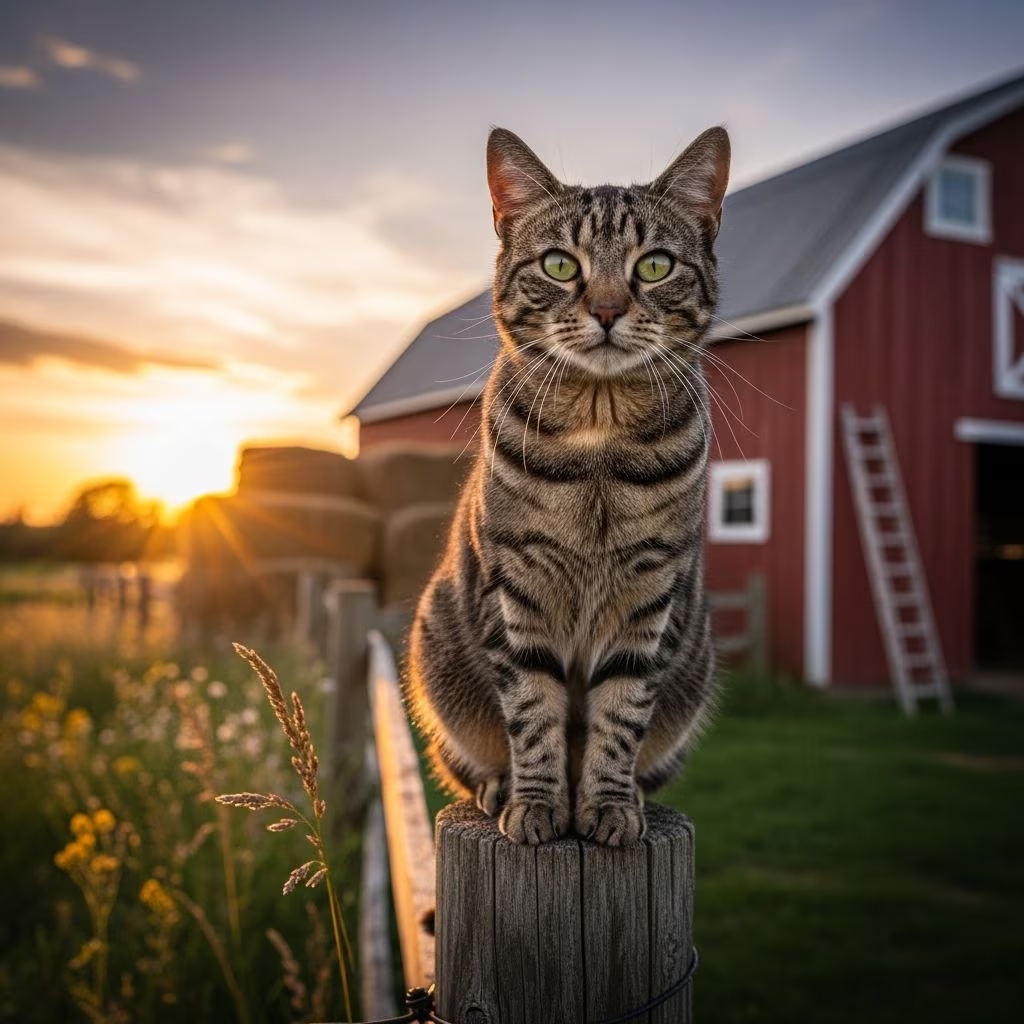
Barn cats, also known as farm cats, are rugged, independent felines bred or adapted for outdoor life on farms, where they excel at pest control by hunting rodents in barns, silos, and fields. These working cats trace their roots back over 9,000 years to early agricultural settlements, where wildcats like the African wildcat (Felis lybica) partnered with humans to protect grain stores. Today, specific breeds stand out for their hunting prowess, resilience, and adaptability to harsh rural environments.
What Is a Barn Cat?
A **barn cat** is a domestic cat, often mixed-breed or of hardy purebred lines, that lives primarily outdoors in a semi-feral or feral state on farms. Unlike indoor pets, barn cats are self-sufficient hunters tasked with controlling rodents, insects, and other pests that threaten crops and livestock feed. Historical evidence dates their role to 7,500 B.C., making them among the first domesticated cats. They thrive with minimal intervention—shelter, food supplements, and veterinary care—while patrolling large areas independently.
Barn cats offer a natural, chemical-free alternative to traps or poisons, reducing disease risks from rodents like hantavirus or leptospirosis. Farmers value their low-maintenance nature; colonies of 5-10 cats can protect expansive properties effectively.
History of Barn Cats
The saga of barn cats begins with humanity’s agricultural revolution around 9,000 years ago. As farmers stored surplus grain, rodents proliferated, drawing wildcats to settlements for easy prey. This symbiosis led to gradual domestication, with ancient Egyptians venerating cats as protectors by 7500 B.C.. Cats spread via trade routes to Europe, Asia, and the Americas, becoming fixtures in barns and ships.
In colonial America, barn cats were essential for safeguarding food stores in grain-filled barns. Semi-wild and unnamed, they formed colonies in haylofts, earning respect through utility rather than affection. The early 20th century’s farm expansion marked their golden age, with entire litters raised amid livestock operations. Modern barn cats continue this legacy, often sourced from rescues as feral or semi-feral Domestic Shorthairs.
Best Barn Cat Breeds
Not all cats suit barn life; ideal breeds boast strong hunting instincts, physical endurance, weather resistance, and independence. Below are seven top breeds, each with traits honed for farm work.
1. American Shorthair
The **American Shorthair** is a quintessential barn cat: sturdy, medium-built with strong muscles and balanced proportions for reliability in pest control. Developed for practicality, they exhibit observant, measured behavior—watching before pouncing on prey. Their short, dense coat repels dirt and water, ideal for dusty barns or rainy fields.
- Hunting Style: Patient stalkers excelling at rodents in tight spaces.
- Temperament: Adaptable to farm bustle, tolerant of livestock and changes.
- Care Needs: Minimal grooming; thrives on kibble supplements and shelter.
Why perfect for barns: Their no-nonsense utility mirrors colonial farm cats.
2. Maine Coon
**Maine Coons**, among the largest domestic cats, feature long limbs, tufted ears, and thick, water-resistant coats suited to cold climates. Deliberate movers with curiosity and problem-solving skills, they thoroughly patrol barns and lofts. Calm and tolerant, they handle noise, machinery, and animals without stress.
Why This Cat Is a Good Fit
- Large frame for outdoor endurance.
- Curious exploration covers vast areas.
- Composed in busy farm settings.
Bred for ship and farm life, they’re gentle giants with top hunting chops.
3. Manx
Instantly recognizable by their tailless or stubby tails, **Manx** cats boast powerful hind legs for explosive jumps and agile turns—perfect for chasing vermin in hay bales. Determined and persistent, they repeat successful hunting routes, ensuring thorough coverage. Their dense coat withstands variable weather.
- Strengths: Superior balance despite tail mutation; quiet, efficient hunters.
- Farm Role: Excels in lofts and storage, undeterred by heights.
4. Siberian
**Siberians**, from Russia’s harsh winters, have waterproof, dense triple coats and solid, powerful builds. Confident climbers, they patrol vertically and horizontally with thoughtful, non-impulsive actions. Fun-loving with strong instincts, they’re socially tolerant yet self-sufficient.
- Climate Adaptation: Thrives in cold, wet conditions.
- Personality: Resilient explorers ideal for large homesteads.
5. Chartreux
The muscular **Chartreux** moves quietly and efficiently, with a dense coat for cooler regions. Observant and reserved, they monitor from vantage points before acting, preferring routine patrols.
Why This Cat Is a Good Fit
- Stealthy steps for undetected hunting.
- Robust frame for outdoor rigors.
- Attentive monitoring suits barns.
6. Siamese
Sleek **Siamese** are alert, vocal hunters with lean builds for speed. Highly curious, they detect changes instantly and adapt routines quickly. Playful and mentally sharp, they’re top barn performers despite their elegant looks.
- Hunting Edge: Vocal alerts and persistent chasing.
- Fit: Engaged in dynamic farm environments.
7. Turkish Angora
Graceful **Turkish Angoras** navigate heights effortlessly with slim bodies and light steps. Confident vertical explorers, they perch high to survey territories, adapting swiftly to changes. Agile and aware, they’re suited for lofts and expansive barns.
Barn Cat Care Guide
Caring for barn cats prioritizes their health and productivity without domestication.
Providing Shelter and Food
Build insulated, draft-free shelters (e.g., straw-filled boxes in barns) elevated from ground moisture. Feed high-protein kibble daily—1/4 to 1/2 cup per cat—near shelter to condition them. Supplement with scraps but prioritize hunting for fitness.
Veterinary Care and Population Control
Core vaccines (rabies, FVRCP), annual check-ups, and spay/neuter prevent overpopulation and roaming. Flea/tick preventives and deworming combat parasites from prey. Monitor for injuries via weekly checks.
Training and Socialization
Schedule feeding builds trust; use treats for recall. Territorial breeds suit solitary roles, while relaxed ones like Maine Coons handle herds. Semi-feral rescues adapt via barn cat programs.
Pros and Cons of Barn Cats
| Pros | Cons |
|---|---|
| Natural pest control, cost-effective | Requires vet commitment; weather risks |
| Low daily maintenance; self-sustaining | Predator threats; potential litters if unsterilized |
| Protects property health (e.g., no rodenticides) | Less affectionate than pets |
Frequently Asked Questions (FAQs)
Q: What breeds make the best barn cats?
A: Top picks include American Shorthair, Maine Coon, Manx, Siberian, Chartreux, Siamese, and Turkish Angora for their hunting skills and resilience.
Q: Do barn cats need food if they hunt?
A: Yes, supplement with kibble for nutrition, especially in lean seasons; hunting alone may not suffice.
Q: Can feral cats become barn cats?
A: Absolutely—many rescues place sterilized ferals as working cats after trap-neuter-return.
Q: How many barn cats for a farm?
A: 1-2 per acre or 5-10 for average barns to maintain control without overcrowding.
Q: Are barn cats friendly?
A: Varies; many remain semi-feral but tolerate humans providing food. Socialization improves bonds.
References
- 7 Cat Breeds Adapted To Barn Hunting — World Animal Foundation. 2023. https://worldanimalfoundation.org/cats/cat-breeds-adapted-to-barn-hunting/
- Meow and Then: History of Barn Cats — Morning Ag Clips. 2023. https://www.morningagclips.com/meow-and-then-history-of-barn-cats/
- What Is a Barn Cat? A Comprehensive Vet-Approved Guide — Catster. 2023. https://www.catster.com/lifestyle/what-is-a-barn-cat/
- Barn Cat Breeds: The Best Working Cats for Farms and Homesteads — WoPet. 2023. https://wopet.com/cats/barn-cat-breeds/
- Farm cat — Wikipedia. 2023. https://en.wikipedia.org/wiki/Farm_cat
- Barn Cat Heritage — Way of Cats. 2023. https://www.wayofcats.com/blog/barn-cat-heritage/71876



