

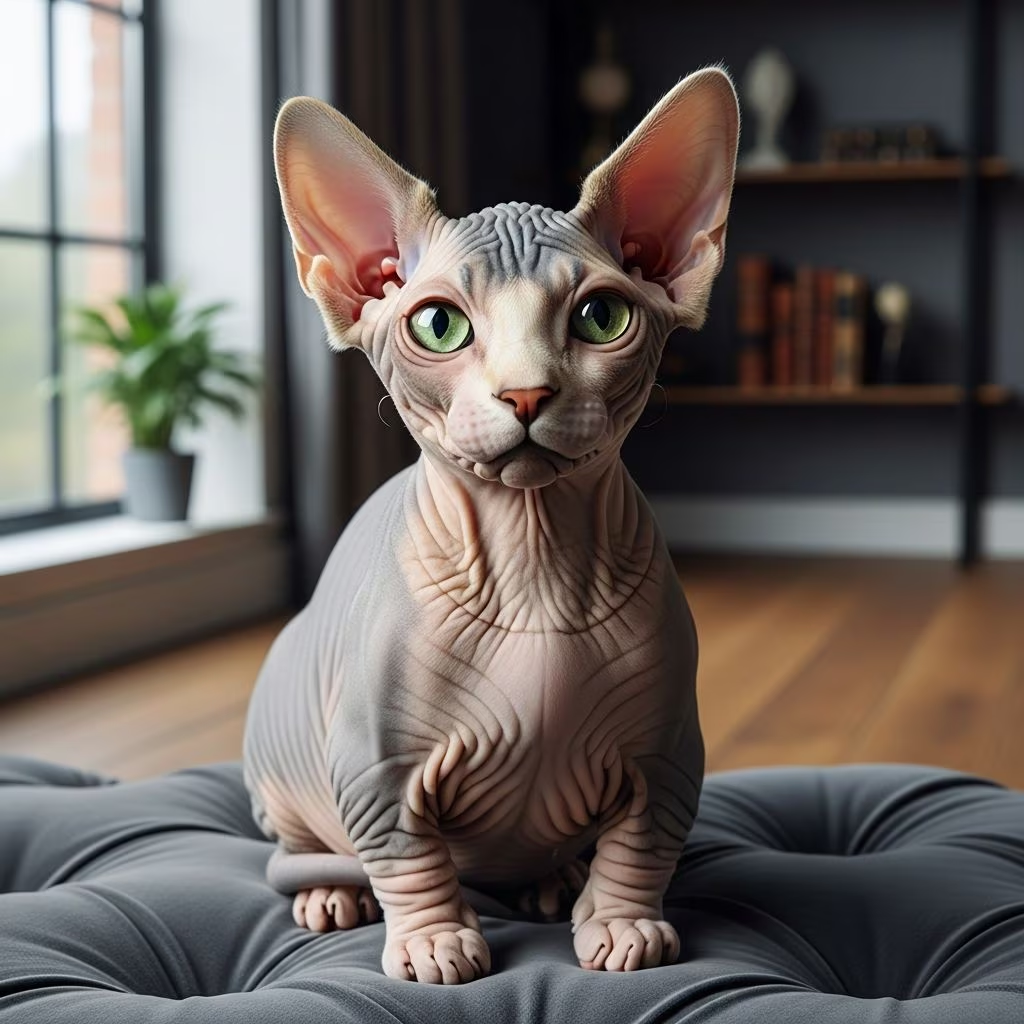
The Bambino cat stands out as a captivating hybrid breed, blending the hairless elegance of the Sphynx with the compact stature of the Munchkin. These diminutive felines, often likened to playful badgers or chipmunks due to their low-slung gait, have captured hearts since their emergence in the mid-2000s. Known for their wrinkled skin, stubby legs, and boundless energy, Bambinos offer a one-of-a-kind companionship that’s both entertaining and endearing.
Origins and Development of the Bambino Breed
The story of the Bambino begins in 2005 when North American breeders Stephanie Osborne and Pat Osborne crossed the Sphynx cat, famous for its recessive hairless gene, with the Munchkin, noted for its dominant short-leg mutation. This intentional pairing aimed to create a cat that combined bald beauty with a dwarf-like build, resulting in the first registered litter that year.
The International Cat Association (TICA) quickly acknowledged the breed’s potential by classifying it as an experimental new breed in 2006, though full championship status remains elusive due to ongoing debates over genetic ethics. Critics question the health implications of merging two breeds with notable mutations, yet enthusiasts praise the Bambino’s vitality and charm. Today, the breed is also registered with the Registry of Rare and Exotic Felines (REFR), reflecting its growing, albeit niche, presence in the feline world.
Named after the Italian word for ‘baby,’ the Bambino retains a perpetual kittenish allure into adulthood, with its large eyes, rounded features, and playful demeanor. This relatively recent development distinguishes it from ancient breeds, positioning it as a modern marvel in cat fancy circles.
Distinctive Physical Characteristics
Bambino cats are immediately recognizable by their unique physique. Standing merely 8-9 inches at the shoulder, they weigh between 5-9 pounds, with males typically 25% larger than females, showcasing clear sexual dimorphism. Their bodies are athletic and muscular, featuring an elongated yet sturdy frame with a broad chest, powerful shoulders, and a full belly that conveys robustness rather than fragility.
| Feature | Description |
|---|---|
| Head | Average-sized, modified wedge shape with rounded contours, chiseled cheekbones, flat forehead, straight nose with stop, short muzzle, prominent whisker pads, and strong chin |
| Neck | Medium length, muscular, and rounded, especially imposing in mature males |
| Legs | Short (about 1/3 body height), thick, muscular; hind legs slightly longer than front, with wrinkly skin |
| Paws | Oval, puffy pads, 5 toes front/4 hind, long flexible digits |
| Tail | Long, thick at base, tapering to rounded tip |
| Eyes & Ears | Large, almond-shaped or round eyes widely set; large upright ears at head edges |
The skin, often described as velvety or chamois-like, may appear completely bald (‘rubber’ texture) or covered in a fine, less-than-2mm peach fuzz on areas like legs, ears, tail, and nose bridge. Colors range from white and cream to black, chocolate, and patterns, with abundant wrinkles enhancing their exotic appeal. Breed standards penalize overly long legs, excessive hair, or fragile builds, emphasizing a balanced, healthy form.
Temperament and Behavioral Traits
Bambinos are renowned for their sociable, intelligent, and affectionate nature, forming deep bonds with all family members, including children and other pets. Highly people-oriented, they crave attention and often follow owners room-to-room, seeking laps for warmth and cuddles.
- Playful Energy: Despite short legs, they exhibit remarkable agility, darting with a badger-like waddle, chasing toys, and performing vertical leaps onto low surfaces.
- Gentle Disposition: Mild-tempered and non-aggressive, ideal for households seeking a low-drama companion.
- Curious Explorers: Intelligent and inquisitive, they thrive on interactive toys and environmental enrichment.
- Social Butterflies: Excel in multi-pet homes and with visitors, rarely shying away from new faces.
Though needy for affection, Bambinos balance independence, avoiding clinginess. Their outgoing personality makes them poor candidates for long solo periods, potentially leading to mischief if bored.
Essential Grooming and Daily Care
Caring for a Bambino’s hairless skin requires diligence. Weekly baths with mild, cat-safe shampoo remove oils, preventing acne or odors; dry thoroughly to avoid chills.
- Wipe skin folds daily with hypoallergenic wipes to curb bacterial buildup.
- Apply cat-specific moisturizers or oils (e.g., coconut) for softness and UV protection.
- Nail trims bi-weekly; ear cleaning monthly to prevent wax accumulation.
- Brush ‘coated’ variants gently to manage fine fur.
Protect from cold with sweaters or heated beds; use sunscreen outdoors. High-quality, protein-rich diets support their muscular build, fed 2-3 small meals daily to maintain ideal weight.
Health Considerations and Lifespan
As a young breed, long-term data is limited, but known risks stem from parent genetics. Munchkin heritage raises concerns for lordosis (spine curvature) and pectus excavatum (chest deformity), though incidence varies. Sphynx traits increase skin sensitivity to temperature extremes, sunburn, and infections.
Vigilance for hypertrophic cardiomyopathy (HCM), common in Sphynx, is advised via annual ultrasounds. Routine vet checks, vaccinations, and parasite prevention are crucial. With proper care, Bambinos live 12-15 years.
Ethical breeding from health-tested lines minimizes issues; avoid breeders ignoring TICA guidelines on mutation pairings.
Ideal Homes and Lifestyle Fit
Bambinos flourish in active, loving environments. Families, apartments, or homes with gentle kids/dogs suit them best; allergy sufferers appreciate minimal shedding.
- Pros: Entertaining, loving, low fur.
- Cons: High grooming, warmth needs, rarity/cost ($1,500-$5,000).
Provide scratching posts, puzzle feeders, and safe climbing spots adapted to their stature. Training responds well to positive reinforcement.
Frequently Asked Questions (FAQs)
Are Bambino cats hypoallergenic?
Partially; minimal dander/fur helps, but skin proteins can trigger allergies. Test exposure first.
Do Bambino cats have mobility issues?
Most navigate adeptly, but very short legs may limit jumps. Monitor spine health.
How often should I bathe a Bambino?
Weekly or bi-weekly to manage oils; more if greasy.
Can Bambinos live in cold climates?
They need warmth; indoors with heating/sweaters essential.
Are Bambinos good with children?
Yes, patient and playful, but supervise young kids.
Bringing a Bambino into Your Life
Adopting a Bambino promises joy from a cat that’s equal parts lap warmer, entertainer, and explorer. Research reputable breeders via TICA/REFR, prioritize health certifications, and prepare for their special needs. These ‘forever kittens’ reward dedication with unwavering loyalty and quirky charm.
References
- Bambino Cat Breed: Info, Pictures, Temperament & Traits — Catster. 2023-10-15. https://www.catster.com/cat-breeds/bambino-cat/
- Bambino cat breed, photo — TopCat. 2024-05-20. https://en.top-cat.org/breeds-articles/254
- What is a Bambino Cat? Facts on the Hairless Breed — ASPCA Pet Insurance. 2024-02-10. https://www.aspcapetinsurance.com/resources/bambino/
- Bambino Cat Breed Profile — Litter-Robot. 2023-11-05. https://www.litter-robot.com/blog/bambino-cat/
- Bambino Cat: Personality & Cat Breed Characteristics — Holistapet. 2024-01-12. https://www.holistapet.com/blogs/cat-breeds/bambino
- Get to Know Bambino Cats: Unique Breed, Gentle Companion — Wildcat Family. 2023-09-18. https://www.wildcatfamily.com/blog/z-domestic-cats/get-to-know-bambino-cats-unique-breed-gentle-companion/
- All about Bambino cat breed — Animalia.bio. 2024-03-22. https://animalia.bio/pets/bambino-cat



