

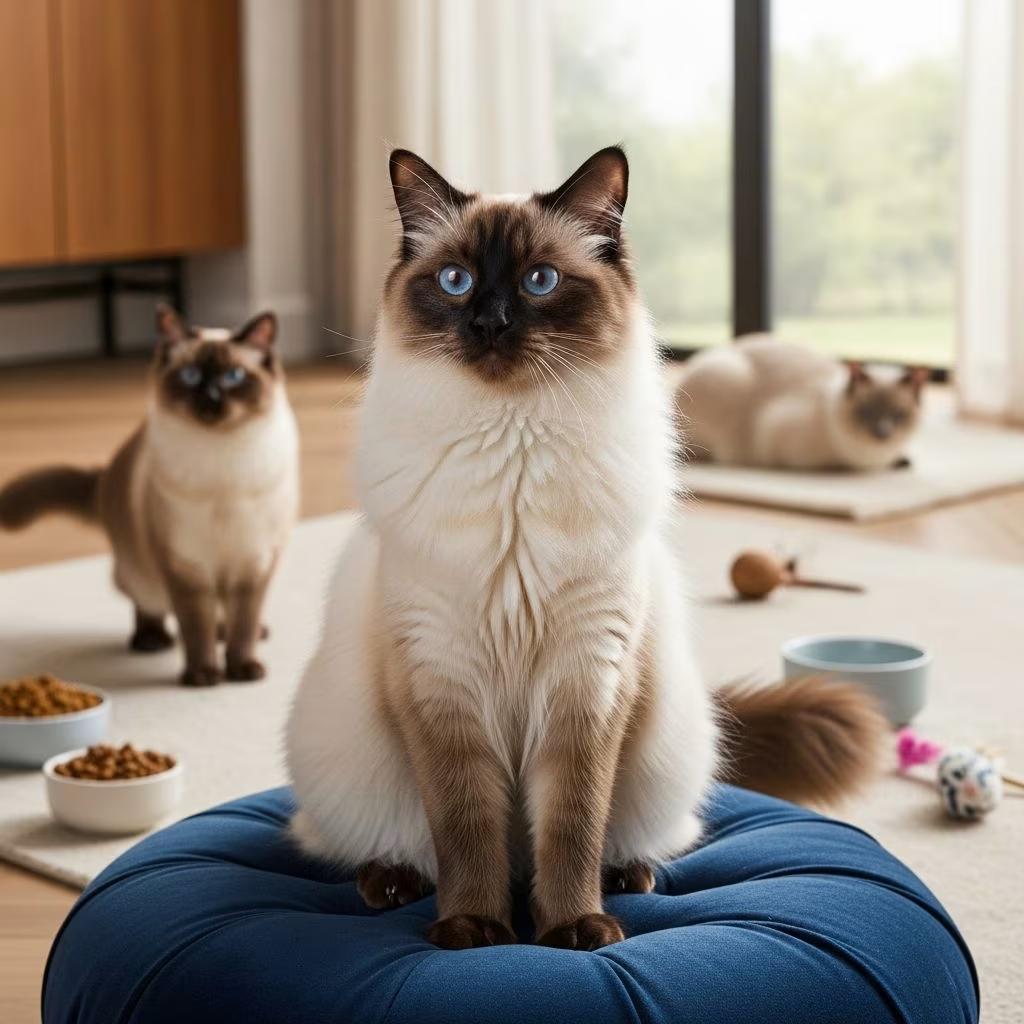
The Balinese cat, often called the long-haired Siamese, captivates with its elegant silhouette, silky coat, and striking **color points**. Originating as a natural mutation from Siamese litters in the mid-20th century, this breed was officially recognized by the Cat Fanciers’ Association (CFA) in the early 1970s, initially in four traditional colors: seal point, chocolate point, blue point, and lilac point. The International Cat Association (TICA) expanded recognition to include red, cream, tabby patterns, tortoiseshells, and bicolor points by 1979. These cats feature a creamy body with darker pigmentation on cooler extremities like the ears, face, paws, and tail—a trait due to the Himalayan gene, which limits pigment production in warmer body areas. Balinese kittens are born white or cream and develop points by four weeks, with colors intensifying with age or in cooler climates. Renowned for sapphire-blue eyes (in non-red/cream variants), playful personalities, and vocal nature, Balinese cats thrive as affectionate companions. This guide details **11 key color variations**, drawing from CFA and TICA standards, helping enthusiasts identify and appreciate these stunning felines.
The 11 Types of Balinese Cats
Balinese colors mirror Siamese but extend to more patterns in some registries. Traditional points form the foundation, with dilutions, reds, torties, and lynx adding variety. Below, we explore each, noting body color, point shades, eye color, and unique traits.
1. Seal Point
The **seal point** is the hallmark Balinese color, defining the breed since Siamese imports to the West. It features a pale fawn to cream body, warm-toned, shading lighter on the underbelly, with deep seal brown (nearly black) points on the mask, ears, legs, and tail. Nose leather and paw pads match the points. Deep blue eyes pierce through this classic look. As the most common variation, seal points embody the breed’s elegant contrast.
2. Chocolate Point
A lighter, more contrasting take on seal, the **chocolate point** boasts an ivory body without shading, accented by warm milk-chocolate points. Subtle chocolate splashes may appear on the body. Eyes are blue, slightly lighter than seal’s. Cinnamon-pink nose leather and paw pads complete this warm palette, popular for its soft sophistication.
3. Blue Point
**Blue point** Balinese display a bluish-white body, cold-toned, fading to pure white underneath, with deep blue-gray points. Slate-colored nose and paw pads align with the cool hues. Often mistaken for lilac, this diluted seal point offers a washed-out gray elegance and those signature blue eyes.
4. Lilac Point
Rare and striking, the **lilac point** has a glacial white body, frosty gray points with pinkish undertones (diluted chocolate), lavender-pink nose and paw pads, and vivid blue eyes. In bright light, points shimmer with lilac hues, making this one of the lightest, most ethereal variations.
5. Red Point (Flame Point)
Dubbed **flame point** by breeders, the red point features a clear white to cream body with bright apricot to deep red/orange points, preferring deeper shades without barring. Flesh or coral pink nose and pads, plus blue-green to gold eyes, evoke fiery tails. Rare and vivid, lynx versions are even scarcer.
6. Cream Point
The **cream point**, a dilute red, sports a white to light cream body with pale cream points on extremities. Eyes range blue-green to gold. Easily confused with red points in kittens, full distinction emerges by one year. Delicate and subtle, it’s cherished for its soft glow.
7. Seal Tortie Point
**Parti-color** wonders, seal tortie points have a pale fawn-cream body, mottled with cream in maturity, and points of seal brown randomly patched with red/cream. Nose and pads show seal with pink mottling. Eye color varies; this mottled beauty adds whimsy to the traditional palette.
8. Chocolate Tortie Point
Similar but warmer, **chocolate tortie** offers an ivory body (mottled later) with milk-chocolate points speckled red/cream. Cinnamon nose/pads with pink mottling. The random patching creates unique patterns on each cat, blending chocolate elegance with tortie flair.
9. Blue Cream Point
A diluted tortie, **blue cream** features bluish-white to platinum body, frosty gray points mottled pale cream. Lavender-pink nose/pads with cream mottling. Cooler than others, it resembles a smoky pastel dream.
10. Lynx Point
**Lynx points** introduce tabby stripes on points in any base color (seal lynx, chocolate lynx, etc.). Bodies remain pale, points show ghost striping or bold bars. For example, seal lynx has brown banded hairs; eyes blue except in red/cream. TICA embraced these in 1979 for dynamic texture.
11. Other Variations (Smoke, Bicolor)
Advanced patterns include **smoke points** (white undercoat tipped with color, e.g., seal smoke) and **bicolor points** (points with white, like seal point bicolor). CFA’s Javanese division covers these, expanding options. Rare finds like cinnamon or fawn lynx add further diversity.
Balinese Cat Color Genetics and Development
Balinese colors stem from the **colorpoint gene** (cs/cs genotype), restricting pigment to cooler areas. Kittens emerge cream-white, points visible by 4 weeks, maturing fully at 1-2 years. Age, climate, and health influence intensity—warmer environments lighten coats. Breeding adheres to CFA/TICA: traditional four points in Balinese division, expanded in Javanese. Vets note points may “rust” from sun or diet, but true colors persist.
| Color Type | Body Color | Point Color | Eye Color | Registry Notes |
|---|---|---|---|---|
| Seal Point | Pale fawn-cream | Deep seal brown | Deep blue | CFA Traditional |
| Chocolate Point | Ivory | Milk chocolate | Blue | CFA Traditional |
| Blue Point | Blush white | Deep blue-gray | Blue | CFA Traditional |
| Lilac Point | Glacial white | Frosty gray-pink | Blue | CFA Traditional |
| Red Point | Clear white | Apricot-red | Blue-green/gold | TICA/CFA Javanese |
| Cream Point | White-cream | Pale cream | Blue-green/gold | TICA/CFA |
Care Tips for Balinese Cats of All Colors
Regardless of hue, Balinese need weekly grooming for their medium-long, silky coats that shed minimally. Dental care prevents staining light bodies; sun protection avoids color fading. Provide cool environments for vivid points, balanced diet for coat health, and mental stimulation matching their intelligent, social nature.
Frequently Asked Questions
What are the main Balinese cat colors?
The CFA recognizes four primary colors: seal, chocolate, blue, and lilac point. TICA and others include red, cream, tortie, lynx, and more.
Do all Balinese have blue eyes?
Traditional points (seal, chocolate, etc.) have deep blue eyes. Red and cream variants have blue-green to gold.
Are Balinese cats hypoallergenic?
Not truly, but low-shedding coats make them suitable for many allergy sufferers.
How do Balinese colors develop?
Kittens start white/cream; points appear by 4 weeks, fully maturing in 1-2 years.
What’s the rarest Balinese color?
Lilac point and certain lynx or tortie variations are among the rarest.
References
- 11 Vet-Verified Types of Balinese Cats: Colors, Breeds & Patterns — Catster. 2023. https://www.catster.com/lifestyle/balinese-cats-colors/
- All about Balinese cat breed — Animalia.bio. 2024. https://animalia.bio/pets/balinese-cat
- Balinese — The International Cat Association (TICA). 2024. https://tica.org/breed/balinese/
- Balinese — The Cat Fanciers’ Association (CFA). 2024. https://cfa.org/breed/balinese/
- Balinese Cat Breed Information — Purina UK. 2024. https://www.purina.co.uk/find-a-pet/cat-breeds/balinese



