

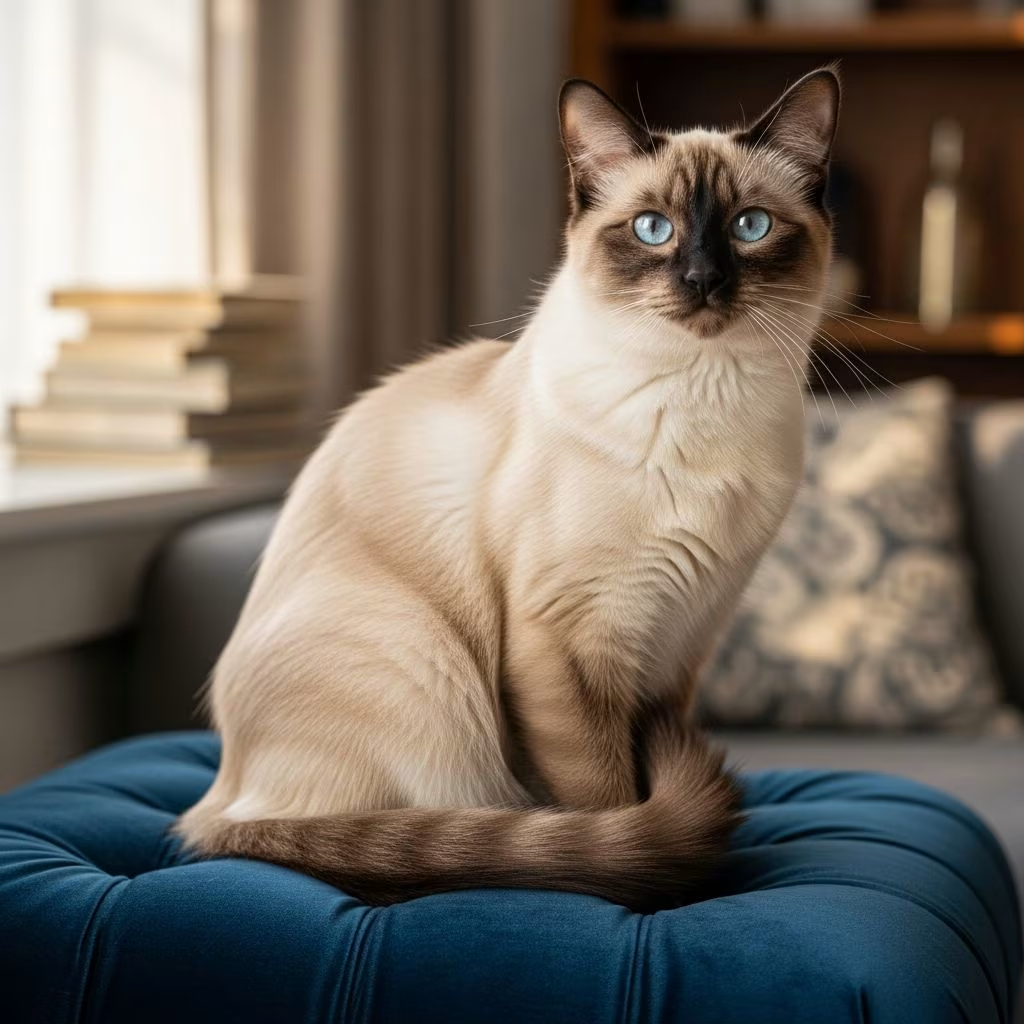
Balinese Cat Breed: A Complete Guide to This Elegant Feline
The Balinese cat is a graceful, medium-sized feline that combines the striking features of its Siamese ancestors with a luxurious semi-long coat. Known for their elegant appearance, talkative nature, and playful demeanor, Balinese cats have become increasingly popular among cat enthusiasts seeking a loyal and interactive companion. This comprehensive guide explores everything potential owners need to know about this captivating breed.
Understanding the Balinese Breed History
The Balinese breed emerged as a natural long-haired mutation of the Siamese cat, developing in the 1950s. Breeders recognized the beauty of these long-haired Siamese variants and began selectively breeding them to establish a distinct breed. Named after the Indonesian island of Bali, these cats embody elegance and sophistication. The breed closely resembles the traditional Siamese in temperament and appearance, but with the added beauty of a silky, medium-length coat that distinguishes them from their short-haired cousins.
Physical Characteristics and Appearance
Body Structure
The Balinese is defined by its **long, tubular body with fine bones and firm muscles**. These cats are medium-sized but appear more delicate due to their slender build. The body maintains graceful, tapering lines from the head to the tail, with shoulders and hips continuing in the same sleek profile. Despite their refined appearance, Balinese cats possess surprising strength and athleticism hidden beneath their elegant exterior.
Key physical features include:
- Long, slender neck
- Fine-boned, long legs with hind legs slightly higher than front legs
- Small, dainty, oval-shaped paws with five toes in front and four behind
- Tight abdomen with no flabby appearance
- Males typically larger than females
Head and Facial Features
The Balinese head is distinctly **wedge-shaped with large, pointed ears** that appear to continue the triangular line of the face. The ears are set high and wide, contributing to the breed’s alert appearance. The deep blue, slanted almond-shaped eyes are one of the breed’s most striking features, and they convey an intelligent, curious expression. Modern Balinese feature a more pronounced wedge-shaped head with a long, tapering muzzle compared to the traditional type.
The Signature Tail
The Balinese tail is exceptionally distinctive, featuring a **magnificent plume of long hair that spreads outward like a feather**. The tail hair can extend up to five inches in length, creating an elegant, flowing appearance. This plumed tail serves as a striking visual characteristic that immediately identifies the breed.
Coat and Coloring
Coat Type and Texture
Unlike most long-haired cat breeds, the Balinese coat is **medium-length, soft, and silky without a dense undercoat**. The absence of a fluffy undercoat is significant, as it reduces the likelihood of matting and tangling substantially. The coat typically measures between half an inch to two inches in length across the body, with the longest hair appearing on the tail. This unique coat structure not only contributes to the breed’s elegant appearance but also makes grooming considerably easier than other long-haired breeds.
Color Patterns
Balinese cats display colorpoint patterns inherited from their Siamese ancestry. The breed exhibits numerous recognized color variations:
| Color Pattern | Description |
|---|---|
| Seal Point | Pale fawn to cream body with deep seal brown points and matching nose leather and paw pads |
| Chocolate Point | Ivory body with milk-chocolate colored points and cinnamon-pink nose and paw pads |
| Blue Point | Bluish-white body shading to white on stomach and chest, with deep blue points and slate-colored paw pads |
| Lilac Point | Glacial white body with frosty grey and pinkish-toned points and lavender-pink paw pads |
| Red Point | Clear white body with bright apricot to deep red points and flesh or coral pink paw pads |
| Cream Point | Clear white body with cream-colored points and tan to pinkish-beige paw pads |
Temperament and Personality
Social and Vocal Nature
Balinese cats are **highly social and notably vocal felines** that share their Siamese ancestors’ tendency to communicate frequently. They are talkative companions who enjoy expressing themselves to their owners, though typically at a lower volume than Siamese cats. These cats thrive on human interaction and form strong bonds with their families. They are often described as **dog-like in personality**, exhibiting loyalty and affection comparable to canine companions.
Playful and Curious Disposition
The Balinese breed is characterized by **high energy levels and a playful, inquisitive nature**. These cats maintain an intense interest in the activity and happenings around their environment. They enjoy interactive play and games, making them entertaining companions for active households. Their curiosity drives them to explore their surroundings, investigate new objects, and participate in family activities.
Attention Requirements
Balinese cats are quite **clingy and high-maintenance in terms of attention**, preferring constant companionship and interaction with their owners. They don’t do well when left alone for extended periods and require a family that can provide substantial engagement and mental stimulation. These cats need interactive play with scratching posts, cat trees, and elevated perches where they can observe their environment.
Grooming and Coat Maintenance
The Balinese coat requires **regular grooming once weekly** to maintain its silky texture and prevent occasional matting. The lack of undercoat significantly reduces grooming demands compared to other long-haired breeds. Regular brushing helps remove loose hair, distributes natural oils throughout the coat, and allows owners to bond with their cats. Despite being considered a long-haired breed, Balinese cats are actually **easier to maintain than many other long-haired breeds** due to their unique coat structure.
Hypoallergenic Properties
Balinese cats are often considered **hypoallergenic, as they produce less Fel d 1 protein**, the primary allergen that causes cat allergies in humans. While no cat breed is completely hypoallergenic, Balinese cats may be a more suitable option for allergy-prone individuals compared to other breeds. However, potential owners with severe allergies should spend time with the breed before committing to ensure compatibility.
Health and Physical Condition
The Balinese is generally a **healthy and active breed** with a natural inclination toward staying fit. These cats have a healthy thirst for adventure and activity, which helps them maintain proper weight when provided with adequate exercise space. However, owners should take care that their Balinese does not become obese, as the breed’s fine-boned structure means excess weight can strain the body. A balanced diet combined with adequate playtime and exercise helps maintain optimal health and weight.
Living Environment and Space Requirements
Ideal Home Conditions
The Balinese breed thrives best in homes with **experienced cat owners who can provide extensive outdoor space and a calm environment**. These cats need room to climb, jump, and explore, making vertical space essential. They benefit from window perches where they can observe outdoor activity, as their curious nature drives them to stay mentally engaged.
Socialization and Companionship
Balinese cats are **best suited to homes where they won’t be left alone for extended periods**. They can be left for a few hours but prefer regular human interaction. These felines enjoy the company of other people and can become distressed in isolation. Families or individuals who spend considerable time at home are ideal for this breed.
Family Suitability
While Balinese cats are loving and affectionate, they are **not always ideal for traditional family homes** with very young children. The breed’s need for a calm environment and extensive attention means households with screaming toddlers or chaotic conditions may cause stress. However, in homes with older children or adult-only households where they receive appropriate interaction and peaceful surroundings, Balinese cats excel as devoted companions.
Differences Between Traditional and Modern Balinese
Two distinct types of Balinese cats exist, analogous to their Siamese counterparts. The **traditional type** features a broader head and sturdier overall body structure. The **modern type** displays a more pronounced wedge-shaped head with a long, tapering muzzle, broader ears, and a noticeably more slender and elongated body. Both types retain the characteristic silky coat and colorpoint patterns, but the modern type exhibits more extreme features.
Frequently Asked Questions About Balinese Cats
Q: Are Balinese cats truly hypoallergenic?
A: Balinese cats are not completely hypoallergenic but produce less Fel d 1 protein than many other breeds. They may be more suitable for allergy-prone individuals, though reactions vary by person.
Q: How much exercise do Balinese cats need?
A: Balinese cats are highly energetic and need substantial playtime, climbing opportunities, and interactive engagement daily to stay mentally and physically stimulated.
Q: Do Balinese cats require outdoor access?
A: Balinese cats benefit from extensive outdoor space or access to safe outdoor environments. They need room to exercise and explore, making homes with yards or secure outdoor areas ideal.
Q: How often should Balinese cats be groomed?
A: Weekly grooming is recommended to maintain the coat’s silky texture and prevent matting, though this is less demanding than grooming requirements for other long-haired breeds.
Q: Are Balinese cats good for first-time cat owners?
A: Balinese cats are better suited to experienced cat owners who understand their high attention needs and can provide a calm, engaging environment.
Q: How long do Balinese cats typically live?
A: While specific lifespan data varies, Balinese cats are generally a healthy breed. With proper care, nutrition, and veterinary attention, they can live into their mid-to-late teens.
Q: Do Balinese cats get along with other pets?
A: Balinese cats are social animals that can coexist with other cats and pets, particularly when socialized early. Their playful nature makes them suitable for multi-pet households where they receive adequate individual attention.
Conclusion
The Balinese cat breed represents an exquisite combination of elegance, intelligence, and affectionate companionship. With their striking colorpoint coat, graceful physique, and engaging personality, these cats capture the hearts of dedicated feline enthusiasts. The breed’s lower grooming demands compared to other long-haired cats, combined with reduced allergen production, make them appealing options for suitable households. However, prospective owners must recognize that Balinese cats require experienced handling, substantial attention, calm environments, and active engagement. For individuals or families prepared to meet these needs and provide a loving, interactive home, the Balinese cat offers years of devoted companionship and entertaining personality that few other breeds can match.
References
- Balinese Cat Personality: How Do Balinese Cats Act? — Litter Robot. 2024. https://www.litter-robot.com/blog/balinese-personality/
- Balinese Cat Breed Information — Purina UK. 2024. https://www.purina.co.uk/find-a-pet/cat-breeds/balinese
- Balinese Breed Standard — The Cat Fanciers’ Association (CFA). 2024. https://cfa.org/breed/balinese/
- Balinese Cat — Wikipedia. 2025. https://en.wikipedia.org/wiki/Balinese_cat
- Balinese Cat Breed — Hill’s Pet Nutrition. 2024. https://www.hillspet.com/cat-care/cat-breeds/balinese
- Balinese — TICA – The International Cat Association. 2024. https://tica.org/breed/balinese/



