

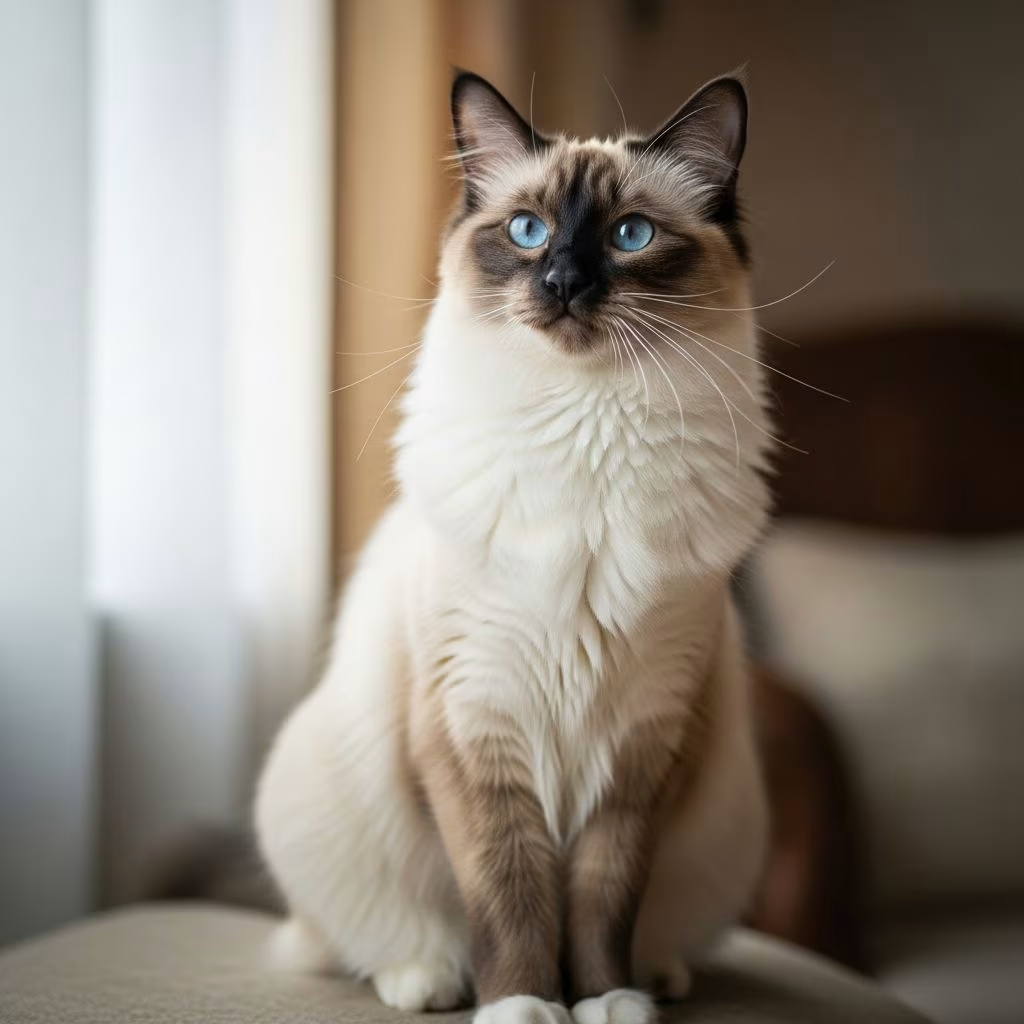
The Balinese cat captivates with its sleek elegance and spirited demeanor, blending the Siamese’s vocal charm with a luxurious semi-long coat. This breed offers companionship that’s both affectionate and engaging, ideal for households seeking an interactive pet.
Origins and Development of the Balinese
Emerging in the mid-20th century, the Balinese traces its roots to long-haired kittens born in Siamese litters, initially viewed as anomalies but soon cherished for their unique beauty. Breeders selectively nurtured these natural mutations, establishing the Balinese as a distinct variety by the 1950s through organizations like The Cat Fanciers’ Association (CFA).
Early enthusiasts named the breed after Bali’s graceful dancers, reflecting its fluid movements and poised appearance. Unlike Persian crosses, Balinese developed purely from Siamese genetics, preserving the pointed color pattern while adding silky medium-length fur. Traditional and modern subtypes evolved, with the former retaining a rounder head and the latter emphasizing a sharper wedge shape.
Recognition grew steadily; by the 1970s, Balinese gained championship status in major registries, including CFA and The International Cat Association (TICA). Their development emphasized health and type, avoiding extreme features that plague some pedigreed cats.
Distinctive Physical Traits
Balinese cats embody refinement with a lithe, muscular frame on fine bones, measuring medium in size—typically 8-15 pounds for adults. Their long, tubular bodies feature slim legs, a slender neck, and a plumed tail that accentuates their dancer-like poise.
The head forms a modified wedge, with large, low-set ears continuing the triangular lines. Striking almond-shaped eyes in vivid blue slant expressively, framed by a straight profile where the chin aligns neatly with the nose tip.
- Body: Graceful and svelte, neither bony nor flabby, with hips no wider than shoulders.
- Legs and Paws: Proportionate and slim, ending in dainty oval paws (five toes front, four rear).
- Tail: Long, tapering to a fine point, adorned with a flowing plume.
Coat Varieties and Color Patterns
The Balinese boasts a single-layered, silky coat of medium length—longest on the tail—lacking a dense undercoat, which minimizes matting and shedding. This makes grooming straightforward compared to fluffier longhairs.
Colorpoints define the breed, with darker “points” on ears, face, legs, and tail contrasting a lighter body. CFA divides Balinese into two color groups:
| Division | Examples | Body Color | Point Color |
|---|---|---|---|
| Balinese | Seal Point, Chocolate Point, Blue Point, Lilac Point | Pale fawn/ivory to bluish-white | Deep seal brown, milk-chocolate, deep blue, frosty grey |
| Javanese | Red Point, Cream Point, Lynx Points, Tortie Points | Clear white or glacial white | Apricot-red, pale cream, barred patterns, mottled red/cream |
Seal points display warm fawn bodies fading to cream on the underbelly, with rich brown extremities. Chocolate points offer ivory bodies and warm chocolate tips, while blue and lilac provide cooler tones. Javanese variants introduce reds, creams, and tabby or tortoiseshell mottling on points, expanding options for diverse aesthetics.
Nose leather and paw pads match point colors, like slate for blue points or cinnamon-pink for chocolates, adding to their harmonious appeal.
Vibrant Personality and Behavior
Balinese cats mirror Siamese vitality: highly social, intelligent, and vocal, often “chatting” in melodic tones to engage their people. They crave interaction, following owners room-to-room and thriving on play, affection, and mental stimulation.
- Playful Energy: Boundless curiosity drives leaping to high perches, chasing toys, and exploring; cat trees and scratchers are essentials.
- Affectionate Bonds: Dog-like loyalty includes greeting at doors, sitting for pets, and sleeping nearby—perfect for families but challenging for frequent absentees.
- Social Nature: They mesh well with other pets and children if introduced properly, disliking solitude.
Though demanding of attention, their lower-volume meows and adaptability make them manageable. Harnessing their smarts with puzzle feeders or training prevents boredom-induced mischief.
Essential Care and Grooming Routines
Grooming suits beginners: the coat’s silkiness requires weekly brushing to distribute oils and check skin, but baths are rare. No undercoat means less shedding, and many find them somewhat hypoallergenic due to lower Fel d 1 production—though allergies vary individually.
Support their athleticism with vertical spaces, interactive toys, and daily play sessions to prevent obesity, given their slender builds. Feed high-quality, portion-controlled diets; males may need monitoring as they grow larger.
Litter training comes naturally; self-cleaning options like Litter-Robot appeal to their fastidious habits. Dental care, nail trims biweekly, and ear cleaning prevent common issues.
Health Considerations and Longevity
Robust genetics from Siamese heritage grant Balinese a lifespan of 12-20 years with proper care. They inherit few breed-specific woes but screen for:
- Hypertrophic cardiomyopathy (HCM): Heart thickening; annual ultrasounds advised.
- Progressive retinal atrophy (PRA): Vision loss; genetic testing available.
- Amyloidosis: Rare liver/kidney deposits.
Veterinary pedigrees from reputable breeders minimize risks. Neutering curbs roaming urges, and vaccinations plus parasite preventives are standard.
Obesity threatens their fine frames—maintain ideal weight through activity. Recent studies affirm their vitality, with many reaching senior years actively.
Ideal Living Environments
Balinese flourish in engaged homes: apartments suit if enriched with climbers, while houses offer exploration space. They adore families, compatible cats, or calm dogs but falter in isolation.
Moderate climates suit their coat; avoid extremes. Interactive owners who converse and play daily ensure happiness.
Bringing Home a Balinese Kitten
Select CFA/TICA-registered breeders emphasizing health testing. Kittens display points from 6-8 weeks, maturing fully by 2-3 years. Budget $800-$2000+, plus lifelong costs. Early socialization fosters well-rounded adults.
Prepare with scratching posts, perches, toys, and food. Transition gradually for bonding success.
Frequently Asked Questions
Are Balinese cats hypoallergenic?
Partially; their low-shedding coat and reduced Fel d 1 make them better for allergy sufferers, but test exposure.
How vocal are Balinese cats?
Quite talkative, with softer Siamese-like meows seeking interaction.
Do Balinese cats get along with dogs?
Yes, many do, especially with proper introductions, due to their social temperament.
What’s the difference between Balinese and Siamese?
Balinese have semi-long coats; otherwise, similar body, personality, and points.
How much grooming do Balinese need?
Weekly brushing suffices; their coat resists mats effectively.
References
- Balinese Cat Personality: How Do Balinese Cats Act? — Litter-Robot. 2023. https://www.litter-robot.com/blog/balinese-personality/
- Balinese Cat Breed Information — Purina UK. 2024. https://www.purina.co.uk/find-a-pet/cat-breeds/balinese
- Balinese Breed Standard — The Cat Fanciers’ Association. 2025. https://cfa.org/breed/balinese/
- Balinese Cat — Wikipedia (informed by primary sources). 2025. https://en.wikipedia.org/wiki/Balinese_cat
- Balinese Cat Breed — Hill’s Pet Nutrition. 2024. https://www.hillspet.com/cat-care/cat-breeds/balinese
- Balinese Breed — The International Cat Association. 2025. https://tica.org/breed/balinese/



