

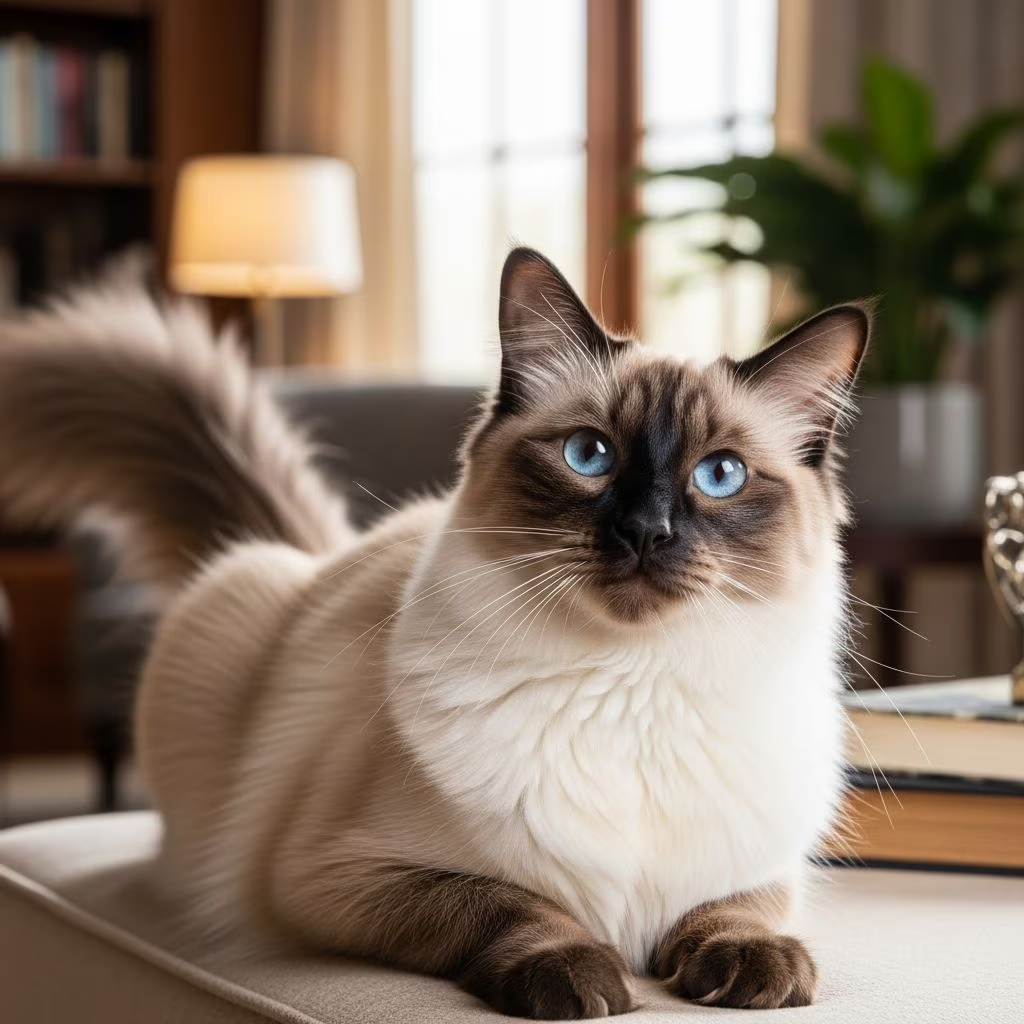
The Balinese cat captivates with its silky, flowing coat and striking blue eyes, blending the elegance of its Siamese heritage with a luxurious long-haired twist. This medium-sized feline offers a perfect mix of playfulness, intelligence, and devotion, making it an ideal companion for those who crave an interactive pet.
Origins and Development of the Balinese
The Balinese cat emerged in the mid-20th century as a natural mutation from Siamese cats, featuring longer fur without altering the core body structure. First recognized in the 1940s and 1950s, these cats arose from Siamese litters where kittens unexpectedly displayed semi-long coats. Breeders selectively nurtured this trait, officially establishing the Balinese as a distinct breed by the 1970s through organizations like The International Cat Association (TICA).
Unlike their namesake island, which holds no direct connection, the name ‘Balinese’ evokes the grace of Balinese dancers, reflecting the cat’s fluid movements and poised demeanor. Traditional ‘old-style’ Balinese retain a more substantial build, while modern variants emphasize a sleeker, wedge-shaped profile. This evolution mirrors Siamese breed standards, with colorpoints like seal, chocolate, and lilac defining their palette.
Early challenges included proving the breed’s viability, as initial litters mixed short and long hair. Persistent breeding efforts standardized the long coat, solidifying the Balinese’s place among pedigreed cats. Today, they symbolize refined feline beauty worldwide.
Distinctive Physical Features
Balinese cats boast a lithe, elongated body with fine bones, muscular undertones, and an overall impression of refined strength. Their frame measures medium in size, typically weighing 6-15 pounds, with males larger than females. Long, slender legs support a tubular torso, ending in oval paws that convey agility.
The head forms a long triangle, with large, wide-set ears continuing the wedge shape and enhancing an alert expression. Almond-shaped eyes slant toward the nose, glowing in vivid blue shades from sapphire to lilac— a hallmark inherited from Siamese ancestry. Some individuals exhibit crossed eyes, adding quirky charm.
The tail stands out as a plumed masterpiece, long and tapering, fringed with silky hair up to five inches. This feature accentuates their dancer-like poise during leaps and sprints.
Coat Variations and Colors
The Balinese coat is medium-long, fine, and silky, lying flat without a dense undercoat—reducing matting risks compared to fluffier breeds. Weekly brushing maintains its sheen and strengthens owner bonds. Kittens born cream-white develop colorpoints on cooler body areas (ears, face, paws, tail) within weeks, darkening slightly with age or in cooler climates.
| Point Color | Description |
|---|---|
| Seal Point | Dark brown points on cream body |
| Chocolate Point | Milk-chocolate points on ivory |
| Blue Point | Diluted blue-gray points |
| Lilac Point | Frosty pinkish-gray points |
These patterns ensure each Balinese sports a harmonious contrast, with body fur lighter than extremities.
Personality Traits and Behavior
Balinese cats mirror Siamese vibrancy but with a softer vocal edge. Highly social, they crave human interaction, often following owners room-to-room like loyal shadows. Their dog-like devotion includes greeting at doors and participating in daily routines.
Intelligence shines through puzzle-solving and trick-learning; they’re among the smartest long-haired breeds. Playful acrobatics demand cat trees, scratching posts, and interactive toys to channel boundless energy. Vocalizations—chirps, trills, and meows—communicate needs, though less piercing than Siamese’s.
- Affectionate: Thrives on lap time and petting sessions.
- Playful: Leaps to high perches effortlessly.
- Inquisitive: Explores cabinets and shadows owners curiously.
- Social: Bonds with families, children, dogs, and cats.
- Energetic: Requires daily play to prevent mischief.
Not suited for constant solitude, they may vocalize discontent if ignored. In calm homes, they offer endless entertainment and warmth.
Essential Care and Grooming Tips
Grooming remains straightforward due to the coat’s lack of undercoat. Brush 1-2 times weekly with a stainless steel comb to remove loose hair and distribute oils, focusing on the tail plume. Baths are rare, as they self-groom efficiently.
Provide vertical spaces: multi-level trees, window perches, and shelves mimic their love for heights. Scratching posts preserve furniture and claws. A high-protein diet prevents obesity in their slender frames—measure portions and monitor weight.
Litter box training succeeds easily; they prefer clean, spacious trays. Dental care involves weekly brushing and annual vet checks to combat common feline issues.
Health Considerations and Lifespan
Balinese enjoy robust health, often living 12-20 years with proper care. Inherited from Siamese, potential issues include hypertrophic cardiomyopathy (HCM), progressive retinal atrophy (PRA), and crossed eyes (strabismus). Responsible breeders screen for genetic markers.
Annual vet visits, vaccinations, and parasite prevention are crucial. Maintain lean weight through exercise to support heart health. Some produce less Fel d 1 allergen protein, aiding allergy sufferers, though not fully hypoallergenic.
Ideal Living Environments
Balinese flourish in active households offering attention and stimulation. Apartments suit if enriched with toys and climbs; they adapt but dislike prolonged isolation. Families with children or pets find them compatible, provided introductions are gentle.
Outdoor access via enclosures benefits high energy, but indoor living protects from hazards. Quiet evenings allow cuddling, balancing their active days.
Frequently Asked Questions (FAQs)
Are Balinese cats good for beginners?
Yes, with commitment to interaction; their needs suit experienced owners best.
How much grooming do Balinese need?
Weekly brushing suffices; low-shedding coat minimizes effort.
Do Balinese cats get along with dogs?
Often yes, especially socialized early; their friendly nature aids harmony.
What’s the difference between Balinese and Siamese?
Balinese have longer coats; personalities align closely.
Are Balinese vocal?
Moderately; they ‘talk’ to communicate but softer than Siamese.
Bringing Home Your Balinese
Adopt from TICA-registered breeders or rescues emphasizing health testing. Prepare with essentials: tree, toys, quality food. Early socialization fosters well-adjusted adults. These cats reward dedication with unwavering loyalty and joy.
References
- Balinese Cat Personality: How Do Balinese Cats Act? — Litter-Robot. 2023. https://www.litter-robot.com/blog/balinese-personality/
- Balinese Cat Breed Information — Purina UK. 2024. https://www.purina.co.uk/find-a-pet/cat-breeds/balinese
- Balinese Cat 101 – Everything You Need to Know — YouTube (All Cats channel). 2022-10-15. https://www.youtube.com/watch?v=qaOw9ZnwOgs
- Balinese cat — Wikipedia. 2025-01-20. https://en.wikipedia.org/wiki/Balinese_cat
- Balinese Cat Breed — Hill’s Pet Nutrition. 2024. https://www.hillspet.com/cat-care/cat-breeds/balinese
- Balinese — The International Cat Association (TICA). 2025. https://tica.org/breed/balinese/



