

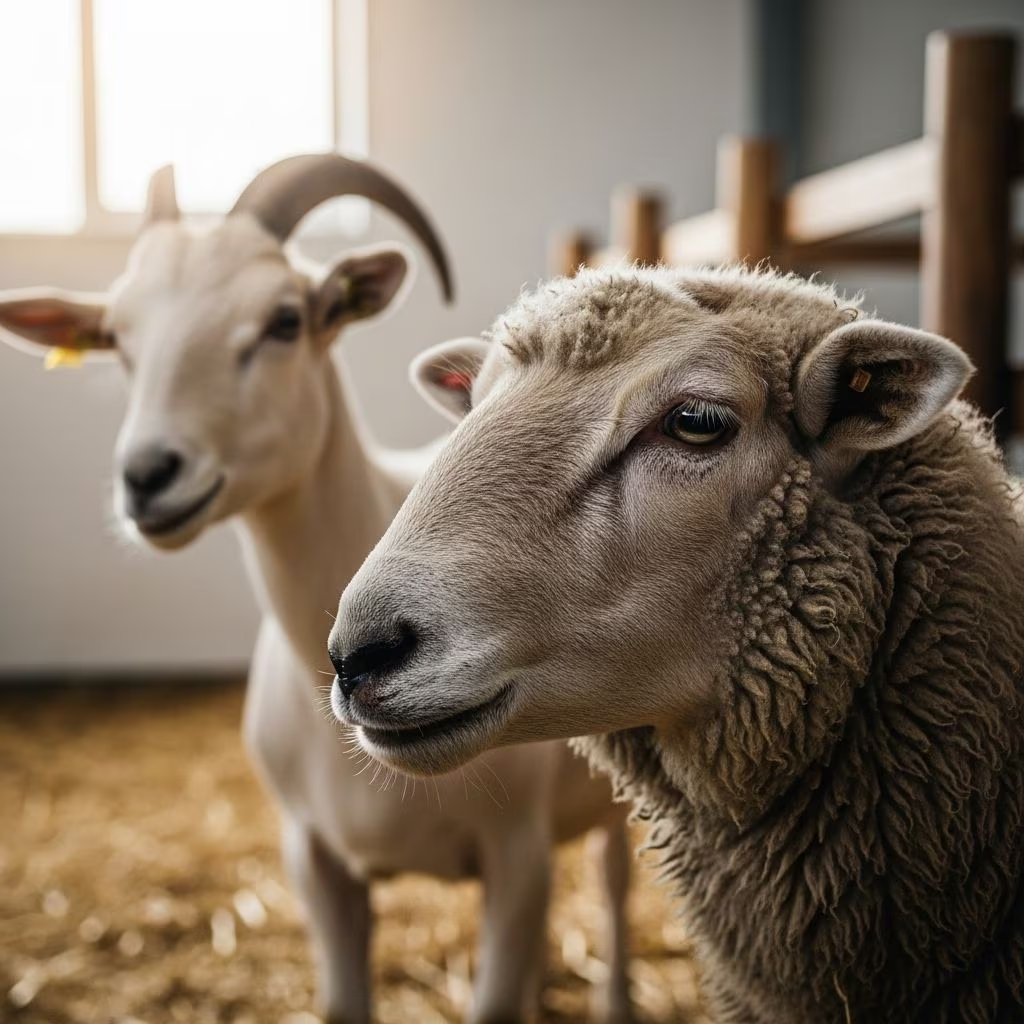
Bacterial pneumonia represents one of the most significant respiratory challenges for sheep and goat producers worldwide, often leading to high morbidity and mortality rates in affected flocks. This condition arises primarily from opportunistic bacteria that exploit weakened immune defenses, resulting in severe lung inflammation and compromised animal welfare.
Understanding the Pathology of Lung Infections
In sheep and goats, bacterial pneumonia typically manifests as bronchopneumonia, where inflammation targets the lung parenchyma and bronchioles. Pathogens like Pasteurella multocida and Mannheimia haemolytica reside asymptomatically in the upper respiratory tract of healthy animals but proliferate rapidly under stress conditions, causing acute tissue damage.
The disease process often begins with primary stressors or viral co-infections that disrupt mucosal barriers, allowing bacterial invasion into the lower airways. This leads to neutrophil influx, fibrin deposition, and alveolar consolidation, impairing gas exchange and oxygen uptake. In severe cases, pleuropneumonia develops, involving the pleural membranes and exacerbating respiratory distress.
Primary Pathogens Responsible
- Pasteurella multocida: Ubiquitous in ruminant nasal flora, triggers fibrinous pneumonia with high fever and toxemia.
- Mannheimia haemolytica: Formerly Pasteurella haemolytica, notorious for leukotoxin production that destroys immune cells, leading to rapid lung necrosis.
- Mycoplasma species: Contribute to chronic or enzootic forms, often synergizing with viruses like parainfluenza-3.
These bacteria thrive in environments of poor ventilation or high stocking density, underscoring the role of management in disease outbreaks.
Recognizing Clinical Manifestations
Early detection hinges on observing subtle behavioral changes progressing to overt signs. Affected animals often isolate themselves, exhibiting depression and anorexia as initial indicators.
| Stage | Symptoms | Severity |
|---|---|---|
| Early | Lethargy, reduced feed intake, mild nasal discharge | Mild |
| Acute | Fever (104–106°F or 40–41°C), moist cough, dyspnea, mucopurulent ocular/nasal exudate | Moderate to Severe |
| Advanced | Open-mouth breathing, frothy nasal discharge, recumbency, sudden death | Critical |
Auscultation reveals crackles and wheezes, particularly in ventral lung fields, while rectal temperatures exceed 40.5°C in febrile cases.
Risk Factors and Predisposing Conditions
Several environmental and physiological factors heighten susceptibility:
- Stressors: Transport, weaning, commingling, or climatic shifts suppress immunity.
- Housing: Overcrowding, dust, ammonia buildup from poor bedding.
- Co-infections: Viral agents (PI-3, RSV, CAE in goats) or parasites (lungworms) pave the way for bacterial superinfection.
- Age: Young lambs/kids face highest mortality; adults show chronic forms.
In export settings or feedlots, these risks compound, leading to explosive outbreaks.
Diagnostic Approaches for Confirmation
Veterinary intervention is crucial for accurate diagnosis, combining clinical evaluation with targeted tests:
- Physical Exam: Assess respiratory rate, lung sounds, and mucous membrane color.
- Necropsy: Post-mortem reveals consolidated anteroventral lobes, fibrin tags, and bacterial culture yields.
- Laboratory Tests: Nasal swabs for PCR, bloodwork for leukocytosis, fecal Baermann for lungworm larvae.
- Imaging: Radiography or ultrasound detects consolidation in live animals.
Differential diagnoses include viral pneumonia, lungworm, or aspiration, necessitating comprehensive sampling.
Treatment Protocols and Management
Prompt antimicrobial therapy is the cornerstone, targeting gram-negative pathogens:
- Antibiotics: Long-acting tetracyclines, florfenicol, or macrolides administered parenterally for 3–5 days.
- Supportive Care: NSAIDs for fever/pain, oxygen supplementation, isolation of cases.
- Fluids/Nutrition: IV fluids for dehydrated animals, palatable feeds to encourage intake.
Response is monitored via temperature and respiratory improvement; chronic cases may require extended therapy. Note: Resistance patterns vary regionally, so culture-guided selection optimizes outcomes.
Prevention Strategies for Herd Health
Proactive measures significantly reduce incidence:
- Vaccination: Mannheimia-Pasteurella vaccines for high-risk groups, administered pre-stress.
- Biosecurity: Quarantine new arrivals, minimize mixing, control vermin.
- Environmental Optimization: Ensure ventilation (>10 air changes/hour), dry bedding, avoid overcrowding (<1.5 m²/head).
- Parasite Control: Routine deworming against Dictyocaulus/Muellerius spp.
- Nutrition: Balanced diets bolstering immunity, especially selenium/vitamin E.
Integrated flock health plans, including regular vet audits, form the bedrock of prevention.
Impact on Production and Economics
Bacterial pneumonia erodes profitability through mortality (up to 30% in outbreaks), treatment costs, carcass condemnations, and growth setbacks. Survivors often develop chronic lesions, reducing wool/meat yields by 20–40%.
In dairy goats, it compounds with CAE, leading to mastitis and culling. Early intervention preserves productivity and market value.
FAQs on Bacterial Pneumonia in Ruminants
What is the most common cause of sudden death in feedlot lambs?
Mannheimia haemolytica pneumonia, often following viral priming.
Can pneumonia spread within a barn overnight?
Yes, aerosol transmission accelerates in confined, poorly ventilated spaces.
Is there a vaccine effective against all strains?
No single vaccine covers all; polyvalent options target key serotypes.
How do lungworms contribute to bacterial pneumonia?
They damage airways, facilitating secondary invasion; diagnose via fecal larvae.
What housing changes reduce risk by 50%?
Improved airflow and reduced density, per management studies.
Emerging Research and Future Directions
Ongoing studies explore leukotoxin inhibitors and novel adjuvanted vaccines. Genomic surveillance tracks resistance, advocating stewardship. Climate-resilient housing designs gain traction amid changing weather patterns.
Farmers should collaborate with vets for tailored protocols, leveraging tools like real-time PCR for rapid diagnostics.
References
- Common Diseases in Dairy Goats and Sheep — Maury County Veterinary Services. 2023-01-23. https://www.maurycountyvet.com/site/blog/2023/01/23/common-diseases-dairy-goats-sheep
- Pneumonia/Lung infection and Treatment in sheep and goat — Virbac India. Accessed 2026. https://in.virbac.com/sheep-and-goat/diseases/pneumonia-in-sheep-and-goat
- Lungworm and other Respiratory Disease in Adult and Yearling Sheep — NADIS. Accessed 2026. https://www.nadis.org.uk/disease-a-z/sheep/lungworm-and-other-respiratory-disease-in-adult-and-yearling-sheep/
- Pneumonia – Sheep And Goats — Ohio State University Small Ruminant Team. 2024-05-07. https://u.osu.edu/sheep/2024/05/07/pneumonia-sheep-and-goats/
- Small ruminant respiratory diseases — The Bovine Practitioner (TAMU). Accessed 2026. https://bovine-ojs-tamu.tdl.org/AABP/article/view/3297/3256
- Sheep And Goats – Pneumonia — Veterinary Handbook Australia. Accessed 2026. https://www.veterinaryhandbook.com.au/Diseases.aspx?diseasenameid=214



