
Bacterial Infections in Commercial Poultry Flocks
Understanding enterococcal disease impact on broiler production and flock health
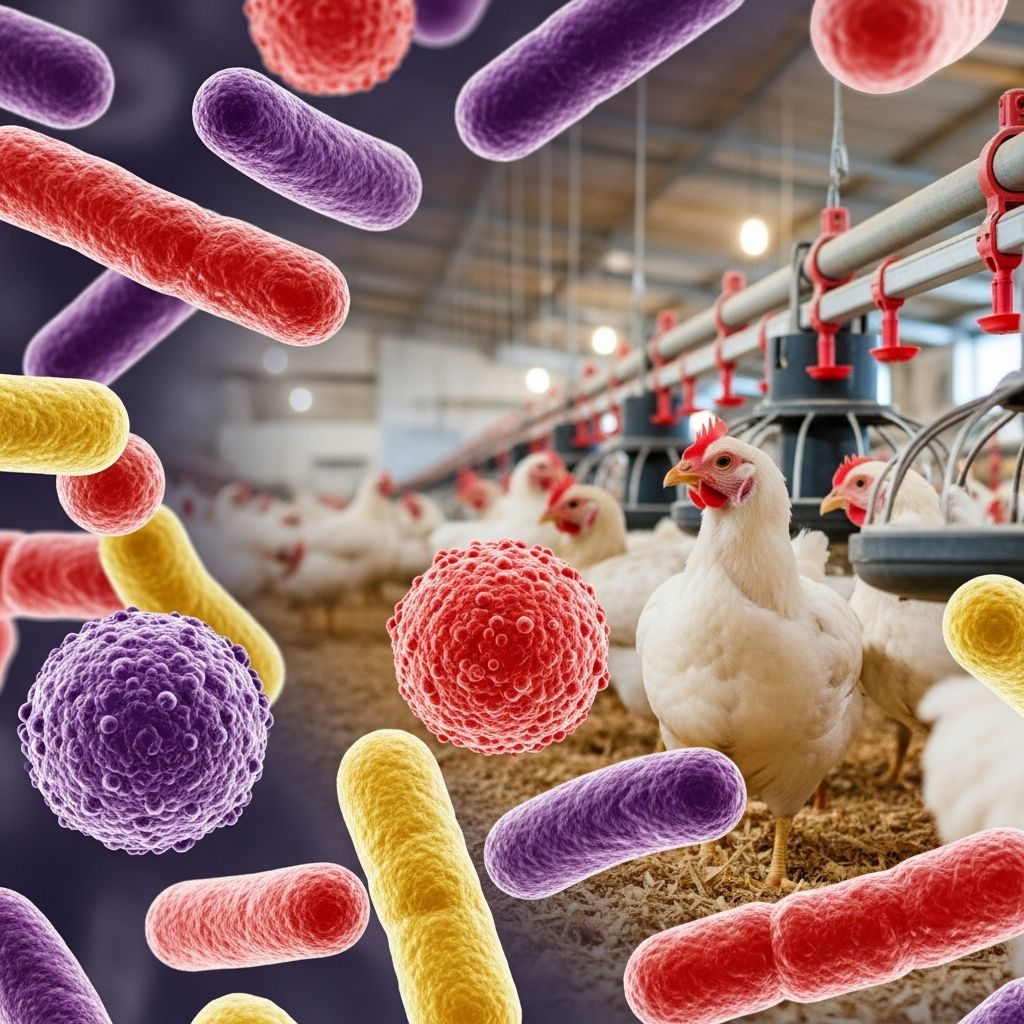
The global poultry industry faces mounting challenges from bacterial pathogens that compromise flock health and economic viability. Among these, enterococcal infections have emerged as a significant concern for commercial broiler producers, causing substantial losses through reduced productivity, increased mortality, and elevated condemnation rates at processing facilities. Unlike many infectious diseases that can be controlled through vaccination or conventional management, these gram-positive bacterial pathogens present unique challenges due to their prevalence in the normal intestinal microbiota and their capacity to develop antibiotic resistance. Understanding the mechanisms of infection, transmission pathways, and practical management strategies is essential for producers seeking to maintain profitability while preserving flock welfare.
The Microbial Foundation: Enterococcal Bacteria in Poultry Systems
Enterococcus species comprise a diverse group of gram-positive cocci that naturally colonize the gastrointestinal tracts of poultry and numerous other animals. These facultatively anaerobic bacteria exist as commensal organisms, meaning they typically coexist with their avian hosts without causing disease. Several enterococcal species inhabit poultry intestines, including E. faecalis, E. faecium, E. cecorum, E. avium, and E. hirae. The presence of these bacteria in healthy flocks is entirely normal and expected, reflecting the complex microbial ecosystem that supports digestive function and nutrient absorption. However, specific pathogenic strains of these species—particularly Enterococcus cecorum—have undergone genetic and phenotypic changes over the past 15 years that enable them to transition from harmless commensals to aggressive pathogens capable of causing severe systemic disease.
The emergence of virulent strains represents a significant evolutionary shift in the threat profile these bacteria pose to commercial operations. These pathogenic variants have developed sophisticated virulence mechanisms that allow them to breach intestinal barriers, evade immune surveillance, and establish infections in skeletal tissues. This transformation from normal microbiota to pathogenic invader fundamentally changes how producers must approach flock health management and biosecurity protocols.
Mechanisms of Pathogenic Invasion and Systemic Spread
Understanding how pathogenic enterococcal strains transition from the intestinal lumen to systemic infection requires examining the specific virulence factors these bacteria have acquired. Modern pathogenic strains possess multiple mechanisms that facilitate their aggressive behavior. These include:
- Early colonization capabilities that allow rapid establishment in the developing intestinal tract of young chicks
- Intestinal barrier-penetrating factors that enable translocation from the gut lumen into the bloodstream
- Immune evasion strategies that allow persistence despite host immune responses
- Tissue tropism factors that direct bacterial localization to skeletal structures
- Production of inflammatory mediators that establish secondary infections in multiple organ systems
Once bacteria breach the intestinal epithelium and enter systemic circulation, they preferentially localize to damaged cartilage and bone tissue, particularly the free thoracic vertebrae—the first thoracic vertebra that lacks ribs. This anatomical preference results in a distinctive disease presentation characterized by vertebral osteomyelitis and inflammation of surrounding tissues. Beyond skeletal involvement, enterococcal infections can establish secondary lesions in the pericardium, lungs, liver, and spleen, expanding the systemic impact and creating multiple sites of inflammation and tissue damage.
Tracking Disease Transmission Within and Between Flocks
The epidemiology of enterococcal infections in broiler production remains incompletely understood despite decades of investigation. A critical finding from transmission studies indicates that experimentally infected broiler breeder hens do not transmit pathogenic Enterococcus cecorum through eggs to embryos or chicks. This absence of vertical transmission eliminates maternal transmission as a significant epidemiological pathway, yet disease continues to spread through broiler flocks with alarming speed.
Instead, horizontal transmission—the spread between birds within a flock—represents the primary epidemiological mechanism. The bacteria disseminate through direct bird-to-bird contact and, more significantly, through exposure to contaminated feces, feed, and water sources. Notably, research has demonstrated that very low frequencies of infected chicks can seed flock-wide outbreaks, suggesting high susceptibility among naive populations and efficient transmission pathways. Once established in a flock, pathogenic Enterococcus cecorum spreads rapidly through fecal-oral transmission routes, with secondary spread accelerating as bacterial burden increases within the intestinal environment.
The between-flock transmission mechanism remains less clearly defined, though evidence suggests contaminated facilities and inadequate cleaning protocols play important roles in perpetuating the pathogen across production cycles. This gap in epidemiological understanding represents a critical challenge for developing effective control strategies at the production system level.
Clinical Manifestations and Disease Progression in Affected Flocks
Enterococcal infections present with variable clinical severity, ranging from subtle subclinical changes to acute, debilitating disease. The most distinctive and recognizable clinical sign is lameness progressing to paralysis, resulting from inflammatory masses developing at the level of the free thoracic vertebrae. Affected birds exhibit a characteristic sitting position with both hind limbs extended cranially, a posture sometimes referred to as the “dog-sitting” position. This distinctive presentation, while pathognomonic, indicates advanced disease with substantial bone involvement.
Disease typically manifests in two temporal phases within affected flocks. The initial phase involves reduced feed intake, decreased nutrient absorption, and suppressed growth rates. During this period, birds may appear lethargic or withdrawn without exhibiting obvious lameness. The second phase becomes apparent during the finisher period, typically peaking between 5 and 6 weeks of age, when paralyzed birds become unable to access feed and water, leading to dehydration and starvation. These secondary complications account for mortality in affected individuals beyond direct tissue damage.
Morbidity and mortality from untreated enterococcal infections can reach concerning levels, with reported morbidity as high as 35% and mortality ranging from 5% to 15% in severely affected flocks. Beyond direct mortality, infected flocks experience elevated condemnation rates at processing facilities—as high as 9.75%—due to systemic lesions, septic arthritis, and associated pathological changes. These production losses compound the direct financial impact of mortality and reduced growth performance.
Diagnosis and Confirmation of Enterococcal Infections
Confirmation of enterococcal infections requires comprehensive diagnostic approaches combining clinical observation with laboratory analysis. Initial suspicion arises from the characteristic clinical signs—particularly the distinctive paralysis pattern—combined with postmortem lesions in vertebral bodies and surrounding tissues. However, clinical signs alone are insufficient for definitive diagnosis, as multiple pathogens can produce similar neurological manifestations.
Laboratory confirmation involves isolation and identification of enterococcal bacteria from affected tissues, particularly bone lesions and affected vertebrae. Culture techniques using appropriate media allow bacterial growth and identification of species. Additionally, laboratory sensitivity testing provides critical information regarding antibiotic susceptibility, guiding therapeutic decisions. The presence of enterococcal bacteria in multiple organs beyond the skeletal system strengthens the diagnostic certainty and indicates systemic dissemination.
Yolk sac infections represent another clinical manifestation increasingly associated with enterococcal species, particularly in neonatal periods. Recent research indicates that Enterococcus has been isolated with increasing frequency in yolk sac infections, a condition previously dominated by E. coli. Additionally, emerging evidence demonstrates that combined infections with both enterococcal species and E. coli in embryonated eggs result in significantly higher neonatal mortality compared to single pathogen exposures, suggesting complex pathogenic interactions in very young birds.
Treatment Approaches and Challenges in Clinical Management
Treatment of established enterococcal infections presents formidable challenges that often result in poor outcomes despite antibiotic administration. Once birds develop clinical signs of paralysis and lameness, successful therapeutic intervention becomes increasingly difficult. The fundamental obstacles include:
- Affected birds’ inability to consume adequate water or feed for proper drug absorption and dosing
- Extensive bone damage at infection sites that limits antibiotic penetration
- Systemic nature of infections involving multiple organ systems
- Rapid progression of neurological dysfunction that impairs animal welfare
Amoxicillin demonstrates the most favorable in vitro susceptibility among available antimicrobial agents and represents the preferred therapeutic choice based on laboratory sensitivity testing. However, field reports indicate only mild effectiveness in many cases, suggesting that pharmacokinetic factors and tissue penetration limitations outweigh in vitro susceptibility advantages. Some producers report variable success with tylosin administration, though this agent’s efficacy remains unpredictable. Metaphylactic approaches using amoxicillin or tylosin delivered to entire flocks during early infection phases have shown occasional success in limiting disease spread, though this strategy requires early detection and carries significant antibiotic usage implications.
Prevention Strategies and Facility Management
Given the poor outcomes associated with treatment, prevention emerges as the superior management approach. Research on farms with recurring enterococcal disease demonstrates that comprehensive cleaning and disinfection protocols play essential roles in preventing reinfection in subsequent flocks. Specific focus areas include:
- Water line cleaning and disinfection, including flushing and super-chlorination procedures
- Environmental disinfection of housing facilities between flock cycles
- Feed management to prevent contamination and bacterial growth
- Litter management and moisture control to reduce environmental bacterial burden
Intestinal health maintenance emerges as a central prevention principle. Research indicates that oral dosing with pathogenic Enterococcus cecorum can reproduce disease in previously uninfected chickens, suggesting that excessive bacterial multiplication within the intestine overwhelms natural host defenses. This observation supports the concept that intestinal barrier integrity and microbiota balance significantly influence susceptibility to systemic infection. Monitoring intestinal health parameters and implementing evidence-based programs to support intestinal function represent practical prevention measures available to producers.
Economic Impact and Industry Significance
The economic implications of enterococcal infections extend beyond direct mortality and morbidity. Infected flocks demonstrate reduced feed intake, increased feed conversion ratios, longer production cycles required to reach market weight, and lower absolute weight gain. These production inefficiencies translate to increased costs per kilogram of produced chicken. Elevated condemnation rates at processing, sometimes exceeding 9.75%, represent direct financial losses that compound the reduced productive performance. For vertically integrated producers managing multiple flocks simultaneously, outbreaks can disrupt production scheduling and create cascading management challenges.
The cumulative economic impact makes enterococcal disease a significant profit reducer for broiler producers, particularly those operating on thin profit margins. Progressive producers increasingly recognize that investment in prevention infrastructure and intestinal health programs provides superior returns compared to treating clinical cases or absorbing production losses.
Emerging Resistance and Future Challenges
Enterococcal bacteria possess intrinsic resistance to certain antibiotics and demonstrate capacity to transmit antimicrobial resistance genes to other microorganisms. Pathogenic Enterococcus faecalis, for example, produces cytolysin—a unique toxin exhibiting activity against both eukaryotic and prokaryotic cells—while also demonstrating resistance patterns that limit treatment options. The increasing prevalence of antibiotic-resistant strains globally threatens to further constrain therapeutic options, making prevention and management without antimicrobial intervention increasingly necessary.
Frequently Asked Questions About Enterococcal Infections
Can infected breeder hens pass enterococcal disease to offspring?
No. Experimental studies have conclusively demonstrated that infected broiler breeder hens do not transmit pathogenic Enterococcus cecorum through eggs to embryos or chicks. However, very small numbers of infected chicks in a flock can seed widespread outbreaks through horizontal transmission mechanisms.
How quickly does disease spread through a flock?
Pathogenic Enterococcus cecorum demonstrates rapid horizontal transmission within flocks via fecal-oral pathways. The speed of spread varies depending on housing density, water and feed management, and litter conditions, but disease can progress from initial infection to flock-wide involvement relatively quickly.
What is the most effective treatment for clinical cases?
Amoxicillin represents the most effective available option based on laboratory sensitivity testing, though field outcomes remain unpredictable due to poor drug penetration into affected bone tissue and affected birds’ inability to consume adequate medication. Prevention remains far superior to treatment.
How can producers prevent recurrence on affected farms?
Comprehensive cleaning and disinfection between flock cycles, including water line treatment with flushing or super-chlorination, combined with intestinal health management programs, significantly reduces recurrence risk.
References
- Pathogenic Enterococcus cecorum – An Emerging Profit Killer for Broiler Producers — EW Nutrition. 2024. https://ew-nutrition.com/us/pathogenic-enterococcus-cecorum-emerging-profit-killer-broiler-producers/
- Enterococcus in Embryos and Neonatal Chickens — University of Saskatchewan Gomis Lab. 2022. https://research-groups.usask.ca/gomislab/research/enterococcus/enterococcus.php
- Review of Enterococcus faecalis Infections of Poultry — National Center for Biotechnology Information (PubMed). 2024. https://pubmed.ncbi.nlm.nih.gov/40249580/
- VOA, Enterococcus — Poultry Health Services. 2024. https://poultryhealth.ca/voa-enterococcus-2/
Similar Articles








Read full bio of medha deb


