

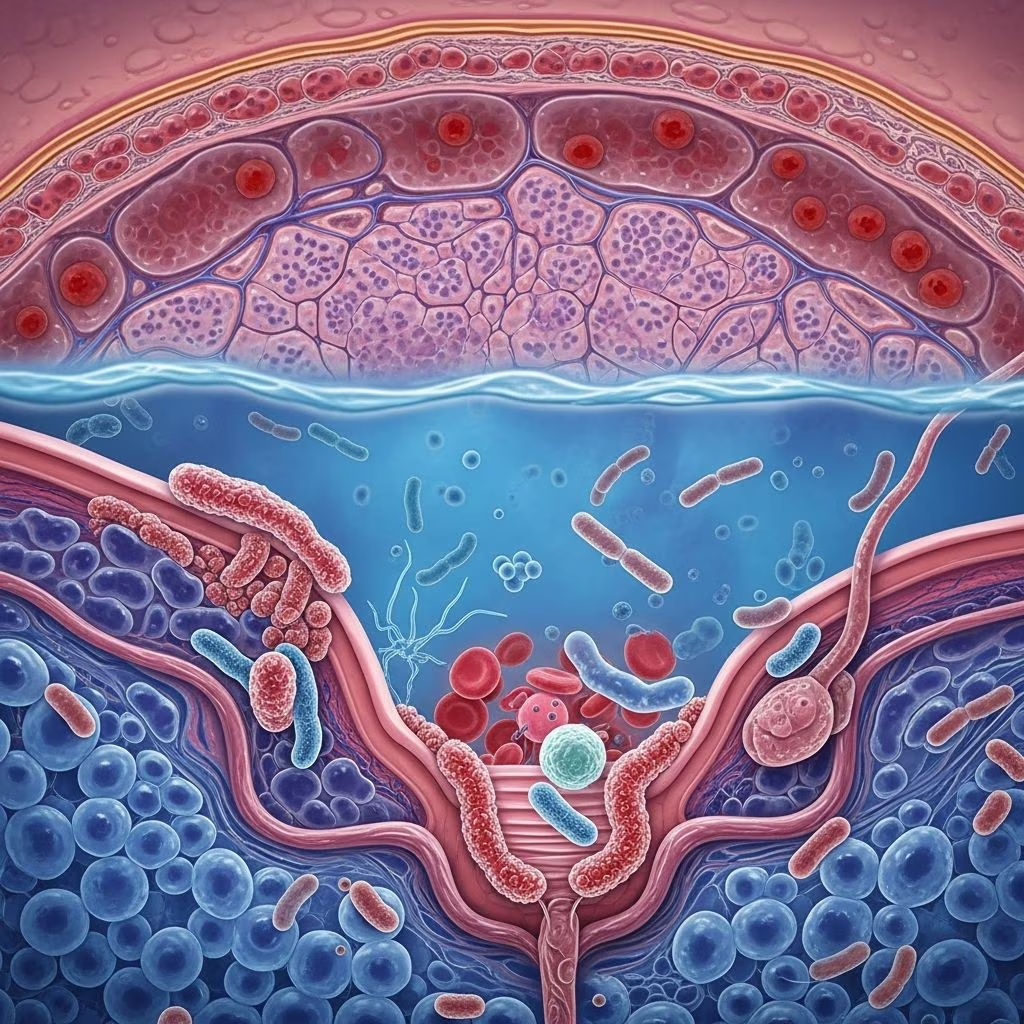
Bacterial cystitis represents a prevalent urinary tract disorder in dogs and cats, characterized by bacterial invasion of the bladder leading to inflammation and discomfort. This condition, often termed a lower urinary tract infection, primarily affects female dogs due to anatomical factors but occurs in both species with varying frequencies.
Understanding the Pathophysiology
The bladder normally maintains a sterile environment through natural flushing mechanisms and immune defenses. However, bacteria such as Escherichia coli ascend from the distal urethra, overwhelming these barriers in susceptible animals. In dogs, this process is facilitated by shorter urethras in females, while cats face challenges distinguishing infectious from sterile inflammations.
Key risk amplifiers include urinary retention, dilute urine from conditions like diabetes mellitus, and structural anomalies such as recessed vulvas or uroliths. In felines, glucose-fermenting organisms can produce gas within the bladder wall, a rare but severe variant known as emphysematous cystitis.
Clinical Manifestations in Pets
Owners frequently observe pets straining during voiding, producing small urine volumes, or eliminating outside litter boxes. Hematuria imparts a pink to red hue, while pollakiuria denotes frequent attempts. Some animals exhibit subclinical bacteriuria, harboring bacteria without overt signs, complicating routine assessments.
- Frequent urination attempts with minimal output
- Straining or vocalizing during elimination
- Bloody or cloudy urine
- Inappropriate house soiling
- Lethargy or reduced appetite in severe cases
Dogs display these more overtly than cats, where signs mimic idiopathic cystitis. Recurrent episodes signal deeper issues like neoplasia or endocrine disorders.
Diagnostic Approaches
Veterinarians initiate evaluation with history and physical exams, palpating for bladder distension or pain. Essential tests include:
| Test | Purpose | Key Findings |
|---|---|---|
| Urinalysis | Detect inflammation and bacteria | Pyuria, hematuria, bacteriuria, low specific gravity |
| Quantitative Urine Culture | Identify pathogen and sensitivities | >10^5 CFU/mL confirms infection |
| Imaging (Radiography/Ultrasound) | Rule out stones or masses | Detects uroliths, tumors, or pyelonephritis |
| Bloodwork | Assess systemic involvement | Azotemia indicates upper tract extension |
Cystocentesis yields the gold-standard sample, minimizing contamination. ISCAID guidelines emphasize culture-guided therapy, especially in cats where sterile conditions predominate.
Treatment Protocols
Acute sporadic cases in dogs respond to short antibiotic courses (3-5 days) post-culture, targeting common pathogens like E. coli or Proteus. Empirical options include trimethoprim-sulfamethoxazole or cephalexin, with studies showing equivalent efficacy to longer regimens.
For recurrent or complicated infections:
- Extended antibiotics (4-6 weeks) based on sensitivities
- Address predispositions: surgical correction of anatomy, urolith dissolution
- Supportive care: analgesics, urinary acidifiers
Cats demand judicious use, as overtreatment risks resistance without proven subclinical benefits. Prognosis excels in uncomplicated scenarios but varies with comorbidities like neoplasia requiring multimodal intervention.
Preventive Strategies for Pet Owners
Prophylaxis centers on hydration promotion via fresh water access and scheduled voids. Specialized diets modulate urine pH, deterring crystal formation. Monitoring high-risk breeds (e.g., Dalmatians) or seniors proves vital.
Recurrence thresholds (>3 episodes/year) warrant advanced imaging and specialist referral. Vaccinations against certain uropathogens remain investigational.
Species-Specific Considerations
Dogs
Prevalent in spayed females and diabetics; prostatitis complicates intact males. Stones often harbor biofilms, necessitating dissolution protocols or lithotripsy.
Cats
Rare sporadic cases; stress-induced idiopathic cystitis overshadows. Subclinical carriage common, advising against routine antimicrobials.
Potential Complications
Untreated progression risks pyelonephritis, sepsis, or chronic kidney damage. Recurrent UTIs link to bladder carcinoma, demanding vigilant surveillance.
FAQs
Can bacterial cystitis resolve without antibiotics?
In dogs with sporadic uncomplicated cases, symptoms may abate, but culture clearance is rare without therapy. Culture confirmation guides necessity.
Why do female dogs get UTIs more often?
Anatomical proximity of urethra to vulva and fecal flora facilitates ascension.
Is cranberry effective for pet UTIs?
Limited evidence; proanthocyanidins may inhibit adhesion, but not a substitute for antibiotics.
How to collect urine at home for testing?
Midstream free-catch suffices initially, but cystocentesis preferred for accuracy.
What if infections keep recurring?
Investigate via full workup: endocrinopathies, neoplasia, or catheters. Long-term low-dose prophylaxis sometimes employed.
References
- Lower Urinary Tract Infection (Bacterial Cystitis) in Dogs — Vetster. 2023. https://vetster.com/en/conditions/dog/lower-urinary-tract-infection-bacterial-cystitis
- Urinary tract infection and subclinical bacteriuria in cats — PMC – NIH. 2019-10-01. https://pmc.ncbi.nlm.nih.gov/articles/PMC6826873/
- ISCAID Urinary Guidelines 2019 — NDSU Veterinary Diagnostic Laboratory. 2022-02. https://www.vdl.ndsu.edu/wp-content/uploads/2022/02/ISCAID-Urinary-Guidelines-2019.pdf
- Cystitis in Dogs — VCA Animal Hospitals. 2023. https://vcahospitals.com/know-your-pet/cystitis-in-dogs
- Diagnosis and management of bacterial urinary tract infections — IDEXX. 2023. https://www.idexx.com/files/urinalysis-dx-update.pdf
- Urinary tract infections — Cornell University College of Veterinary Medicine. 2023. https://www.vet.cornell.edu/departments-centers-and-institutes/riney-canine-health-center/canine-health-topics/urinary-tract-infections



