

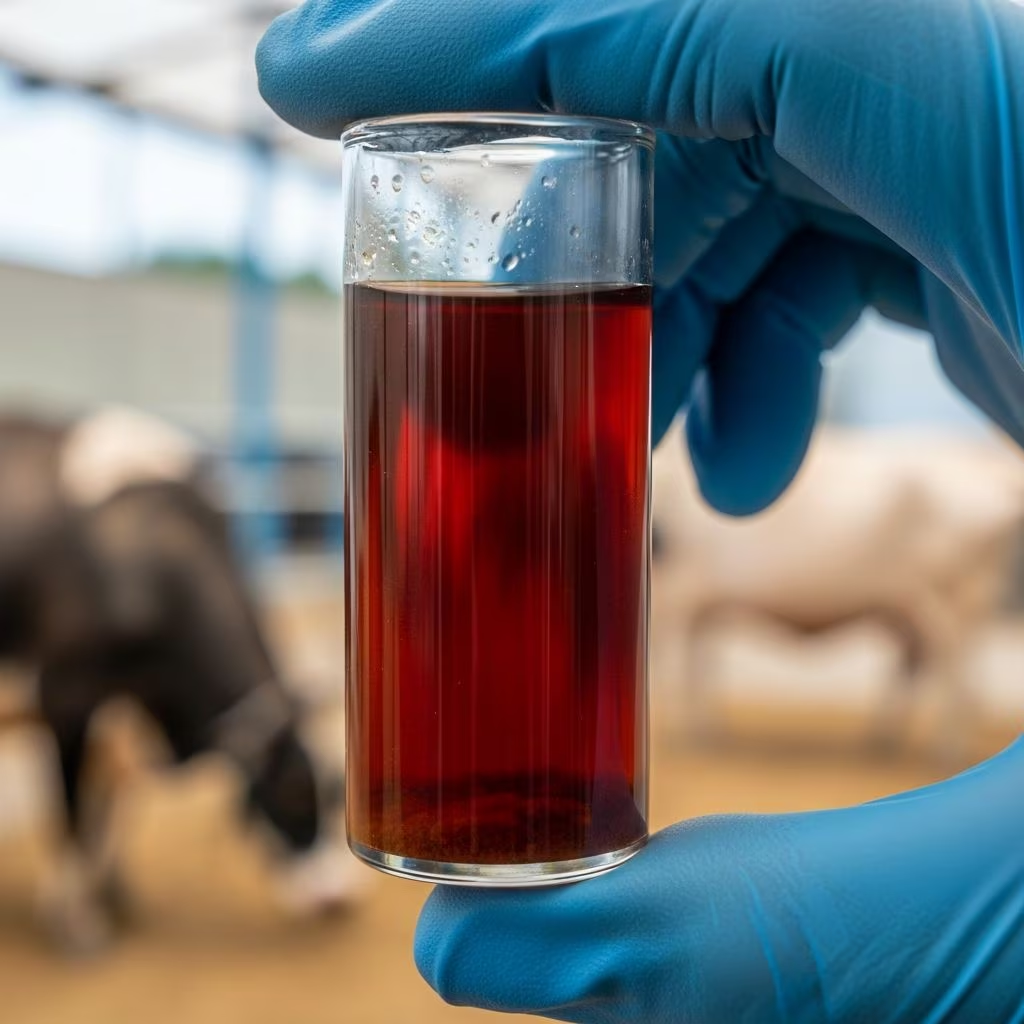
Bacillary hemoglobinuria represents a highly lethal infectious condition primarily impacting cattle, triggered by the soil-dwelling bacterium Clostridium haemolyticum. This toxemic disease manifests through rapid destruction of red blood cells, resulting in characteristic red-tinged urine and widespread organ damage. While most prevalent in cattle, it occasionally strikes sheep, bison, and other species, posing significant challenges to livestock producers in endemic regions.
The Pathogen Behind the Disease
Clostridium haemolyticum, sometimes referred to as C. novyi type D, thrives in anaerobic environments such as alkaline, waterlogged soils. These resilient spores enter animals via ingestion of contaminated forage or water, embedding themselves in the liver where they lie dormant until conditions favor germination.
Once activated, the bacteria proliferate and secrete beta toxin, a potent phospholipase C enzyme. This toxin disrupts cell membranes, particularly those of erythrocytes, leading to massive intravascular hemolysis. The freed hemoglobin overwhelms the kidneys, causing hemoglobinuria – the hallmark “red water” appearance of urine.
Risk Factors and Disease Triggers
The journey from spore ingestion to clinical outbreak hinges on hepatic anaerobiosis. Liver fluke infestations by Fasciola hepatica create ideal niches through tissue necrosis and migration damage, allowing spore activation. Studies confirm this association, though cases without flukes suggest alternative triggers like dietary nitrates, traumatic liver injuries, or biopsies.
- Environmental predispositions: Poorly drained pastures with neutral to alkaline pH.
- Host factors: Animals over one year old, recently moved to contaminated areas, in good body condition.
- Seasonal patterns: Peaks after fluke metacercariae exposure on pastures.
In fluke-free scenarios, ischemic liver foci from thrombosis or direct toxin effects on hepatocytes initiate the process, underscoring multifactorial etiology.
Clinical Manifestations in Affected Animals
Disease progression is alarmingly swift, often culminating in sudden death without warning. In acute cases, the course spans 10-12 hours; subacute forms extend to 3-4 days. Initial signs include high fever (40-41°C), profound lethargy, and abdominal discomfort, rapidly evolving to severe dyspnea, tachycardia, and bloody diarrhea.
| Stage | Symptoms | Duration |
|---|---|---|
| Peracute | Sudden collapse, death | Minutes to hours |
| Acute | Fever, depression, hemoglobinuria, jaundice | 10-12 hours |
| Subacute | Milder anemia, recovery possible | 3-4 days |
Key observable sign: Port-wine colored urine that foams upon voiding, stemming from hemoglobin overload. Pregnant cows succumb fastest due to physiological stress. Subclinical infections confer immunity but enable carrier states, perpetuating environmental contamination via feces and urine.
Pathological Changes at Necropsy
Postmortem examinations reveal a grim picture: dehydrated carcasses with icteric mucosae, edematous subcutis, and petechial hemorrhages extending to muscles. The liver bears a signature ischemic infarct – pale, elevated, demarcated by a hyperemic rim, often adjacent to thickened bile ducts hinting at fluke involvement.
- Kidneys: Dark, friable with petechiae, indicative of hemoglobinuric nephrosis.
- Bladder: Filled with purplish-red urine.
- Intestines: Hemorrhagic with luminal clots; thorax/abdomen containing bloody effusion.
- Lungs/Trachea: Unaffected grossly, but bloody froth present.
Microscopically, hepatocyte necrosis, bacilli clumps, and hemolysis predominate. PCR detection of the beta toxin gene in liver confirms C. haemolyticum.
Diagnosis: Confirming the Culprit
Field diagnosis relies on the triad of hemoglobinuria, liver infarct, and epidemiological context. Differentiate from anthrax (splenomegaly), anaplasmosis, leptospirosis, or bracken fern toxicity via spleen normality and urine color.
Laboratory confirmation involves anaerobic culture from liver lesions, toxin identification, or PCR. Absence of fluke eggs does not rule out BH, as non-parasitic triggers exist. Morbidity ranges 0.25-12%, lethality 80-100% untreated.
Treatment Strategies for Survival
Early intervention is critical; many cases present as sudden deaths. High-dose penicillin or tetracyclines target vegetative bacteria, administered parenterally at 22,000 IU/kg or 10-20 mg/kg, respectively. Supportive care includes fluids, anti-inflammatories, and blood transfusions if feasible. Mortality drops significantly with prompt therapy, though prognosis remains guarded.
Prevention: Vaccination and Management
Vaccination with C. haemolyticum bacterins, administered once or twice yearly based on local prevalence, forms the cornerstone of control. Integrate with fluke prophylaxis using anthelmintics like triclabendazole.
- Avoid high-risk pastures or rotate grazing.
- Monitor for nitrates in feed.
- Quarantine new arrivals from endemic zones.
In bison and sheep, similar protocols apply, with tailored dosing.
Geographic Spread and Epidemiology
Endemic in western US/Canada, Gulf regions, South America, Europe, Middle East, Asia, Australia, and New Zealand, BH correlates with fluke prevalence and soil types. Sporadic outbreaks follow animal movement to contaminated areas, with 7-10 day incubation post-exposure.
Insights from Affected Species Beyond Cattle
Sheep exhibit analogous signs, often linked to hepatic damage. Bison face toxin-mediated hemolysis from liver infections. Rare canine, equine, and porcine cases mirror bovine pathology.
Frequently Asked Questions (FAQs)
What causes the red urine in bacillary hemoglobinuria?
The beta toxin from Clostridium haemolyticum lyses red blood cells, releasing hemoglobin into urine.
Is liver fluke always involved?
No, while common, non-fluke triggers like trauma or nitrates can initiate disease.
How effective is vaccination?
Highly effective; annual or biannual dosing prevents outbreaks in endemic herds.
Can surviving animals spread the disease?
Yes, subclinical carriers shed spores in feces/urine, contaminating pastures.
What is the prognosis without treatment?
Near 95-100% mortality.
Research Frontiers and Future Directions
Ongoing studies explore fluke-independent pathogenesis and improved diagnostics. Ultrastructural analyses reveal bacilli in hepatocytes, reinforcing toxin roles. Enhanced multivalent vaccines combining clostridial antigens promise broader protection.
In summary, vigilance, vaccination, and fluke control mitigate this devastating disease, safeguarding livestock health and economic stability.
References
- Pathology of Naturally Occurring Bacillary Hemoglobinuria in Cattle — PubMed/NCBI. 2017-04-26. https://pubmed.ncbi.nlm.nih.gov/28438111/
- Bacillary Hemoglobinuria in Animals — Merck Veterinary Manual. 2023. https://www.merckvetmanual.com/infectious-diseases/clostridial-diseases/bacillary-hemoglobinuria-in-animals
- Bacillary Hemoglobinuria — Veterian Key. 2016. https://veteriankey.com/bacillary-hemoglobinuria/
- Red Water Disease Infographic — University of Calgary Veterinary Medicine. 2020. https://vet.ucalgary.ca/sites/default/files/teams/9/Red%20Water%20Disease%20Infographic%20FINAL.pdf
- Bacillary Hemoglobinuria — Bison Producers of Alberta. 2022. https://www.bisoncentre.com/resources/resource-library/advanced-bison-information-producers/diseases-bison/bacillary-hemoglobinuria/



