

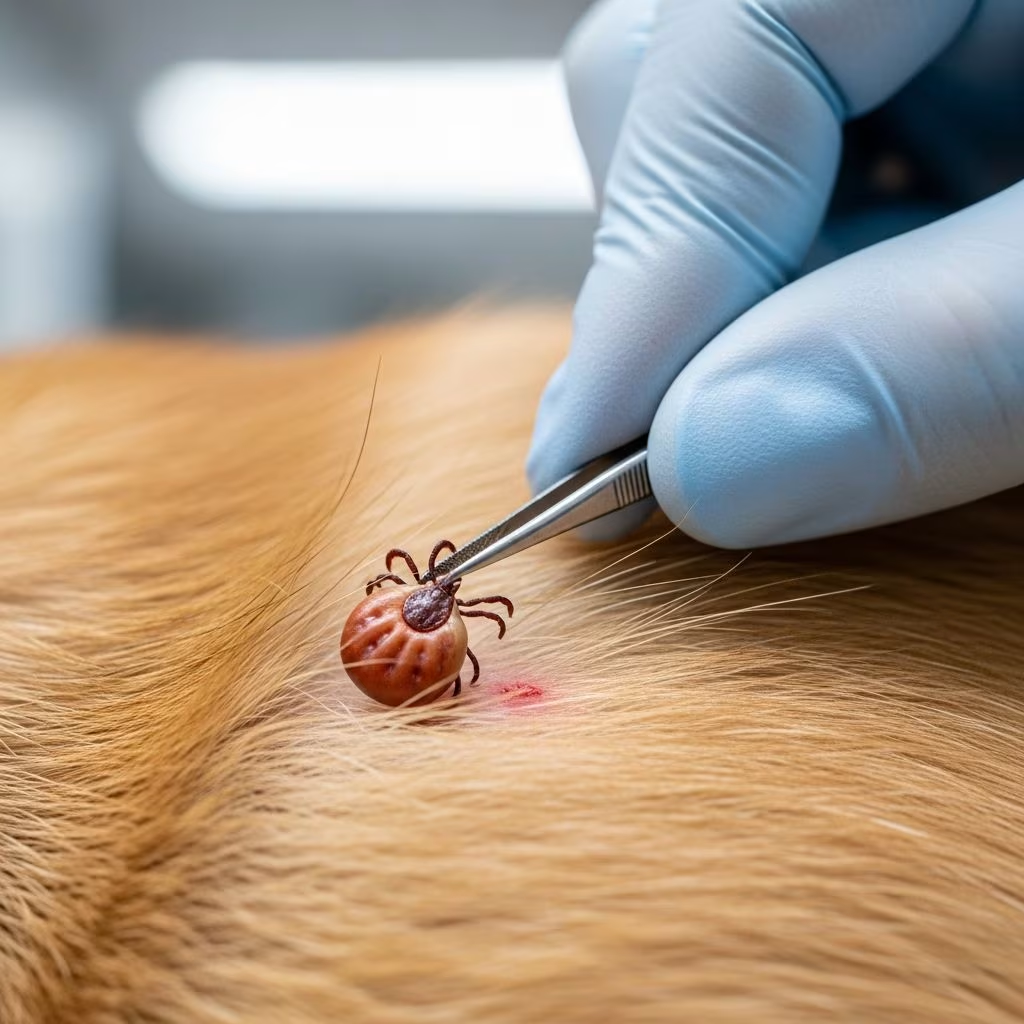
Babesiosis represents a significant health risk for dogs, triggered by protozoan parasites transmitted primarily through tick bites. These microorganisms target red blood cells, potentially leading to severe anemia and multi-organ complications if not addressed promptly.
Understanding the Parasitic Culprit
The Babesia genus encompasses various species that infect canines, with Babesia canis and Babesia gibsoni prevailing in North America. These intraerythrocytic parasites multiply within red blood cells, rupturing them and releasing toxins that impair oxygen transport throughout the body.
In regions like Europe and Africa, strains such as B. rossi provoke more aggressive responses, often necessitating intensive hospitalization. The disease manifests in acute, chronic, or subclinical forms, where infected dogs may appear healthy yet remain contagious.
Primary Transmission Routes
Tick vectors, particularly the brown dog tick (Rhipicephalus sanguineus), serve as the main conduit for Babesia sporozoites into a dog’s bloodstream during feeding. Transmission typically requires the tick to be attached for several hours.
- Infected ticks inject parasites directly into the host.
- Vertical transmission occurs from dam to puppies in utero or via colostrum.
- Blood transfusions from carrier donors pose a risk, especially in breeds like pit bull terriers prone to dog-bite related spread.
- Rarely, mechanical transmission via contaminated needles or aggressive encounters with open wounds.
Pit bull terriers and related breeds show higher susceptibility to B. gibsoni, often linked to fighting injuries rather than ticks alone.
Recognizing Clinical Signs
Symptom severity hinges on the Babesia species, the dog’s age, immune status, and infection load. Acute cases strike swiftly, while chronic ones simmer silently.
| Symptom | Description | Associated Babesia Type |
|---|---|---|
| Fever | Elevated body temperature, often first indicator | All types |
| Weakness/Lethargy | Reduced energy, reluctance to move | Acute forms |
| Dark/Orange Urine (Hemoglobinuria) | Due to red cell destruction | B. canis, B. rossi |
| Jaundice | Yellowing of gums, skin from bilirubin buildup | Severe anemia cases |
| Pale Mucous Membranes | Sign of anemia and poor circulation | Common in acute phase |
Additional signs include splenomegaly, lymphadenopathy, vomiting, and respiratory distress. Chronically infected dogs might exhibit no outward symptoms but harbor parasites, endangering others via ticks or blood donation.
Diagnostic Approaches
Veterinarians confirm babesiosis through a combination of history, clinical exam, and lab tests. Blood smears reveal pear-shaped parasites inside erythrocytes under microscopy, though PCR offers higher sensitivity for low parasitemia.
- Complete blood count (CBC): Reveals regenerative anemia, thrombocytopenia.
- Biochemistry panel: Monitors liver/kidney function, hypoalbuminemia.
- Urinalysis: Detects bilirubinuria, hemoglobinuria.
- Serology/PCR: Species identification for tailored therapy.
Co-infections with other tick-borne pathogens like Ehrlichia complicate diagnosis, warranting comprehensive screening.
Treatment Protocols by Species
Therapy adopts a triadic strategy: antiparasitic drugs, anemia correction, and supportive interventions. Efficacy varies by Babesia type.
For B. canis and Related Strains
Imidocarb dipropionate (7 mg/kg IM, repeated after 14 days) effectively clears infection, though side effects like salivation, colic, and pain at injection site occur. Diminazene aceturate serves as an alternative in some regions.
For B. gibsoni and B. conradae
Combination of atovaquone (13.3 mg/kg PO q8h for 10 days) and azithromycin (10 mg/kg PO q24h for 10 days, then tapered) reduces parasitemia but rarely eliminates carriers. Clindamycin provides an accessible option for initial control.
Blood transfusions are critical for dogs with PCV <20%, using packed red cells or whole blood. Supportive care encompasses IV fluids, oxygen, antiemetics, and hepatoprotectants.
Prognosis Factors
Early intervention yields favorable outcomes, with <10% mortality in uncomplicated B. canis cases. Severe B. rossi infections carry 30%+ fatality despite ICU care. Chronic carriers require lifelong monitoring to prevent flare-ups or transmission.
Prevention: Your Best Defense
Year-round tick preventives form the cornerstone, including oral isoxazolines (e.g., fluralaner), topical fipronil, or collars with flumethrin.
- Daily tick checks after outdoor activities, focusing on ears, armpits, groin.
- Tick-free yards via acaricide treatments and habitat modification.
- Screen blood donors via PCR to avoid iatrogenic spread.
- Avoid high-risk areas during peak tick seasons (spring/summer).
- Vaccination available in some endemic zones for B. canis.
Breeds like American Staffordshire terriers benefit from isolating from dog fights or bites.
FAQs on Canine Babesiosis
Can babesiosis spread to humans?
Yes, certain Babesia species (B. microti) transmit to people via Ixodes ticks, but canine strains pose minimal direct risk.
How long after a tick bite does babesiosis appear?
Incubation averages 1-3 weeks, though subclinical infection can persist indefinitely.
Is babesiosis curable in all dogs?
B. canis often fully resolves; B. gibsoni typically results in lifelong carriage despite treatment.
What if my dog tests positive but seems healthy?
Monitor closely, use preventives, and restrict breeding/donating to curb spread.
Are there home remedies for babesiosis?
No; professional veterinary care is essential. Delays exacerbate anemia and complications.
Emerging Research and Global Perspectives
Recent studies emphasize multi-drug regimens for refractory cases and explore novel antiprotozoals. In endemic areas like South Africa, rapid diagnostics improve survival. U.S. cases rise with tick range expansion due to climate shifts.
Owners in tick hotspots should consult vets for region-specific protocols, integrating preventives with vigilant grooming.
References
- Babesiosis in Dogs: Causes, Symptoms & Treatment — Providence Veterinary Hospital. 2021-02-18. https://www.waxhaw.providencevets.com/site/blog/2021/02/18/babesiosis-dogs-causes-symptoms-treatment
- Babesiosis in Dogs: Causes, Symptoms & Treatment — Ferguson Animal Hospital. 2024-08-15. https://www.fergusonanimalhospital.com/site/blog/2024/08/15/babesiosis-dogs
- Symptoms & Treatment for Babesiosis in Dogs — Germantown Animal Hospital. 2020-10-14. https://www.germantownah.com/site/blog-memphis-vet/2020/10/14/symptoms-treatment-babesiosis-in-dogs
- Babesiosis in Dogs — Heart of Brooklyn Veterinary. 2024-07-15. https://www.heartofbrooklynveterinary.com/site/blog/2024/07/15/babesiosis-dogs
- Treatment for Babesiosis in Dogs — Carolina Veterinary Specialists. 2021-04-15. https://www.charlotte.carolinavet.com/site/charlotte-emergency-vet-blog/2021/04/15/treatment-babesiosis-in-dogs
- Babesiosis in Dogs — VCA Animal Hospitals. N/A. https://vcahospitals.com/know-your-pet/babesiosis-in-dogs
- Canine Babesiosis Fact Sheet — Ohio State University College of Veterinary Medicine. 2023-11-15. https://vet.osu.edu/sites/default/files/documents/AKC_CHF_Canine_Babesiosis_Fact_Sheet_20231115.pdf



