

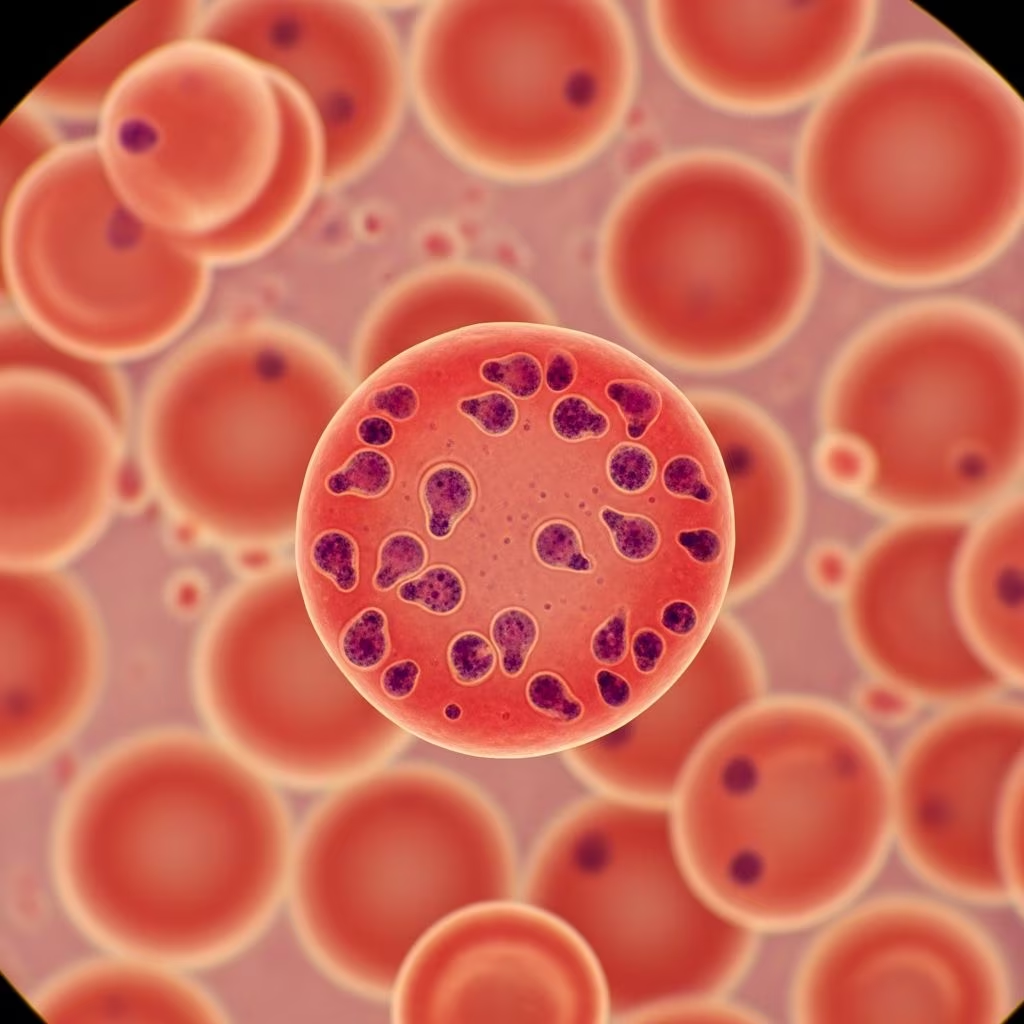
Babesiosis represents a significant health concern for a wide array of animals, driven by protozoan parasites of the genus Babesia that target red blood cells. Transmitted primarily via tick bites, this disease triggers severe hemolytic anemia, fever, and potentially fatal complications across species including cattle, dogs, horses, and more. Understanding its mechanisms, impacts, and management is crucial for veterinarians, farmers, and pet owners alike.
The Nature of Babesia Parasites
These intraerythrocytic protozoa belong to the apicomplexan group, invading red blood cells where they multiply, leading to cell rupture and hemolytic crises. Over 100 species exist, but only select ones pose major threats to animals. Classification has evolved from morphological traits to molecular analysis, revealing complex host-vector relationships.
In livestock, Babesia bovis and B. bigemina dominate bovine infections, with B. bovis noted for higher virulence due to induced vascular issues beyond mere hemolysis. Canine forms include B. canis, B. vogeli, B. rossi, and B. gibsoni, varying by region and severity.
Transmission Pathways and Risk Factors
The primary vector for Babesia is ixodid ticks, such as Rhipicephalus sanguineus for canine strains in tropics and Dermacentor reticularis in Europe. Ticks acquire the parasite during blood meals from infected hosts and transmit it transstadially or transovarially to subsequent hosts.
- Tick-mediated spread: Most common, with incubation periods of 1-3 weeks post-bite.
- Vertical transmission: In dogs, B. gibsoni passes from dam to puppies in utero.
- Iatrogenic routes: Contaminated blood transfusions or dog fights causing direct blood contact, especially in breeds like pit bulls.
- Geographic hotspots: Southern US for canine cases, Africa and Australia for bovine.
High-risk groups include kenneled dogs with poor tick control, racing greyhounds, and cattle in endemic tick zones. Zoonotic potential exists, though animal strains rarely infect humans severely.
Clinical Manifestations Across Species
Symptoms arise from hemolysis, inflammation, and immune responses. Acute phases feature fever exceeding 41°C, lethargy, anorexia, pale gums, and dark urine from hemoglobinuria. Chronic infections may be subclinical yet transmissible.
Bovine Babesiosis
Cattle show rapid progression: fever, milk drop, abortion, and cerebral signs in B. bovis cases due to cytoadherence in brain capillaries. Mortality reaches 50% in naive adults.
Canine Babesiosis
Dogs exhibit a spectrum: mild for B. vogeli, peracute collapse for B. rossi. Common signs include weakness, splenomegaly, thrombocytopenia, and jaundice. B. gibsoni often chronic with renal threats.
Other Species
Horses develop fever and icterus; equines, sheep, goats, swine, and cats face similar hemolytic syndromes, with varying severity.
| Species | Primary Host | Key Vectors | Severity Level |
|---|---|---|---|
| B. bovis | Cattle | Boophilus spp. | High (cerebral, shock) |
| B. bigemina | Cattle | Boophilus spp. | Moderate (hemoglobinuria) |
| B. canis | Dogs | Dermacentor spp. | Variable |
| B. gibsoni | Dogs | R. sanguineus | Chronic/low acute |
Pathophysiology: Beyond Simple Hemolysis
Parasite replication lyses erythrocytes, releasing hemoglobin and triggering bilirubinemia. Virulent strains like B. bovis provoke cytokine storms, systemic inflammatory response syndrome (SIRS), multiple organ dysfunction (MODS), coagulopathies, and hypotension. Immune-mediated anemia exacerbates destruction of uninfected cells. Thrombocytopenia stems from platelet consumption and splenic sequestration.
Diagnostic Approaches
Definitive identification relies on microscopy of Giemsa-stained blood smears revealing pear-shaped merozoites in erythrocytes. PCR enhances sensitivity for low parasitemia, speciating strains.
- Supportive tests: PCV for anemia, bilirubin for hemolysis, platelet counts.
- Serology: IFAT or ELISA for antibodies, useful in chronic cases.
- Differentials: Leptospirosis, ehrlichiosis, immune hemolytic anemia.
Postmortem reveals jaundiced tissues, edematous spleen, dark kidneys.
Treatment Protocols
Imidocarb dipropionate (3-6 mg/kg IM/SC, repeat if needed) and diminazene aceturate are mainstays, targeting parasites but risking cholinergic side effects. Supportive care includes fluids, transfusions for severe anemia, and anti-inflammatories.
For refractory B. gibsoni, atovaquone-azithromycin combinations show promise. Monitor for relapse via PCR.
Prevention and Control Strategies
Tick control via acaricides (pour-ons, dips), pasture management, and resistant breeds is foundational. Vaccines exist for bovine babesiosis in endemic areas (live attenuated strains).
- For dogs: Monthly tick preventives (e.g., fluralaner), avoid high-risk environments.
- Livestock: Quarantine introductions, strategic dipping.
- Blood donor screening: PCR testing.
Epidemiology and Emerging Concerns
Babesiosis burdens tropical/subtropical agriculture, with outbreaks in tick-infested regions. Climate change expands vectors northward, increasing canine reports in North America. Dog fighting sustains B. gibsoni reservoirs.
Frequently Asked Questions (FAQs)
What animals are most affected by babesiosis?
Cattle, dogs, horses, sheep, goats, swine, and cats, with cattle and dogs facing highest impacts.
Can babesiosis spread from animals to humans?
Rarely; human cases usually involve B. microti via Ixodes ticks, distinct from animal strains.
How quickly do symptoms appear after a tick bite?
Typically 1-3 weeks, though chronic forms may delay signs.
Is there a vaccine for canine babesiosis?
Not widely available; experimental ones target specific subspecies.
What should I do if my dog shows signs of anemia?
Consult a vet immediately for bloodwork and tick checks.
Future Directions in Research
Ongoing molecular studies refine taxonomy, aiding targeted therapies. Novel antiprotozoals and broad-spectrum tick vaccines hold promise against this evolving threat.
References
- Babesiosis in Dogs — VCA Animal Hospitals. 2023. https://vcahospitals.com/know-your-pet/babesiosis-in-dogs
- Canine Babesiosis: An Overview — Meddocs Publishers. 2022. https://meddocsonline.org/journal-of-veterinary-medicine-and-animal-sciences/Canine-babesiosis-an-overview.pdf
- Babesiosis in Dogs — Stoney Creek Veterinary. 2024-05-16. https://www.stoneycreekveterinary.com/site/blog/2024/05/16/babesiosis-dog
- Babesiosis in Animals — MSD Veterinary Manual. 2024. https://www.msdvetmanual.com/circulatory-system/blood-parasites/babesiosis-in-animals
- The Etiology, Incidence, Pathogenesis, Diagnostics, and Treatment — PMC (NCBI). 2022-03-15. https://pmc.ncbi.nlm.nih.gov/articles/PMC8944684/
- Canine Babesiosis Fact Sheet — Ohio State University College of Veterinary Medicine. 2023-11-15. https://vet.osu.edu/sites/default/files/documents/AKC_CHF_Canine_Babesiosis_Fact_Sheet_20231115.pdf
- Bovine Babesiosis Information Sheet — USDA APHIS. 2023. https://www.aphis.usda.gov/sites/default/files/bovine-babesiosis-infosheet.pdf
- Babesiosis — CDC DPDx. 2024. https://www.cdc.gov/dpdx/babesiosis/index.html



