

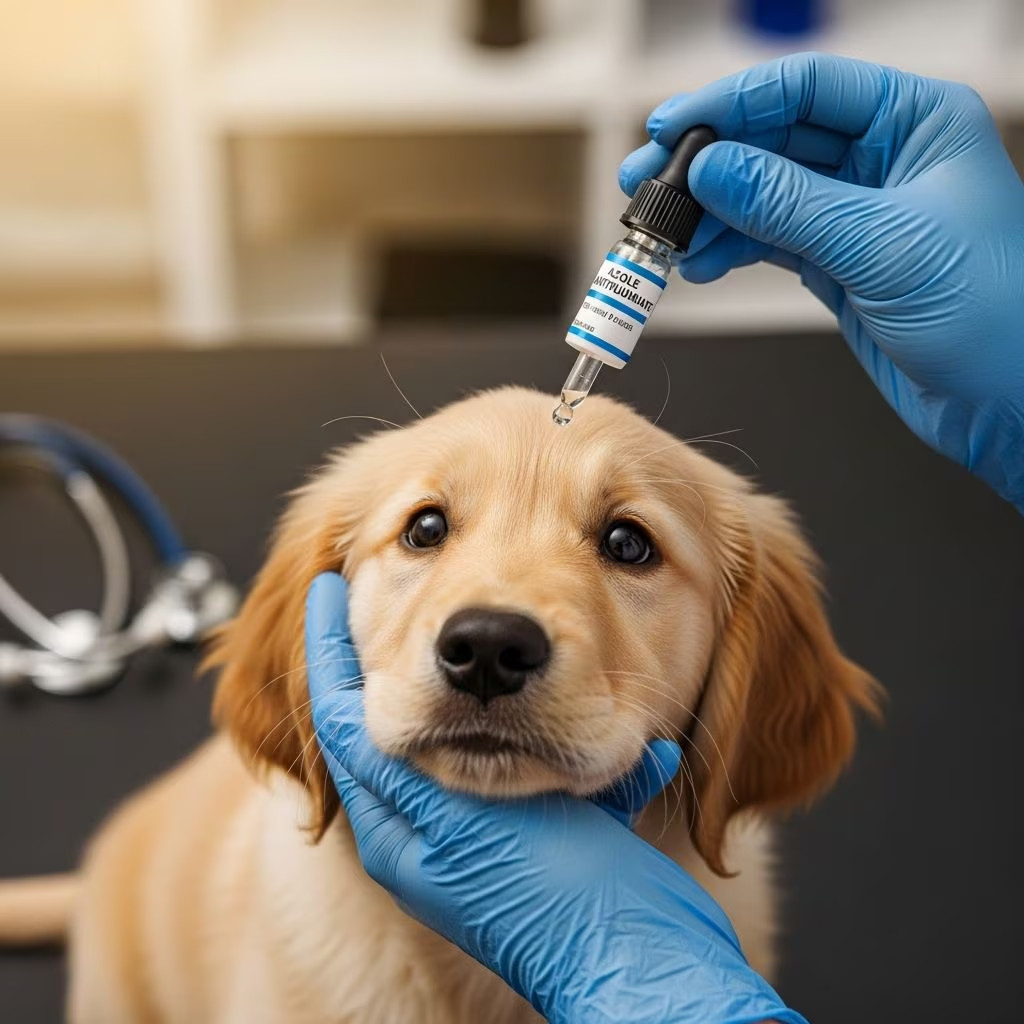
Azole antifungals represent a cornerstone in managing systemic and localized fungal infections in animals, particularly dogs and cats. These medications inhibit fungal growth by targeting ergosterol synthesis, offering broad-spectrum activity against yeasts and molds. This article delves into their pharmacology, clinical applications, dosing regimens, and practical considerations for veterinary use.
Understanding the Mechanism of Azole Action
Azoles exert their effects primarily by binding to the fungal cytochrome P450 enzyme, 14α-demethylase, which is crucial for converting lanosterol to ergosterol—a key component of fungal cell membranes. This disruption leads to depleted ergosterol levels, accumulation of toxic sterols, and impaired membrane integrity, ultimately halting fungal proliferation. In veterinary contexts, this mechanism proves effective against dimorphic fungi like Blastomyces and Histoplasma, as well as opportunistic pathogens such as Cryptococcus and Aspergillus species.
The efficacy of azoles often correlates with pharmacokinetic parameters like the area under the curve to minimum inhibitory concentration ratio (AUC/MIC), emphasizing total daily exposure over dosing frequency. This allows flexible administration, such as once-daily dosing for many formulations in dogs and cats.
Classification of Azoles: Generations and Types
Veterinary azoles are categorized into first- and second-generation drugs. First-generation options, including ketoconazole and itraconazole, laid the foundation for oral antifungal therapy. Itraconazole, in particular, expanded treatment possibilities due to superior potency and tolerability compared to ketoconazole.
Second-generation azoles—voriconazole, posaconazole, and emerging agents like isavuconazole—offer enhanced spectra against resistant molds. Voriconazole demonstrates fungicidal activity against Aspergillus, making it valuable for invasive infections, while posaconazole provides broad coverage including zygomycetes.
- Itraconazole: Versatile for systemic mycoses.
- Fluconazole: Excellent bioavailability, ideal for CNS infections.
- Voriconazole: Preferred for aspergillosis salvage therapy.
- Posaconazole: Broad-spectrum for refractory cases.
Clinical Applications Across Fungal Pathogens
Azoles are indicated for a range of mycoses prevalent in veterinary medicine. Itraconazole treats blastomycosis, histoplasmosis, coccidioidomycosis, sporotrichosis, and dermatophytosis effectively. Fluconazole excels in cryptococcosis due to its ability to penetrate the blood-brain barrier.
For aspergillosis, particularly sinonasal forms in dogs, itraconazole combined with surgical debridement yields high success rates. Voriconazole serves as a frontline or rescue option for invasive disease. Posaconazole addresses failures of first-line therapy in histoplasmosis and blastomycosis.
| Fungal Pathogen | Preferred Azole | Key Notes |
|---|---|---|
| Blastomycosis | Itraconazole | First-line; high efficacy in dogs. |
| Cryptococcosis | Fluconazole | Superior CNS penetration. |
| Aspergillosis | Voriconazole/Itraconazole | Surgical adjunct recommended. |
| Histoplasmosis | Itraconazole/Posaconazole | Salvage with second-generation. |
| Malassezia dermatitis | Itraconazole topical/oral | Combination with polyenes. |
Species-Specific Dosing Protocols
Dosing must account for species pharmacokinetics, formulation bioavailability, and disease severity. In dogs, itraconazole is initiated at 10 mg/kg/day for three days, then maintained at 5 mg/kg/day orally via capsules or solution. Cats receive 5-10 mg/kg/day, preferring solutions for better absorption.
Fluconazole dosing is straightforward at 20 mg/kg/day PO for both dogs and cats, leveraging its high oral bioavailability. Voriconazole requires 5 mg/kg BID in dogs and lower, intermittent dosing in cats (e.g., 12.5 mg total q72h). Posaconazole uses extended-release tablets at 5 mg/kg every other day in larger dogs or solutions BID.
For life-threatening cases, azoles follow amphotericin B induction (step-down therapy), avoiding concurrent use due to potential antagonism.
Dosing Table for Common Azoles
| Drug | Species | Dose | Frequency/Route |
|---|---|---|---|
| Itraconazole | Dog | 5-10 mg/kg | PO daily |
| Itraconazole | Cat | 5-10 mg/kg | PO daily (solution) |
| Fluconazole | Dog/Cat | 20 mg/kg | PO daily |
| Voriconazole | Dog | 5 mg/kg | PO BID |
| Posaconazole | Dog | 5 mg/kg | PO EOD (tablet) |
Pharmacokinetics and Bioavailability Considerations
Bioavailability varies significantly. Itraconazole capsules require gastric acidity for absorption, improved with solutions or fed states. Fluconazole achieves near-complete absorption regardless of food. Second-generation azoles like voriconazole exhibit non-linear kinetics, necessitating therapeutic drug monitoring (TDM) to optimize AUC/MIC ratios.
In cats, lower metabolism rates prolong azole half-lives, supporting less frequent dosing. Dogs metabolize faster, often requiring divided doses for voriconazole.
Adverse Effects and Safety Profile
Azoles are generally well-tolerated but carry risks. Hepatotoxicity is most common, manifesting as elevated liver enzymes; monitoring every 2-4 weeks is advised. Gastrointestinal upset occurs with itraconazole, mitigated by solutions. Voriconazole may cause visual disturbances or neurotoxicity in cats at high doses.
- Common side effects: Anorexia, vomiting, elevated ALT/AST.
- Rare but serious: Adrenal suppression (ketoconazole), skin eruptions.
- Drug interactions: CYP3A4 inhibition potentiates cyclosporine, digoxin.
Contraindicated in pregnancy due to teratogenicity. Use cautiously with amphotericin B.
Resistance Patterns and Treatment Failures
Azole resistance emerges from prolonged exposure, especially in agriculture-linked Aspergillus fumigatus. Veterinary cases report itraconazole failures in aspergillosis, prompting switches to voriconazole. Combination therapies, like azoles with terbinafine, enhance outcomes in refractory Malassezia infections.
TDM guides salvage therapy, targeting plasma levels above MIC for pathogens.
Combination and Adjunctive Therapies
Azoles pair with amphotericin B for severe infections: lipid-complexed amphotericin B at 1-2 mg/kg IV EOD (cumulative 24 mg/kg dogs), followed by oral azoles. Surgical intervention boosts aspergillosis cure rates. For dermatophytosis, topical azoles complement systemic treatment.
Future Directions in Veterinary Antifungals
Emerging azoles like isavuconazole lack veterinary data but show promise. Research focuses on resistance mitigation, novel formulations for bioavailability, and TDM standardization. Guidelines emphasize stewardship to preserve efficacy.
Frequently Asked Questions (FAQs)
What is the first-line azole for canine blastomycosis?
Itraconazole at 5-10 mg/kg/day PO is standard, with high response rates.
Can fluconazole treat fungal meningitis in cats?
Yes, its excellent CSF penetration makes it ideal for cryptococcal meningitis.
How to monitor azole therapy?
Baseline and biweekly CBC, chemistry panels; consider TDM for voriconazole/posaconazole.
Are azoles safe in pregnant animals?
No, they are teratogenic; alternatives like amphotericin B may be considered.
What if itraconazole fails in aspergillosis?
Switch to voriconazole or posaconazole, often with surgery.
References
- Anti-Fungal Therapy with Amphotericin B and Azoles — MiraVista Vets. 2023. https://miravistavets.com/fungal-diseases/general-fungal/anti-fungal-therapy/
- A review of selected systemic antifungal drugs for use in dogs and cats — dvm360. 2022-05-01. https://www.dvm360.com/view/review-selected-systemic-antifungal-drugs-use-dogs-and-cats
- Aspergillus spp., aspergillosis and azole usage in animal species — Oxford Academic (Medical Mycology). 2025. https://academic.oup.com/mmy/article/63/2/myaf009/7994408
- Antifungal Drugs — Veterian Key. 2023. https://veteriankey.com/antifungal-drugs-2/
- The Efficacy of a Combination of Selected Azole Antifungals — PMC (NCBI). 2024. https://pmc.ncbi.nlm.nih.gov/articles/PMC12028153/
- Which antifungal should I use for my veterinary patients? — VetGirl on the Run. 2023. https://vetgirlontherun.com/which-antifungal-should-i-use-for-my-veterinary-patients-vetgirl-veterinary-continuing-education-blog/



