
Axolotl Care Guide: Complete Housing and Health
Master axolotl care with expert guidance on housing, nutrition, water quality, and health management.
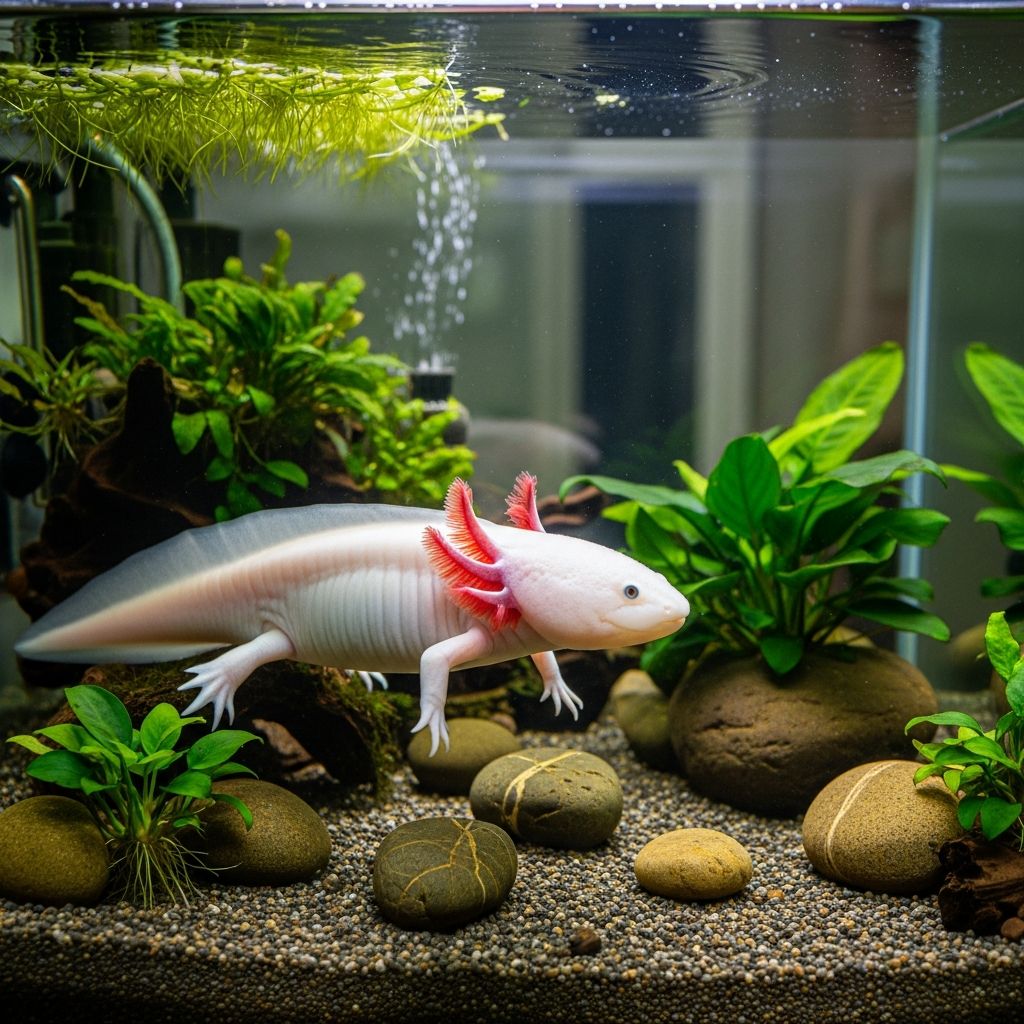
Axolotl Care Guide: Creating the Perfect Environment for Your Aquatic Companion
The axolotl (Ambystoma mexicanum) is a fascinating and unique aquatic amphibian that has become increasingly popular as a pet. These remarkable creatures, native to Mexico, are known for their perpetual smile and feathery external gills. However, caring for an axolotl requires dedication and knowledge. This comprehensive guide will walk you through everything you need to know to provide your axolotl with a healthy, comfortable home.
Housing and Tank Requirements
Providing appropriate housing is the foundation of successful axolotl care. Your axolotl needs a spacious, well-designed tank that meets its specific requirements.
Tank Size and Setup
A minimum 20-gallon long aquarium is recommended for a single adult axolotl. For each additional axolotl, add at least 10 gallons to prevent aggression and territorial disputes. The horizontal dimensions of the tank are more important than height, as axolotls are bottom-dwelling creatures that prefer length and width for movement. Avoid tall, narrow tanks that don’t provide adequate floor space. The tank should be kept in a location away from direct sunlight, heating vents, and high-traffic areas, as these can cause stress to your axolotl.
Substrate Selection
Choosing the right substrate is crucial for your axolotl’s safety and well-being. A very soft, fine sand with less than 1 mm grain size poses the least risk for axolotls. Any substrate with particles larger than 2 mm diameter is gravel, which can cause impaction if ingested. Young axolotls cannot be safely kept on sand because particles are too large for their smaller bodies to pass through. It is recommended to wait until your axolotl is at least 15 cm (6 inches) long before using sand substrate. For juvenile axolotls, a bare bottom tank or fine-grade substrate designed for aquatic use is safer.
Decor and Hiding Spots
Ample hiding spots provide a more comfortable environment and reduce stress. Axolotls naturally seek shelter and appreciate places to retreat. Suitable decorations include PVC pipes, cave structures, and dense aquatic plants. Marimo balls can be used with axolotls as long as they are larger than the axolotl’s head, preventing accidental ingestion. Smooth decorations without sharp edges protect the delicate skin and external gills of your pet. Avoid decorations with small crevices where your axolotl could become trapped.
Aquatic Plants
Aquatic plants provide excellent hangout spots for axolotls while contributing to water quality. Some common houseplants such as pothos and monstera can be partially submerged in your tank to help absorb nitrates and provide additional resting areas. Live aquatic plants like Java ferns and Anubias are also suitable choices. Plants help create a more naturalistic environment while offering psychological benefits through enrichment.
Water Parameters and Filtration
Maintaining proper water conditions is essential for axolotl health. These aquatic amphibians are sensitive to poor water quality and temperature fluctuations.
Temperature Management
Temperature is arguably the most critical factor in axolotl care. Axolotls are most comfortable in water between 15-20°C (60-68°F). Temperatures higher than 20°C (68°F) will quickly lead to stress and the development of disease. Conversely, temperatures lower than 15°C (60°F) will slow metabolism, which is detrimental for prolonged periods. In warm climates or during summer months, an aquarium chiller may be necessary to maintain appropriate water temperature. A reliable water thermometer should be used to monitor temperature consistently.
Water Quality Parameters
Maintaining stable water chemistry is vital for preventing disease and stress. A water quality tracking sheet should be maintained with your tank to monitor changes over time. Key parameters to track include:
- pH: Maintain between 6.5-8.0 for optimal health
- Ammonia: Should be 0 ppm at all times
- Nitrite: Must remain at 0 ppm
- Nitrate: Keep below 20 ppm through regular water changes
- Oxygen saturation: Should be 70-100%
- General hardness: Hard water helps maintain skin integrity
- Salinity: 0 g/L (freshwater only)
Regular testing helps you identify problems before they affect your axolotl’s health. A Freshwater Master Test Kit by API is recommended for comprehensive water analysis.
Water Changes and Maintenance
Axolotls are messy animals and quickly pollute their water with their heavy bioload. In an established tank with a stable nitrogen cycle, water changes must be performed at least weekly. Change 20-30% of the water during each change. Some keepers perform more frequent changes (1-3 times weekly with 30-50% water replacement) based on tank bioload and water quality measurements. A siphon and large bucket are essential tools for performing efficient water changes. Spot cleaning and removal of uneaten food between water changes helps maintain water quality.
Water Conditioners
A water conditioner must be used when adding any new water to the tank to remove chlorine and chloramines. The best water conditioners for axolotls remove chlorine and chloramines while detoxifying ammonia and nitrites. Seachem Prime and Fritz Complete are commonly recommended safe options. Avoid conditioners containing aloe vera or other plant extracts, as these are toxic to axolotls. Words like “natural,” “plant,” “herbal extract,” “slime coat,” or “stress” on labels often indicate aloe content. Additionally, avoid conditioners containing iodine.
Appropriate Water Sources
Not all water sources are suitable for axolotls. Safe water options include conditioned tap water, spring water, and well water. However, reverse osmosis water and distilled water should be avoided because they lack vital minerals and salts necessary for axolotl health. If using well water, ensure you know when your local water authority performs shock treatments each year, as residual chlorine may require conditioning.
Filtration System
A gentle filtration system is important but must not create strong currents. Rapid water currents are stressful and traumatic to axolotls. Hang-on-back filters, sponge filters, and canister filters can all be used effectively if output is reduced or directed to minimize flow. An appropriately rated filter helps maintain water quality between water changes by removing waste and controlling nitrogen cycle byproducts.
Feeding and Nutrition
Proper nutrition is essential for maintaining health and supporting growth in axolotls. These carnivorous amphibians require a meat-based diet and have specific feeding requirements based on age and size.
Feeding Frequency
Adult axolotls should be fed 3-4 times per week, with some sources recommending feeding once every 2-3 days as much as they will eat per feeding. Younger axolotls less than 8 inches require more frequent feeding. Feed as much as your axolotl can eat in 5-10 minutes, then remove any uneaten food to maintain water quality. Overfeeding leads to obesity and water quality degradation.
Appropriate Food Options
Axolotls require a meat-based diet and grip and swallow their food rather than biting or tearing it. Suitable food options include:
- Earthworms and nightcrawlers
- Blackworms
- Cooked shrimp
- Sinking salmon pellets
- Small freshwater feeder fish (silversides)
- Various insects
If feeding live fish, they must be quarantined for a minimum of two weeks and treated with broad-spectrum medications to prevent parasitic, fungal, and bacterial infections. For this reason, worms or non-live food options are strongly recommended to avoid illness. Avoid feeding insects with tough exoskeletons like mealworms, which axolotls cannot digest well. Crickets should only be fed occasionally (1-2 times per month in small amounts).
Portion Control
Proper portion sizing prevents obesity and maintains water quality. The recommended portion is about five 3/16″ pellets per feeding for adults. When feeding live food, offer only what your axolotl can consume within 5-10 minutes. Some keepers recommend feeding six days per week rather than daily, allowing a fasting day to promote digestive health.
Lighting Considerations
Axolotls prefer not to be in bright light and need adequate places to hide. Bright lighting can cause stress and should be avoided. Position your tank away from windows receiving direct sunlight. If artificial lighting is used, keep it on a 12-hour light-dark cycle at low intensity. Stress from excessive lighting can lead to disease susceptibility and behavioral problems.
Acclimation and Introduction
Proper acclimation when introducing a new axolotl to your tank is crucial for minimizing stress and preventing shock.
Acclimation Process
Follow these steps for proper acclimation:
- Open the bag holding your new axolotl and gently pour the water and animal into a large bowl or container
- Slowly add ¼ cup of water from your cycled aquarium to the container once every 5 minutes for 30 minutes
- After 30 minutes, use a net to gently remove your axolotl from the container and place it into your aquarium
- Do not pour the acclimation water back into the aquarium to prevent introducing pathogens
This gradual acclimation process allows your axolotl to adjust to the new water parameters without experiencing osmotic shock.
Common Health Issues and Treatment
Despite proper care, axolotls can experience health problems. Recognizing and treating these issues promptly is important.
Fungal and Bacterial Infections
Fungal and bacterial infections are common in stressed or poorly maintained tanks. Indian almond leaves are recommended for their anti-fungal, anti-bacterial, and antioxidant properties. Black tea can treat minor fungal infections. For severe cases, Methylene Blue is an effective treatment.
Parasitic Infections
Parasitic infections may occur, particularly if live food sources are contaminated. PraziPro is used to eliminate harmful parasites. Proper quarantine of feeder fish prevents most parasitic infections.
Tank Maintenance for Health
Many health issues stem from poor water quality or temperature stress. Maintaining appropriate tank conditions, performing regular water changes, and keeping temperature stable prevent most common problems. A water quality sheet allows tracking of water parameters over time, helping identify trends before they cause disease.
Essential Equipment Checklist
To properly care for your axolotl, ensure you have the following equipment:
- 20-gallon minimum tank (longer is better)
- Gentle filtration system (sponge or hang-on-back filter)
- Water thermometer to monitor temperature
- Aquarium chiller (for warm climates)
- Water test kit (Freshwater Master Test Kit by API recommended)
- Water conditioner (Seachem Prime recommended)
- Siphon for water changes
- Large bucket for water changes
- Appropriate substrates or bare bottom setup
- Hiding spots and decorations
- Indian almond leaves for health maintenance
- Medications (Methylene Blue, PraziPro) for emergencies
Frequently Asked Questions
Q: What is the lifespan of an axolotl?
A: Well-cared for axolotls have a lifespan of 10-15 years, making them a long-term commitment as pets.
Q: Are axolotls easy pets?
A: Despite their appeal, axolotls are not easy pets to care for. They require cold water (often requiring a chiller), are prone to illness, need weekly water changes, direct feeding, and manual waste removal.
Q: Can axolotls be housed together?
A: While axolotls can sometimes be housed together, they are territorial and may become aggressive. If housing multiple axolotls, provide at least 10 additional gallons per extra animal and monitor for conflicts.
Q: What temperature is ideal for axolotls?
A: Axolotls are most comfortable in water between 15-20°C (60-68°F). Temperatures above 20°C cause stress and disease, while temperatures below 15°C slow metabolism dangerously.
Q: How often should I perform water changes?
A: Water changes should be performed at least weekly with 20-30% water replacement. Some tanks require 1-3 times weekly changes depending on bioload and water quality.
Q: What should I feed my axolotl?
A: Axolotls require a meat-based diet including earthworms, blackworms, cooked shrimp, or sinking salmon pellets. Adults should eat 3-4 times weekly, consuming only what they can eat in 5-10 minutes.
Q: Can I use sand in my axolotl tank?
A: Fine sand (less than 1 mm grain size) can be used for adult axolotls over 15 cm (6 inches) long. Younger axolotls require bare bottom tanks to prevent dangerous impaction.
Q: What water conditioner is best for axolotls?
A: Seachem Prime is the most commonly recommended water conditioner for axolotls as it is axolotl-safe and removes chlorine, chloramines, and detoxifies ammonia and nitrites. Avoid conditioners containing aloe vera.
References
- Axolotl Care Sheet — Agave Vet Care. 2023. https://agavevetcare.com/wp-content/uploads/2023/10/Axolotl-Care-Sheet.pdf
- Axolotl Care Guide — Axolotl Central. Accessed 2025. https://www.axolotlcentral.com/axolotl-care-guide
- The Best Axolotl Care Guide in the World — Axolotl Planet. Accessed 2025. https://axolotlplanet.com/blogs/all-about-axolotls/the-best-axolotl-care-guide-in-the-world
Similar Articles








Read full bio of Sneha Tete


