
Avoiding Raw Food in Cats: Safety & Nutrition
Understand the risks of raw food diets for cats and learn safer feeding alternatives.
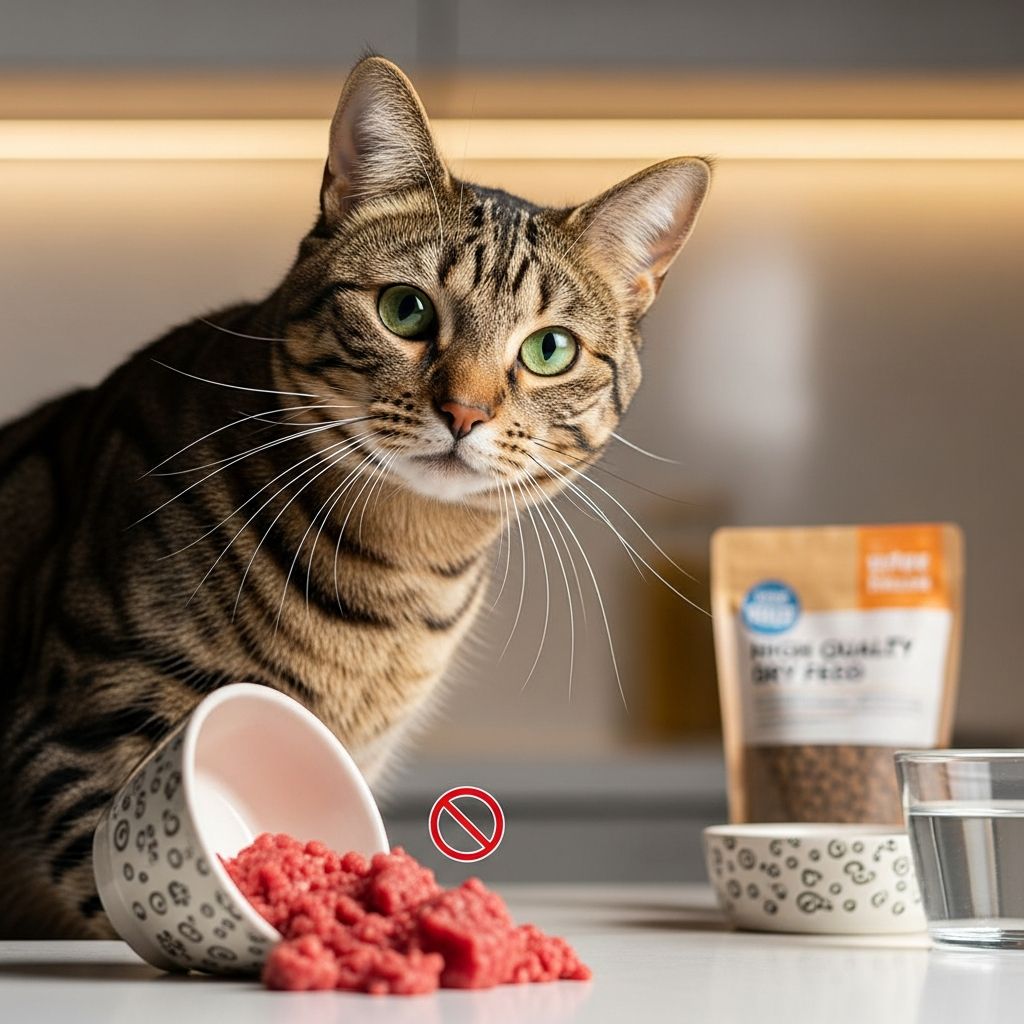
Understanding Raw Food Diets for Cats
The practice of feeding raw food to cats has gained popularity among some pet owners who believe it mimics a cat’s natural diet. However, veterinary professionals and major health organizations have significant concerns about this feeding practice. The Centers for Disease Control and Prevention (CDC), the Center for Veterinary Medicine (CVM), the US Food and Drug Administration (FDA), and the Canadian Veterinary Medical Association (CVMA) all maintain a unified position: feeding raw food to cats poses potential dangers to the cat itself, other household pets, and the pet owner.
Understanding the specific risks associated with raw food diets is essential for any cat owner considering this feeding approach. While the appeal of a “natural” diet is understandable, the reality involves serious health considerations that deserve careful attention.
Primary Concerns With Raw Food Diets
Three main concerns stand out when evaluating raw food diets for felines:
Infectious Disease Risks
The most significant concern with raw meat is the potential for bacterial contamination. A comprehensive study conducted from 2011 through 2012 examined commercially available raw pet foods, specifically frozen products made from ground meat or sausage. The results were alarming: nearly 25% of the raw food samples tested positive for harmful bacteria, including Salmonella species and Listeria monocytogenes.
Beyond these two pathogens, researchers have identified numerous other bacteria commonly found in raw pet foods that pose health risks. These include Campylobacter species, Clostridium difficile, Clostridium perfringens, Clostridium botulinum, Escherichia coli, Yersinia enterocolitica, and enterotoxigenic Staphylococcus aureus. These bacteria can sicken not only the cat consuming the raw food but also the human family members handling it during preparation.
The transmission risk extends beyond direct consumption. Harmful bacteria shed through saliva or feces can contaminate other household pets, even those not eating the raw food diet. This cross-contamination poses a significant public health concern for multi-pet households.
Dietary Nutritional Imbalances
Cats have specific nutritional requirements that must be met consistently for optimal health. These requirements include essential amino acids, fatty acids, vitamins, and minerals that must come from their food sources. Cats are obligate carnivores, meaning they require animal-based proteins and have unique metabolic requirements that differ significantly from other pets like dogs.
Many commercially available raw food diets do not include a nutritional adequacy statement on their labels. This omission indicates a significant risk: the diet may be missing essential nutrients, contain insufficient quantities of certain nutrients, or have excessive amounts of others. Homemade raw diets present an even greater nutritional challenge. Unless a recipe has been specifically formulated by a veterinary nutritionist, homemade raw diets are unlikely to be complete and balanced, potentially leading to serious nutritional deficiencies over time.
Foreign Body Obstruction
Raw food diets often include bones or bone fragments that pose serious intestinal obstruction risks. Unlike cooked bones, which become more brittle and digestible, raw bones can remain intact as they pass through the digestive tract. When these pieces become lodged in the intestines, they create a blockage that prevents normal digestion and movement of food through the system.
Foreign body obstructions frequently require surgical intervention to remove the blocking material. In severe cases, bone fragments can penetrate the intestinal wall, leading to life-threatening complications such as sepsis and internal bleeding. The potential costs and health consequences of these emergencies are substantial.
Clinical Signs of Bacterial Infection
Cats consuming contaminated raw food may display various clinical symptoms indicating infection or digestive distress. Pet owners should watch for:
– Vomiting- Diarrhea (often bloody)- Fever- Loss of appetite (inappetence)- Lethargy and reduced activity
These symptoms can escalate quickly, particularly in kittens, senior cats, or cats with compromised immune systems. Any cat exhibiting these signs should receive immediate veterinary attention.
Protective Measures if You Choose to Offer Raw Food
While veterinary healthcare teams strongly recommend avoiding raw food completely, some pet owners may choose to offer raw food despite the risks. If you decide to proceed, implementing these precautions can help reduce—though not eliminate—the risk of bacterial contamination:
Food Handling and Storage
– Keep raw food frozen until ready to use; do not allow it to thaw at room temperature- Thaw raw food only in the refrigerator or microwave, never in a sink or on a counter where bacteria can proliferate- Keep raw food completely separate from other household food items- Use dedicated utensils and cutting surfaces for raw pet food, never intermingling with human food preparation areas- Clean and disinfect all surfaces and objects that come into contact with raw food, including cutting boards, bowls, and utensils
Personal Hygiene Practices
– Thoroughly wash your hands with soap and water immediately after handling raw food- Wash your hands after petting or being licked by your cat, especially if they have recently consumed raw food- Avoid kissing your cat on the face or allowing them to lick your face, particularly if they have just eaten raw food- Clean litter boxes frequently and wash your hands thoroughly afterwards
Food Storage and Disposal
– Cover and refrigerate any raw food your cat does not consume within the feeding period- Discard uneaten raw food safely rather than leaving it exposed- Never leave raw food at room temperature for extended periods
Nutritional Adequacy in Raw Food Diets
Raw food diets come in two primary forms: commercial products and homemade preparations. Each presents different nutritional challenges.
Commercial Raw Food Options
When evaluating commercial raw food products, cat owners should look for a nutritional adequacy statement on the package label. This statement indicates that the food has been tested and verified to contain all essential nutrients in appropriate quantities and proportions—making the diet “complete and balanced.” Many commercial raw food products lack this statement, creating uncertainty about whether the diet provides adequate nutrition.
Homemade Raw Diets
Homemade raw diets present particular nutritional concerns. Without formulation by a qualified veterinary nutritionist, these diets are highly likely to be nutritionally incomplete or unbalanced. The complexity of feline nutritional requirements means that well-intentioned but uninformed meal preparation frequently results in deficiencies or excesses of critical nutrients.
The Question of Bones in Raw Diets
Proponents of raw food diets often cite the consumption of bones as a natural aspect of a cat’s ancestral diet. However, this argument overlooks critical differences between wild predation and domestic feeding. Wild cats consume freshly killed prey with bones in their natural state, but domesticated cats eating commercially prepared raw food with preserved bones face different digestive challenges.
The intestinal tract is not designed to digest bone material, and fragments can accumulate and cause blockages. Even small bone pieces can cause significant problems. The risk of foreign body obstruction, requiring emergency surgical intervention, is a serious consequence that often results in substantial veterinary costs and potential long-term complications for the cat.
Evaluating Raw Food Safety Standards
If you decide to feed a raw food diet despite the documented risks, certain questions should be posed to the manufacturer before selecting a product:
– What food safety protocols does the company implement?- Has the product undergone pathogen testing?- Does the manufacturer employ a “kill step”—a process designed to eliminate harmful bacteria?- Is the diet complete and balanced according to AAFCO (Association of American Feed Control Officials) standards?- What is the company’s track record regarding recalls or contamination incidents?
These questions help identify which raw food products, if any, maintain higher safety standards than others. However, it’s important to note that even products with strong safety protocols carry inherent risks that cannot be completely eliminated.
Comparing Diet Options for Your Cat
| Diet Type | Safety Considerations | Nutritional Adequacy | Cost | Veterinary Recommendation |
|---|---|---|---|---|
| Cooked Commercial Kibble | High – processed and tested | Complete and balanced | Low to moderate | Recommended |
| Cooked Canned Food | High – processed and tested | Complete and balanced | Moderate | Recommended |
| Raw Food | Low – contamination risk | Often incomplete | High | Not recommended |
| Fresh Diet | Variable – depends on manufacturer | Varies widely | High | Conditional |
| Homemade Cooked Diet | Moderate – if prepared correctly | Often incomplete without professional guidance | Moderate to high | With veterinary nutritionist consultation |
Optimal Dietary Approach for Healthy Adult Cats
For healthy adult cats, veterinarians recommend selecting a diet that meets three essential criteria:
– The diet must be nutritionally complete and balanced, containing all essential nutrients in appropriate amounts and proportions- The food must be cooked, eliminating the risk of pathogenic bacterial contamination- The product must have undergone testing for harmful bacteria before distribution to retail locations
Cooked commercial cat foods, whether in kibble or canned form, generally meet these standards and have been formulated with input from feline nutritionists. These products provide a safe, reliable foundation for feline nutrition.
Special Considerations for Alternative Diets
Cats have adapted well to consuming cooked diets over generations of domestication. Contrary to marketing claims suggesting otherwise, cats can digest complex carbohydrates more easily once food has been cooked. This adaptation demonstrates that cooked diets are appropriate and digestible for feline consumption.
If your cat requires an alternative diet due to specific health conditions, food allergies, or intolerances, consult with your veterinarian before making dietary changes. They can evaluate whether limited-ingredient diets, prescription diets, or other specialized options are appropriate for your cat’s individual needs.
Frequently Asked Questions About Raw Food Diets for Cats
Q: Is raw food safer for cats with food allergies?
A: While some owners believe raw diets reduce allergies, limited-ingredient cooked diets are a safer alternative. These are formulated to reduce common allergens while maintaining food safety standards and nutritional completeness.
Q: Can I feed my cat raw food if I take proper precautions?
A: While precautions reduce some risks, they cannot eliminate the danger of bacterial contamination or nutritional imbalances. Veterinarians recommend avoiding raw food entirely rather than relying on precautions.
Q: Will my cat reject cooked food if accustomed to raw?
A: Most cats adapt well to dietary transitions. Gradually mixing increasing amounts of cooked food with raw food over 7-10 days typically allows smooth adaptation without digestive upset.
Q: Are freeze-dried and dehydrated raw diets safer than frozen raw?
A: No. Freeze-drying and dehydrating are not considered adequate methods for reducing pathogen loads. These diets carry similar risks to frozen raw meat.
Q: What should I do if my cat has eaten raw food and shows symptoms?
A: Contact your veterinarian immediately. Symptoms such as vomiting, diarrhea, or fever indicate potential infection requiring professional evaluation and treatment.
Q: Should I inform my veterinarian if I continue feeding raw food?
A: Yes. If you choose to continue a raw diet despite recommendations, inform your veterinarian so they can monitor for potential health issues and offer guidance on safer options.
Making the Best Choice for Your Cat
The decision about what to feed your cat ultimately rests with you as the owner. However, this decision should be informed by current scientific evidence and veterinary consensus. The research clearly demonstrates that the risks of raw food diets—including bacterial contamination, nutritional inadequacy, and foreign body obstruction—significantly outweigh any unproven benefits.
Cooked commercial diets, formulated by feline nutritionists and subjected to rigorous safety testing, provide a reliable, safe foundation for feline nutrition. These diets have been proven through decades of use to support healthy, thriving cats across all life stages.
If you have concerns about your current cat food, specific health conditions affecting your cat’s nutrition, or questions about diet selection, consult with your veterinarian or a board-certified veterinary nutritionist. These professionals can evaluate your cat’s individual needs and recommend the safest, most appropriate dietary approach for your feline companion’s long-term health and wellbeing.
References
- Raw Food Diets in Cats — VCA Animal Hospitals. 2024. https://vcahospitals.com/know-your-pet/avoiding-raw-food-in-cats
- Nutrition – General Feeding Guidelines for Cats — VCA Animal Hospitals. 2024. https://vcahospitals.com/know-your-pet/nutrition-feeding-guidelines-for-cats
- What’s in My Cat’s Food?: Designer Diets, Grain Free Diets — VCA Animal Hospitals. 2024. https://vcahospitals.com/know-your-pet/whats-in-my-cats-food-designer-diets-grain-free-diets
- Choosing the Best Diet for Your Pet — VCA Animal Hospitals. 2024. https://vcahospitals.com/know-your-pet/choosing-the-best-diet-for-your-pet
- Bacterial Contamination in Commercial Raw Pet Foods — Centers for Disease Control and Prevention (CDC). 2024. https://www.cdc.gov
Similar Articles








Read full bio of medha deb




