
Avian Poxviruses in Non-Gallinaceous Birds
Exploring poxviral diseases in wild birds, pet species, and endangered populations beyond chickens and turkeys.
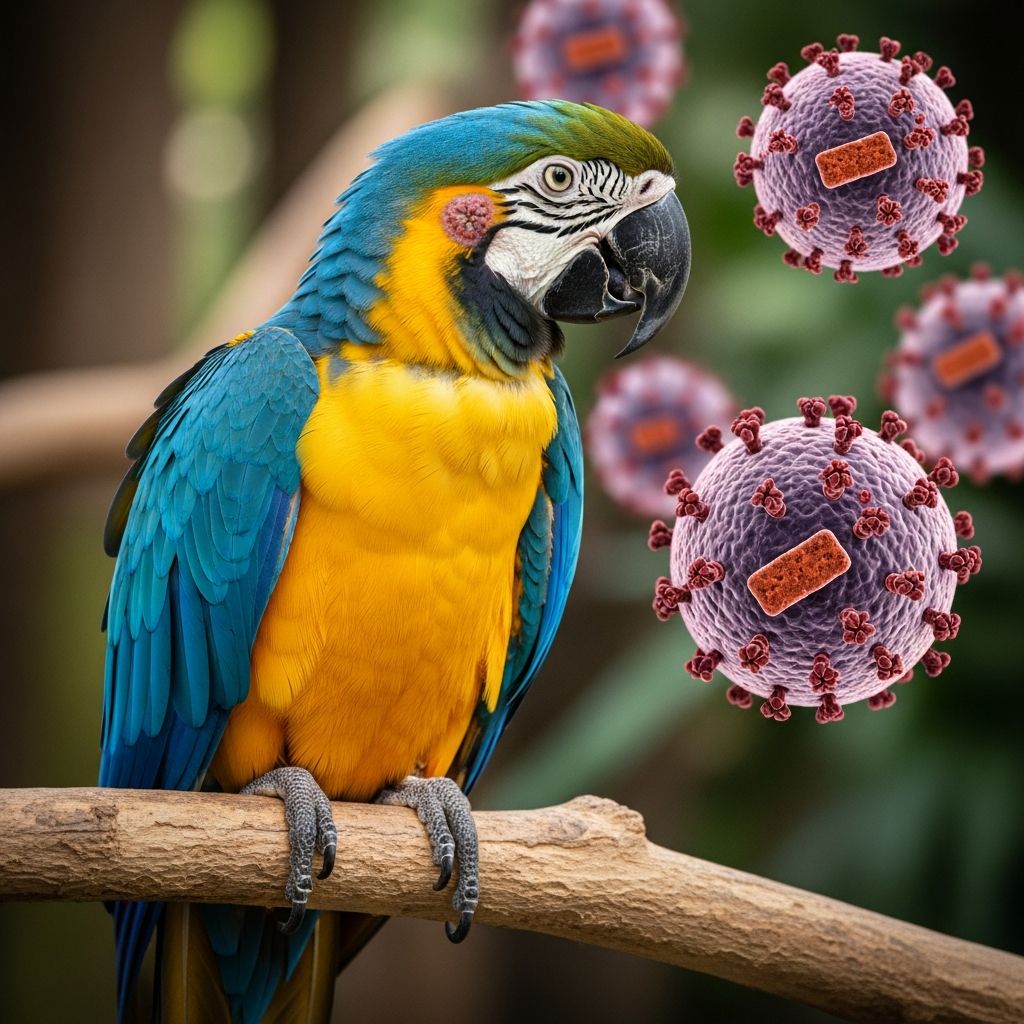
Avian poxviruses represent a significant health threat to a broad spectrum of bird species outside of domestic chickens and turkeys, impacting wild populations, pet birds, and endangered avifauna globally. These infections, caused by members of the Avipoxvirus genus, manifest in various forms and can influence bird demographics in critical ecosystems.
Understanding the Viral Culprits
The family Poxviridae encompasses large, brick-shaped viruses with complex genomes, and within the genus Avipoxvirus, multiple strains have evolved to infect diverse avian hosts. Unlike the well-studied fowlpox virus primarily affecting gallinaceous birds, other avipoxviruses target passerines, psittacines, raptors, and waterfowl. Genetic analyses reveal distinct clades: Clade A (fowlpox-like), Clade B (canarypox-like), and Clade C (psittacinepox-like), with host-specific adaptations evident in phylogenetic studies.
Recognized species include canarypox, pigeonpox, juncopox, sparrowpox, starlingpox, mynahpox, psittacinepox, peacockpox, and penguinpox, among others. Poxviruses from Hawaiian species like crows (Corvus hawaiiensis), geese (Branta sandvicensis), palila (Loxioides baillleui), and ‘apapane (Himatione sanguinea) show unique antigenic profiles distinct from mainland strains.
| Clade | Representative Strains | Common Hosts |
|---|---|---|
| A (Fowlpox-like) | Quailpox, Turkeypox | Gamebirds, some wild turkeys |
| B (Canarypox-like) | Canarypox, Juncopox | Passerines, finches, starlings |
| C (Psittacinepox-like) | Psittacinepox | Parrots, psittacines |
Phylogenetic research on 57 bird-derived isolates underscores recombination events and host family-specific clustering, such as raptor poxviruses in Accipitriformes.
Affected Bird Species and Geographic Spread
Over 230 wild and domestic bird species across terrestrial and marine environments have been documented with poxvirus infections worldwide, excluding polar extremes. In the U.S., Michigan reports cases in 22 species including mourning doves, wild turkeys, bald eagles, American crows, and songbirds like goldfinches and cardinals. Southeastern states highlight vulnerabilities in bobwhite quail, mourning doves, finches, and wild turkeys.
Australia documents infections in Australian kestrels, crimson rosellas, and magpies, with uncharacterized strains suggesting undiscovered variants. Pennsylvania notes upland gamebirds, songbirds, and raptors as primary sufferers. Dane County, Wisconsin, treated over 50 cases from 14 species in 2024 alone. Endangered populations, such as Hawaiian forest birds, face population-limiting outbreaks.
- Passeriformes: Finches, sparrows, starlings, robins, cowbirds.
- Psittaciformes: Parrots, cockatiels, lovebirds.
- Falconiformes/Accipitriformes: Hawks, eagles, falcons, buzzards.
- Anseriformes: Geese, swans, occasional waterfowl.
- Other: Penguins, flamingos, condors, mynahs, pigeons.
Clinical Manifestations and Disease Forms
Avian pox presents in cutaneous (dry), diphtheric (wet), septicemic, and ocular forms, with severity varying by strain, host, and immune status. The cutaneous form dominates, featuring wart-like nodules on unfeathered skin—comb, wattles, eyelids, beak, or legs—that may ulcerate and secondary infect.
Diphtheric pox involves mucous membranes of mouth, throat, or trachea, forming yellow-white plaques that obstruct airways, leading to respiratory distress. Septicemic forms are rare and lethal, especially in young or stressed birds. Ocular involvement causes swollen eyelids, conjunctivitis, and potential blindness.
Incubation spans 4–10 days, with lesions healing in 2–4 weeks in survivors, who gain strain-specific immunity. Morbidity reaches 100% in naive flocks, mortality 10–80% depending on form.
Transmission Dynamics
Mosquitoes (e.g., Culex spp.) serve as primary mechanical vectors, transmitting virus via contaminated mouthparts during feeding. Direct contact with scabs or exudates, and aerosol in diphtheric cases, facilitate spread. Birds recover immunity to homologous strains but remain susceptible to heterologous ones.
Outbreaks peak in summer when vectors abound, exacerbated by crowding or stress. Prey-predator transmission occurs, as seen in raptor infections.
Diagnostic Approaches
Diagnosis combines clinical signs, histopathology (e.g., eosinophilic intracytoplasmic inclusions—Bollinger bodies), and molecular confirmation via PCR targeting 4b core protein or fpv167 genes. Electron microscopy reveals poxvirus morphology, while virus isolation on chorioallantoic membrane (CAM) produces pock lesions.
Antigenic differentiation uses cross-protection tests or sequencing, crucial for strain identification.
Treatment Strategies
No specific antiviral exists; supportive care is key. Isolate affected birds, provide soft foods, electrolytes, and antibiotics for secondary bacteria. Surgical debridement aids cutaneous lesions; vitamin A supplementation supports epithelial health.
In rehabilitation, topical antiseptics and fly repellents prevent complications. Mortality drops with prompt intervention.
Prevention and Control Measures
Vaccination employs wing-web application of live avipoxviruses (e.g., fowlpox-canarypox recombinants) or vectored vaccines expressing mammalian antigens, offering cross-protection. Biosecurity—vector control via insecticides, quarantine, and hygiene—curbs outbreaks.
For wild birds, habitat management reduces vector breeding. Conservation programs monitor and vaccinate translocated endangered species.
Ecological and Conservation Implications
Poxviruses drive declines in Hawaiian natives, Galápagos mockingbirds, Canary Island endemics, and bustard reintroductions. In Australia, magpie outbreaks highlight surveillance needs. Climate change may expand vector ranges, intensifying threats.
FAQs
What birds are most at risk for avian pox outside poultry?
Songbirds, doves, raptors, psittacines, and wild turkeys top the list, with over 230 species affected globally.
How do you differentiate avian pox strains?
PCR, sequencing, and phylogenetics identify clades; host specificity and pock morphology on CAM assist.
Can vaccinated birds still get pox?
Yes, heterologous strains may infect, but vaccines reduce severity.
Is avian pox zoonotic?
No, it is avian-specific with no human transmission risk.
How can backyard bird feeders prevent outbreaks?
Clean feeders regularly, use vector screens, and report sick birds to authorities.
References
- Poxviral Infections in Birds Other Than Chickens and Turkeys — Merck Veterinary Manual. 2023. https://www.merckvetmanual.com/poultry/fowlpox/poxviral-infections-in-birds-other-than-chickens-and-turkeys
- Avian Pox — Michigan Department of Natural Resources. 2023. https://www.michigan.gov/dnr/managing-resources/wildlife/wildlife-disease/wdm/avian-pox
- Poxviruses and Australian Wild Birds — Wildlife Health Australia. 2022. https://wildlifehealthaustralia.com.au/Portals/0/ResourceCentre/FactSheets/Avian/Poxviruses_and_Australian_Wild_Birds.pdf
- Avian Pox Factsheet — University of Georgia Southeastern Cooperative Wildlife Disease Study. 2024. https://vet.uga.edu/wp-content/uploads/2024/04/SCWDS_factsheet3_avian-pox.pdf
- Worldwide Phylogenetic Relationship of Avian Poxviruses — National Center for Biotechnology Information (PMC). 2013-04-11. https://pmc.ncbi.nlm.nih.gov/articles/PMC3624294/
- Avian Pox — Pennsylvania Game Commission. 2023. https://www.pa.gov/agencies/pgc/wildlife/wildlife-health/wildlife-diseases/avian-pox
Similar Articles








Read full bio of medha deb


