
Avian Louse Flies: Parasitic Threats to Birds
Discover the biology, impact, and control of hippoboscid flies that plague birds worldwide, from songbirds to pigeons.
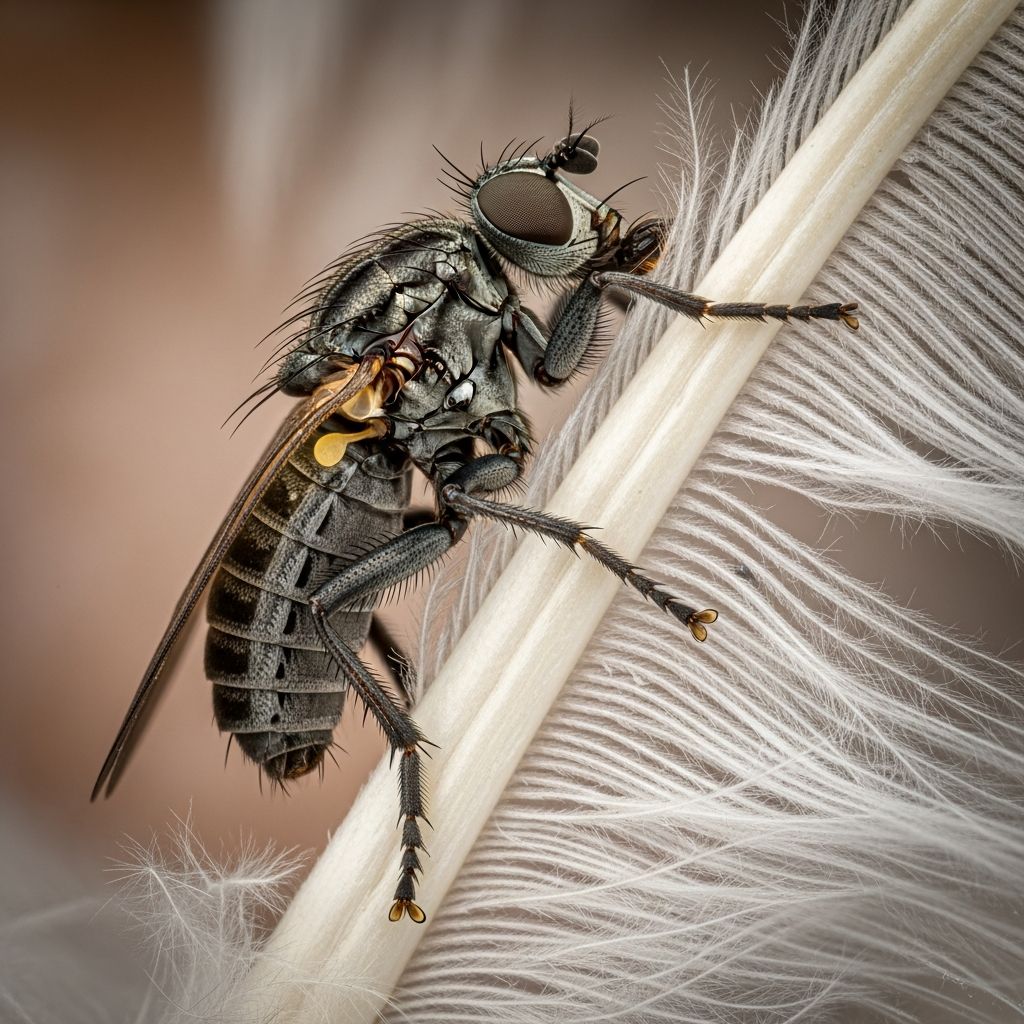
Obligate blood-sucking insects known as louse flies or hippoboscids pose significant challenges to bird populations worldwide. These flies from the family Hippoboscidae target birds, attaching firmly and feeding on blood while potentially spreading diseases.
Biological Characteristics and Adaptations
Louse flies exhibit remarkable adaptations for a parasitic lifestyle. Typically dark brown, flat, and leathery, they measure around 6-7.5 mm with piercing mouthparts designed for blood meals. Many species possess wings enabling swift flight to locate or switch hosts, though some are wingless or have reduced wings.
These flies belong to the order Diptera and superfamily Hippoboscoidea, where larvae develop internally within the female. Females produce live larvae nourished by specialized milk glands, depositing them as prepupae onto substrates like nests or feathers. Pupae are shiny, seed-like, and endure diapause, emerging as adults ready to seek hosts.
- Winged forms: Such as Pseudolynchia canariensis, excel in mobility, infesting pigeons and raptors across tropical regions.
- Wingless forms: Like certain Ornithomya species, rely on host movement for dispersal.
- Size and color: Compact bodies (up to 7 mm) with robust legs for clinging to feathers.
Diversity of Species Infesting Birds
Over 200 hippoboscid species exist globally, with many specialized for avian hosts. Key genera include Ornithomya, Ornithoica, and Pseudolynchia.
| Species | Primary Hosts | Geographic Range | Notable Traits |
|---|---|---|---|
| Pseudolynchia canariensis | Pigeons, songbirds, raptors | Tropical/subtropical, southern US to New England | Winged, swift flier, painful human bites |
| Ornithoica avicularia | Reed birds, migrants | Europe, Hungary studies | Habitat-specific, ground feeders |
| Ornithoica turdi | Thrushes, shrikes, meadow birds | Europe | Forest/meadow preference, short migrants |
| Ornithoica fringillina | Non-ground feeders | Europe | Avoids ground-feeding birds |
| Ornithomya laticornis | Tits, possibly migrants | Africa to Europe | Rare vagrant records |
Studies in Hungary revealed O. avicularia as dominant on reed habitats, while O. turdi favored forests and meadows. Co-infestations are rare, with max two species per bird.
Life Cycle and Reproduction Strategies
Hippoboscids employ viviparous reproduction, a key adaptation. Females retain a single larva at a time, feeding it via accessory glands until maturity. The larva pupates immediately upon deposition, with pupal periods of 19-36 days depending on season.
Adults survive months on hosts, with energetics demanding large blood meals—pupae can exceed adult weight pre-feeding. Overwintering occurs as pupae in nests or soil, synchronizing with bird breeding.
- Female ingests blood multiple times.
- Larva develops internally (10-20 per lifetime).
- Deposits motile prepupa on host or environment.
- Pupation: 3-5 weeks to adult emergence.
- Adults seek hosts via flight or phoresis.
Host Specificity and Ecological Patterns
Host choice correlates with bird ecology. Statistical analyses show habitat (reed vs. forest), migration distance, and foraging height influence infestation.
- Habitat: O. avicularia in reeds; O. turdi in meadows/forests (P < 0.0001).
- Migration: O. fringillina on long migrants; O. turdi on short (P=0.0343).
- Foraging: O. avicularia on ground feeders (36%); O. turdi prefers ground (64%).
Vagrants like O. laticornis hitchhike on migrants from Africa, surviving months post-arrival.
Health Impacts on Birds and Zoonotic Risks
These flies crawl rapidly on unfeathered skin, sucking blood and causing irritation. Heavy infestations lead to anemia, feather damage, and reduced fitness. Critically, they vector avian protozoans like Haemoproteus, transmitting via contaminated mouthparts.
Humans handling infested birds face painful bites from species like pigeon flies, lasting days with swelling. While not primary disease vectors for mammals, they highlight zoonotic potential.
Detection and Veterinary Diagnosis
Infestations manifest as ruffled feathers, skin irritation, and visible flies. Part the feathers for inspection—unique winged, agile adults confirm presence.
- Visual cues: Dark, flat flies darting swiftly.
- Symptoms: Anemia, weight loss, behavioral changes.
- Lab confirmation: Microscopy for protozoans in blood smears.
Management and Prevention Tactics
Control focuses on hygiene, insecticides, and host management. For pigeons and captives:
| Method | Application | Effectiveness |
|---|---|---|
| Insecticidal dusts/sprays | Direct on birds/nests | High, targets adults/pupae |
| Nest sanitation | Remove debris post-breeding | Prevents pupal survival |
| Quarantine new birds | Inspect before introduction | Stops spread |
| Biological: Predators | Encourage insectivores | Moderate, natural control |
Pyrethroids or organophosphates prove effective, but rotate to avoid resistance. Wild bird management emphasizes habitat hygiene.
Research Frontiers and Global Distribution
Recent phylogenetics reveal non-monophyletic groups within subfamilies, informing evolution. Distribution spans continents: P. canariensis in Americas subtropics; European Ornithoica species track bird migrations.
Climate change may expand ranges via altered migrations. Ongoing checklists catalog 213+ species, underscoring biodiversity.
Frequently Asked Questions (FAQs)
What do avian louse flies look like?
Dark brown, flat, leathery flies, 6-7.5 mm long, often winged and agile.
Can louse flies harm humans?
Yes, bites from handling birds are painful, lasting days, though transmission rare.
How do they spread diseases?
As intermediate hosts/vectors for Haemoproteus via blood-feeding.
Are there wingless bird louse flies?
Yes, some Ornithomya species shed wings post-host location.
How to treat infested pigeons?
Use approved insecticides, clean lofts, isolate birds.
References
- Hippoboscid or Louse Flies of Birds — Merck Veterinary Manual. 2023. https://www.merckvetmanual.com/integumentary-system/flies/hippoboscid-or-louse-flies-of-birds
- Contributions to our knowledge on avian louse flies — PMC/NCBI. 2024-05-15. https://pmc.ncbi.nlm.nih.gov/articles/PMC11129389/
- Hippoboscidae — Wikipedia (informed by primary sources). 2024. https://en.wikipedia.org/wiki/Hippoboscidae
- Louse fly — Britannica. 2024. https://www.britannica.com/animal/louse-fly
- Keds, Flat-Flies and Bat-Flies — Royal Entomological Society. 2022-01. https://www.royensoc.co.uk/wp-content/uploads/2022/01/Vol10_Part07_Hutson.pdf
- A checklist of louse flies — BioOne. 2024. https://bioone.org/journals/integrative-systematics-stuttgart-contributions-to-natural-history/volume-7/issue-2/2024.995170/A-checklist-of-louse-flies-Diptera–Hippoboscidae-and-their/10.18476/2024.995170.full
Similar Articles








Read full bio of medha deb


