

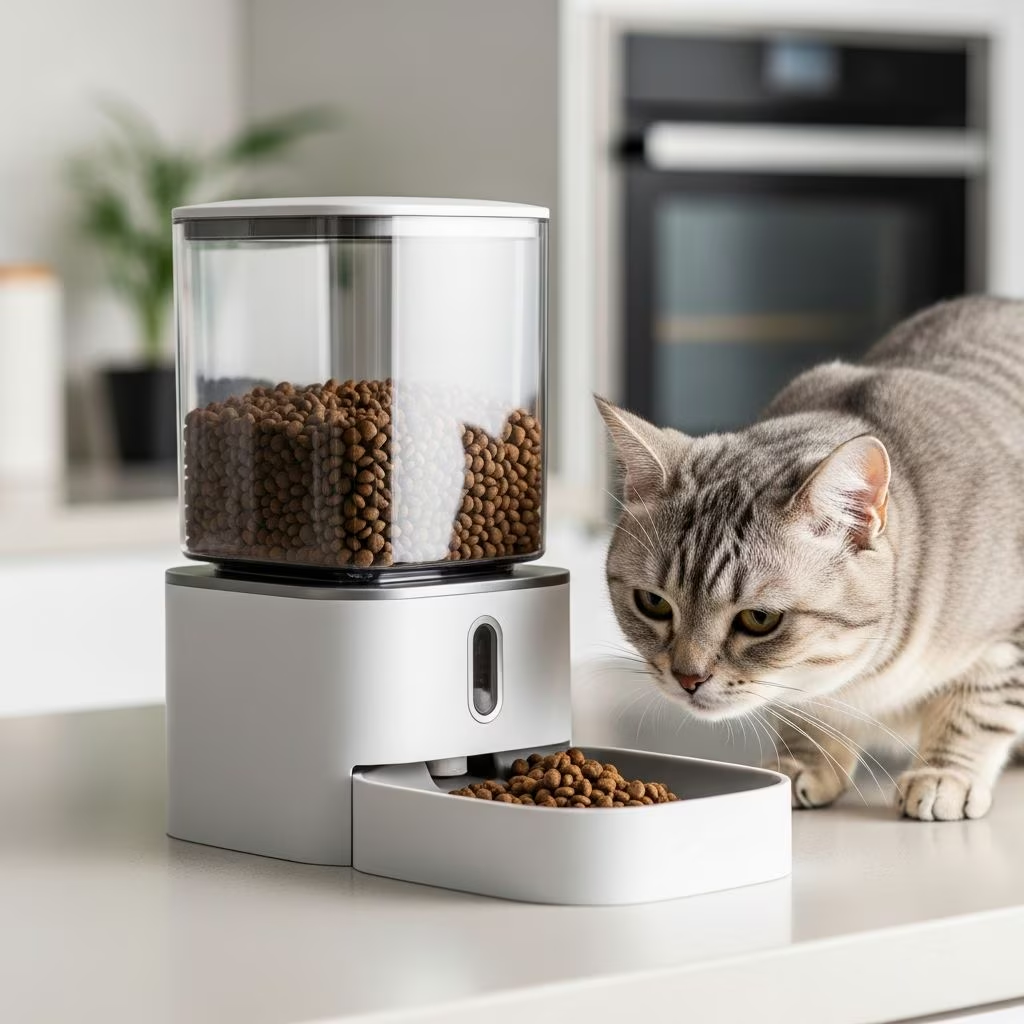
Pet ownership demands consistent care, and feeding schedules represent one of the most important daily responsibilities. For cat owners with demanding work schedules or those seeking convenient feeding solutions, automatic dispensing systems offer practical alternatives to traditional hand-feeding. Among the various automatic feeding options available, gravity-based feeders have gained popularity due to their simplicity, affordability, and straightforward operation. This comprehensive guide explores how these systems function, their practical applications, and their suitability for different feline needs.
The Mechanics Behind Gravity-Based Feeding Systems
Gravity feeders operate on a fundamental principle of physics—the natural downward force exerted by gravity on objects. These devices consist of two primary components: an elevated storage container positioned above a food bowl. The storage container holds between one and three pounds of dry cat food, while the lower bowl serves as the eating surface. As your cat consumes food from the bowl, space becomes available in the feeding dish. This reduction in food volume allows kibble from the storage container above to automatically flow downward through an opening or chute, continuously replenishing the bowl.
The elegance of this design lies in its lack of mechanical complexity. Unlike powered feeders that require electricity or batteries, gravity feeders function entirely through passive physics. The food naturally descends due to gravitational pull, requiring no motors, electronics, or programming. This fundamental simplicity translates directly into reliability—with minimal moving parts, there are fewer components that can malfunction or require maintenance.
Most gravity feeders are manufactured from durable plastic materials, making them lightweight and easy to clean. The plastic construction also renders these devices suitable for both indoor and outdoor placement, as they withstand various environmental conditions without requiring protective housing. Whether positioned in your kitchen, living room, or on an outdoor patio, gravity feeders operate identically regardless of location.
Practical Applications and Placement Considerations
The versatility of gravity feeders extends to their deployment across diverse living situations. Apartment dwellers find these feeders particularly suitable because they require no electrical outlets or battery replacements. Multi-cat households benefit from the continuous food availability that gravity feeders provide throughout the day. Unlike timed feeders that dispense meals at programmed intervals, gravity systems ensure that food remains accessible whenever your cat expresses hunger.
For outdoor environments, gravity feeders eliminate concerns about power sources entirely. They can be safely positioned on decks, patios, or covered outdoor areas without requiring weatherproof electrical components. This makes them ideal for supplemental feeding of outdoor cats or for owners who maintain both indoor and outdoor feeding stations.
One important consideration involves multi-pet households. If your home includes dogs or other animals with different dietary requirements than your cats, gravity feeders should be positioned where only your feline companions can access them. Cat food formulations differ substantially from dog nutrition, and feeding the wrong species their inappropriate diet can cause digestive upset or other health complications.
Financial Investment and Accessibility
A significant advantage of gravity feeders involves their cost-effectiveness. These devices typically range from fifteen to thirty dollars, making them substantially more affordable than their powered counterparts, which often exceed one hundred dollars. This accessible price point allows budget-conscious pet owners to implement automatic feeding without substantial financial investment. Additionally, gravity feeders are widely available through both online retailers and brick-and-mortar pet supply stores, ensuring easy procurement regardless of your preferred shopping method.
The lack of ongoing expenses further enhances their financial appeal. Powered feeders require periodic battery replacements or incur electricity costs, while gravity systems impose no recurring expenditures beyond the initial purchase price. This makes them particularly attractive for owners seeking genuinely economical feeding solutions.
When Gravity Feeders Excel: Key Advantages
Gravity feeders shine in specific scenarios and for particular cat populations. For healthy adult cats without dietary restrictions or eating behavioral issues, gravity feeders provide excellent service. The hands-off nature of these systems appeals to busy professionals who work extended hours and want assurance that their cats have continuous access to food while they’re away.
The minimal setup requirements make gravity feeders immediately functional. Unlike complex electronic systems requiring app downloads, Wi-Fi configuration, or programming, gravity feeders work straight out of the box. Fill the storage container, position it above the bowl, and the system begins functioning automatically.
Maintenance and cleaning prove straightforward with gravity feeders. Plastic construction allows simple hand washing or dishwasher cleaning. The absence of electronic components eliminates concerns about water damage during cleaning, a consideration that complicates maintenance of powered feeding systems.
For owners with space constraints, gravity feeders occupy minimal floor area. Their compact vertical design fits easily into corners, under shelving, or in tight kitchen spaces where larger feeding systems wouldn’t fit. This spatial efficiency makes them suitable for apartment living or homes where kitchen real estate is premium.
Significant Limitations: Understanding Gravity Feeder Constraints
Despite their advantages, gravity feeders present notable limitations that make them unsuitable for many cats. The most critical constraint involves portion control. These systems cannot restrict the amount of food your cat consumes daily. Cats possess instinctive eating behaviors that differ markedly from humans—many felines eat opportunistically whenever food is available, rather than eating only until satiation. For cats predisposed to obesity or weight gain, unlimited food access creates substantial health risks.
Veterinary research demonstrates strong links between feline obesity and multiple serious health conditions, including diabetes, arthritis, heart disease, and urinary disorders. Cats that tend to overeat represent poor candidates for gravity feeder systems because these devices cannot prevent excessive consumption. If your veterinarian has recommended specific portion sizes for your cat due to weight management or health concerns, gravity feeders cannot accommodate those dietary restrictions.
Rapid eating presents another behavioral issue incompatible with gravity feeders. Some cats consume their meals quickly, sometimes so rapidly that they regurgitate their food shortly after eating. This hasty consumption can result from excitement, anxiety, or simply eating style. Cats that gorge themselves benefit from slow feeders—specially designed bowls with internal ridges or obstacles that force decelerated eating. Gravity feeders offer no such speed-reducing features, making them counterproductive for cats with this behavioral pattern.
The food type restriction represents a fundamental limitation. Gravity feeders work exclusively with dry kibble. Cats requiring wet food diets or those whose veterinarians recommend wet food for health reasons cannot be adequately served by gravity systems. This incompatibility extends to special prescription diets, which often come in wet formulations specifically designed for cats with particular health conditions.
Environmental factors can compromise gravity feeder functionality. In humid climates, moisture can cause dry kibble to clump or cake at the feeder opening, preventing proper food flow. Similarly, if kibble becomes exposed to moisture from any source, the resulting texture changes can obstruct the feeding mechanism, requiring manual clearing of blockages.
Health Conditions and Veterinary Considerations
Cats with diagnosed health conditions warrant careful evaluation before gravity feeder implementation. Diabetic cats often require tightly controlled meal timing and portion sizes to coordinate with insulin injections and maintain stable blood glucose levels. Cats with kidney disease, urinary disorders, or digestive conditions may need specific food types or portion amounts that a gravity feeder cannot provide.
If your veterinarian has established specific dietary recommendations for your cat, particularly those involving portion restrictions, prescription foods, or wet food diets, gravity feeders likely conflict with those recommendations. Your cat’s health must always take precedence over convenience factors. In such cases, consulting with your veterinarian about appropriate feeding methods ensures you’re prioritizing your cat’s medical needs.
Cats with anxiety or feeding-related behavioral issues may experience stress with the always-available food model. Some cats benefit from structured meal times and the interactive component of direct feeding, which reinforces bonding and allows owners to monitor consumption carefully.
Comparing Gravity Feeders to Alternative Automatic Systems
| Feature | Gravity Feeders | Powered Feeders |
|---|---|---|
| Cost | $15–$30 | $55–$350 |
| Power Requirements | None | Electricity or batteries |
| Portion Control | No control | Programmable portions |
| Food Types Supported | Dry food only | Dry, wet, or both |
| Overeating Prevention | Not possible | Yes, through scheduling |
| Remote Monitoring | Not available | Often app-controlled |
| Outdoor Suitability | Excellent | Poor without protection |
| Setup Complexity | Minimal | Requires programming |
Specialized Feeder Alternatives
Beyond gravity feeders, the pet feeding market offers several specialized alternatives designed for specific needs. Microchip-activated feeders incorporate identification technology that recognizes individual cats through implanted microchips, dispensing food only to the intended recipient. This proves invaluable in multi-cat households where different cats require different diets or where one cat tends to eat the other’s food.
Slow feeders address eating speed issues through specially designed bowls containing internal obstacles or ridges. These structural elements force cats to eat around barriers, inherently slowing consumption and potentially reducing vomiting, bloating, and other digestive distress caused by rapid eating.
Wet food dispensers incorporate cooling mechanisms like ice packs to maintain food freshness throughout the day. These systems serve cats requiring or preferring wet food diets and are essential for cats with medical conditions necessitating wet food consumption.
Combination feeders merge multiple technologies—perhaps pairing a gravity feeder for dry kibble with an electronic component for wet food. These hybrid systems provide flexibility for multi-cat households with varying dietary needs.
Determining if a Gravity Feeder Suits Your Cat
Evaluate several factors before selecting a gravity feeder as your feeding solution. Consider your cat’s weight status—healthy-weight cats without obesity history are better candidates than those prone to weight gain. Assess eating speed and behavior; cats that consume food calmly without vomiting or regurgitation issues are appropriate for gravity systems.
Review any veterinary dietary recommendations. If your veterinarian has suggested specific portion sizes, meal timing, or food types, these requirements may contradict gravity feeder functionality. Always prioritize veterinary guidance over convenience factors.
Evaluate your living situation. If you maintain other pets with different dietary requirements, can you position the gravity feeder securely away from other animals? Can you accommodate the device in your current space? Will you need outdoor feeding capability?
Consider your schedule realistically. While gravity feeders provide continuous food access, cats still benefit from interactive feeding and monitoring. Even with automatic feeders, regular health checks, weight monitoring, and veterinary visits remain essential.
Important Limitations When Away from Home
Gravity feeders should never serve as substitutes for professional pet care when you’re away from home for extended periods. While these feeders ensure consistent food availability, cats require supervision, fresh water, litter box maintenance, and monitoring for health issues. A gravity feeder cannot address these comprehensive care needs.
If you plan to be away for more than a day or two, arranging for a trusted pet sitter, professional pet care service, or boarding facility remains essential. These providers ensure your cat receives proper supervision, health monitoring, and the interactive attention that is fundamental to feline wellbeing.
Making Your Decision
Gravity feeders represent legitimate feeding solutions for specific situations—healthy adult cats without eating behavioral problems, owners seeking economical automatic feeding, and situations where portability and power-free operation are valuable. However, cats with weight management concerns, eating speed issues, or specific veterinary dietary requirements need alternative feeding approaches.
Consult with your veterinarian to ensure any automatic feeder aligns with your cat’s individual health profile and nutritional needs. This professional guidance ensures your feeding method prioritizes your cat’s wellbeing while addressing your practical scheduling constraints.
References
- How Do Gravity Cat Feeders Work? Vet-Verified Pros, Cons & Price — Catster. January 2026. https://www.catster.com/nutrition/how-do-gravity-cat-feeders-work/
- Automatic Cat Feeders All You Need To Know! — Cat Tree UK. https://cattree.uk/automatic-cat-feeders-all-you-need-to-know/
- The Ultimate Guide to Automatic Cat Feeders and Water Fountains — Art Your Cat. https://artyourcat.com/blogs/art-your-cat-blog/the-ultimate-guide-to-automatic-cat-feeders-and-water-fountains-choosing-using-and-maintaining-smart-feeding-systems



