Australian Shepherds Solo Time: Managing Alone Hours
Expert guidance on safe alone time duration and prevention strategies for Australian Shepherds
Australian Shepherds Solo Time: Managing Alone Hours Safely and Effectively
Australian Shepherds represent one of the most energetic and intelligent dog breeds available today. Their vibrant personalities and strong bonds with their families make them wonderful companions, yet these same qualities create unique challenges when it comes to managing time away from home. Understanding the specific needs of this breed regarding solo time is essential for any prospective or current Australian Shepherd owner.
Establishing Appropriate Solo Time Limits for Your Australian Shepherd
The cornerstone question for many Australian Shepherd owners centers on duration: how long can these dogs safely remain alone? Industry experts and veterinary professionals recommend that adult Australian Shepherds should not spend more than 3 to 4 hours in solitude at any given time. This timeframe balances the dog’s physiological needs with their psychological requirements for social interaction and mental stimulation.
For puppies, the guidelines become considerably more restrictive. Young Australian Shepherds under six months of age should not be left alone for periods exceeding one hour per month of their age. This constraint reflects the reality that puppies possess limited bladder control and require frequent bathroom breaks, consistent feeding schedules, and regular socialization to develop into well-adjusted adults.
The breed’s developmental stages demand careful attention. Elderly Australian Shepherds may have different requirements based on individual health conditions, potentially requiring more frequent check-ins or shorter solo periods depending on medical circumstances and mobility challenges.
Why Australian Shepherds Struggle With Extended Alone Time
Australian Shepherds were originally bred as herding dogs, a role that demanded constant engagement with their handlers and livestock. This historical background has left an indelible mark on their temperament and behavioral patterns. Contemporary Australian Shepherds retain strong pack instincts and an intense need for social bonding with their human families.
The breed exhibits exceptional intelligence and loyalty, characteristics that paradoxically contribute to their difficulty with solitude. When Australian Shepherds realize their owners have departed, they may experience genuine distress. Their problem-solving abilities, normally an asset, sometimes manifest in destructive ways as they attempt to alleviate boredom and anxiety through furniture destruction, excessive vocalization, and other unwanted behaviors.
This breed’s high energy requirements compound the challenge. Without adequate physical outlets and mental engagement, Australian Shepherds become frustrated residents of their homes, a frustration that typically expresses itself through behavioral issues rather than peaceful rest.
Recognizing and Understanding Separation Anxiety in Australian Shepherds
Separation anxiety represents a genuine clinical condition affecting many Australian Shepherds, characterized by overwhelming distress triggered by isolation from their owners. This condition extends beyond simple loneliness or boredom; it reflects a profound psychological response to perceived abandonment.
Several factors contribute to separation anxiety development:
- Puppyhood developmental stages and natural anxiety responses
- Chronic boredom resulting from insufficient mental and physical stimulation
- Previous experiences of neglect, abuse, or abandonment in rescue dogs
- Lack of gradual conditioning to alone time during early development
- Insufficient confidence-building and independence training
The manifestations of separation anxiety in Australian Shepherds can be particularly challenging for apartment dwellers and urban owners. Common behavioral expressions include destructive chewing, furniture destruction, excessive barking, house soiling despite adequate house training, and escape attempts.
Building Independence and Confidence Through Gradual Conditioning
Preventing separation anxiety requires a deliberate, patient approach beginning during puppyhood or early in the dog’s residence with your family. The fundamental principle involves teaching Australian Shepherds that solo time is a normal, manageable, and ultimately temporary state.
Progressive Desensitization Strategy:
Start by leaving your Australian Shepherd alone for very brief periods—just a few minutes initially. Gradually extend these durations over weeks and months, allowing your dog to develop confidence in your return. Each successful solo period reinforces the understanding that departure is temporary and reunion is certain.
The psychological framing of departure and arrival matters significantly. Avoid making departures emotionally significant by minimizing goodbyes and not creating elaborate pre-departure rituals. Conversely, when returning home, offer genuine recognition and affection to create positive associations with reunion.
Puzzle Toys and Mental Engagement:
Introduce mentally stimulating toys such as puzzle feeders and treat-dispensing toys specifically before departure. These tools accomplish multiple objectives simultaneously: they provide mental engagement that distracts from loneliness, they create positive associations with solo time through reward mechanisms, and they promote cognitive activity that naturally induces fatigue and restfulness.
Meeting Exercise and Physical Activity Requirements
Australian Shepherds demand substantial daily exercise to maintain physical health and mental equilibrium. Adult Australian Shepherds require at least 1 to 2 hours of structured physical activity daily, ideally distributed across multiple sessions. This requirement should be viewed as non-negotiable for breed health and wellbeing.
The nature of exercise matters as much as the duration. Variety and engagement prevent boredom and maintain motivation:
- Structured walking sessions at varying locations and intensities
- Off-leash running and play in secure environments
- Swimming and water-based activities for low-impact cardiovascular work
- Fetch and retrieval games incorporating their natural herding instincts
- Canine sports such as agility, obedience, or herding trials
- Social interactions with other friendly dogs during exercise
Puppies follow a different formula: they require approximately 5 minutes of exercise per month of age, delivered twice daily. An 8-month-old puppy, for example, would need roughly 20 minutes per session twice daily. This graduated approach respects their developing skeletal system while providing appropriate outlet for their energy.
When Australian Shepherds receive insufficient exercise, their pent-up energy invariably seeks outlets through persistent barking, destructive behaviors including chewing and digging, and overall behavioral deterioration.
Crate Training: Creating a Safe Sanctuary
Proper crate training transforms the crate from a confining space into a secure den environment where your Australian Shepherd feels safe and comfortable. When executed correctly, crate training provides multiple benefits simultaneously.
Introduce crate training gradually, allowing your dog to associate the crate with positive experiences through treats, toys, and praise. Never use the crate as punishment. Many veterinarians recommend dedicating the first two weeks after bringing a puppy home to intensive crate training and bonding, which facilitates faster progress than attempting to rush the process.
Properly crate-trained Australian Shepherds remain safer during extended alone time, as the confined space prevents destructive behaviors that might result in injury and limits house soiling to specific areas that are easier to manage.
Practical Strategies for Working Owners and Busy Households
Many families cannot maintain constant presence due to employment obligations, school schedules, or other commitments. For these households, several practical interventions can bridge the gap:
Midday Check-ins and Breaks:
If leaving your Australian Shepherd alone for 6+ hours daily, arranging midday visits becomes essential. A trusted friend, family member, or professional pet sitter can break the day into manageable segments, reducing stress and providing bathroom breaks, fresh water, and brief social interaction.
Dog Walkers and Pet Sitting Services:
Professional dog walkers can provide midday exercise and bathroom breaks, transforming an 8-hour workday into multiple shorter solo periods. Similarly, pet sitters can offer companionship, feeding, and care management.
Doggy Daycare Programs:
Many communities offer doggy daycare facilities where Australian Shepherds can interact with other dogs, receive professional supervision, and enjoy structured activity. Full-time or part-time daycare enrollment eliminates extended solo periods while providing beneficial socialization.
Workplace Integration:
Some employers permit occasional work-from-home days or allow employees to bring dogs to the office. Nearly 20% of U.S. dog owners report bringing their dogs to work at least occasionally, reducing weekday alone time significantly.
Environmental Considerations During Alone Time
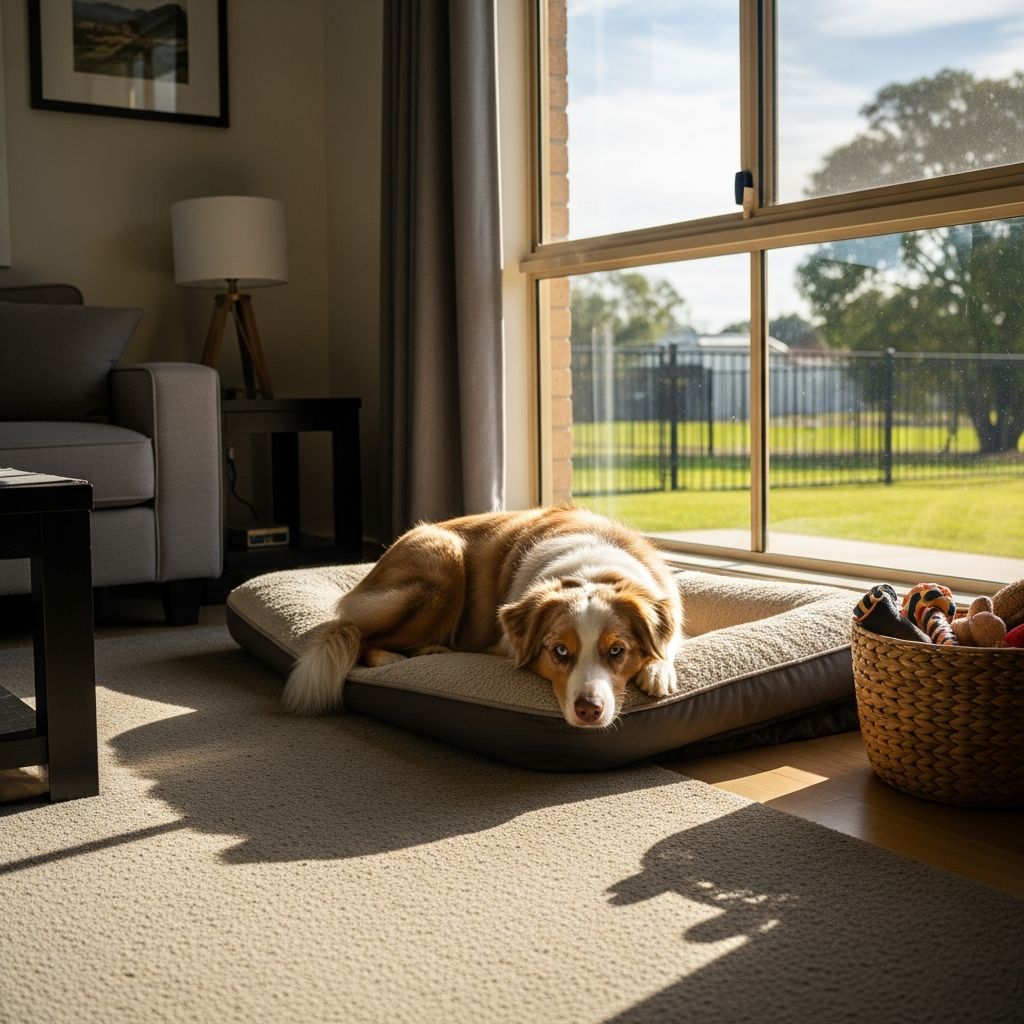
When your Australian Shepherd must remain home alone, environmental setup significantly impacts their experience. Create an appropriate solo space that balances containment with comfort:
- Provide access to fresh, clean water at all times
- Offer a comfortable bed or sleeping area
- Ensure adequate natural light from windows
- Maintain moderate temperature control
- Leave radio or calming music playing softly for auditory comfort
- Provide safe toys appropriate to your dog’s destructive tendencies
- Avoid confining to single rooms, particularly for rescue dogs with trauma histories
The space should feel welcoming rather than punitive, with features that promote relaxation and prevent destructive behaviors or escape attempts.
Special Considerations for Rescue Australian Shepherds
Australian Shepherds adopted as adults, particularly rescues from neglectful or abusive situations, require modified approaches to alone time. These dogs often carry emotional baggage that amplifies separation anxiety and requires patient, understanding handling. Rushing rescue dogs into extended alone time without proper preparation typically backfires, reinforcing anxiety patterns.
Adopting a rescue Australian Shepherd while working full-time and living alone presents substantial challenges that many experts recommend against. These situations demand either significant lifestyle modifications or reconsidering breed selection.
Frequently Asked Questions About Australian Shepherd Alone Time
Can Australian Shepherds adjust to full-time working households?
Australian Shepherds can adapt to households where owners work full-time, but only with deliberate planning and supplementary care arrangements. The combination of exercise, crate training, midday check-ins, and professional support can successfully bridge gaps in owner presence.
At what age can Australian Shepherds safely remain alone for 4 hours?
Most Australian Shepherds can manage 4-hour solo periods around 8-10 months of age, assuming proper training and adequate exercise. Individual maturity varies, so gradual testing with close observation ensures appropriate readiness.
What distinguishes separation anxiety from typical alone-time stress?
Separation anxiety involves intense, prolonged distress and destructive responses consistently triggered by owner departure. Simple alone-time stress typically improves with proper exercise and conditioning, whereas separation anxiety may require professional behavioral intervention.
How does apartment living affect Australian Shepherds’ alone time tolerance?
Apartment living intensifies challenges for Australian Shepherds left alone, as excessive barking disturbs neighbors and limited space compounds frustration. However, committed owners combining crate training, professional care, and exceptional exercise protocols can successfully maintain apartment-dwelling Australian Shepherds.
Should Australian Shepherds have constant access to outdoor space during alone time?
While yard access provides benefits, leaving Australian Shepherds loose in yards for extended periods creates other issues including neighbor conflicts from excessive barking, escape attempts, or destructive yard behaviors. Confined indoor spaces with appropriate environmental enrichment often work better for extended alone periods.
Conclusion: Building a Sustainable Routine
Australian Shepherds represent a significant commitment requiring honest assessment of lifestyle and availability. Their intelligence, loyalty, and energy make them exceptional companions for owners willing to meet their substantial needs. Understanding appropriate alone time limits, recognizing early separation anxiety signs, and implementing proactive strategies transforms ownership from challenging to rewarding.
Success with Australian Shepherds involves accepting that they thrive with active engagement and structured routines. By respecting their need for companionship, exercise, and mental stimulation while gradually building independence through thoughtful conditioning, owners can foster happy, well-adjusted dogs regardless of household work schedules or other constraints.
References
- Spirit Dog Training — Spirit Dog Training. 2024. https://spiritdogtraining.com/australian-shepherds-left-alone/
- Can Australian Shepherds Be Left Alone? Vet-Verified Facts & FAQ — Dogster. 2024. https://www.dogster.com/dog-health-care/can-australian-shepherds-be-left-alone
- Australian Shepherd Training Tips: What Every Owner Should Know — Woofz. 2024. https://www.woofz.com/blog/australian-shepherd-training/
- Can My AUSTRALIAN SHEPHERD Be Left Alone — Fenrir Canine Leaders (YouTube). 2024. https://www.youtube.com/watch?v=lRqlelyJDoo
- Australian Shepherd Dog Breed Guide: Facts & Information — Green Cross Vets. 2024. https://www.greencrossvets.com.au/pet-library/dogs/breed-guides/australian-shepherd-owners-guide/
Similar Articles






Read full bio of medha deb