

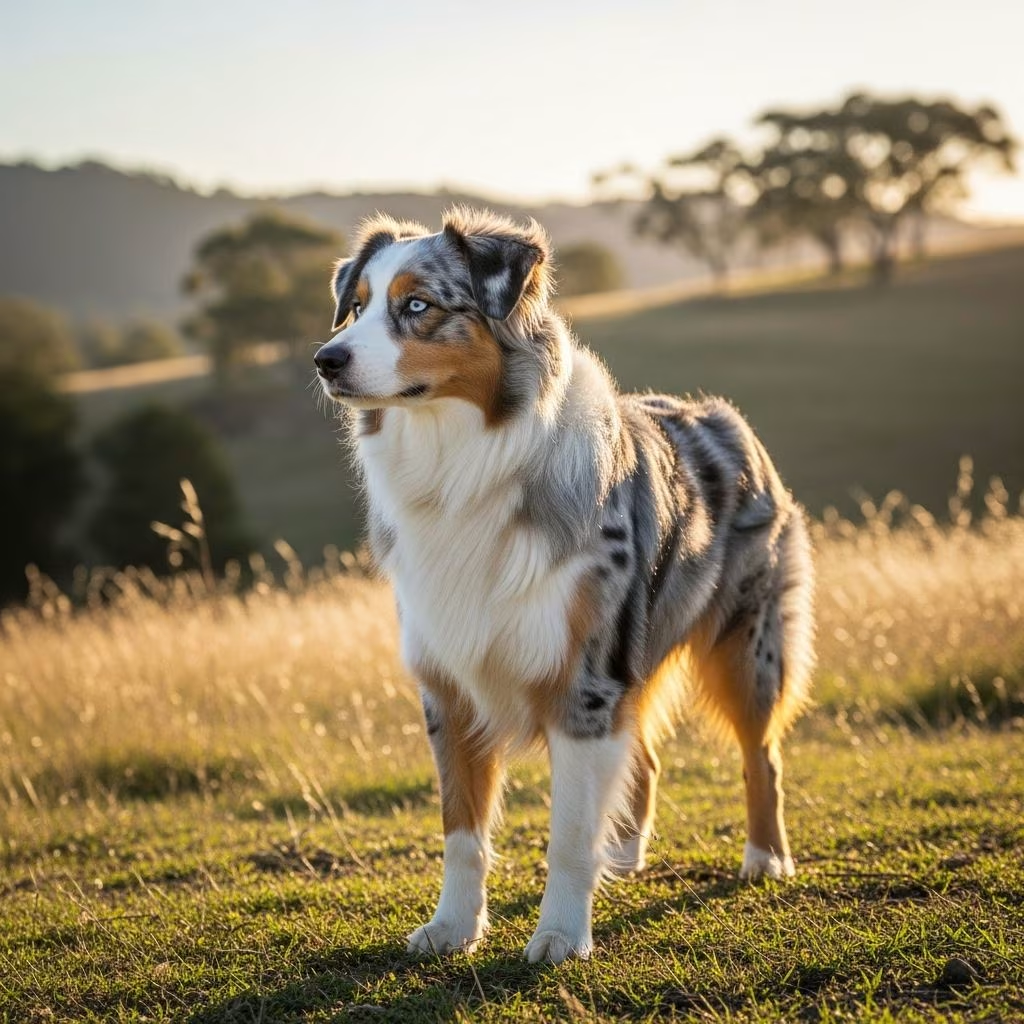
Australian Shepherds, often called Aussies, exhibit moderate protective behaviors rooted in their herding heritage rather than dedicated guarding instincts. While they alert bark at intruders and show loyalty to family, they typically lack the aggressive drive of specialized guard dogs, making them better watchdogs than defenders with proper training and socialization.
The Herding Roots Shaping Aussie Protection
Australian Shepherds originated as versatile herding dogs on American ranches, tasked with managing livestock through intelligence and agility rather than confrontation. This background fosters vigilance and quick responses to changes in their environment, traits that translate to home protection. Unlike livestock guardians like Great Pyrenees, Aussies focus on movement control, which can manifest as barking or positioning themselves between family and perceived threats.
Their hyper-awareness stems from breeding for endurance and discernment, allowing them to differentiate routine from unusual activity. Owners report Aussies scanning yards or perimeters, ready to vocalize at unfamiliar sights or sounds. However, this instinct prioritizes alerting over physical intervention, distinguishing them from breeds selected for intimidation.
Instinctive Alertness vs. True Guarding Drive
Aussies demonstrate natural suspicion toward strangers, often standing aloof until introduced by owners. This reserved demeanor serves as a deterrent, with their medium build and intense gaze adding to an imposing presence during walks or property patrols. Studies and breeder observations note that well-bred Aussies bond deeply with their pack, extending protectiveness to children and household members.
- Barking as Primary Defense: Most Aussies rely on loud, persistent barking to signal danger, effective for deterrence but rarely escalating to bites without provocation.
- Family-Oriented Loyalty: They attach to the entire household, showing gentle protectiveness toward kids while potentially herding them playfully.
- Territorial Awareness: They vigilantly guard yards or homes, reacting to intruders but calming once owners intervene.
Individual temperament varies; some Aussies display bolder defensiveness, especially if undersocialized, while others remain more passive observers.
Training to Enhance Protective Qualities
While innate guarding is limited, Aussies’ high intelligence and eagerness to please make them responsive to protection training. Programs emphasizing obedience, boundary setting, and controlled aggression can amplify their watchdog role without fostering fear-based reactivity.
Key training focuses include:
| Training Element | Purpose | Expected Outcome |
|---|---|---|
| Early Socialization | Expose to strangers, noises, and animals | Reduces overprotectiveness; ensures guest acceptance |
| Obedience Commands | Teach “stay,” “bark,” “quiet” | Allows owner-directed responses, preventing independent action |
| Boundary Work | Define property lines | Instills territorial confidence without roaming |
| Desensitization | Simulate intrusions calmly | Builds reliable alerting without panic |
Consistent leadership prevents Aussies from assuming control, as their problem-solving nature might lead to unwanted interventions like nipping at visitors. Professional trainers recommend daily mental stimulation to channel energy productively.
Would an Aussie Confront an Intruder?
Predicting an Australian Shepherd’s reaction to a true threat depends on genetics, upbringing, and circumstances. Socialized Aussies may bark fiercely but retreat or seek owner guidance, lacking the fearless aggression of breeds like German Shepherds. Undersocialized individuals might lunge, but this risks misdirected aggression toward friends.
Factors influencing response:
- Owner Presence: Aussies prioritize human cues, escalating only if owners show fear.
- Intruder Behavior: Aggressive advances provoke stronger reactions than passive entry.
- Training Level: Trained dogs follow commands; untrained ones act instinctively, often just vocalizing.
Real-world accounts highlight Aussies intervening in livestock threats or child protection scenarios, leveraging speed and boldness, but home invasions rarely see them as primary defenders.
Aussies in Family and Home Settings
For families, Australian Shepherds offer balanced protection without excessive wariness. Their playfulness suits active households, but herding tendencies require management around children to avoid nipping during rough play. Elderly or sedentary owners may struggle with their energy demands, potentially amplifying protective overreactions from boredom.
Pros of Aussies as protectors:
- Low maintenance alerting via barking.
- Deep family bonds foster subtle vigilance.
- Adaptable to training for enhanced security.
Cons:
- Not reliably aggressive against armed threats.
- High exercise needs; unmet leads to anxiety-fueled behaviors.
- Socialization lapses cause stranger aversion.
Comparing Aussies to Dedicated Guard Breeds
| Breed | Primary Role | Protection Style | Trainability | Family Fit |
|---|---|---|---|---|
| Australian Shepherd | Herding/Watchdog | Alert barking, moderate suspicion | High | Excellent with active families |
| German Shepherd | Guard/Police | Aggressive deterrence, bite work | High | Good with training |
| Rottweiler | Guard | Intimidation, physical confrontation | Moderate | Needs experienced owners |
| Labrador Retriever | Companion | Friendly alerting | High | Best for low-threat homes |
Aussies bridge companion and protector roles, ideal for alert needs without intense guarding.
Health and Lifestyle Considerations for Protective Aussies
Maintaining an Aussie’s protective edge requires addressing breed-specific health issues like hip dysplasia or eye conditions, which could impair mobility. A diet supporting joint health and regular vet checkups ensure peak performance. Daily hikes, agility training, or puzzle toys prevent frustration that mimics overprotectiveness.
In urban apartments, their barking might disturb neighbors, necessitating quiet training. Rural settings amplify their territorial strengths, allowing natural patrolling.
Frequently Asked Questions
Are Australian Shepherds good with children?
Yes, they bond closely but may herd kids; training curbs nipping.
Can I train my Aussie to be a guard dog?
Absolutely, their obedience shines, but expect watchdog-level results.
Do Aussies get along with other pets?
With socialization, yes; herding instincts may chase cats.
How much exercise do protective Aussies need?
1-2 hours daily to channel vigilance productively.
Are female or male Aussies more protective?
No significant difference; temperament varies individually.
Maximizing Your Aussie’s Watchdog Potential
To leverage an Australian Shepherd’s strengths, commit to lifelong training and engagement. Enroll in obedience classes, practice recall in distractions, and reward calm assessments of strangers. This builds a reliable partner who enhances security through smarts rather than brawn.
Owners praise Aussies for preventing break-ins via noise alone, with rare escalation proving their temperament stability. For those seeking devoted companions with bonus alertness, they excel; pure protection seekers should consider alternatives.
References
- Will An Australian Shepherd Protect You? — SpiritDog Training. 2023-05-15. https://spiritdogtraining.com/australian-shepherd-protection/
- Typical Aussie Traits — Faithwalk Aussies. 2022-11-10. https://www.faithwalkaussiesmas.com/typical-aussie-traits
- ARE AUSTRALIAN SHEPHERD GOOD GUARD DOGS? — YouTube (Wag! Channel). 2021-08-20. https://www.youtube.com/watch?v=jNVa9fowcgY
- Breed Spotlight: Australian Shepherd — Animal Behavior College. 2024-02-14. https://www.animalbehaviorcollege.com/blog/pet-training/breed-spotlight-australian-shepherd/
- Personality And Character — Australian Shepherd Club of America (ASCA). 2023-09-01. https://asca.org/aussies/about-aussies/personality-and-character/



