

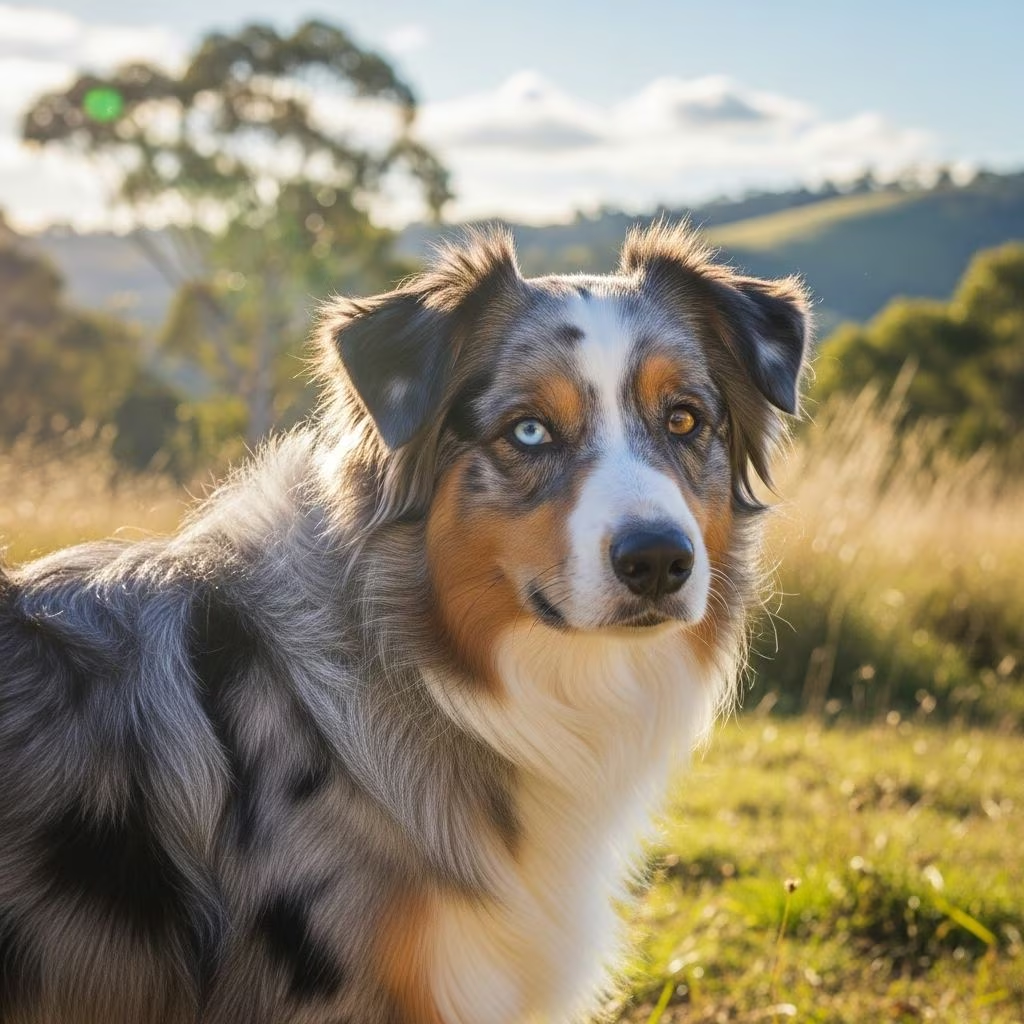
The Australian Shepherd, often called the “Aussie,” stands out as a vibrant, medium-sized herding dog renowned for its sharp intelligence, boundless energy, and unwavering loyalty. Despite the name, this breed originated in the United States, developed by ranchers in the Western states to manage livestock with precision and grit. These dogs combine athletic prowess with a keen problem-solving mindset, making them exceptional workers and companions for active owners.
Origins and Development of the Breed
Australian Shepherds trace their roots to the 19th century American West, where shepherds needed rugged dogs to handle diverse livestock on expansive ranches. Contrary to their name, they were not imported from Australia but likely descended from European herding breeds brought by Basque immigrants who worked in California and Idaho. These dogs were selectively bred for endurance, agility, and an authoritative presence to control cattle and sheep effectively.
By the early 20th century, Aussies had become staples on American farms, valued for their versatility in herding, guarding, and even performing tricks in rodeos. The breed gained formal recognition through organizations like the United States Australian Shepherd Association (USASA) and later the American Kennel Club (AKC) in 1990. Today, while many Aussies live as pets, their working heritage remains evident in their drive and capabilities in dog sports like agility and flyball.
Physical Characteristics and Appearance
Aussies are medium-sized dogs, typically standing 18 to 23 inches tall at the shoulder and weighing 40 to 65 pounds. Males are generally larger than females. Their build is athletic and balanced, with a strong frame suited for long days of work.
The coat is medium-length, straight to wavy, and weather-resistant, featuring a full mane around the neck and feathering on the legs and tail. Common colors include black, blue merle, red merle, and red, often with white and copper markings. Most have a natural bobtail under four inches, though some are docked for uniformity. Their expressive almond-shaped eyes can be blue, brown, or heterochromatic, adding to their striking look.
| Trait | Male | Female |
|---|---|---|
| Height | 20-23 inches | 18-21 inches |
| Weight | 50-65 lbs | 40-55 lbs |
| Coat | Medium-length, double coat | Medium-length, double coat |
| Colors | Merle, black, red, tricolor | Merle, black, red, tricolor |
Distinctive Personality Traits
Australian Shepherds are defined by their high intelligence and strong herding instincts, which manifest as a need to control movement in their environment. They are authoritative workers who approach tasks with enthusiasm and problem-solving flair, often finding creative ways to overcome obstacles.
Reserved with strangers, Aussies form deep bonds with their families, acting as loyal protectors without being overly aggressive. Their guardian instincts kick in during adolescence, leading to increased vigilance. They thrive on human interaction and dislike being left alone for long periods.
- Intelligent and Trainable: Eager to please and quick learners, they excel in obedience and advanced training.
- Energetic Herders: High prey drive makes them chase balls or nip at heels, requiring outlets like sports.
- Visually Sensitive: Notice subtle movements, which demands thorough socialization.
- Problem Solvers: Will manipulate environments if bored, leading to destructive behaviors without stimulation.
Training Essentials for Success
Training an Aussie starts early due to their sharp minds and independent streak. Positive reinforcement works best, leveraging their food motivation and desire to please. Consistency and firm leadership are key, as they respect hierarchy but resist dictatorial or weak handling.
Socialization is critical from puppyhood to curb excessive reserve or reactivity. Expose them to diverse people, animals, and environments to build confidence. Herding instincts can lead to nipping at children or other pets, so teach boundaries firmly.
Mental stimulation matches physical exercise in importance. Without it, even well-exercised Aussies become restless. Incorporate puzzle toys, scent work, and jobs like carrying items.
- Begin with basic commands using treats and praise.
- Enroll in obedience or agility classes for structure.
- Channel herding drive into flyball, treibball, or herding trials.
- Use crate training to manage adolescence behaviors.
Exercise and Daily Activity Requirements
Aussies demand 1-2 hours of vigorous daily exercise to prevent boredom-induced issues. Activities like running, hiking, biking, or swimming suit their endurance. Mental games extend play sessions effectively.
Fenced yards are essential to contain their chasing impulses toward cars, wildlife, or children. Avoid off-leash areas without recall training. Dog sports provide ideal outlets, enhancing their happiness and behavior.
Nutrition and Grooming Routines
Feed high-quality, protein-rich food tailored to their activity level—about 2-3 cups daily for adults, split into meals. Puppies need frequent, smaller portions for growth. Monitor weight to avoid obesity, which strains joints.
Groom weekly with brushing to manage shedding, especially during seasonal blows. Bathe monthly, check ears for infections, and trim nails regularly. Their double coat repels dirt but traps debris.
Health Considerations and Common Issues
Aussies live 12-15 years but face breed-specific risks. Hip dysplasia, elbow dysplasia, and eye conditions like cataracts or progressive retinal atrophy (PRA) are prevalent. Multi-drug resistance mutation (MDR1) affects sensitivity to certain medications—test genetically.
Epilepsy, hypothyroidism, and cancer also occur. Annual vet checks, including eye certifications from OFA or CERF, are recommended. Responsible breeding reduces hereditary issues.
- Hip/Elbow Evaluation: OFA grading.
- Eye Exams: Annual for genetic conditions.
- Cardiac Testing: For murmurs.
- MDR1 Testing: Before parasite treatments.
Perfect Homes and Lifestyle Matches
Aussies suit active families or individuals with time for exercise and training. They excel with children if socialized but may herd them. Compatible with other pets under supervision.
Apartments are challenging due to energy needs; rural or suburban homes with space are ideal. Not for novice owners seeking low-maintenance pets—they demand engagement.
Growing from Puppy to Adult
Puppies are playful but develop reserve by 6-12 months. Adolescence (7-18 months) amplifies watchdog traits and independence. Provide structure to guide this phase positively.
Adults mellow slightly but retain drive. Seniors need joint supplements and lighter exercise.
Frequently Asked Questions
Are Australian Shepherds good for first-time owners?
No, their high energy and training needs suit experienced handlers best.
How much exercise do Aussies need daily?
At least 60-120 minutes of physical activity plus mental challenges.
Do Australian Shepherds shed a lot?
Yes, moderately year-round with heavier seasonal shedding.
Can Aussies live in apartments?
Possible with ample walks, but not ideal due to space requirements.
Are they hypoallergenic?
No, their double coat sheds and produces dander.
References
- Raising an Australian Shepherd: Temperament and Development — South Texas Aussie Rescue. Accessed 2026. https://www.southtexasaussierescue.org/raising-an-australian-shepherd-temperament-and-development/
- The Australian Shepherd — United States Australian Shepherd Association. Accessed 2026. https://australianshepherds.org/finding-an-aussie/the-australian-shepherd/
- The Australian Shepherd Dog Breed — Hill’s Pet Nutrition. Accessed 2026. https://www.hillspet.com/dog-care/dog-breeds/australia-shepherd
- Typical Aussie Traits — Faithwalk Aussies. Accessed 2026. https://www.faithwalkaussiesmas.com/typical-aussie-traits
- Personality And Character — Australian Shepherd Club of America. Accessed 2026. https://asca.org/aussies/about-aussies/personality-and-character/
- Australian Shepherd Dog Breed Guide with Rover — YouTube (Rover). Accessed 2026. https://www.youtube.com/watch?v=2CtJ9-d6biY
- Australian Shepherd — American Kennel Club. Accessed 2026. https://www.akc.org/dog-breeds/australian-shepherd/



