

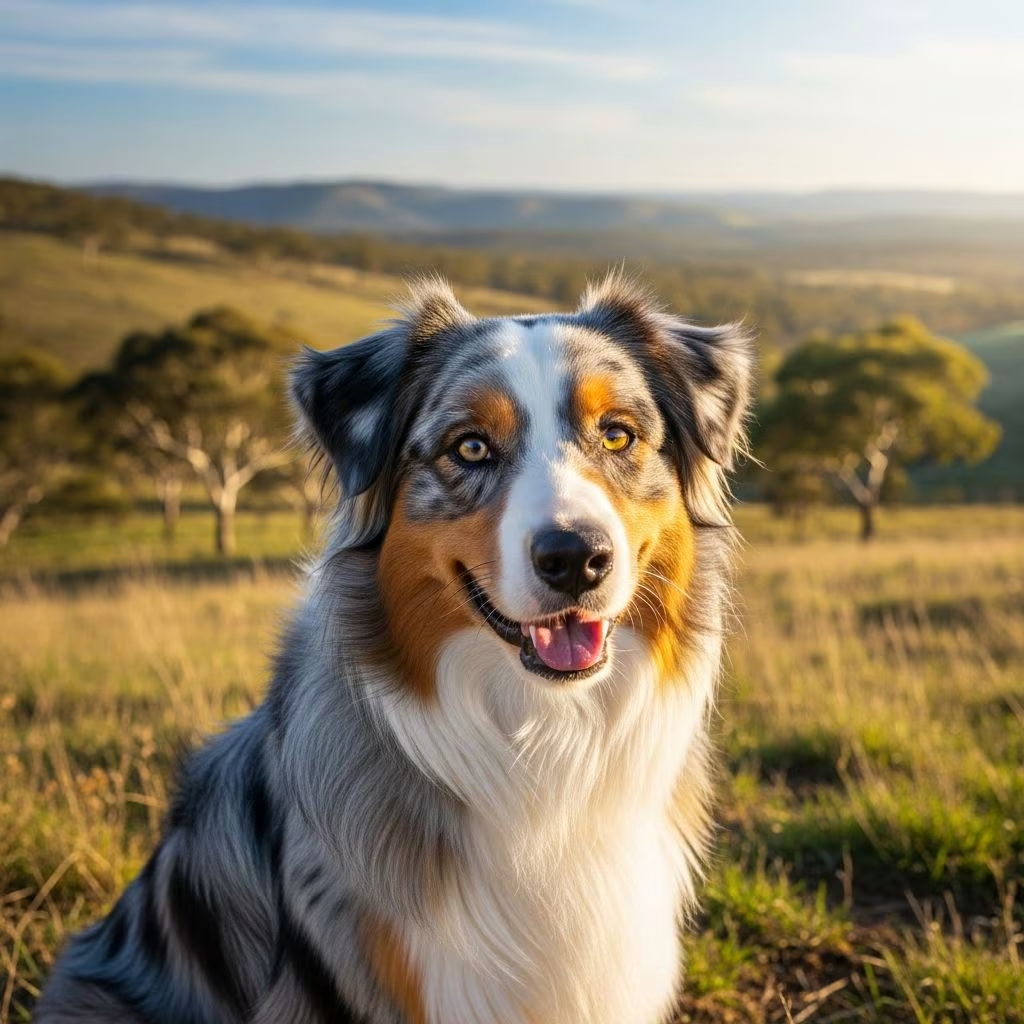
The Australian Shepherd, often called the \”Aussie,\” stands out as a vibrant, medium-sized dog breed renowned for its athletic build, sharp intellect, and unwavering loyalty. Despite the name, this breed originated in the United States, where it was developed to manage livestock on Western ranches. Today, Aussies thrive as both working dogs and devoted family pets, excelling in agility, herding trials, and everyday companionship when their needs are met.
Origins and Development of the Aussie Breed
Australian Shepherds trace their roots to the rugged landscapes of 19th-century America, particularly among Basque shepherds in California and the Midwest. Contrary to their name, they were not bred in Australia but likely descend from European herding dogs brought by shepherds via Australia to the U.S. These dogs were selectively bred for their ability to handle cattle, sheep, and other stock with precision and endurance.
By the early 20th century, Aussies gained popularity on ranches for their versatility. They could herd livestock over vast distances, guard property, and even hunt varmints. The breed’s formal recognition came later, with the Australian Shepherd Club of America (ASCA) establishing standards in the 1950s and the American Kennel Club (AKC) accepting them into its Herding Group in 1990. This history imbues modern Aussies with a strong work ethic, making them ill-suited for sedentary lifestyles but perfect for active households.
Physical Characteristics and Breed Standards
Aussies are medium-sized dogs with a balanced, athletic frame designed for agility and stamina. Males typically measure 20-23 inches at the shoulder and weigh 50-65 pounds, while females are slightly smaller at 18-21 inches and 40-55 pounds. Their build supports explosive speed and endurance, featuring strong hips, powerful legs, and a distinctive stride where front and rear legs cross over for optimal efficiency.
The double coat is moderately long, weather-resistant, with a dense undercoat and coarser outer layer. It’s shorter on the head and front legs, feathering out on the rear legs and tail. Coat colors vary strikingly: blue merle (grayish base with black spots), red merle (reddish base with liver spots), black, or red, often accented by white markings on the face, chest, legs, and tail tip, plus tan points above eyes, on cheeks, and under tail. No two Aussies have identical patterns, adding to their visual appeal.
| Trait | Male | Female |
|---|---|---|
| Height (inches) | 20-23 | 18-21 |
| Weight (lbs) | 50-65 | 40-55 |
| Coat Length | Moderate | Moderate |
| Common Colors | Merle, Black, Red | Merle, Black, Red |
This table summarizes key physical specs per breed standards from the ASCA and AKC.
Personality Traits and Behavioral Tendencies
Australian Shepherds are bright, versatile dogs blending herding prowess with companion qualities. They are intelligent, loyal, and protective, often forming deep bonds with their families. Bred as all-purpose stock dogs, they possess a natural guardian instinct, remaining reserved or cautious around strangers—a trait codified in breed standards.
Highly energetic, Aussies demand purpose through work or play. Without it, they may engage in destructive behaviors like digging or chewing. Their herding heritage leads to instinctive behaviors like nipping at heels to \”control\” children, pets, or moving objects such as cars. Socialization from puppyhood is crucial to manage territorial tendencies and ensure they distinguish friend from foe.
- Intelligent and Trainable: Quick learners who excel in obedience, agility, and problem-solving.
- Loyal Companions: Thrive on human interaction, following owners everywhere.
- Protective: Vigilant guardians of home and family, but need training to curb overprotectiveness.
- Active and Playful: Love roughhousing, running, and mental challenges.
- Reserved with Strangers: Not overly affectionate with all; prefer familiar people.
Individual temperaments vary; some Aussies are outgoing, while others are more independent thinkers.
Exercise and Activity Requirements
Aussies require substantial daily exercise— at least 1-2 hours of vigorous activity—to stay balanced. Ideal outlets include herding trials, agility courses, dock diving, flyball, or long hikes. Their high-drive nature suits rural or active suburban homes with fenced yards, but they adapt poorly to apartment living without ample stimulation.
Mental exercise is equally vital. Puzzle toys, training sessions, and canine sports prevent boredom-induced issues. They enjoy car rides and being involved in family routines, reflecting their pack-oriented history. Lack of outlets can amplify reactivity or anxiety due to their hyper-vigilant, detail-oriented wiring.
Grooming and Coat Maintenance
The Aussie’s double coat sheds seasonally, requiring brushing 2-3 times weekly with a pin brush or undercoat rake to remove dead hair and prevent matting. Bath only as needed to preserve natural oils. Check ears weekly for infections, trim nails monthly, and maintain dental hygiene with brushing or chews.
Minimal drool and a clean coat make them low-maintenance in hygiene, but their feathering demands attention around ears and tail.
Training Essentials for Success
Early, positive reinforcement training harnesses the Aussie’s eagerness to please. Start socialization at 8 weeks to build confidence around people, dogs, and environments. Herding instinct tests reveal natural talents for stock work.
Consistency and firm leadership are key; Aussies respect fair hierarchies but resist harshness. Teach commands like \”leave it\” to curb herding nips. Advanced training shines in sports like obedience and rally.
Health Considerations and Lifespan
Aussies generally live 12-15 years with proper care. Common concerns include hip dysplasia, elbow dysplasia, cataracts, epilepsy, and multidrug resistance mutation (MDR1), affecting drug sensitivity. Responsible breeders screen for progressive retinal atrophy (PRA) and collie eye anomaly.
Maintain health via balanced diet, regular vet checkups, and weight management to reduce joint stress. Recent guidelines emphasize genetic testing for breeding stock.
Nutrition and Daily Feeding Guidelines
Feed high-quality, protein-rich food suited to active lifestyles: 2-3 cups daily, split into meals. Puppies need growth-formulated kibble; adults benefit from working-breed formulas. Monitor for allergies and adjust for age, activity, and health.
| Life Stage | Daily Calories (approx.) | Key Nutrients |
|---|---|---|
| Puppy | 800-1200 | High Protein, DHA for brain |
| Adult Active | 1200-1800 | Glucosamine for joints |
| Senior | 900-1400 | Antioxidants, lower fat |
Finding the Right Aussie and Ideal Homes
Choose breeders affiliated with ASCA or AKC for health-tested pups. Rescues offer adult Aussies needing homes. Best for experienced owners with time for exercise, space, and training. They suit families with older kids, active singles, or farms but may overwhelm novices or couch potatoes.
Compatibility: Good with trained pets and known dogs; large yards preferred over city apartments.
Frequently Asked Questions (FAQs)
Are Australian Shepherds good family dogs?
Yes, with proper training and exercise, they are loyal and protective family members, though their herding may involve nipping at kids’ heels.
How much exercise do Aussies need?
At least 60-120 minutes of vigorous activity daily, plus mental stimulation.
Do Australian Shepherds shed a lot?
Moderate shedding, heavier seasonally; regular brushing controls it.
Are Aussies easy to train?
Highly trainable due to intelligence, but require consistent, positive methods.
What’s the temperament of an Australian Shepherd?
Energetic, intelligent, loyal, protective, and often reserved with strangers.
References
- Australian Shepherd – Wikipedia — Wikipedia. 2023-10-01. https://en.wikipedia.org/wiki/Australian_Shepherd
- The Australian Shepherd — United States Australian Shepherd Association. N/A. https://australianshepherds.org/finding-an-aussie/the-australian-shepherd/
- Australian Shepherd Dog Breed Information — Purina UK. 2024-01-15. https://www.purina.co.uk/find-a-pet/dog-breeds/australian-shepherd
- Typical Aussie Traits — Faithwalk Aussies. 2023-05-20. https://www.faithwalkaussiesmas.com/typical-aussie-traits
- Personality And Character — ASCA. 2024-03-10. https://asca.org/aussies/about-aussies/personality-and-character/
- Australian Shepherd — American Kennel Club. 2025-11-12. https://www.akc.org/dog-breeds/australian-shepherd/



