

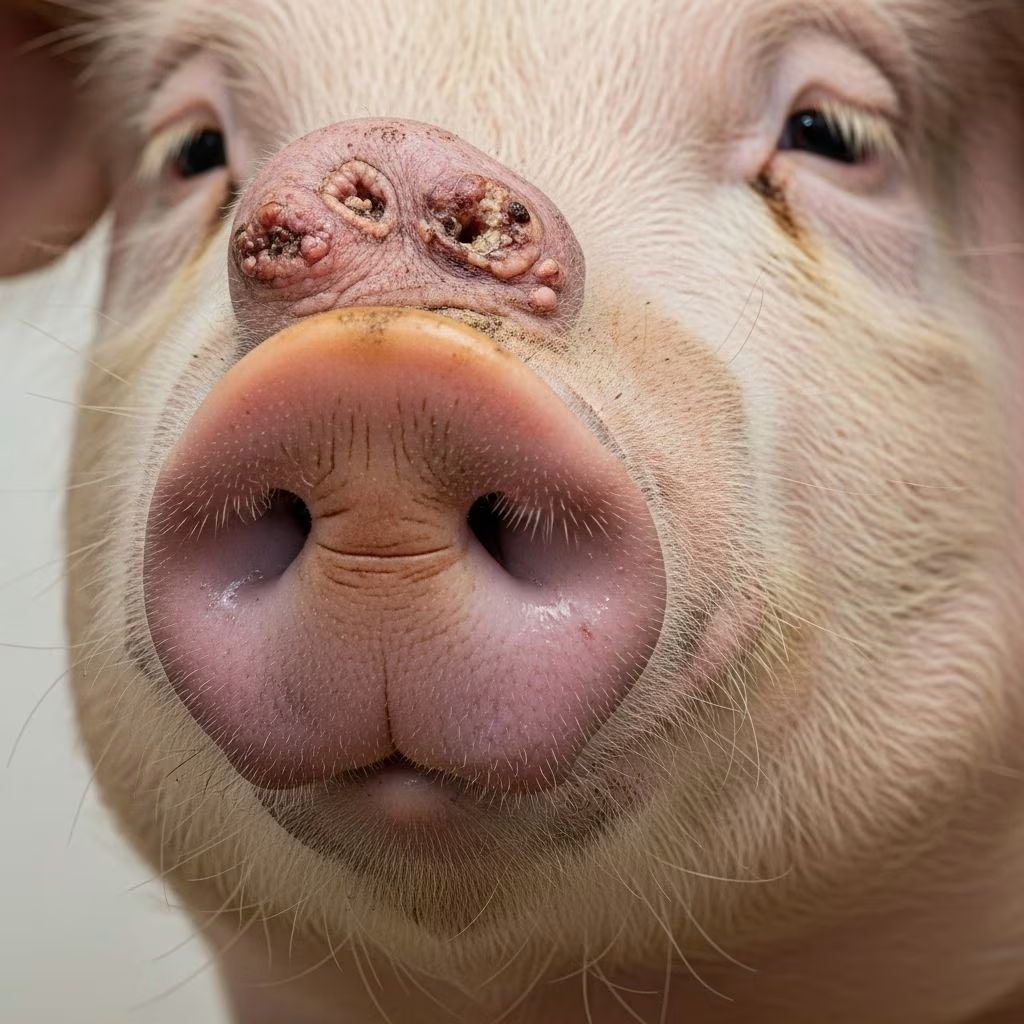
Atrophic rhinitis represents one of the most prevalent respiratory conditions affecting pigs worldwide, particularly in intensive farming systems. This disease targets the nasal passages, leading to structural damage that compromises breathing, growth, and overall herd performance. Caused primarily by bacterial toxins, it manifests in varying severity, from mild inflammation to severe facial distortions and stunted development. Understanding its mechanisms is crucial for swine producers aiming to minimize economic losses through targeted interventions.
The Bacterial Culprits Behind Nasal Damage
The primary agent responsible for atrophic rhinitis is toxigenic strains of Pasteurella multocida, which produce a potent dermonecrotic toxin (PMT) that destroys nasal turbinate bones. This progressive form results in permanent atrophy and is often exacerbated by prior infection with Bordetella bronchiseptica, which predisposes the nasal mucosa to P. multocida colonization. Non-progressive cases, driven mainly by B. bronchiseptica alone, cause transient turbinate damage that typically resolves without long-term effects on growth.
Secondary pathogens like Corynebacterium pyogenes, Haemophilus species, and others can contribute to inflammatory responses, amplifying tissue destruction. High-density housing, inadequate ventilation, ammonia buildup, and dust exposure further promote bacterial proliferation and disease severity.
Recognizing Early Warning Signs in Piglets
Symptoms emerge as early as 3-8 weeks of age in weaned piglets, starting with sneezing, snuffling, and clear nasal discharge. Acute outbreaks may involve nasal hemorrhage, especially when maternal antibodies are low, alongside coughing and lacrimal duct inflammation leading to tear staining around the eyes.
- Sneezing and nasal discharge: Initial indicators of mucosal irritation.
- Coughing: Often dry and hacking, more noticeable during feeding or exercise.
- Tear staining: Due to blocked ducts, visible below the eyes.
- Facial changes: Progressive twisting, shortening, or wrinkling of the snout in severe cases.
In advanced stages, affected pigs exhibit poor appetite, reduced daily weight gain, and feed conversion inefficiencies, potentially delaying market weight by 4-6 weeks.
Pathological Changes and Long-Term Impacts
Histologically, the disease erodes the delicate turbinate scrolls in the nasal cavity, assessed optimally at the level of the first or second upper premolar. This atrophy impairs the nose’s filtering function, increasing susceptibility to dust, irritants, and secondary respiratory infections like pneumonia.
Severe cases lead to brachygnathia superior, where the upper jaw shortens relative to the lower due to halted bone growth. Even mildly affected pigs suffer隐形 losses through chronic bronchitis and heightened pneumonia risk, compounding economic burdens via poorer growth rates and higher veterinary costs.
| Stage | Key Pathological Features | Clinical Outcomes |
|---|---|---|
| Acute | Mucosal swelling, hemorrhage | Sneezing, discharge, breathing obstruction |
| Subacute | Turbinate erosion begins | Tear staining, mild growth lag |
| Chronic | Complete turbinate atrophy, facial deformity | Poor growth, pneumonia predisposition |
Diagnostic Approaches for Accurate Confirmation
Diagnosis relies on a combination of clinical observation and laboratory tests. Field signs like sneezing clusters in young pigs and snout deformities strongly suggest atrophic rhinitis. Necropsy reveals turbinate atrophy, confirmed by transverse nasal sectioning.
Microbial culture from nasal swabs identifies P. multocida (toxin-producing strains via PCR) and B. bronchiseptica. Histopathology shows bone resorption and inflammation. Differential diagnoses include enzootic pneumonia (caused by Mycoplasma hyopneumoniae), which may coexist, presenting with dry cough but lung lesions rather than nasal atrophy.
Management Strategies and Treatment Options
Early intervention is key, though no cure fully reverses turbinate damage. Antimicrobials like tetracyclines or trimethoprim-sulfadiazine target acute bacterial overgrowth, most effective before chronic changes set in. Severely affected pigs should be culled to protect herd productivity.
Supportive care includes improving air quality to reduce irritants. In outbreaks, segregating affected litters prevents spread via aerosols and direct contact.
Prevention: The Cornerstone of Control
Vaccination forms the backbone of prophylaxis. Maternal immunization with bacterin-toxoid vaccines against P. multocida toxins and B. bronchiseptica provides passive immunity to piglets. Sow vaccination pre-farrowing ensures colostral antibodies.
All-in-all-out production, strict biosecurity, and optimal ventilation minimize risk factors. Eradication programs involve test-and-cull, monitoring via nasal turbinate scores (NTS), where scores above 2 indicate issues.
- Ventilation upgrades: Reduce ammonia and dust.
- Stocking density control: Prevent overcrowding.
- Vaccine protocols: Annual boosts for sows.
- Hygiene: Disinfect farrowing areas.
Economic Implications for Swine Operations
Atrophic rhinitis slashes profitability through retarded growth (up to 20% reduced gain), worsened feed efficiency (FCR increase by 0.5), and secondary disease escalation. In endemic herds, it synergizes with pneumonia, doubling losses. Proactive management can reclaim these margins, with vaccinated herds showing marked declines in incidence.
FAQs on Atrophic Rhinitis in Pigs
What causes the most severe form of atrophic rhinitis?
Toxigenic Pasteurella multocida produces dermonecrotic toxin, often following Bordetella bronchiseptica infection.
At what age do symptoms typically appear?
Primarily 3-8 weeks, during the post-weaning period when immunity wanes.
Can atrophic rhinitis be cured?
Damage is irreversible, but early antibiotics and prevention halt progression.
How is it diagnosed in the field?
Via clinical signs, nasal turbinate scoring at slaughter, and bacterial culture.
What are the best prevention methods?
Vaccination, improved biosecurity, and environmental management.
Advanced Research Insights and Future Directions
Recent studies emphasize PMT’s role, with recombinant toxin reproducing lesions in gnotobiotic models, confirming its centrality. Synergistic pathogenesis—B. bronchiseptica aiding P. multocida adhesion—highlights multifactorial control needs. Emerging diagnostics like multiplex PCR enhance strain typing for tailored vaccines. Global prevalence has declined with management shifts, yet vigilance remains essential in modern swine systems.
Integrating genomics for toxin gene detection promises precise monitoring. Combined with precision farming (e.g., air quality sensors), these tools could near-eradicate the disease.
References
- Atrophic Rhinitis (AR) – Progressive Atrophic Rhinitis (PAR) — The Pig Site. Accessed 2026. https://www.thepigsite.com/disease-guide/atrophic-rhinitis-ar-progressive-atrophic-rhinitis-par
- Understanding Atrophic Rhinitis and Enzootic Pneumonia Disease in Pigs — Bivatec Ltd. Accessed 2026. https://www.bivatec.com/blog/understanding-atrophic-rhinitis-and-enzootic-pneumonia-disease-in-pigs
- Atrophic Rhinitis in Pigs — Merck Veterinary Manual. Accessed 2026. https://www.merckvetmanual.com/respiratory-system/respiratory-diseases-of-pigs/atrophic-rhinitis-in-pigs
- Progressive Atrophic Rhinitis — NADIS. Accessed 2026. https://www.nadis.org.uk/disease-a-z/pigs/progressive-atrophic-rhinitis/
- Atrophic Rhinitis — NCBI Bookshelf (Polymicrobial Diseases). 2002 (authoritative reference on etiology). https://www.ncbi.nlm.nih.gov/books/NBK2478/
- Porcine Atrophic Rhinitis | Causes, Signs, and Prevention in Swine — YouTube (Pipestone Veterinary Services). Accessed 2026. https://www.youtube.com/watch?v=j9v-2j544u0



