

Understanding Atrial Fibrillation in Dogs
Atrial fibrillation (AF) is a common cardiac arrhythmia that affects the electrical conduction system of a dog’s heart. This condition occurs when the atria of the heart beat irregularly and rapidly, disrupting the normal synchronized rhythm between the upper chambers (atria) and lower chambers (ventricles) of the heart. When the heart loses its coordinated contractions, it becomes less efficient at pumping oxygenated blood throughout the body, which can lead to various clinical signs and complications.
Understanding atrial fibrillation is crucial for dog owners because early detection and appropriate management can significantly improve your pet’s quality of life and potentially extend their lifespan. While AF can occur in any dog breed and at any age, it is most commonly seen in medium to large breed dogs and tends to increase in prevalence with advancing age.
Types of Atrial Fibrillation
Veterinarians classify atrial fibrillation into several categories based on duration and response to treatment:
Paroxysmal Atrial Fibrillation
This type occurs intermittently and may spontaneously convert back to normal sinus rhythm. Episodes can be brief and sporadic, making diagnosis sometimes challenging.
Persistent Atrial Fibrillation
This form lasts for more than 48 hours and typically requires medical intervention to restore normal rhythm. These episodes do not convert spontaneously and necessitate treatment.
Permanent Atrial Fibrillation
In permanent AF, the arrhythmia becomes chronic and cannot be converted back to normal sinus rhythm. Dogs with this classification require long-term rate control management.
Recognizing the Symptoms
The symptoms of atrial fibrillation in dogs vary depending on the severity of the condition and the underlying heart disease present. In mild cases where the heart rate is only moderately elevated, dogs may display no noticeable symptoms at all. However, as the condition progresses and heart rate increases, the heart’s efficiency decreases, meaning less oxygenated blood reaches the body’s tissues with each heartbeat.
Common Clinical Signs
Dogs with atrial fibrillation may exhibit the following symptoms:
- Lethargy and decreased energy levels
- Exercise intolerance and difficulty keeping up during walks or play
- Excessive fatigue after minimal activity
- Weakness and collapse, particularly after exertion
- Coughing, especially at night or when lying down
- Difficulty breathing or rapid breathing (tachypnea)
- Loss of consciousness or syncope (fainting episodes)
- Irregular or “galloping” heart rhythm
It is important to note that the severity of symptoms often correlates with the underlying cause of the arrhythmia. Dogs with lone AF (fibrillation without structural heart disease) may remain asymptomatic, while those with concurrent congestive heart failure typically experience more pronounced clinical signs.
Diagnosis of Atrial Fibrillation
Veterinarians employ several diagnostic tools and procedures to identify and characterize atrial fibrillation in dogs. A thorough diagnostic approach is essential to determine not only the presence of AF but also identify any underlying cardiac disease that may have triggered the arrhythmia.
Physical Examination
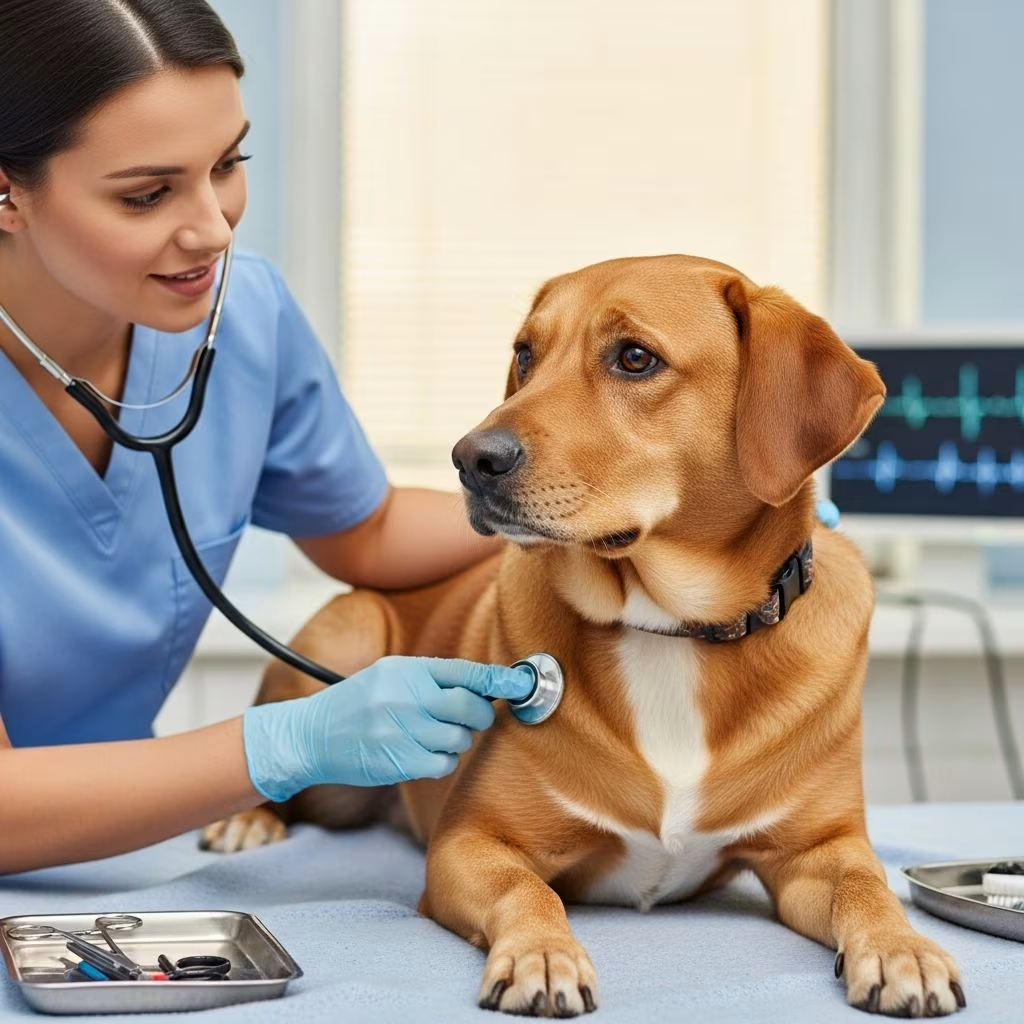
During the initial physical examination, your veterinarian will listen to your dog’s heart using a stethoscope. An irregular heartbeat or “galloping” heart rhythm may be detected, which prompts further investigation.
Electrocardiogram (ECG)
The electrocardiogram is the gold standard diagnostic tool for identifying atrial fibrillation. This non-invasive test records the electrical activity of the heart and clearly shows the characteristic irregular rhythm pattern associated with AF. An ECG can usually be performed in a veterinary clinic and provides immediate diagnostic information.
Holter Monitor (24-Hour ECG)
For dogs with intermittent or paroxysmal atrial fibrillation, a 24-hour ambulatory ECG monitoring device (Holter monitor) may be recommended. This portable device records heart rhythm continuously throughout the day and night, capturing episodes that might be missed during a brief clinic-based ECG examination. Holter monitoring is also crucial for optimizing medication dosages once treatment has begun.
Echocardiography
Echocardiography uses ultrasound to visualize the heart’s structure and function. This test helps identify any underlying cardiac disease such as dilated cardiomyopathy, valvular disease, or atrial enlargement that may be contributing to the development of atrial fibrillation.
Radiography (Chest X-rays)
Thoracic radiography can reveal heart enlargement and pulmonary changes associated with congestive heart failure, providing additional information about the overall cardiac status of your dog.
Blood Tests
Laboratory work may be performed to assess organ function and screen for systemic conditions that could contribute to cardiac arrhythmias.
Treatment Approaches for Atrial Fibrillation
The management of atrial fibrillation in dogs involves two primary treatment strategies: rate control and rhythm control. The choice of approach depends on several factors including the type of AF, presence of underlying heart disease, and individual patient characteristics.
Rate Control Strategy
Rate control is the most commonly employed treatment strategy in veterinary medicine. This approach focuses on slowing the ventricular response to maintain an acceptable heart rate rather than attempting to restore normal sinus rhythm. The goal of rate control is to maintain the resting heart rate below 125 beats per minute on average, though individual targets may vary.
Medications for Rate Control
Diltiazem: This calcium channel blocker is one of the most commonly prescribed medications for rate control in dogs with atrial fibrillation. Diltiazem works by slowing conduction through the atrioventricular (AV) node, effectively reducing the ventricular response rate. It is generally well-tolerated with minimal side effects.
Digoxin: Historically one of the most used medications for AF treatment, digoxin enhances vagal tone and slows AV node conduction velocity. While effective, digoxin can cause side effects such as vomiting and diarrhea, particularly at higher doses. Treatment typically begins at a low dose with gradual increases based on response.
Combination Therapy: Research has demonstrated that combining digoxin and diltiazem provides superior heart rate control compared to either medication alone. In clinical trials, combination therapy reduced median heart rates from 194 beats per minute to approximately 126 beats per minute, significantly better than monotherapy results.
Beta-Blockers: Medications such as atenolol and propranolol can be used for rate control by slowing AV node conduction. However, they should be used cautiously in dogs with congestive heart failure due to their negative effects on cardiac contractility.
Rhythm Control Strategy
Rhythm control aims to restore the heart to normal sinus rhythm. This approach is less commonly used in veterinary medicine and is typically reserved for specific cases.
Electrical Cardioversion
Electrical cardioversion uses defibrillating pads to deliver a controlled electrical shock to the heart during general anesthesia, attempting to restore normal rhythm. This procedure is most suitable for dogs with lone atrial fibrillation (no structural heart disease) and is typically performed only by specialist veterinary cardiologists. Success rates are variable, and rhythm often reverts to fibrillation over time.
Anti-Arrhythmic Medications
Amiodarone: This potent anti-arrhythmic medication has shown promise in converting some dogs with AF to normal sinus rhythm. In retrospective studies, amiodarone successfully converted certain dogs to normal rhythm while reducing heart rate in others. However, monotherapy with amiodarone alone has not been consistently successful in most affected dogs.
Sotalol: This medication combines beta-blocking properties with anti-arrhythmic effects. While potentially useful, monotherapy with sotalol alone has had limited success in converting AF to normal rhythm in most dogs.
Treatment Response and Management
Once treatment is initiated, careful monitoring is essential to assess response and adjust medication dosages as needed. Regular Holter monitoring helps optimize therapy by documenting heart rates during rest and activity. Most dogs require lifelong medication to maintain appropriate heart rate control. For dogs with lone atrial fibrillation, prognosis is reasonably good with appropriate management, though regular veterinary check-ups and ongoing medication are necessary.
Prognosis and Long-Term Outlook
The prognosis for dogs with atrial fibrillation depends significantly on whether structural heart disease is present. Dogs diagnosed with lone AF (fibrillation without underlying heart disease) generally have a reasonable prognosis. With appropriate rate control medication and regular monitoring, many of these dogs can enjoy good quality of life for several years.
Unfortunately, the majority of dogs with atrial fibrillation develop AF secondary to underlying heart disease such as dilated cardiomyopathy or valvular disease. These cases carry a more guarded prognosis because the underlying condition requires additional management and may progress over time. In these instances, treatment must address both the atrial fibrillation and the primary cardiac disease.
Regular veterinary evaluation, including periodic echocardiography and Holter monitoring, helps assess disease progression and optimize treatment. Your veterinarian, in conjunction with a veterinary cardiologist when necessary, can provide personalized prognostic information based on your dog’s specific condition and response to therapy.
Managing Your Dog’s Condition
Living with a dog diagnosed with atrial fibrillation requires commitment to ongoing care and monitoring. Owners should:
- Administer medications exactly as prescribed, maintaining consistent dosing schedules
- Attend regular veterinary appointments for monitoring and medication adjustments
- Keep dogs at a healthy weight to reduce cardiac workload
- Provide moderate, consistent exercise appropriate for your dog’s condition
- Avoid excessive heat and stress, which can exacerbate symptoms
- Monitor for changes in symptoms or exercise tolerance
- Ensure regular Holter monitoring as recommended by your veterinarian
Frequently Asked Questions
Q: Can atrial fibrillation be cured in dogs?
A: In most cases, atrial fibrillation cannot be permanently cured. Treatment focuses on rate control and managing symptoms. Some dogs with lone AF and no structural heart disease may respond to rhythm control procedures, but recurrence is common. Most dogs require lifelong medication management.
Q: How long can a dog live with atrial fibrillation?
A: With appropriate treatment and monitoring, dogs with lone atrial fibrillation can live for many years. Those with underlying heart disease may have a shorter lifespan depending on the severity of the primary condition. Regular veterinary care significantly impacts longevity and quality of life.
Q: Is atrial fibrillation painful for dogs?
A: Atrial fibrillation itself is not typically painful, but the reduced cardiac output can cause discomfort through exercise intolerance and weakness. Secondary conditions like heart failure may cause coughing or breathing difficulties. Proper treatment helps alleviate these symptoms.
Q: What medications are most effective for treating canine AF?
A: The most effective medications for rate control are diltiazem and digoxin, particularly when used in combination. Beta-blockers like atenolol and propranolol can also be effective. The best choice depends on your dog’s individual circumstances and any concurrent health conditions.
Q: How often does my dog need monitoring?
A: Dogs with atrial fibrillation typically require regular veterinary check-ups every 3-6 months, with Holter monitoring performed as recommended by your veterinarian to optimize medication dosing and assess response to treatment.
Q: Can lifestyle changes help manage atrial fibrillation in dogs?
A: While lifestyle modifications alone cannot cure AF, maintaining a healthy weight, providing moderate exercise, reducing stress, and avoiding extreme heat can help manage symptoms and reduce cardiac workload. These changes complement but do not replace medical management.
References
- Diagnosis and management of canine atrial fibrillation — National Center for Biotechnology Information (PubMed). 2020. https://pubmed.ncbi.nlm.nih.gov/33129554/
- Arrhythmias (Abnormal Rhythms) in Dogs — College of Veterinary Medicine, Cornell University. Accessed 2025. https://www.vet.cornell.edu/hospitals/services/cardiology/arrhythmias-abnormal-rhythms-dogs
- Management of atrial fibrillation — Vet Times. 2024. https://www.vettimes.com/news/vets/small-animal-vets/management-of-atrial-fibrillation
- Heart Beat Problems (Fibrillation and Flutter) in Dogs — PetMD. Accessed 2025. https://www.petmd.com/dog/conditions/cardiovascular/c_dg_atrial_fibrillation_atrial_flutter
- Atrial Fibrillation In Dogs: Symptoms, Treatment & Prevention — Vet Collection. 2024. https://www.vetcollection.co.uk/health/conditions/atrial-fibrillation-in-dogs/



