
Channeling Reactivity: Athletic Pursuits for Reactive Dogs
Discover which dog sports harness reactivity productively while building confidence and reducing stress.
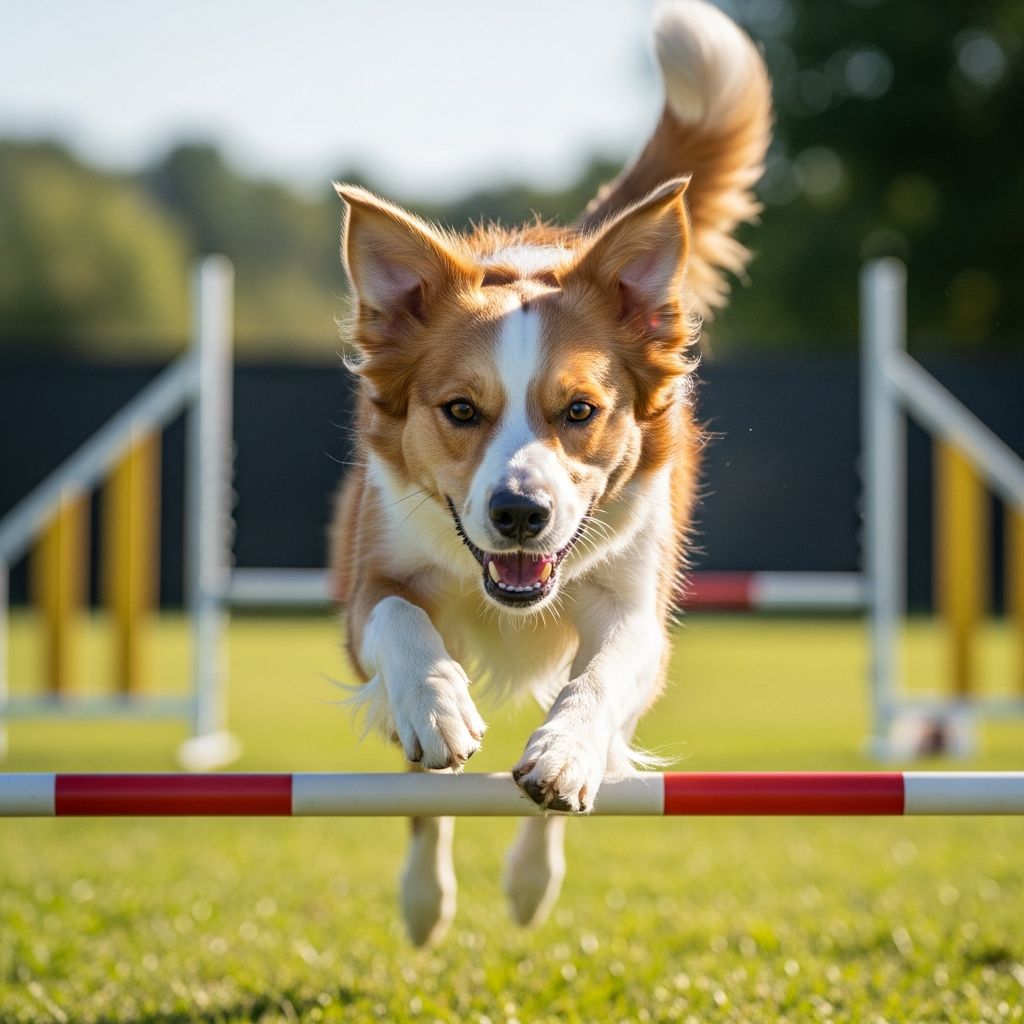
Dogs exhibiting reactive behavior often possess intense focus, strong drives, and abundant energy—qualities that, when properly channeled, can transform them into accomplished competitors. Rather than viewing reactivity as an insurmountable barrier to athletic participation, thoughtful sport selection combined with appropriate training creates opportunities for these dogs to build confidence, reduce stress, and develop meaningful bonds with their handlers. The key lies in understanding which competitive pursuits align with reactive dogs’ neurological needs and which environments could exacerbate their challenges.
Understanding Reactivity and Athletic Opportunity
Reactivity in dogs manifests as heightened responses to environmental stimuli—other animals, people, or movement—often involving lunging, barking, or intense focus. These responses stem from various emotional foundations including fear, frustration, excitement, or prey drive instincts. Rather than indicating aggression or fundamental behavioral defects, reactivity often reflects a dog’s inability to regulate emotional arousal when confronted with triggering situations.
The challenge for reactive dogs isn’t a lack of capability but rather an oversensitivity to external stimuli combined with difficulty maintaining emotional composure. Paradoxically, this same intensity of focus and drive that creates behavioral challenges can become an asset in carefully selected sporting activities. Sports that redirect this focus toward constructive goals while simultaneously reducing the dog’s baseline stress levels offer therapeutic benefits alongside competitive engagement.
Scent-Based Activities: The Neurological Advantage
Among the most scientifically supported options for reactive dogs are scent-work disciplines. The act of following a scent trail triggers profound neurological changes in dogs, most notably reducing cortisol—the stress hormone—while promoting a state of focused calm. Tracking, wherein dogs follow human scent along predetermined paths, exemplifies this approach perfectly.
Tracking competitions occur with individual dogs working one at a time while remaining leashed, eliminating the environmental triggers that typically challenge reactive animals. The intricate mental work required for scent detection provides an outlet for the dog’s intense focus while simultaneously soothing their nervous system. Dogs routinely emerge from tracking sessions noticeably calmer and more emotionally regulated than they entered.
This combination of mental stimulation and stress reduction makes scent-based sports particularly valuable for dogs whose reactivity stems from generalized anxiety or inadequate outlets for their problem-solving capabilities. The ritualistic nature of scent work—following established patterns and rules—provides structure that many reactive dogs find reassuring.
Individual Competition Formats for Reactive Dogs
A crucial factor in selecting appropriate sports involves the structural format of competition itself. Reactive dogs typically thrive in one-on-one competition scenarios while struggling in environments featuring simultaneous multi-dog participation. Sports providing individual performance opportunities with controlled spacing between competitors offer the environmental management necessary for reactive dogs to succeed.
Dock Diving exemplifies this structured approach. Dogs compete individually, launching from docks into water while handlers maintain control from designated areas. While dock diving involves high-adrenaline activity, competitors can typically space themselves sufficiently between performances, and reactive dogs can remain at distance from other participants during non-competing periods. However, pre-competition and post-competition coping strategies should already be established, as the intense arousal of the activity itself requires emotional regulation skills.
Trick Training and Canine Freestyle represent another category of manageable competition. Trick training occurs exclusively between handler and dog, requiring no interaction with other competitors or animals. Dogs accumulate titles through demonstrating learned behaviors, providing clear achievement markers. Canine freestyle—a choreographed dance performed to music—similarly focuses on the handler-dog relationship rather than comparison with other animals. Despite requiring off-leash performance and solid foundational obedience, the emphasis on mutual focus and relationship building actually mitigates reactivity by establishing the handler as the dog’s primary focal point.
Weight Pulling offers another individually structured option where reactive dogs can excel. This sport channels a dog’s natural pulling drive into a constructive competitive context, allowing focus to concentrate on task performance rather than environmental stimuli. Competition accommodations can accommodate most reactive dogs, though excellent physical conditioning remains essential for participant safety and welfare.
Comparative Analysis: Suitable Versus Challenging Sports
| Sport Type | Competition Format | Reactivity Considerations | Prerequisites |
|---|---|---|---|
| Tracking | Individual, leashed | Highly suitable; reduces stress | Basic scent training |
| Dock Diving | Individual, controlled spacing | Manageable with coping skills | Water comfort, jumping ability |
| Canine Freestyle | Individual performance | Excellent; builds focus on handler | Obedience foundation, choreography |
| Weight Pulling | Individual, task-focused | Suitable; redirects drive | Physical conditioning, harness training |
| Agility | Individual but high-speed | Challenging; off-leash at arousal | Obstacle training, impulse control |
| FastCAT | Multiple dogs in sequence | Unsuitable; high arousal environment | Sprint speed training |
| Canicross | Handler-dog team on long line | Unsuitable; uncontrolled variables | Distance running fitness |
| Flyball | Team relay, off-leash passing | Unsuitable; intense excitement | Ball drive, speed |
High-Adrenaline Sports: Understanding the Risks
Certain competitive activities, while potentially suitable for non-reactive or mildly reactive dogs, present excessive challenges for dogs with moderate to severe reactivity. These sports feature inherent high-arousal components that elevate even typically calm dogs into states of intense excitement, leaving reactive dogs unable to manage their emotional responses effectively.
FastCAT (a coursing competition involving dogs running at maximum speed in close proximity to one another) exposes dogs to precisely the environmental conditions that trigger reactivity: multiple animals in high-arousal states with minimal physical or temporal separation. The off-leash format provides no handler control mechanism, making intervention impossible should reactivity emerge.
Agility, while requiring greater structured control than FastCAT, still involves off-leash performance during high-speed competition. For mildly reactive dogs with substantially developed impulse control, agility might be reconsidered with dedicated focus on course performance rather than environmental awareness. However, many trainers regularly receive referrals to address reactivity that emerged or worsened during agility training.
Canicross and Flyball similarly present unacceptable risk profiles for reactive dogs. Canicross involves extended running on long lines with inherent unpredictability, while flyball combines team-based off-leash racing with intense ball drive—a recipe for escalating reactivity.
Managing Human-Focused Reactivity in Competitive Settings
Beyond dog-to-dog reactivity concerns, many reactive canines struggle with people-focused responses. Dog sports venues inevitably involve judges, spectators, handlers of competing dogs, setup crews, and facility staff—creating densely social environments that challenge human-reactive dogs.
Sports like rally obedience and traditional obedience competition, while conducted relatively quietly compared to agility or dock diving, require sustained focus on handlers while judges observe from close proximity and other competitors occupy nearby spaces. These controlled environments actually benefit human-reactive dogs by providing clear behavioral expectations and opportunities to practice selective attention in the presence of people.
The key differentiator involves the sport’s inherent demand structure: activities requiring intense handler focus naturally redirect a dog’s attention away from other people present, while sports emphasizing environmental awareness or multi-dog interaction amplify human-reactivity concerns.
Foundation Training Before Competition
Successful reactive dog sports participation requires establishing fundamental emotional regulation skills before introducing competitive stimuli. Dogs must develop reliable impulse control, demonstrating ability to regulate their own emotional arousal rather than depending entirely on handler management.
Desensitization and counter-conditioning protocols systematically pair trigger exposure with positive outcomes at distances where dogs remain capable of learning, gradually reshaping emotional responses to previously problematic stimuli. Emergency protocols must address instances when reactivity emerges unexpectedly, with handlers prepared to implement evasive maneuvers or redirect attention using especially motivating rewards.
Between training sessions, reactive dogs require substantial decompression time to process experiences and reset emotional baselines. This downtime functions as neurological recovery, allowing dogs to consolidate learning while reducing cumulative stress that might otherwise intensify reactivity patterns.
Attention-building exercises, including teaching dogs to look at triggers without fixating and subsequently check back with handlers for rewards, establish alternative behavioral choices when confronted with previously reactive situations. These skills transform reactive dogs’ cognitive processes from automatic reflexive responses into conscious decision-making about environmental focus.
Assessment and Recovery Indicators
Evaluating a reactive dog’s readiness for competitive participation involves careful observation of behavioral patterns during training. Changes in gait, movement pace, or physical tension often precede reactive episodes, providing early warning signals that a dog approaches emotional threshold. Equally important is assessing recovery time following trigger exposure—dogs returning quickly to baseline emotional states demonstrate greater resilience than those remaining stressed for extended periods.
Recovery capacity functions as a useful metric for determining whether individual dogs possess sufficient emotional regulation for specific sports. Dogs showing rapid emotional reset can typically progress to more challenging competitive environments than those requiring prolonged decompression following minor trigger exposures.
Sport-Specific Training Strategies
Different sports demand distinct training emphasis. Scent-based activities benefit from foundational obedience combined with specific olfactory training but don’t necessarily require extensive distraction proofing since scent work naturally focuses dogs’ attention. Conversely, sports involving other competitors or observers demand substantial impulse control, attention-building, and handler-focus conditioning.
For reactive dogs pursuing individual competition formats like canine freestyle or trick training, building extraordinary value in working with handlers becomes paramount. Dogs must perceive collaborative handler engagement as inherently more rewarding than environmental observation or reactivity, requiring handlers to identify and utilize truly high-value reinforcement while systematically building positive associations with training contexts.
Selecting Trainers and Training Facilities
Qualified trainers experienced specifically with reactive dogs prove invaluable when developing competition pathways. These specialists understand how to structure training progressions that build confidence while respecting reactive dogs’ emotional limitations, preventing inadvertent sensitization that could worsen behavioral challenges.
Training facilities increasingly offer dedicated reactive dog classes where all participants remain physically separated, eliminating inadvertent trigger exposure during foundational instruction. Such specialized environments allow reactive dogs to develop skills without the emotional burden of managing multiple concurrent trigger exposures.
Realistic Expectations and Long-Term Benefits
While reactive dogs can absolutely achieve competitive titles and athletic success, timelines typically extend longer than for non-reactive counterparts. These extended periods reflect the necessary emotional foundation-building rather than indicating capability deficits. Many reactive dogs eventually demonstrate remarkable resilience, competing successfully in environments that initially seemed impossible.
Beyond competitive achievement, participation in appropriately selected sports provides reactive dogs with profound psychological and physiological benefits. Stress-reducing activities like tracking lower cortisol levels and establish healthier emotional baselines. Individual competition formats eliminate trigger-dense environments while building confidence through repeated success. Handler-focused sports strengthen relationships while naturally redirecting attention from environmental stimuli that previously triggered reactivity.
The transformation from reactive dog to confident competitor requires patience, appropriate sport selection, skilled training guidance, and realistic timeline expectations. Yet the investment yields dogs who are not merely competition participants but fundamentally more emotionally regulated, confident individuals capable of engaging successfully with previously triggering situations.
References
- Dog Sports for Reactive Dogs — Whole Dog Journal. Accessed March 2026. https://www.whole-dog-journal.com/behavior/dog-sports-for-reactive-dogs/
- Reactive Dog Training: From Lunging and Barking to Calm Confidence — Wagbar. Accessed March 2026. https://www.wagbar.com/reactive-dog-training-from-lunging-and-barking-to-calm-confidence
- Managing Reactive Behavior — Cornell University College of Veterinary Medicine, Riney Canine Health Center. Accessed March 2026. https://www.vet.cornell.edu/departments-centers-and-institutes/riney-canine-health-center/canine-health-information/managing-reactive-behavior
- Competing in Sports With a ‘Challenging Dog’ — American Kennel Club. Accessed March 2026. https://www.akc.org/expert-advice/training/dog-sports-challenging-dog/
Similar Articles








Read full bio of Sneha Tete




