

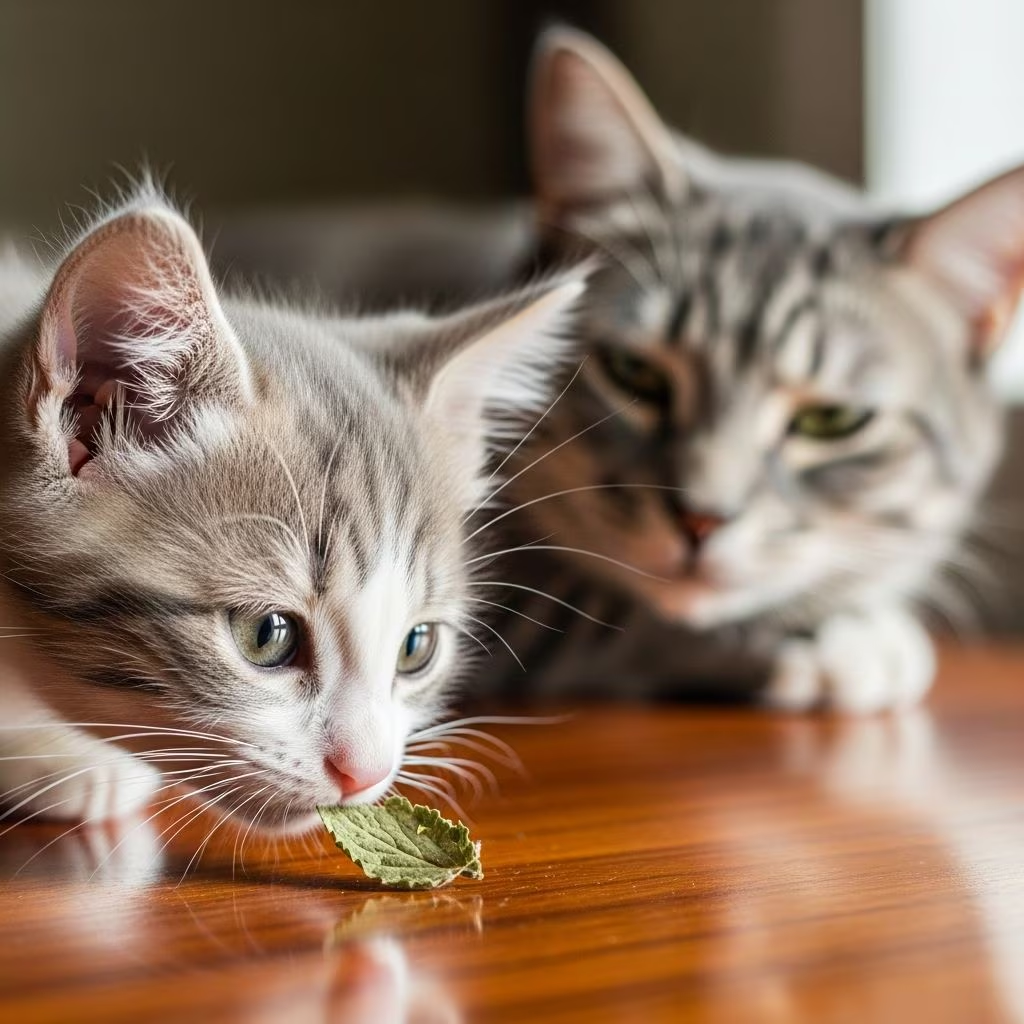
At What Age Can Cats Have Catnip?
Catnip, scientifically known as Nepeta cataria, is a beloved herb among cat owners seeking to enrich their pets’ lives. However, one common question that arises is: at what age can cats safely enjoy catnip? The answer involves understanding feline development, genetics, and the unique ways this herb affects cats at different life stages.
Understanding Catnip and Its Effects
Catnip is a perennial herb from the mint family that contains a powerful compound called nepetalactone, an essential oil responsible for the distinctive behavioral responses observed in many cats. When cats come into contact with catnip, particularly through smelling it, this compound binds to receptors in their nasal tissue and stimulates areas of the brain linked to emotion and behavior.
The effects of catnip differ based on how cats interact with it. When cats sniff catnip, they typically exhibit playful, euphoric responses such as rolling, rubbing, purring, meowing, or becoming hyperactive. However, when cats eat catnip, the effect is usually the opposite—most cats become calm and relaxed. Typical catnip sessions last around 10 minutes, after which cats become temporarily immune to its effects for approximately two hours.
Age Guidelines for Catnip Introduction
Very Young Kittens (Under 3 Months)
The primary consideration for very young kittens is that kittens under three months of age are generally immune to the effects of catnip. This is because the sensitivity to nepetalactone develops gradually with age and is influenced by hormonal changes in the kitten’s body. At this stage, even if you expose your kitten to catnip, they likely won’t exhibit any of the characteristic responses that adult cats display.
Young Kittens (3 to 6 Months)
The critical age range for catnip introduction is between three to six months of age. Most veterinarians and animal experts agree that kittens typically start to respond to catnip around this timeframe. However, it’s important to note that responses vary among individual kittens. Some may show interest earlier, while others might take until they reach six months or slightly beyond.
When introducing catnip to kittens in this age range, exercise caution and moderation. Too much catnip too soon can potentially overwhelm their developing systems. Start with small amounts and observe how your kitten reacts before increasing exposure.
Older Kittens and Adult Cats (6+ Months)
Once cats reach six months of age and beyond, most will display noticeable reactions to catnip. Adult cats in their prime years typically exhibit the most intense and enthusiastic responses to this herb. The euphoric effects can be particularly valuable for their mental stimulation and overall well-being. As cats age into their senior years, their sensitivity to catnip may decrease, though many older cats still enjoy it.
The Genetic Factor
An important consideration that affects all age groups is that sensitivity to catnip is genetic. Approximately 30 to 50 percent of cats show no reaction to catnip at all, regardless of age. This means that even if your kitten reaches the appropriate age, they may never respond to catnip if they lack the necessary genetic receptors.
This genetic predisposition is inherited, and many kittens lack the necessary receptors to process catnip’s effects until they mature. If your cat doesn’t respond to catnip even after reaching adulthood, this is completely normal and nothing to be concerned about.
How Different Ages React to Catnip
Kittens (Before 6 Months)
- May show little to no reaction until six months old
- Can engage with catnip-scented toys, but not due to catnip’s euphoric effects
- Easily entertained through play with interactive toys
- Need alternative forms of stimulation and enrichment
Adult Cats (6 Months to Senior Years)
- Typically exhibit playful and euphoric responses to catnip
- Display behaviors such as rolling, flipping, and vocalization
- Experience intense euphoria followed by a calming phase
- Benefit from mental stimulation and physical activity prompted by catnip
Senior Cats (7+ Years)
- May show decreased sensitivity to catnip compared to younger adults
- Still benefit from catnip’s effects on mental and physical well-being
- Should be monitored for any adverse reactions
- May prefer gentler interactions with catnip-infused toys
Health Benefits of Catnip by Age
Catnip offers numerous health benefits for cats across different age groups. Promoting physical activity is one of the primary advantages—whether through chasing, leaping, or interactive play, catnip can motivate cats to engage in physical exercise. This is especially important for maintaining healthy weight and combating obesity-related issues.
Beyond physical activity, catnip can provide mental stimulation, reduce stress, and even support behavioral management. The euphoric effects followed by a calming phase can help anxious cats relax, making it a useful tool for multi-cat households or during transitions.
Safe Usage Guidelines
Amount and Frequency
When introducing catnip to your cat, use just one tablespoon at a time—any more may be too much for your feline companion. Fresh catnip is more potent than dried form, so you won’t need to give your cat as much of it. It’s recommended to limit catnip sessions to a few times per week.
Avoid highly concentrated catnip oils due to their potency. If you’re unsure about the correct amount for your specific cat, discuss it with your veterinarian.
Storage and Preservation
To maintain catnip’s potency, store it in an airtight container in the freezer. Catnip does lose its potency over time, so proper storage is essential for maximum freshness. An airtight container protects the herb from air exposure and moisture that can degrade the nepetalactone compound.
Supervision and Monitoring
While catnip is generally safe for cats, supervise initial interactions, especially with young kittens. Watch for any adverse reactions such as vomiting or diarrhea. If you notice these symptoms after your cat consumes catnip, consult your veterinarian.
Potential Concerns and Safety
Toxicity
The good news is that catnip is non-toxic and safe for cats. There is no evidence that catnip is toxic to felines, even when consumed in moderate amounts. However, some cats may have an adverse reaction, particularly if they eat the catnip instead of just sniffing or rolling in it.
Overdose Risk
Cats cannot overdose on catnip in the traditional sense. However, too much catnip can cause some health problems, such as vomiting, diarrhea, dizziness, or trouble walking. Because the effects wear off quickly and cats develop temporary immunity after about half an hour, there is no real risk of overdose in the clinical sense.
Most cats instinctively know when they’ve had enough catnip. However, it remains a good idea to supervise interactions and limit exposure to prevent gastrointestinal upset.
Behavioral Considerations
Avoid giving catnip to aggressive or anxious cats, as their reactions can vary unpredictably. For some cats, the stimulation from catnip might exacerbate stress or aggressive tendencies. If your cat has a history of aggression or anxiety, consult your veterinarian before introducing catnip.
When to Start: Making the Decision
If you’re considering introducing catnip to your kitten, the ideal timeline is to wait until your kitten is at least three to six months old. At this age, your kitten’s sensory receptors for catnip will likely be developed enough to process the herb’s effects. Starting before this age is generally futile, as your kitten won’t respond to it anyway.
If your kitten hasn’t shown any response to catnip by six months of age, don’t be discouraged. It may take until they’re closer to one year old for the response to develop. Additionally, remember that approximately 30-50 percent of cats are genetically unresponsive to catnip, so your cat may simply be in that population.
Catnip Alternatives for Young Kittens
Since very young kittens cannot enjoy catnip’s effects, consider alternative enrichment options. Interactive toys, feather wands, laser pointers, and puzzle feeders provide mental stimulation and physical exercise without relying on catnip. These alternatives are particularly valuable during the first three to six months of your kitten’s life when catnip simply won’t work.
Frequently Asked Questions
Q: Can kittens under three months old have catnip?
A: While catnip is not harmful to very young kittens, they are generally immune to its effects until three to six months of age. Giving catnip to kittens under three months is usually ineffective.
Q: What if my six-month-old kitten doesn’t respond to catnip?
A: Lack of response to catnip is often genetic. Approximately 30-50 percent of cats don’t react to catnip at all. If your kitten shows no response by one year of age, they’re likely genetically unresponsive to the herb.
Q: How often should I give my cat catnip?
A: It’s recommended to limit catnip sessions to a few times per week. If you give your cat catnip too frequently, you might notice decreased effects as they develop tolerance.
Q: Is fresh or dried catnip better for cats?
A: Both are effective, but fresh catnip is more potent than dried form. Since fresh catnip is more concentrated, you’ll need to use less of it compared to dried catnip.
Q: What should I do if my cat vomits or has diarrhea after eating catnip?
A: Consult your veterinarian if your cat experiences these symptoms. While catnip is generally safe, some cats may have sensitivities or eat too much, causing gastrointestinal upset.
References
- What Is Catnip and What Does It Do to Cats? — PetMD. https://www.petmd.com/cat/general-health/what-is-catnip
- Catnip: Kittens vs. Adult Cats and Their Unique Reactions — Kitty Kickstix. 2025-08-19. https://www.kittykickstix.com/blogs/cat-resources/catnip-kittens-vs-adult-cats-reactions
- What Is Catnip? — Humane World for Animals. https://www.humaneworld.org/en/resources/catnip-benefits-uses-for-cats
- Why Do Cats Love Catnip? — Purina Canada. https://www.purina.ca/articles/cat/behaviour/why-do-cats-love-catnip
- Can Kittens Have Catnip? — Little Silver Animal Hospital. https://littlesilveranimalhospital.com/blog/can-kittens-have-catnip/
- Everything You Need to Know About Catnip — Small Door Veterinary. https://www.smalldoorvet.com/learning-center/medical/catnip
- Catnip: The herb that drives cats wild — Animal Humane Society. https://www.animalhumanesociety.org/resource/catnip-herb-drives-cats-wild



