

Lameness in small animals such as dogs and cats often signals underlying musculoskeletal problems, requiring a systematic veterinary approach to pinpoint the cause. This guide outlines a complete diagnostic protocol, drawing from established veterinary practices to help pet owners and professionals restore normal movement.
Understanding the Roots of Lameness
Lameness manifests as an abnormal gait or reluctance to bear weight, typically due to pain, mechanical interference, or neurological deficits in dogs and cats. Common culprits include joint inflammation like arthritis, ligament tears such as cranial cruciate ruptures, fractures, infections, or soft tissue injuries from trauma. In felines, subtle signs like reduced jumping ability may indicate issues, while canines often show overt limping. Early detection prevents chronic disability, emphasizing the need for prompt evaluation.
Pet history plays a pivotal role; factors like age, breed predispositions (e.g., Labrador retrievers prone to hip dysplasia), recent activities, and medication use inform the exam. Owners should note onset timing, affected limbs, and environmental changes to aid veterinarians.
Initial Observation at Rest
The examination begins with a quiet assessment of the pet in a familiar setting to minimize stress. Veterinarians observe posture, weight distribution, and limb positioning while the animal stands naturally. Asymmetry, such as head nodding in anticipation of weight shift or toe dragging, provides early clues.
- Postural cues: Check for shifting weight off one limb or excessive lordosis in the spine.
- Limb inspection: Look for swelling, angular deformities, muscle wasting, or abnormal angulation in bones.
- Skin and hair: Note wounds, calluses from dragging, or hair loss over joints.
This non-invasive step establishes baselines for comparison during motion, crucial for subtle cases in cats.
Gait Analysis in Motion
Moving the pet on a leash or free in a straight line and circles reveals dynamic abnormalities. Walk and trot observations are standard, as lameness may intensify at faster gaits. Key signs include shortened stride, head bobbing (up on good forelimb, down on lame), hip hiking, or circumduction.
| Gait Phase | Normal Finding | Lameness Indicator |
|---|---|---|
| Stance | Full weight bearing | Reduced contact time |
| Swing | Smooth arc | Dragging or floating |
| Trot | Even diagonal pairs | Three-legged pattern |
Circular patterns exacerbate forelimb issues inwardly and hindlimbs outwardly. Video recording aids in slow-motion review for precision.
Hands-On Physical Palpation
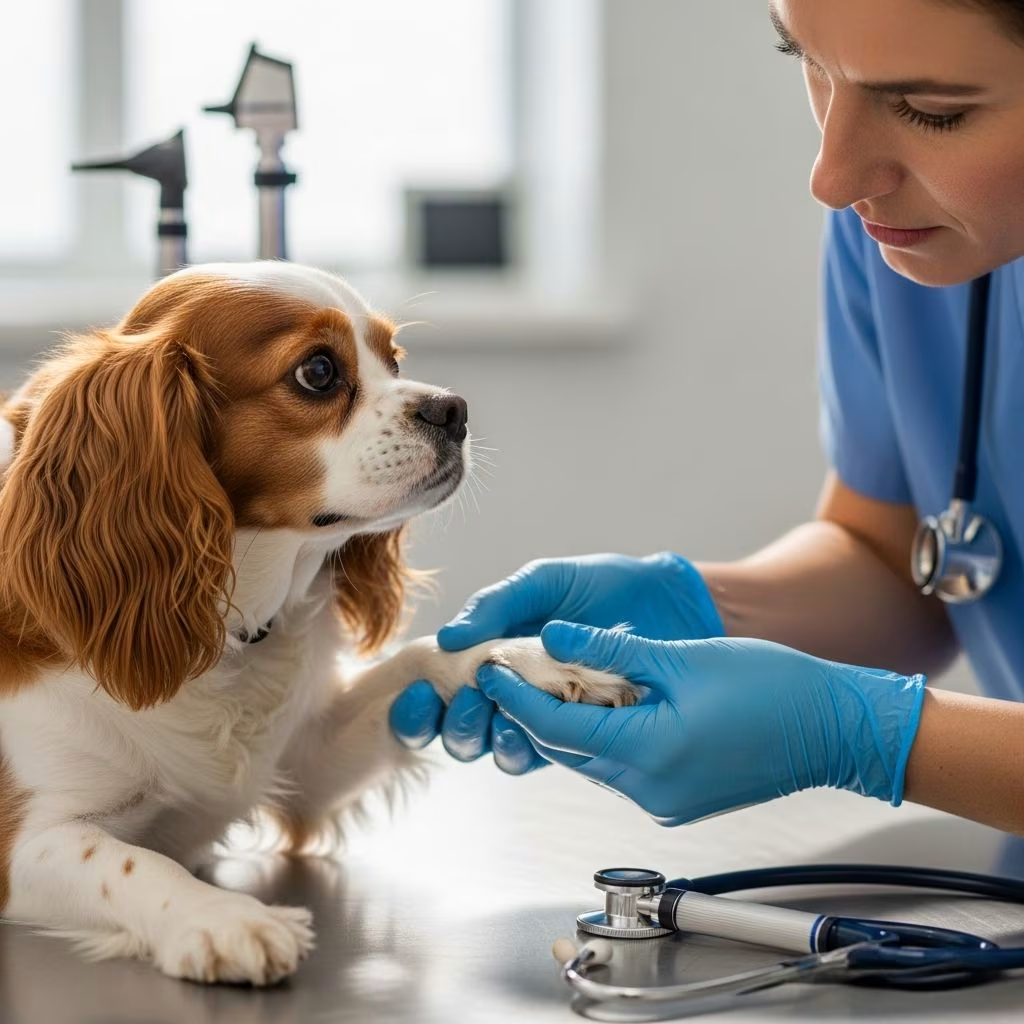
Palpation systematically probes from digits to spine, comparing contralateral sides for heat, effusion, crepitus, or pain responses. Start distally: squeeze toes for withdrawal, flex/extend joints, and compress tendons. Ascend to stifles, elbows, shoulders, hips, and include thorax, abdomen for referred pain.
- Joint assessment: Range of motion, laxity, or instability.
- Muscle evaluation: Atrophy, fibrosis, or trigger points.
- Spinal check: Pain on percussion or hyperextension.
Sedation may be needed for fractious patients. This step localizes pain sources effectively.
Provocative Manipulation Tests
Flexion, extension, or abduction stresses reveal occult pain. Hold limbs in extreme positions for 30-60 seconds, then release for immediate gait recheck. Positive responses include worsened lameness or stiffness post-manipulation.
For shoulders, cranial drawer tests detect instability; stifles undergo cranial tibial thrust for cruciate integrity. These mimic stress without imaging, guiding further diagnostics.
Diagnostic Analgesia for Localization
Local anesthetics numb specific regions sequentially, from distal (digital blocks) to proximal (high brachial or lumbosacral). Improvement in gait grade post-injection pinpoints the site. Use short-acting agents like lidocaine, retesting every 10-20 minutes.
- Forelimb sequence: Feet, fetlocks, carpi, elbows, shoulders.
- Hindlimb: Digits, tarsi, stifles, hips.
- Caution: Avoid systemic toxicity; monitor heart rate.
This gold-standard method confirms lameness origin before imaging.
Imaging Essentials
Radiography is first-line for bony changes: orthogonal views of affected areas detect fractures, dysplasia, or neoplasms. Ultrasonography excels for soft tissues, visualizing tendons, ligaments, and effusions dynamically.
Advanced options include CT for precise bone detail and MRI for soft tissue contrast, often under anesthesia in small patients. Scintigraphy highlights active inflammation via radiotracer uptake.
Choosing the Right Modality
| Modality | Best For | Limitations |
|---|---|---|
| X-ray | Bone, joints | Poor soft tissue |
| Ultrasound | Tendons, fluid | Operator-dependent |
| MRI | Soft tissue, nerves | Costly, sedation |
| CT | Complex fractures | Radiation exposure |
Grading Lameness Severity
Standard scales quantify findings for tracking progress. The AAHA system ranges 0 (sound) to 5 (non-weight bearing), aiding communication.
- 1: Lameness detectable only at trot.
- 2: Obvious at walk.
- 3: Weight-bearing but lame.
- 4: Toe-touching.
- 5: No weight support.
Fore vs. hindlimb distinctions refine grading.
Multimodal Differential Diagnosis
Compile findings: acute trauma suggests sprains/fractures; chronic points to degenerative joint disease. Rule out non-orthopedic mimics like infections (Lyme), neoplasia, or discospondylitis via bloodwork, cytology, or cultures.
Neurological exams differentiate paresis from pain-induced lameness.
Treatment Pathways Post-Diagnosis
Once identified, options span conservative (rest, NSAIDs, physical therapy) to surgical (TPLO for cruciates, fracture pinning). Multimodal pain control and rehabilitation optimize outcomes.
Frequently Asked Questions (FAQs)
What causes sudden lameness in my dog?
Trauma, insect stings, or disk herniations are common; seek immediate vet care.
How long does a lameness exam take?
30-90 minutes initially, longer with imaging.
Is sedation always required?
No, but helpful for thorough palpation in anxious pets.
Can lameness resolve without treatment?
Mild strains may, but persistent cases need intervention to avoid arthritis.
What if diagnostics are inconclusive?
Repeat exams, advanced imaging, or specialist referral.
Preventive Strategies for Pet Owners
Maintain ideal weight, provide joint supplements, ensure safe exercise, and schedule regular check-ups. Breeds like German Shepherds benefit from early hip screening.
References
- Testing for Lameness — VCA Animal Hospitals. 2023. https://vcahospitals.com/know-your-pet/testing-for-lameness
- Lameness Exams & Scale: How to Diagnose a Lame Horse — Mad Barn. 2024. https://madbarn.com/lameness-exam-for-horses/
- From Block to Image to Treatment: A Step-By-Step Guide to Equine Lameness Diagnosis — Hallmarq Veterinary Imaging. 2025-11-06. https://hallmarq.net/us/2025/11/06/from-block-to-image-to-treatment-a-step-by-step-guide-to-equine-lameness-diagnosis/



