

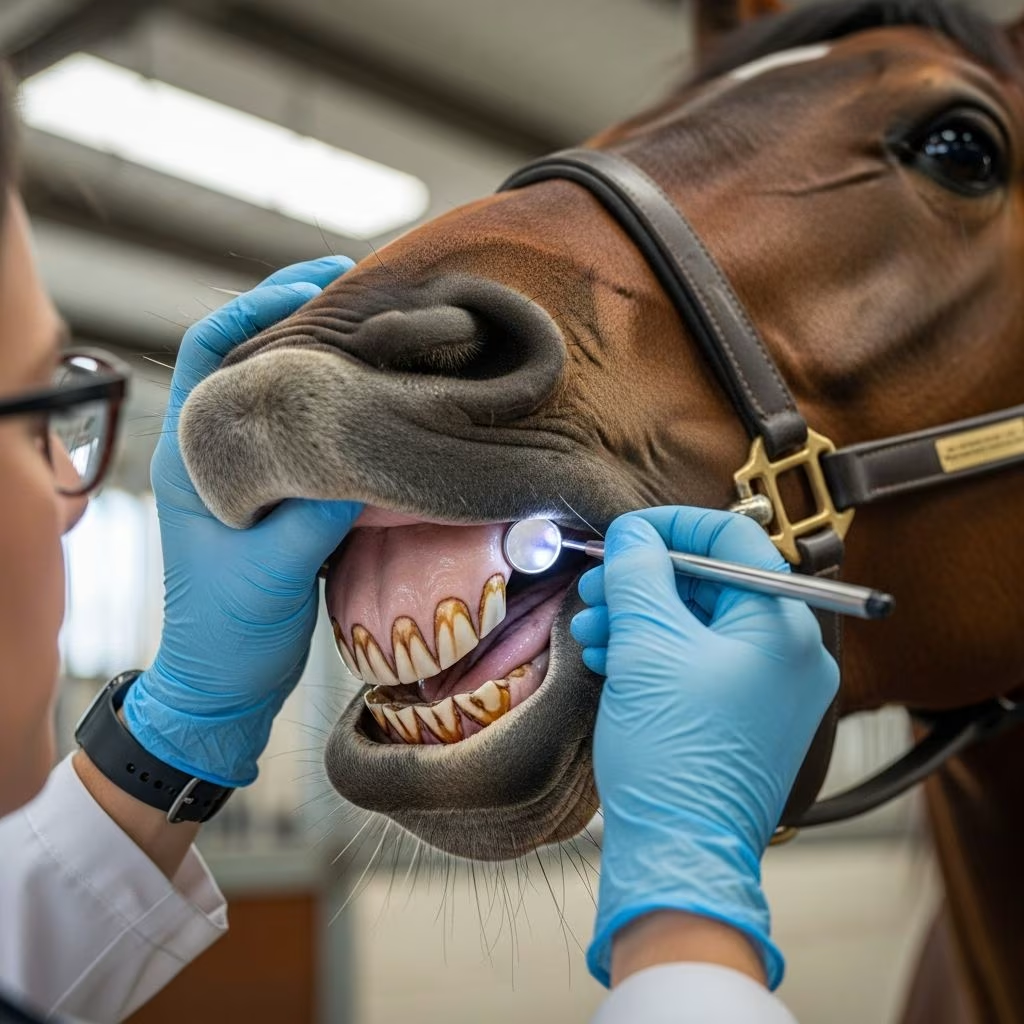
Estimating a horse’s age by inspecting its teeth remains a cornerstone of equine evaluation, particularly when registration papers are unavailable. This method relies on observing changes in the incisor teeth, which provide clues about developmental stages and wear over time. While not perfectly precise, especially in older animals, it offers valuable insights for breeders, buyers, and veterinarians.
Why Teeth Serve as Age Indicators in Horses
Horses possess hypsodont teeth, meaning they have high-crowned structures that continuously erupt throughout life to compensate for wear. The lower incisors are the primary focus for age assessment due to their visibility and predictable changes. These teeth undergo distinct transformations, from initial eruption to eventual flattening and angle shifts, influenced by diet, environment, and genetics.
Young horses show rapid, reliable changes, making estimates accurate up to about 5-6 years. Beyond this, factors like stabling (slower wear) or grazing on abrasive surfaces (faster wear) introduce variability. Range horses often appear older due to sand-induced erosion, while sheltered ones seem younger.
Understanding Equine Dental Anatomy Basics
A horse’s mouth features 12 incisors—six upper and six lower—divided into central (nippers), intermediate, and corner pairs. These nippers clip grass, while premolars and molars grind it. For aging, focus on incisors: each has a crown, neck, root, and features like the ‘cup’ (infundibulum, a central enamel pit) and dental star (exposed pulp visibility).
- Deciduous teeth: Temporary milk teeth, smaller and whiter, present from birth.
- Permanent teeth: Larger, yellower, erupting progressively.
- Occlusal surface: The biting edge, which evolves from oval to triangular.
Key table for quick reference:
| Feature | Description | Age Relevance |
|---|---|---|
| Cup | Enamel pit on chewing surface | Disappears 5-11 years |
| Dental Star | Pulp exposure mark | Appears 7-10 years |
| Galvayne’s Groove | Dark line on upper corner incisor | Starts at 10 years |
Step-by-Step Guide to Examining Horse Teeth
Approach calmly from the left side, a horse’s preferred handling direction. Part the lips gently with thumb and forefinger, keeping jaws closed initially. Use good light and a speculum if available for deeper views. Rinse teeth if dirty for clarity.
- Secure the horse: Halter and tie or have a handler.
- Inspect externally: Note lip tattoos or brands first for registry checks.
- Open mouth: Observe incisor alignment and angle.
- Count teeth types: Milk vs. permanent.
- Check surfaces: Cups, stars, shapes, grooves.
Safety first: Wear gloves, avoid sudden moves, and consult a vet for tricky cases.
Developmental Milestones: From Foal to Young Adult
Foals are born with 12 deciduous incisors. Permanent teeth erupt in sequence, marking clear age brackets under 5 years.
- Birth to 1 week: All milk incisors present.
- 2-4 weeks: Central incisors shed.
- 6-9 months: Intermediate incisors replace.
- 1.5-2 years: Corner incisors emerge.
- 2.5-3 years: All lower centrals permanent.
- 3.5-4 years: Lower intermediates.
- 4-4.5 years: Lower corners; horse is fully dentitoned below.
By 4.5 years, all lower incisors are permanent, confirming maturity for riding.
Interpreting Wear Patterns in Middle-Aged Horses
From 5-10 years, cups vanish progressively, offering a timeline. The central incisor cup disappears around 6 years, intermediates at 7-8, corners at 9-10. Post-cup, the surface shows a dark dental star, visible centrally at 7-8 years.
Incisor shape shifts: young teeth are wide and oval; by 8-9 years, corners become taller than wide. Angle of incidence—the bite angle—starts acute (160°) in youth, steepening to 180° by 20 years.
Table of cup disappearance:
| Incisor Position | Central | Intermediate | Corner |
|---|---|---|---|
| Age (years) | 6 | 7-8 | 9-10 |
Advanced Indicators for Mature and Senior Horses
Over 10 years, traditional markers like Galvayne’s groove appear: a vertical line on upper corner incisors starting midway at 10, reaching the lip at 15-20, fading after. However, it’s inconsistent and less reliable.
Other signs include:
- Surface flattening: Teeth become triangular and level by 12-15 years.
- 7-year hook: Small enamel ridge on uppers (variable).
- Excessive wear: Chips, ramps, or wave patterns from diet imbalances.
- Arch change: Parabolic bite in seniors.
Beyond 14-15 years, estimates are guesses; genetics and care dominate.
Factors Influencing Dental Age Accuracy
No method is foolproof. Diet (hay vs. pasture), soil type, breed (Arabs wear slower), and husbandry skew appearances. Stabled horses retain cups longer; sandy grazers lose them early.
Veterinary exams using floats (rasping) maintain even wear, altering natural progression. Always cross-check with records, brands, or blood tests if possible.
Practical Applications in Horse Management
Buyers use this for fair pricing; insurers for policies; vets for health prognoses. Regular dental checks (every 6-12 months) prevent issues like quidding or colic.
For unregistered horses, combine teeth with height/weight estimates: measure heart girth and body length for weight via formula (girth² × length / 330 + 50).
Frequently Asked Questions
Can you accurately age any horse by teeth?
Precise up to 8-10 years; rough beyond. Consult a professional.
Do all horses follow the same dental timeline?
No, variations occur due to environment and genetics.
Is dental aging safe for beginners?
Basic checks yes, but use caution and tools for safety.
How often should horse teeth be examined?
Twice yearly by a vet for health and accurate aging.
What if teeth suggest conflicting ages?
Verify with registries or experts; wear can mislead.
Limitations and When to Seek Expert Help
After 12 years, error margins grow; use as a range, not exact. Professionals employ X-rays or sedation for precision. Prioritize welfare: uneven teeth signal care needs.
References
- Methods for Determining Age, Weight, and Height of a Horse — Benefab Products. 2023. https://benefabproducts.com/blogs/blog/methods-determining-age-weight-height-horse
- Uncovering the Mystery: A Guide to Determining Your Horse Age — Saratoga Stalls. 2023. https://saratogastalls.com/uncovering-the-mystery-a-guide-to-determining-your-horse-age/
- The Practice of Aging a Horse By Their Teeth — West Hills Equine Veterinary Blog. 2023. https://www.westhillsevs.com/equineveterinaryblog/agingahorsebytheirteeth
- Determining Age of Horses by Their Teeth — University of Missouri Extension. 2022-01-01. https://extension.missouri.edu/publications/g2842
- Estimation of Age by Examination of the Teeth in Animals — MSD Veterinary Manual. 2024. https://www.msdvetmanual.com/digestive-system/dental-development-and-anatomy/estimation-of-age-by-examination-of-the-teeth-in-animals
- Determining the Age of a Horse by Its Teeth — mysrf.org. 2020. https://mysrf.org/pdf/pdf_horse/hs4.pdf
- Aging Horses by Their Teeth — Utah State University Extension. 2023. https://extension.usu.edu/equine/research/aging-horses-by-their-teeth



