

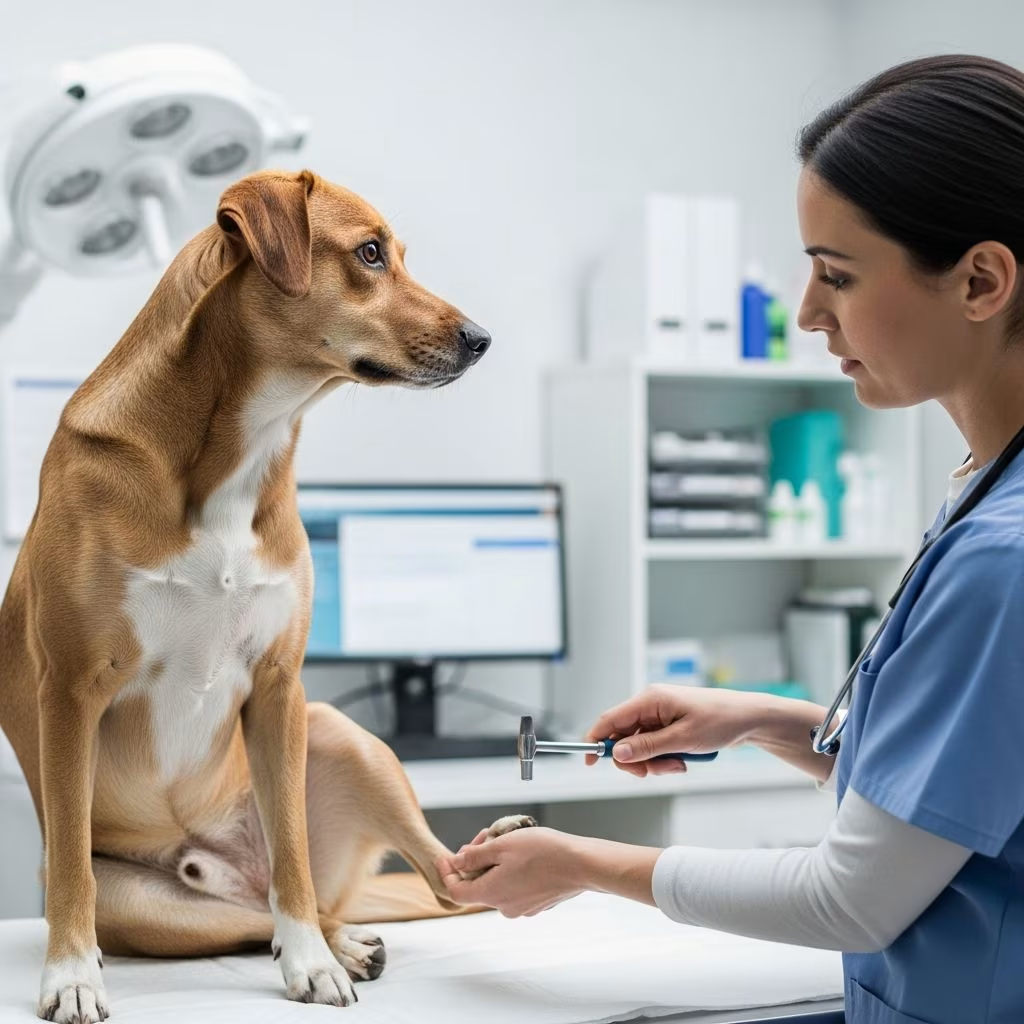
When your dog exhibits unusual behaviors, coordination problems, or concerning physical symptoms, your veterinarian may recommend a neurological assessment. Unlike routine physical exams, a neurological evaluation focuses specifically on the function and integrity of your dog’s nervous system—the complex network of the brain, spinal cord, and peripheral nerves that controls movement, sensation, and vital bodily functions. Understanding what this examination involves can help you prepare your pet and better comprehend your veterinarian’s findings.
Foundation of Neurological Assessment
A thorough neurological evaluation begins before any hands-on testing occurs. Your veterinarian will conduct a detailed history discussion, asking about when symptoms started, what behaviors you’ve noticed, any recent injuries or illnesses, and changes in your dog’s movement or behavior patterns. This conversation provides crucial context that guides the physical examination that follows.
The physical examination component establishes baseline health status and may reveal systemic conditions affecting the nervous system. Only after this groundwork does the specific neurological examination commence, which involves a series of organized tests designed to identify exactly which part of the nervous system may be affected.
The Five Pillars of Neurological Testing
Mental Status and Awareness Assessment
The first component evaluates your dog’s mentation—essentially their mental alertness and awareness. Your veterinarian observes whether your dog is fully conscious and responsive, appears depressed or lethargic, displays confusion or disorientation, or shows signs of aggression or unusual behavior. The examiner may note whether your dog responds appropriately to their surroundings and follows commands or stimuli.
Abnormalities in this category might include constant pacing, seizures, depression, coma, or head circling in one direction—all of which suggest involvement of the brain’s higher centers. A dog exhibiting mental status changes may have cerebral or diencephalon disease, requiring further investigation.
Gait Analysis and Postural Observation
How your dog walks tells veterinarians considerable information about neurological function. During gait assessment, the examiner observes movement patterns while the dog walks naturally, noting any limping, dragging, stiffness, lack of coordination, or asymmetry between left and right sides. The dog’s posture—how they stand and hold their body—is equally informative.
Some dogs may display a head tilt, which can indicate vestibular system involvement or cerebellar disease. Others might show incoordination, head bobbing, or tremors. These observations help the veterinarian narrow down which nervous system region requires closer examination.
Cranial Nerve Evaluation
The brain stem contains 12 pairs of cranial nerves controlling specialized functions in the head region. These nerves manage smell, vision, eye movement, facial movements, hearing, balance, chewing, swallowing, barking, and tongue movement.
During cranial nerve testing, the veterinarian performs several specific assessments:
- Facial symmetry examination: The veterinarian visually inspects and feels the face, eyes, eyelids, nostrils, lips, and chewing muscles to ensure both sides appear equal
- Pupil evaluation: Both pupils are checked for symmetry and then tested with a bright light source to verify direct and indirect light reflexes function properly
- Eye movement testing: The examiner observes how the eyes track movement and whether both eyes coordinate properly
- Hearing assessment: The veterinarian may test the dog’s response to sounds
- Mouth and throat function: Ability to open the mouth, chew, swallow, and move the tongue are evaluated
Cranial nerve testing helps localize problems to the brain stem or specific nerve pathways.
Postural Reactions and Proprioception
Proprioception—the body’s awareness of limb position in space—is crucial for coordinated movement. Testing proprioceptive function requires active dog cooperation and proper examiner technique.
Common postural reaction tests include:
- Paw replacement test: The examiner gently moves a paw from its normal position to assess how quickly and accurately the dog repositions it
- Hopping test: The dog is pushed sideways over the foot supporting their weight, and the examiner watches whether they hop to maintain balance. Poor initiation of hopping suggests sensory deficits, while poor follow-through indicates motor system problems
- Wheelbarrow test: The dog’s hind legs are lifted slightly, and the dog walks forward on its front legs while the examiner observes coordination
- Righting test: The dog is placed on their side or upside down to evaluate their ability to right themselves quickly
These tests may be delayed or absent in dogs experiencing systemic weakness or sedation.
Spinal Reflex Testing
Reflex tests evaluate the integrity of the spinal cord and peripheral nerves. These tests involve gently striking specific areas or manipulating limbs to trigger involuntary responses. The veterinarian assesses whether reflexes are normal, diminished, exaggerated, or absent.
Spinal reflexes help identify the location of spinal cord injuries or peripheral nerve problems. Normal reflex responses indicate proper nerve pathway function, while abnormal responses suggest specific regions requiring investigation.
Detailed Spinal and Muscle Assessment
Following general neurological testing, the veterinarian performs careful palpation—physical examination by touch—along the entire spine. This assessment begins away from suspected problem areas and gradually moves toward regions of concern to avoid aggravating any painful condition.
During spinal palpation, the veterinarian evaluates:
- Muscle tone and overall muscle condition
- Muscle symmetry between left and right sides
- Signs of muscle atrophy or wasting
- Spinal pain through gentle pressure and movement
- Neck flexibility and pain response through range-of-motion testing
- Tail position and sensitivity
Special care is taken when assessing the neck, particularly if atlantoaxial subluxation or fracture is suspected—in these cases, normal neck flexion may be avoided to prevent injury.
Pain Perception Evaluation
Pain perception testing is only performed if the dog has lost voluntary motor function in any limb. This test evaluates both superficial and deep pain sensation:
- Superficial pain: Tested by gently pinching the web between toe pads
- Deep pain: Tested by pinching the periosteum (bone covering) on the toe, typically using a hemostat to apply consistent pressure
A conscious response—vocalizing, attempting to bite, turning the head, whining, pupil dilation, or increased breathing rate—indicates the dog can feel pain. Loss of deep pain perception indicates more severe spinal cord damage.
Advanced Diagnostic Imaging and Testing
When the neurological examination identifies abnormalities, your veterinarian will recommend additional diagnostic tests to determine the specific condition. Common advanced diagnostics include:
- Blood tests and urinalysis: Identify systemic conditions affecting the nervous system
- Fecal testing: May reveal parasitic infections with neurological manifestations
- Cerebrospinal fluid analysis: Examines fluid surrounding the brain and spinal cord for infection, inflammation, or malignancy
- X-rays: Identify fractures, skeletal abnormalities, or vertebral problems
- Contrast x-rays: Use special dyes to visualize soft tissue structures
- Computed tomography (CT) scans: Provide detailed cross-sectional brain and spinal cord imaging
- Magnetic resonance imaging (MRI): Offers superior soft tissue detail for brain and spinal cord assessment
- Electroencephalography: Records electrical brain activity to evaluate seizure disorders
- Nerve conduction velocity testing: Measures how quickly electrical signals travel along nerves, detecting nerve injury
- Brain stem auditory evoked response (BAER): Records electrical activity from sound pathway to the brain, useful for evaluating deafness and brain stem disorders
- Spinal cord evoked potentials: Tests spinal cord function through electrical stimulation
- Electromyography (EMG): Measures muscle electrical activity using a small needle electrode
Interpreting Examination Findings
The primary purposes of neurological examination are to confirm a neurological condition exists and to localize the lesion—determining exactly which part of the nervous system is affected. This information guides subsequent diagnostic testing and treatment decisions.
Your veterinarian may perform repeat neurological examinations over time to detect subtle changes or disease progression. These serial examinations provide valuable information about whether a condition is stable, improving, or worsening.
Preparing Your Dog for Neurological Evaluation
Several factors can affect examination results. Sedation from medications can delay or eliminate postural reactions. If your dog is uncooperative or anxious, some tests may be difficult to perform accurately. Systemic illness causing weakness can also affect test outcomes.
Inform your veterinarian about any medications your dog takes, recent sedation or anesthesia, behavioral concerns, and specific symptoms you’ve observed. Having detailed information about when problems started and how they’ve progressed helps your veterinarian interpret examination findings accurately.
Frequently Asked Questions
What is a neurological examination?
A neurological examination is a systematic evaluation of your dog’s nervous system through observation and specific physical tests designed to identify the location and type of any nervous system problem.
How long does a neurological exam take?
A basic neurological examination typically takes 15-30 minutes, though time may vary depending on your dog’s cooperation and whether specialized tests like BAER or spinal cord evoked potentials are performed.
Will my dog need general anesthesia for neurological testing?
Most neurological examinations require your dog to be awake so they can cooperate with tests. However, advanced imaging like MRI requires general anesthesia.
What conditions might be identified through neurological examination?
Neurological examinations can help identify brain disease, spinal cord injury, peripheral nerve damage, balance disorders, seizure disorders, and various other nervous system conditions.
Should I be concerned if my dog needs a neurological exam?
While neurological symptoms warrant investigation, many conditions are treatable or manageable. The examination helps identify problems so appropriate treatment can begin promptly.
References
- How to Perform a Neurological Exam on a Dog — Southeast Veterinary Neurology. February 19, 2021. https://www.youtube.com/watch?v=AowoiFFDuls
- The Neurologic Evaluation of Dogs — Merck Veterinary Manual, Thomas Schubert, DVM, DACVIM, DABVP. https://www.merckvetmanual.com/dog-owners/brain-spinal-cord-and-nerve-disorders-of-dogs/the-neurologic-evaluation-of-dogs
- How to Perform a Neurologic Examination in Companion Animals — Today’s Veterinary Practice. https://todaysveterinarypractice.com/neurology/the-neurologic-examination-in-companion-animals-part-1-performing-the-examination/
- Neurologic Exams For Pets — Minnesota Veterinary Neurology. https://www.mnveterinaryneurology.com/what-we-do/neurologic-exams.html
- A Guide to the Neurologic Examination — Today’s Veterinary Nurse. https://todaysveterinarynurse.com/neurology/guide-to-veterinary-neurologic-examination/
- Key Tools for Neurological Assessment and Treatment — CARE Vets. https://carecharlotte.com/blog/key-tools-for-neurological-assessment-and-treatment-of-pets-at-care/



