
Assessing Animal Age Through Dental Analysis
Unlock precise age determination in animals using teeth eruption, wear patterns, and advanced imaging for better veterinary care.
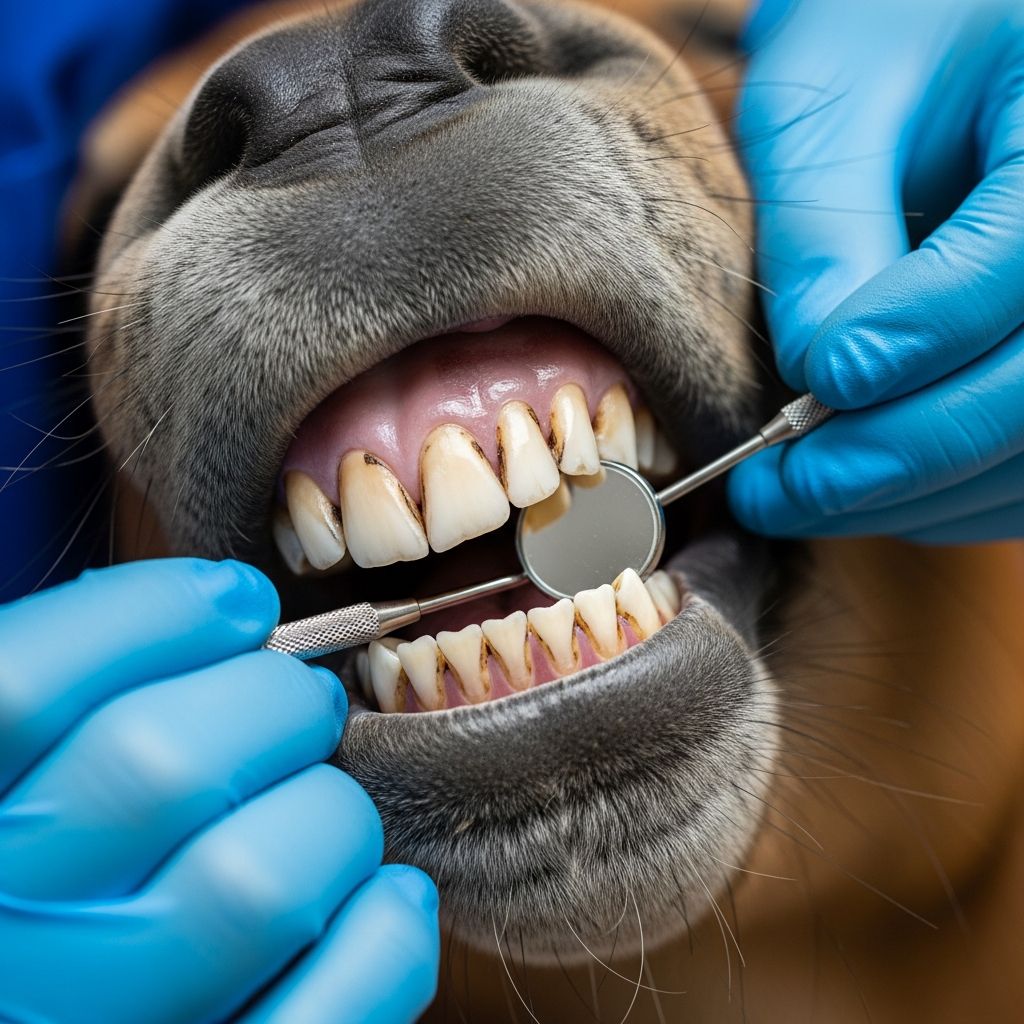
Determining the age of animals plays a crucial role in veterinary medicine, influencing everything from treatment plans to breeding decisions. Traditional approaches rely heavily on observing dental development, including tooth eruption and wear. These methods provide practical insights, especially for livestock and companion animals, though they come with limitations due to individual variations and environmental factors. Modern techniques, such as computed tomography (CT) scans measuring pulp-to-tooth volume ratios, offer enhanced precision, particularly for dogs.
Fundamentals of Dental Eruption in Age Estimation
Dental eruption serves as a primary indicator of age, particularly in young animals. Deciduous teeth emerge first, followed by permanent ones, creating predictable timelines across species. For instance, in puppies, the replacement of milk teeth with adult dentition typically completes by six months, allowing veterinarians to distinguish juveniles from adults with high accuracy. This process involves monitoring the emergence of incisors, premolars, and molars, which vary by species.
- Canine Dentition: Puppies develop deciduous incisors around 3-4 weeks, with permanent incisors erupting between 2-5 months. Canines follow suit, solidifying age brackets up to one year.
- Equine Patterns: Horses exhibit central incisors erupting at 2.5 years, intermediates at 3.5 years, and corners at 4.5 years, forming the basis for ‘age by the teeth’ assessments.
- Bovine Timelines: Cattle show similar progression, with permanent incisors appearing progressively from 1.5 to 4 years.
These milestones enable quick field evaluations but lose reliability post-eruption as wear introduces variability.
Interpreting Tooth Wear and Attrition Patterns
Once permanent teeth are in place, wear patterns become key. Brachydont teeth (low-crowned, as in dogs and small ruminants) show rapid attrition, while hypsodont teeth (high-crowned, like in horses and cattle) resist wear longer, exposing infundibula or dental stars over time. Examiners assess occlusal surfaces for flattening, cupping, and color changes.
| Species | Age Indicator | Description |
|---|---|---|
| Horses | 2-5 Years | Incisors level, no visible dental star; cups shallow. |
| Horses | 6-10 Years | Dental star appears on intermediates; teeth triangular. |
| Cattle | 2 Years | 2 permanent incisors erupted centrally. |
| Dogs | 1-2 Years | Clean white teeth, minimal tartar. |
| Dogs | 6+ Years | Heavy tartar, wear on incisors and canines. |
In equines, Galvayne’s groove—a dark line on upper corner incisors—emerges around 10 years, deepening by 20, aiding senior assessments. However, diet, genetics, and husbandry affect wear rates, necessitating cautious interpretation.
Species-Specific Dental Aging Protocols
Horses: From Foals to Veterans
Horse age estimation hinges on incisor progression. At birth, foals have deciduous teeth; permanent centrals erupt at 2.5 years, marked by neckline visibility. By 8 years, cups disappear from centrals, and teeth angle outward. Advanced signs include prominent bars at 12 years and heavy cupping beyond 15. These changes reflect continuous growth and eruption of hypsodont teeth, compensating for wear.
Cattle and Sheep: Practical Field Methods
Cattle rely on lower incisor eruption: two at 2 years, four at 3, six at 4, and eight at 5. Beyond this, wear on the corner incisor—flattening at 6 years, dentine exposure at 7—provides further clues. Sheep follow a similar incisor-based system, with full permanents by 4 years. These methods suit auction and management contexts but falter in older animals due to accelerated wear from rough forage.
Dogs and Cats: Companion Animal Challenges
For dogs, early accuracy drops post-6 months as all 42 permanent teeth emerge. Tartar accumulation signals 3-5 years, with yellowing and wear by 6-10, though small breeds show faster disease progression. Cats exhibit parallel patterns, with incisor wear and resorption lesions in seniors. Visual cues combine with gum health and mobility for holistic estimates.
Advanced Imaging: CT and Volumetric Analysis
Emerging technologies surpass visual limits. A 2025 study on 95 dog skulls (5-216 months) used CT to calculate pulp-to-tooth (P/T) volume ratios in the right maxillary canine and fourth premolar (PM4). Strong negative correlations emerged: r=0.88 for canines, r=0.77 for PM4, with logarithmic models predicting age accurately (R²=0.78 canine). This non-invasive method suits forensics and clinical use, unaffected by external wear factors.
In reindeer, visual wear scoring on molars and premolars shows biases in older individuals, prompting calls for crown height or cementum annulation validation. CT extends applicability beyond traditional dentition.
Limitations and Sources of Error
No method is infallible. Eruption can vary by nutrition and breed; wear accelerates with abrasive diets or slows in soft-fed animals. In dogs, genetics confounds tartar-based estimates. Hypsodont teeth prolong usability but introduce subjectivity in ‘stars’ or grooves. Cementum annulation offers precision (±1 year in 89% of reindeer cases) but requires histology.
- Environmental influences: Pasture quality alters attrition.
- Health factors: Disease accelerates resorption.
- Breed variations: brachycephalics prone to early wear.
Veterinarians mitigate errors by cross-referencing with eyes, coat, and radiographs.
Practical Applications in Veterinary Practice
Dental age estimation informs anesthesia risks, dental prophylaxis timing, and nutritional needs. In forensics, it identifies remains; in production animals, it guides culling. Integrating DNA methylation clocks enhances accuracy for mixed signals. Training emphasizes multi-factor assessment for reliability.
Frequently Asked Questions (FAQs)
How accurate is tooth-based age estimation in horses?
Highly reliable up to 8-10 years via incisor cups and stars; less so beyond due to wear variability.
Can dog age be precisely determined after 1 year?
Visual dental exams provide ranges, improved by CT P/T ratios showing strong age correlations.
What if an animal’s teeth show atypical wear?
Consult full exam including bloodwork and imaging to account for diet or pathology.
Is dental aging applicable to wild animals?
Yes, adapted methods like wear scoring aid wildlife management, validated against known-age samples.
Should owners use home dental checks for age?
No; professional exams ensure accuracy and detect issues early.
Future Directions in Dental Age Assessment
Ongoing research refines CT models and explores AI pattern recognition. Multi-species databases will standardize protocols, blending eruption, wear, and biometrics for unprecedented precision. These advances promise better outcomes in veterinary and conservation fields.
References
- Age estimation using the ratio of dental pulp to tooth volume by CT scan in dogs — J Vet Sci. 2025-01-01. https://pubmed.ncbi.nlm.nih.gov/39901470/
- Assessing current visual tooth wear age estimation methods for Rangifer tarandus — PMC. 2024. https://pmc.ncbi.nlm.nih.gov/articles/PMC10986930/
- How Veterinarians Estimate Dog Age — Embark Vet. 2023. https://embarkvet.com/resources/how-veterinarians-estimate-dog-age/
- Dogs Teeth and Age: How They Correlate — Animal Dental Specialists. 2023. https://animaldentalspecialists.com/can-you-tell-the-age-of-a-dog-by-their-teeth/
- Estimation of Age by Examination of the Teeth in Animals — MSD Veterinary Manual. 2023. https://www.msdvetmanual.com/digestive-system/dental-development-and-anatomy/estimation-of-age-by-examination-of-the-teeth-in-animals
Similar Articles








Read full bio of medha deb


