

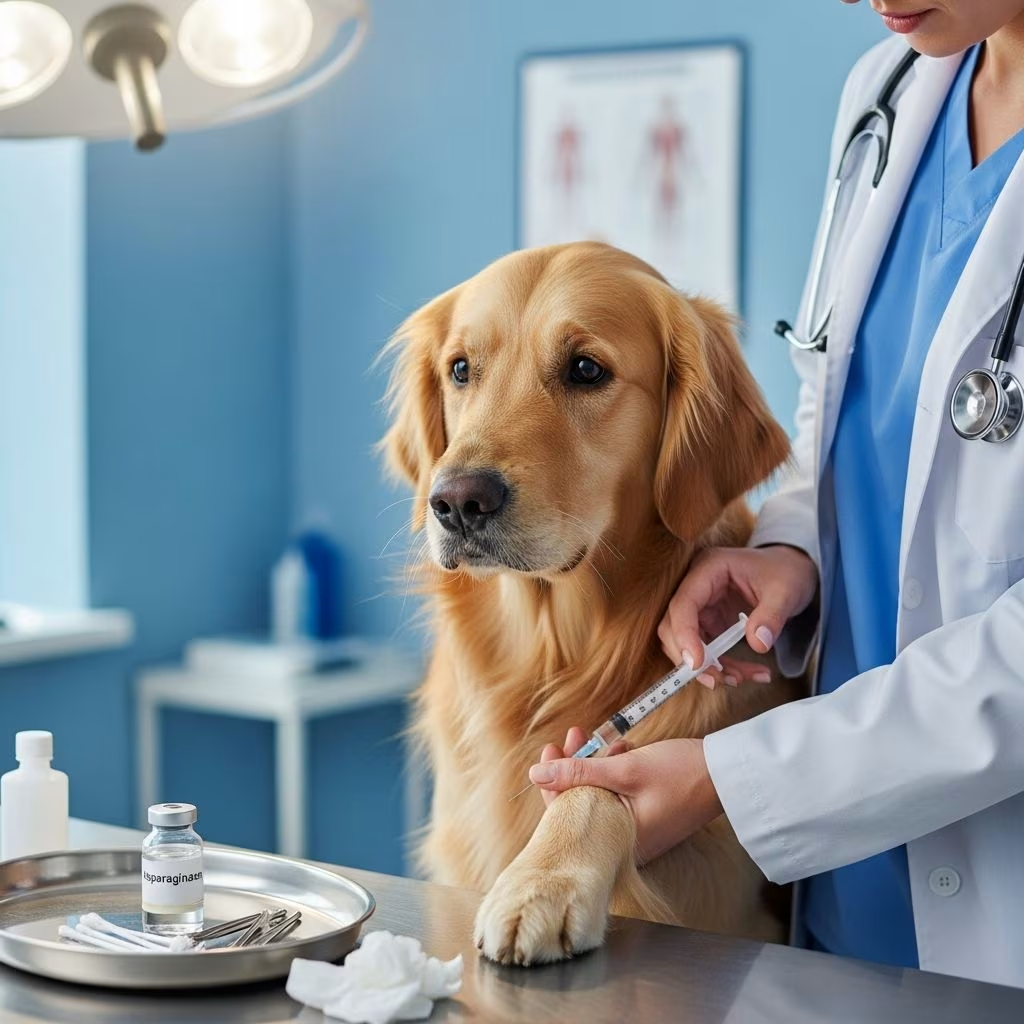
**Canine lymphoma**, a prevalent malignancy in dogs, demands multifaceted treatment strategies where **asparaginase** plays a crucial role, particularly in combination protocols like CHOP and as a rescue agent. This enzyme-based therapy targets lymphoblasts by depriving them of essential amino acids, inducing remission rates exceeding 80% when used appropriately.
Understanding Canine Lymphoma and Treatment Foundations
Canine lymphoma originates in the lymphatic system, often presenting as multicentric disease affecting lymph nodes, spleen, and other organs. It ranks among the most common cancers in dogs, with B-cell and T-cell subtypes influencing prognosis. While incurable, treatments focus on extending remission and enhancing quality of life, achieving initial response rates over 90% with chemotherapy.
Traditional approaches rely on multi-agent regimens adapted from human oncology. The **CHOP protocol**—comprising cyclophosphamide, hydroxydaunorubicin (doxorubicin), vincristine (Oncovin), and prednisone—stands as the gold standard, spanning 25 weeks and delivering median survival of 8-12 months. Asparaginase integrates optionally, especially for high-grade cases or relapsed disease.
The Mechanism and Strategic Use of Asparaginase
Asparaginase, commercially known as Elspar in human medicine and used off-label in veterinary practice, hydrolyzes asparagine into aspartic acid and ammonia. Lymphoma cells, deficient in asparagine synthetase, cannot synthesize this amino acid, leading to protein starvation and apoptosis.
In veterinary protocols, it is administered subcutaneously, often as an induction agent before CHOP cycles or in rescue combinations with lomustine (CCNU). For clinically ill dogs, a single dose can rapidly reduce tumor burden, with remissions in 80-90% of cases lasting 2-3 cycles. Dosing typically ranges from 400 IU/kg every 3 weeks, tailored to body weight and response.
Integration into Standard and Rescue Protocols
- CHOP Enhancement: Added during induction for aggressive lymphomas, boosting complete remission rates.
- Rescue Therapy: Post-relapse, combined with CCNU; 80-90% response, up to 6 treatments if full remission achieved.
- Palliative Role: For substage b (symptomatic) dogs, providing quick symptom relief.
Compared to single-agent doxorubicin, asparaginase offers non-overlapping toxicity, preserving options for sequential therapies.
Recent Advances Complementing Asparaginase
FDA-approved innovations expand options. **Tanovea (rabacfosadine)**, fully approved in 2021, targets lymphoma via non-P-glycoprotein mechanisms, ideal for doxorubicin-resistant cases. Administered IV every 21 days, it yields durable remissions as monotherapy or alternated with doxorubicin.
**Laverdia (verdinexor)**, the first oral therapy with 2026 full approval, inhibits nuclear export, achieving 55% clinical benefit with median 71-day duration. Suited for home administration twice weekly. These agents pair well with asparaginase in refractory scenarios.
Comparative Efficacy of Lymphoma Treatments
| Treatment | Response Rate | Median Remission | Administration | Common Side Effects |
|---|---|---|---|---|
| CHOP ± Asparaginase | >80-90% | 8-12 months | IV/Oral, 25 weeks | GI upset, myelosuppression |
| Tanovea | High in naïve/relapsed | Clinically relevant PFS | IV q21d | Manageable toxicity |
| Laverdia | 55% benefit | 71 days | Oral 2x/week | Variable, home-based |
| Asparaginase + CCNU Rescue | 80-90% | 2-3 cycles | SC/Oral q3w | Anorexia, anaphylaxis risk |
This table highlights asparaginase’s niche in rescue, complementing frontline CHOP and novel agents.
Potential Side Effects and Management
Asparaginase’s profile includes hypersensitivity (anaphylaxis in 1-2% after repeat doses), coagulopathies, and GI effects like anorexia or vomiting. Pre-treatment antihistamines and monitoring mitigate risks. Unlike alkylators, it spares bone marrow significantly.
Owners report improved appetite post-induction, aiding recovery. Veterinary oversight ensures safe integration, with prednisone tapering to minimize steroid side effects.
Prognostic Factors Influencing Outcomes
- Immunophenotype: B-cell responds better than T-cell.
- Stage/Substage: Early stages yield longer survival.
- Response Speed: Rapid remission predicts durability.
- Ancillary Therapies: Radiation or surgery for localized forms.
Recent studies emphasize client communication on realistic expectations, as relapse is inevitable but manageable.
Alternative and Emerging Modalities
Beyond chemo, half-body radiation offers single-session palliation, while bone marrow transplants with stem cell rescue target cure in select cases, though availability limits use. Low-intensity chlorambucil-prednisone suits indolent lymphomas, exceeding 2-year survival.
Practical Guidance for Pet Owners
Consult oncologists early. Monitor for lymphadenopathy, lethargy, or anorexia. Budget for protocols: CHOP ~$4,000-6,000; Tanovea adds cost but convenience. Quality of life metrics guide decisions—many dogs enjoy 1+ remissions.
Frequently Asked Questions (FAQs)
What is the success rate of asparaginase in dog lymphoma?
In rescue protocols, 80-90% achieve remission, often lasting 2-3 cycles.
Is asparaginase safe for repeated use?
Yes, with precautions against hypersensitivity; first dose monitors closely.
How does Tanovea compare to traditional CHOP?
Tanovea excels in relapsed cases, fewer visits, non-cross-resistant.
Can lymphoma be cured in dogs?
Rarely; focus is remission and palliation.
What are signs of lymphoma relapse?
Regrowing nodes, weight loss, or systemic illness.
References
- Canine Lymphoma Research — Purdue University College of Veterinary Medicine. 2026. https://vet.purdue.edu/wcorc/cancer-research/canine-lymphoma-research.php
- A New Era in Dog Lymphoma Treatment: Tanovea and Laverdia — OncoDaily. 2026. https://oncodaily.com/oncolibrary/dog-lymphoma-treatment
- Lymphoma in Dogs — Merck Veterinary Manual. 2026. https://www.merckvetmanual.com/circulatory-system/lymphoma-in-dogs/lymphoma-in-dogs
- Medical Oncology: Canine Rescue Lymphoma — NC State Veterinary Hospital. 2026. https://hospital.cvm.ncsu.edu/services/small-animals/cancer-oncology/oncology/canine-rescue-lymphoma/
- Treatment options for canine lymphoma — dvm360. 2026. https://www.dvm360.com/view/treatment-options-for-canine-lymphoma
- Review of Canine Lymphoma Treated with Chemotherapy — PMC (NCBI). 2023-06-01. https://pmc.ncbi.nlm.nih.gov/articles/PMC10224423/



