

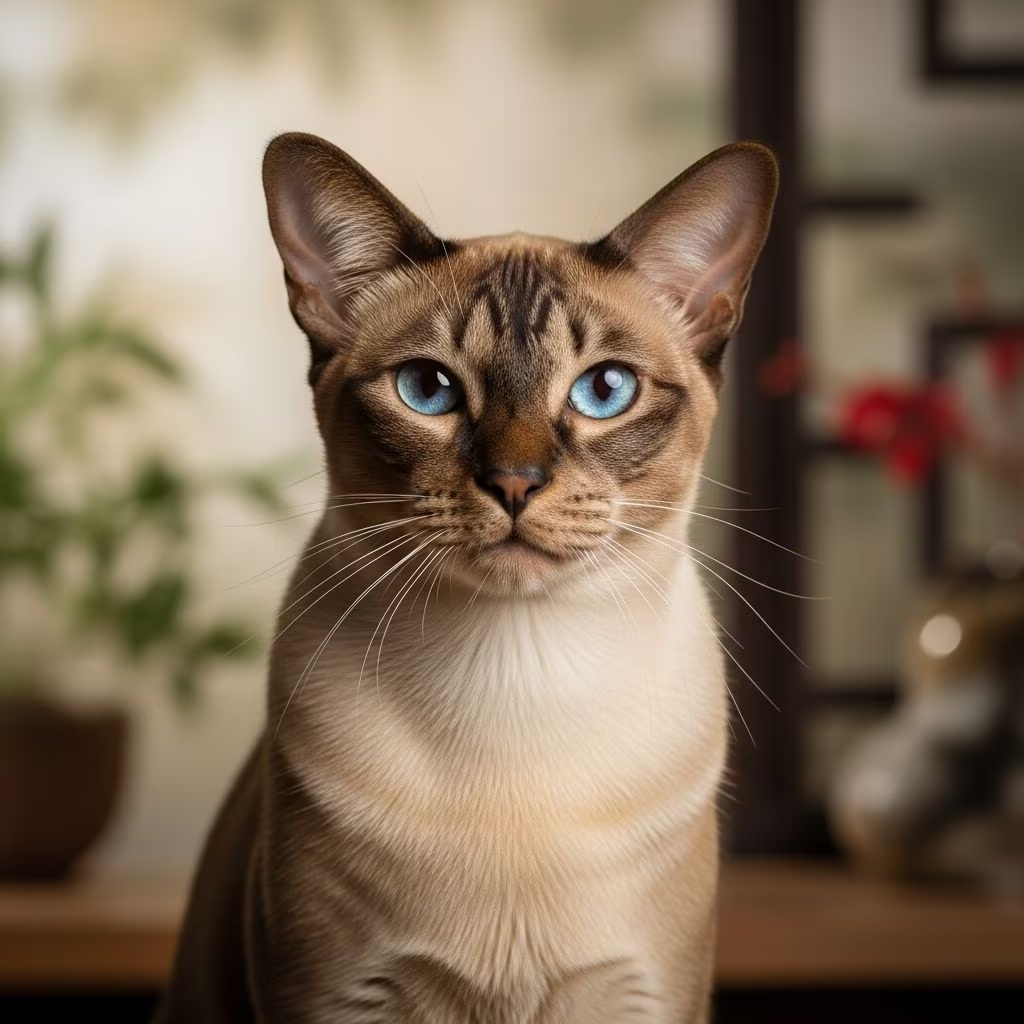
The **Asian cat** is a striking breed known for its elegant, muscular build and Burmese-like type, available in a wide array of colors and patterns. Developed in the UK from an accidental mating, this medium-sized cat combines the athleticism of the Burmese with diverse coat options, including shorthair and semi-longhair (Tiffanie) varieties, making it a versatile and affectionate companion for families.
Asian Cat Pictures
Asian cats showcase a sleek, glossy coat that can appear almost watercolor-like in solid colors, with options for tabby patterns or white markings. Their large, expressive eyes—ranging from green to amber—set against a moderate wedge-shaped head, medium ears, and lithe body, create a poised and athletic silhouette. Males are notably muscular, while females appear more dainty. Gallery images often highlight their fine, satiny fur lying close to the skin, emphasizing their refined beauty.
Asian Cat Facts
- **Size**: Medium-sized, with males heavier and more solid (typically 8-12 pounds), females dainty and lean.
- **Lifespan**: 12-16 years with proper care, robust health from Burmese lineage.
- **Coat Varieties**: Shorthair (glossy, fine) and semi-longhair (Tiffanie, silky).
- **Colors/Patterns**: Non-silver shaded (e.g., chocolate, blue, lilac), tabby, smoke, and tipped; excludes pointed or silver-shaded except Burmilla.
- **Activity Level**: High-energy, playful, and inquisitive, requiring daily interaction.
- **Vocalization**: Talkative but not overly noisy, responds to owners with chatty meows.
History
The **Asian cat breed** traces its origins to 1981 in the United Kingdom, born from an unexpected romance between Baroness Miranda von Kirchberg’s cats: a Chinchilla Persian male named Sanquist (or Jamari Sanquist) and a Lilac Burmese female named Faberge (or Bambino Lilac Faberge). Intended for breed-specific matings, Faberge was sent away but returned pregnant, delivering four stunning female kittens—Galatea, Gemma, Gabriela, and Gisella—with a unique silver-tipped coat on a Burmese frame.
Rather than neuter them, the Baroness backcrossed the kittens with Burmese cats to refine the type, founding the Burmilla as the initial variety. Breeder Therese Clarke, who adopted Gemma, established the Burmilla Cat Club in 1984. The breed expanded into the broader Asian group, incorporating non-silver colors, patterns, and the semi-longhaired Tiffanie. The Governing Council of the Cat Fancy (GCCF) granted preliminary Championship Status to Burmilla in 1990, with full status for all five Asian varieties by 2003. Today, it’s a rare pedigree breed, with only 160 GCCF-registered kittens in 2023.
This accidental litter not only created the Burmilla but spawned the Asian Shorthair and Tiffanie, retaining the Burmese body while diversifying coats. Related influences from Persians and Chinchillas added coat variety, distinguishing Asians from pure Burmese.
Size
Asian cats are **medium-sized** with a slender, athletic build—heavy for their frame due to dense muscle. They measure 9-11 inches at the shoulder, with males weighing 10-15 pounds (more solid and muscular) and females 8-12 pounds (dainty and elegant). Their long, lean lines, broad rounded chest, slender legs, and neat oval paws contribute to a lithe yet powerful appearance. The Tiffanie variant mirrors this but with a finer, semi-long coat.
Personality
**Asian cats** are lively, outgoing ‘people cats’—affectionate, intelligent, and eager to participate in family life. They thrive on play, investigation, and interaction, often following owners room-to-room with curious determination. Talkative without excess noise, they ‘chat’ back when addressed, adding charm to their entertaining nature.
Generally good with children, dogs, and other pets if socialized early and introduced properly, they prefer confident, outgoing companions. In multi-cat homes, their willful streak may spark dominance issues, but they coexist well with similar lively breeds. Stress-sensitive, they excel in calm environments but may mark or fight if overwhelmed. Easy-going when relaxed, they make devoted family pets.
Appearance
Mirroring the **European Burmese** in type, Asians feature a moderate wedge-shaped head, high cheekbones, straight nose with a gentle stop, and large, expressive almond eyes (green to amber, vivid in non-chocolate/lilac). Ears are medium-sized, wide-set, and rounded-tipped; the neck is slender yet muscular.
The body is muscular and lithe: broad chest, level back, slender legs (hind slightly longer), and medium tail with rounded tip. The benchmark shorthair coat is short, fine, glossy, and close-lying—watercolor-smooth in solids. Tiffanie has a semi-long, silky coat. Colors include sepia (chocolate, blue, lilac), tabby, smoke, and tipped (Burmilla silver); patterns may feature white. No pointed or excessive silver shading.
| Variety | Coat Length | Key Colors/Patterns |
|---|---|---|
| Asian Shorthair (incl. Burmilla) | Short, glossy | Shaded, tabby, smoke, solid sepia |
| Tiffanie | Semi-long, silky | Same as above |
Grooming & Care
**Low-maintenance grooming** suits the Asian’s short coat: weekly brushing removes loose fur and distributes oils, preventing matting in Tiffanies (brush 2-3 times weekly). Bathe rarely, as their coat repels dirt. Dental care (weekly brushing, annual vet checks), nail trims every 2-3 weeks, and ear cleaning prevent issues.
Feed high-quality, breed-appropriate diet for muscle maintenance—kibble/wet food balanced for activity level. Provide fresh water, scratching posts, interactive toys, and climbing trees to channel energy. Litter training is instinctive; use clumping litter in covered boxes.
Health
Generally hardy from Burmese stock, Asians live 12-16 years but may inherit **Burmese-related conditions**: hypertrophic cardiomyopathy (HCM), diabetes, and oral issues. Annual vet exams, heart screenings, and dental care mitigate risks. Obesity-prone if under-exercised; maintain ideal weight. No breed-specific tests mandated, but pedigree screening helps. Early socialization reduces stress behaviors.
Nutrition
Active Asians need **300-400 calories daily** (adjust for age/sterilization): protein-rich (30-40%) for muscle, moderate fat, and fibers for digestion. Divide into 2-3 meals; avoid obesity with portion control. Seniors may need joint-support formulas; kittens require growth diets. Always provide water; wet food aids hydration.
Are Asian Cats Good with Kids & Dogs?
Yes, **Asian cats excel with families**. Their patient, playful demeanor suits children—supervise young kids due to size/activity. Dog-friendly if introduced gradually, preferring confident breeds. Early socialization ensures harmony; their adaptability makes them ideal multi-pet homes.
Frequently Asked Questions
What is an Asian cat like?
Energetic, affectionate, and curious, with a Burmese body in diverse colors—perfect for interactive owners.
Are Asians rare?
Yes, relatively rare; only 160 GCCF kittens in 2023.
How big do Asian cats get?
Males 10-15 lbs, females 8-12 lbs; medium build.
Do Asian cats shed a lot?
Minimal shedding; weekly brushing suffices.
Asian cat vs. Burmese?
Asians have Burmese type but more coat colors/patterns; Burmilla is silver-shaded subset.
Are they hypoallergenic?
No, but short coat sheds less than longhaired breeds.
References
- Asian – The Governing Council of the Cat Fancy — GCCF. Accessed 2026. https://www.gccfcats.org/getting-a-cat/choosing/cat-breeds/asian/
- The Asian Cat | History, Traits, and Care — Feline Fancy. Accessed 2026. https://felinefancy.co.uk/blogs/news/asian-cat
- Asian cat – Wikipedia — Wikipedia. 2023-12-01. https://en.wikipedia.org/wiki/Asian_cat
- All about Asian cat breed — Animalia.bio. Accessed 2026. https://animalia.bio/pets/asian-cat
- Asian Cat Breed Information — Purina UK. Accessed 2026. https://www.purina.co.uk/find-a-pet/cat-breeds/asian



