

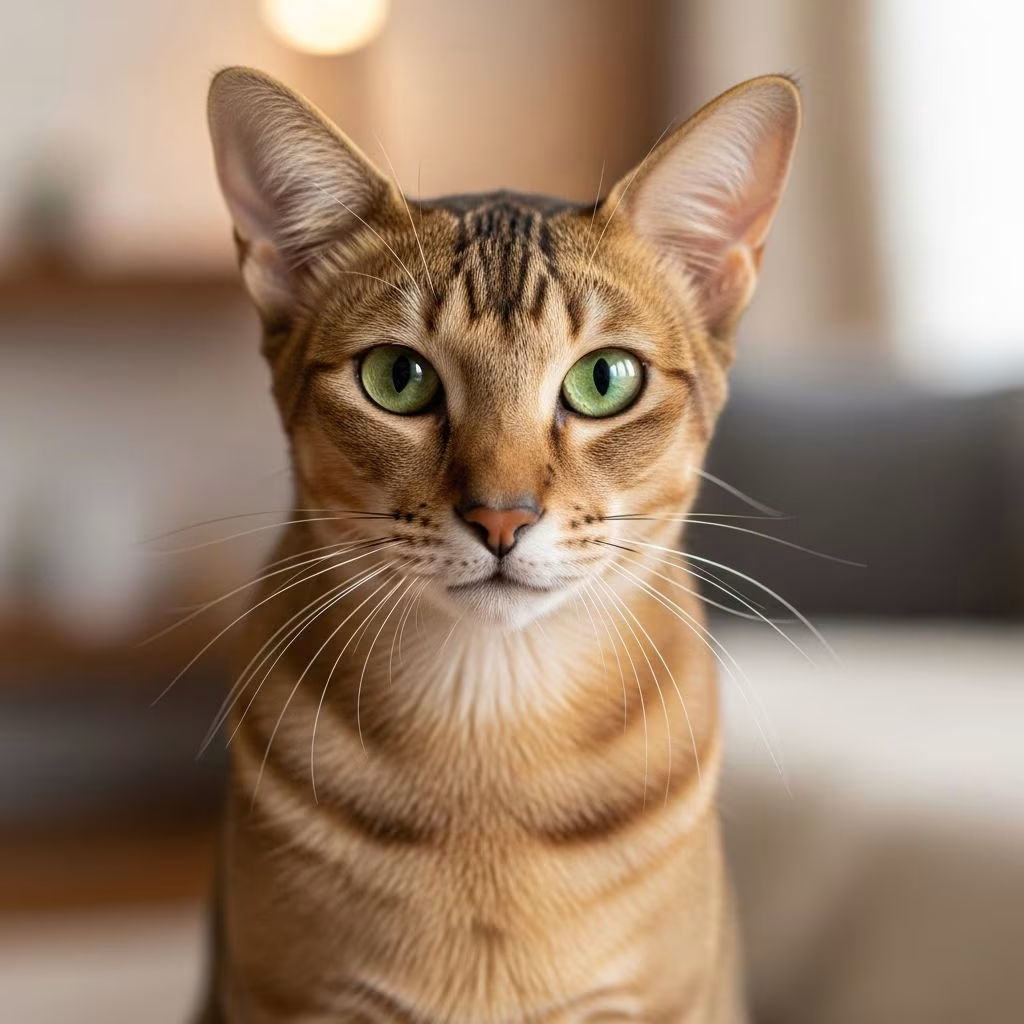
The **Asian cat** is a striking breed known for its elegant, athletic build and Burmese-like body type with diverse coat colors and patterns. Developed in the UK from an accidental mating, this medium-sized cat combines the playfulness of the Burmese with unique shading, available in shorthair and semi-longhair varieties.
Asian Cat Facts
- Origin: United Kingdom
- Breed Group: Asian Group (includes Burmilla, Tiffanie, and others)
- Pet Quality: Excellent family pet, good with children and dogs if socialized
- Size: Medium; males 8-12 lbs, females 6-10 lbs
- Lifespan: 12-16 years
- Coat: Short glossy (Asian Shorthair) or semi-long silky (Tiffanie)
- Colors: Self colors, tabby, tortoiseshell, silver-shaded, with or without white
- Energy Level: High – loves play and exploration
- Vocalization: Talkative but not overly noisy
- Grooming: Low-maintenance weekly brushing
Asian Cat Breed Overview
The Asian cat exemplifies grace and vitality, mirroring the **Burmese** in body conformation but offering a spectrum of coat varieties beyond the typical Burmese palette. This breed group emerged from a serendipitous union in 1981 between a lilac Burmese female named Bambino Lilac Faberge and a Chinchilla Persian male, Jamari Sanquist, owned by Baroness Miranda von Kirchberg. The resulting litter of four kittens—Galatea, Gemma, Gabriela, and Gisella—displayed a unique silver-tipped coat on a Burmese frame, sparking the development of the Burmilla and eventually the broader Asian group.
Recognized by the Governing Council of the Cat Fancy (GCCF), the Asian encompasses shorthair and semi-longhair (Tiffanie) types in non-silver colors, while silver varieties fall under Burmilla or Chinchilla. By 2003, all Asian varieties achieved full Championship status, though they remain relatively rare, with only 160 pedigreed kittens registered in 2023.
These cats are medium-sized, muscular yet slender, with males appearing more robust and females daintier. Their moderate wedge-shaped head, large expressive eyes (often green to amber), and glossy coat create a watercolor-like effect, especially in solid hues.
History of the Asian Cat
The tale of the Asian cat is one of romance and innovation. In 1981, despite plans for purebred matings, Faberge and Sanquist produced kittens with an alluring blend of traits: the sturdy Burmese body and the shimmering Persian influence. Rather than discard them, the Baroness backcrossed them to Burmese lines, refining the Burmilla with its signature tipping. As breeding expanded, non-silver offspring birthed the Asian Shorthair, and longhaired kittens led to the Tiffanie.
Breeder Therese Clarke, adopting Gemma, founded the Burmilla Cat Club in 1984, accelerating recognition. Preliminary Championship status arrived in 1990, with full status by 2003. This evolution distinguishes Asians from related breeds like Burmese (ancestral body type), Persians/Chinchillas (coat influence), and even Abyssinians in some patterned lines.
Asian Cat Appearance & Colors
Asians boast a **lithe, athletic physique** heavy for their size, with a broad chest, slender legs, and oval paws. The head is rounded with a straight profile, medium ears, and prominent eyes slanting slightly upward. The short coat is fine, glossy, and close-lying; Tiffanies have a silky semi-long coat without undercoat.
Coat diversity defines the breed:
- Asian Self (Shorthair): Solid colors like black, blue, chocolate, lilac, red.
- Asian Tabby: Classic, mackerel, spotted patterns in various colors.
- Asian Ticked: Abyssinian-like ticking.
- Tiffanie: Semi-longhair versions of the above.
- With White: Bicolor, harlequin, van patterns.
Males average 9-12 lbs, females 7-10 lbs, reaching full maturity around 2-3 years due to slow development.
Asian Cat Personality & Temperament
**Outgoing and affectionate**, Asians are quintessential ‘people cats,’ craving involvement in family life. Lively and intelligent, they excel at interactive play, investigating cabinets, and ‘chatting’ in response to owners—vocal yet not shrill.
They thrive with confident cats, dogs, and children but may assert dominance in multi-pet homes, potentially leading to stress-related issues like marking if not managed. Early socialization ensures harmony; they’re generally stress-sensitive, preferring calm environments.
| Trait | Description |
|---|---|
| Affection Level | High – loves laps and cuddles |
| Playfulness | Very high – fetch and toys enthusiast |
| Trainability | Good – responds to clicker training |
| Independence | Moderate – enjoys company but not clingy |
| Child-Friendly | Yes, with supervision |
Asian Cat Health & Lifespan
Asians inherit Burmese robustness, living 12-16 years. Common concerns include:
- HCM (Hypertrophic Cardiomyopathy): Screen parents via echo.
- Diabetes Mellitus: Burmese lineage risk; monitor diet.
- Oral Issues: Dental disease; weekly brushing advised.
- Pyruvate Kinase Deficiency: Rare genetic anemia.
Annual vet checks, vaccinations, and parasite control are essential. Recent GCCF data emphasizes genetic testing for breeding stock.
Asian Cat Care & Grooming
Grooming
Low-shedding coats need weekly brushing to distribute oils and reduce hairballs. Tiffanies require more frequent combing. Bathe rarely; nails trimmed biweekly, ears cleaned monthly.
Exercise
Daily play sessions (20-30 mins) with toys, scratching posts, and climbing trees match their energy. Puzzle feeders engage their curiosity.
Diet
High-quality protein-rich food; portion control prevents obesity. Fresh water always; consider wet food for hydration.
Living Environment
Indoor-only preferred; harness training for safe outdoor time. Provide perches and hideouts.
Related Breeds to the Asian Cat
- Burmilla: Silver-shaded sibling with tipping.
- Burmese: Body type foundation; warmer tones.
- Tiffanie: Longhaired Asian.
- European Shorthair: Similar build, less refined.
Asian Cat FAQs
Are Asian cats hypoallergenic?
No, but low-shedding coats produce fewer allergens than heavy shedders.
Do Asian cats get along with dogs?
Yes, with proper introductions; their confident nature aids compatibility.
How much do Asian cats cost?
Pedigree kittens: $800-$1500 USD, depending on lineage and region.
Are Asian cats talkative?
Moderately; they chirp and trill in conversation.
What’s the difference between Asian and Burmilla?
Asians have non-silver coats; Burmillas feature silver tipping/shading.
Can Asian cats be left alone?
Prefer company; not ideal for long workdays without stimulation.
References
- Asian – The Governing Council of the Cat Fancy — GCCF. Accessed 2026. https://www.gccfcats.org/getting-a-cat/choosing/cat-breeds/asian/
- The Asian Cat | History, Traits, and Care — Feline Fancy. Accessed 2026. https://felinefancy.co.uk/blogs/news/asian-cat
- Asian cat – Wikipedia — Wikipedia. 2023-12-01. https://en.wikipedia.org/wiki/Asian_cat
- All about Asian cat breed — Animalia.bio. Accessed 2026. https://animalia.bio/pets/asian-cat
- Asian Cat Breed Information — Purina UK. Accessed 2026. https://www.purina.co.uk/find-a-pet/cat-breeds/asian



