

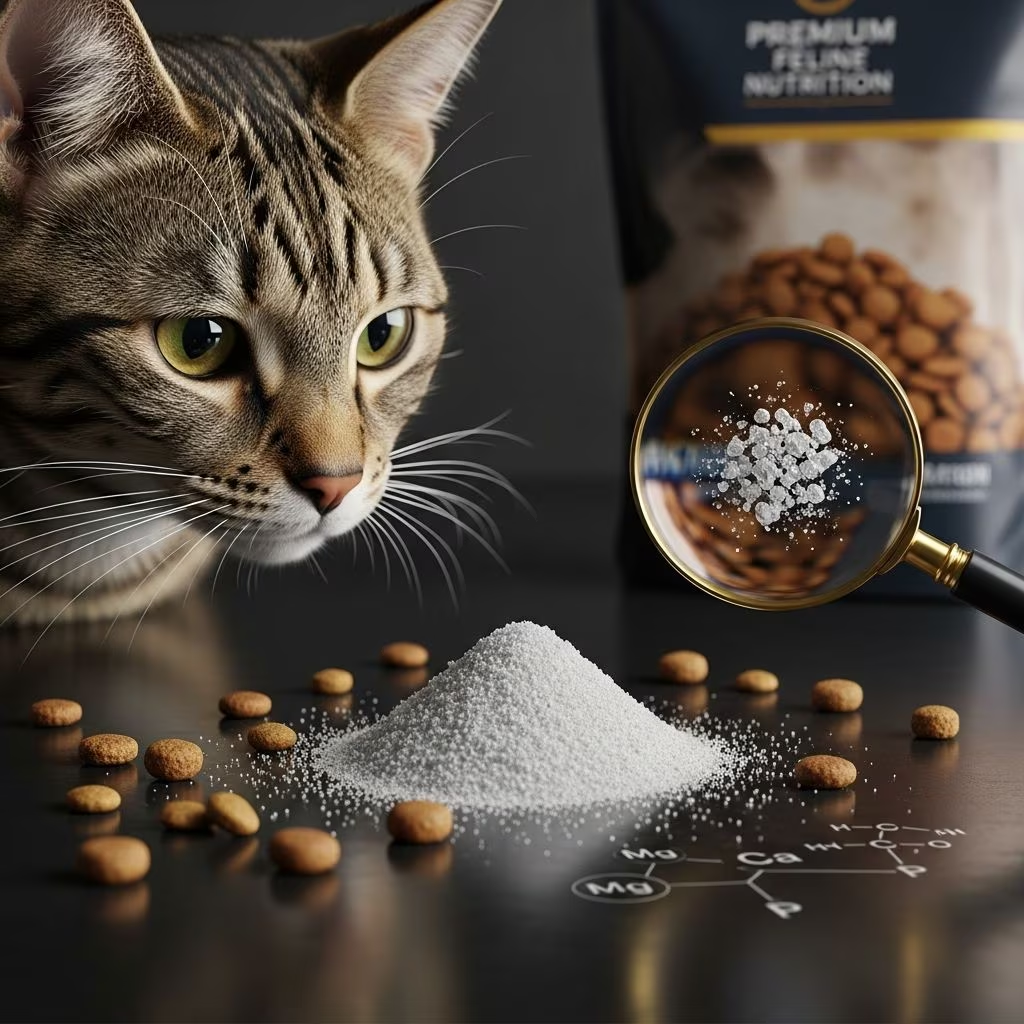
Understanding Ash in Cat Food: A Complete Guide for Pet Parents
When browsing cat food labels, you may have noticed a nutritional component called “crude ash” listed in the analytical constituents section. Many pet owners find themselves confused or concerned about this ingredient, wondering whether high ash content indicates poor quality food or potential health risks for their feline companions. The reality is far more nuanced than popular myths suggest. Understanding what ash truly is and how it functions in your cat’s diet is essential for making informed decisions about your pet’s nutrition.
Ash is a legitimate and necessary component of feline nutrition that serves important biological functions. Rather than being something to fear or avoid entirely, ash represents the mineral content that keeps your cat healthy and thriving. By learning the facts about ash, pet parents can confidently select appropriate foods without being misled by outdated information or marketing claims.
What Exactly Is Ash in Cat Food?
Ash in cat food refers to the inorganic mineral content that remains after the organic portion of food has been burned off during laboratory testing. Pet food manufacturers measure ash by heating food samples to temperatures between 550 and 600 degrees Fahrenheit. What remains after this process is the mineral residue commonly referred to as ash content.
The minerals comprising this ash include essential nutrients such as:
- Calcium
- Phosphorus
- Magnesium
- Potassium
- Sodium
- Silicon
- Sulfur
- Trace minerals including zinc and iron
These minerals are absolutely vital for maintaining numerous bodily functions in cats. They support bone health and strength, enable proper muscle contraction, facilitate nerve transmission, and contribute to overall metabolic processes. Without adequate mineral content, cats would experience serious health complications affecting their skeletal system, muscular function, and organ performance.
It’s important to understand that ash doesn’t represent a single substance or byproduct. Instead, it encompasses all the inorganic mineral compounds naturally present in food ingredients. Most ash in commercial cat kibble originates from calcium and phosphorus that come from the meat and bone content used in formulation.
The Historical Context: Why Ash Became Controversial
Understanding why ash has developed such a negative reputation requires examining the history of pet food regulation and manufacturing practices. Before standardized industry regulations were established by organizations like the Association of American Feed Control Officials (AAFCO), the Pet Food Institute, and similar international bodies, some pet food manufacturers engaged in questionable practices.
During this unregulated era, certain manufacturers would incorporate low-quality ingredients such as excessive bones, cartilage, and other animal parts into cat food formulations. When these inferior products were subjected to the ash-testing process, they produced significantly higher ash content compared to quality foods. Consequently, elevated ash percentages became an informal indicator of poor manufacturing practices and inferior ingredient quality. This association between high ash and low-quality ingredients became deeply embedded in consumer consciousness and continues to influence purchasing decisions today.
Modern Pet Food Standards and Ash Content
The pet food industry has undergone dramatic transformation since those early days of minimal regulation. Today, reputable manufacturers adhere to strict guidelines established by regulatory bodies including AAFCO in the United States, FEDIAF in Europe, and UK Pet Food standards in the United Kingdom. Most quality pet food companies are members of these regulatory organizations and commit to using only ingredients that meet human-food consumption standards.
Even premium quality cat foods contain ash content ranging from 3 to 10 percent. This is not an indicator of inferior ingredients but rather reflects the deliberate addition of essential vitamins and minerals necessary for complete and balanced nutrition. During the ash-testing process, these mineral supplements, along with naturally occurring minerals from quality meat sources, remain behind as mineral residue.
The presence of ash in high-quality foods demonstrates that manufacturers are meeting their responsibility to provide comprehensive nutrition. Rather than viewing ash as a contaminant or indicator of poor quality, modern understanding recognizes it as evidence that a food contains the mineral supplementation necessary for optimal feline health.
Types of Ash: Organic vs. Inorganic
Not all ash present in cat food originates from the same sources, and this distinction matters when considering potential health effects. Understanding the difference between organic and inorganic ash helps clarify why generalized concerns about ash content often miss the mark.
Inorganic Ash: This category includes mineral content derived from intentional ingredient additions like bone meal, eggshell supplements, mineral supplements, and other inorganic mineral sources. Inorganic ash is typically necessary and beneficial for maintaining feline health. It is not inherently harmful and serves critical functions in supporting bone structure, muscle function, and metabolic processes.
Organic Ash: This type of ash results from the burning process itself and appears in all cat foods to some extent. It consists of carbonates and other compounds that form during the high-temperature testing procedure. Organic ash is not harmful when present in moderate amounts and is an unavoidable aspect of any food product subjected to ash testing.
The legitimate concern lies specifically with excessive inorganic ash, which can lead to mineral imbalances in your cat’s diet. Rather than eliminating all ash from cat food, the appropriate focus should be on ensuring the right balance and proportion of minerals according to your cat’s specific nutritional needs.
Ash and Feline Urinary Tract Health
One of the primary reasons pet owners worry about ash content relates to potential urinary tract issues in cats. Understanding the actual relationship between ash and feline lower urinary tract disease (FLUTD) requires examining both historical assumptions and modern scientific understanding.
Historical Misconceptions
During the 1970s and 1980s, veterinarians investigating the causes of feline urinary crystals and stones initially suspected ash content as a contributing factor. This led to widespread recommendations for low-ash diets and contributed to the development of numerous “low-ash” commercial cat food products. However, subsequent research revealed that ash itself was not the primary culprit in urinary disease development.
The Role of Magnesium and Urine pH
Further investigation demonstrated that the actual problem involved the formulation of commercial cat foods and their effect on urine pH levels rather than ash content directly. Most commercial dry kibble diets are formulated with high vegetable and grain content, which creates more alkaline urine with a higher pH. This alkaline environment promotes the formation of struvite crystals (magnesium ammonium phosphate) that can cause urinary obstruction and disease.
In contrast, a high-meat diet similar to what cats would consume in nature promotes more acidic urine with a lower pH, supporting better urinary tract health. The key issue centers on mineral balance and urine pH, not simply on ash percentage numbers appearing on package labels.
The Magnesium Consideration
While magnesium is a component of ash, restricting all magnesium is not the solution to preventing urinary disease. High levels of certain minerals, particularly magnesium and phosphorus, have been associated with urinary stone formation in some cats. However, moderate magnesium levels are essential for numerous health functions, and complete magnesium restriction can create other health problems.
Instead of focusing on low-ash or low-magnesium diets, attention should center on maintaining appropriate mineral balance tailored to individual cat needs. Cats with specific urinary health concerns may benefit from diets formulated to support appropriate urine pH and mineral balance, but this is different from simply selecting the lowest ash percentage available.
Assessing Ash Content on Pet Food Labels
When evaluating cat food options, understanding how to interpret ash content requires context and comparison. Rather than viewing any specific ash percentage as inherently good or bad, pet parents should consider ash within the broader nutritional framework of the food.
Typical ash content ranges for quality cat foods fall between 3 and 10 percent. Foods at the lower end of this range are not necessarily superior to those at the higher end. A food with 8 percent ash containing high-quality ingredients and appropriate mineral balance may be far superior to a food with 4 percent ash that lacks essential nutrient supplementation.
The analytical constituents section of your cat food label provides important information including protein, fat, fiber, moisture, and ash percentages. However, this information alone does not tell the complete nutritional story. You should also review the ingredient list, understand the meat content, and ideally consult with your veterinarian about whether a particular food meets your individual cat’s nutritional requirements.
Choosing Quality Cat Food Beyond Ash Content
Rather than focusing exclusively on ash percentages, pet parents should evaluate cat food quality through multiple lenses:
- Ingredient Quality: High-quality protein sources listed first in the ingredient list indicate better formulations than foods relying on grain fillers
- Manufacturer Reputation: Brands committed to regulatory compliance and quality standards provide greater assurance
- Nutritional Completeness: Look for foods formulated to be complete and balanced according to AAFCO standards
- Individual Cat Needs: Consider your cat’s age, health status, activity level, and any specific health concerns
- Veterinary Guidance: Your veterinarian can recommend foods appropriate for your specific cat’s needs
Quality cat food manufacturers deliberately include essential vitamins and minerals, resulting in moderate ash content that supports feline health. The presence of ash in these foods reflects nutritional completeness, not inferiority.
Frequently Asked Questions About Ash in Cat Food
Q: Is there an ideal ash percentage for all cats?
A: There is no universal ideal ash percentage. Different cats have different nutritional needs based on age, health status, and individual factors. Quality foods typically contain 3-10% ash, and what matters most is that the overall mineral balance supports your cat’s health. Your veterinarian can recommend appropriate ash levels for your specific cat.
Q: Does low-ash cat food prevent urinary crystals?
A: Low-ash diets alone do not prevent urinary disease. Modern research shows that urine pH and overall mineral balance are more important than ash percentage. Cats prone to urinary issues benefit more from diets that promote appropriate urine pH and proper hydration than from simply choosing low-ash options.
Q: Can high ash content cause kidney disease in cats?
A: High ash content alone does not cause kidney disease. Cats with existing kidney disease may require modified diets recommended by their veterinarian, but this is a different consideration from general ash content concerns.
Q: How does canned cat food compare to dry food regarding ash content?
A: Canned and dry foods may have different ash percentages due to moisture content differences. However, both can be nutritionally appropriate. The higher moisture content of canned food can support urinary health through increased hydration, which may be beneficial for some cats.
Q: Should I switch my cat to low-ash food if they have no health issues?
A: If your cat is healthy and thriving on their current food with no urinary or health concerns, there is no need to switch based solely on ash content. Continue providing a quality, nutritionally complete diet appropriate for your cat’s age and activity level.
Q: What does the “crude ash” listing mean on pet food labels?
A: “Crude ash” refers to the total mineral content determined through laboratory testing. It’s called “crude” because the testing method measures total ash without distinguishing between different mineral types or sources.
Making Informed Choices for Your Cat’s Nutrition
Understanding ash in cat food empowers pet parents to move beyond outdated myths and make nutritionally sound decisions. Rather than reflexively selecting the lowest-ash option, focus on overall food quality, ingredient integrity, and your individual cat’s specific needs.
Quality cat food manufacturers include essential minerals reflected in moderate ash percentages. These minerals are not contaminants but vital nutrients supporting your cat’s health. By understanding what ash represents, evaluating foods comprehensively, and consulting with your veterinarian, you can confidently select foods that promote optimal feline nutrition and long-term wellness.
The ash content on your cat food label represents transparency about mineral content rather than a warning sign about food quality. Modern regulated pet food industry standards ensure that reputable manufacturers provide complete, balanced nutrition that includes appropriate mineral supplementation. Your cat’s health depends on comprehensive nutrition, not on achieving an artificially low ash percentage.
References
- Is high ash content in cat food bad? — Tippaws. 2025. https://www.tippaws.com/blogs/news/is-high-ash-content-in-cat-food-bad
- Why Is There Ash in Cat Food? — Only Natural Pet. 2025. https://www.onlynaturalpet.com/blogs/holistic-healthcare-library/ash-magnesium-in-cat-food
- All About Ash — Tufts University, Petfoodology. August 17, 2022. https://sites.tufts.edu/petfoodology/2022/08/17/all-about-ash/
- Understanding Ash & Phosphorus — Pets on Broadway. 2025. https://petsonbroadway.com/blogs/expert-advice/understanding-ash-and-phosphorus
- AAFCO Dog and Cat Food Nutrient Profiles — Association of American Feed Control Officials (AAFCO). January 2023. https://www.aafco.org/wp-content/uploads/2023/01/Model_Bills_and_Regulations_Agenda_Midyear_2015_Final_Attachment_A.__Proposed_revisions_to_AAFCO_Nutrient_Profiles_PFC_Final_070214.pdf



