

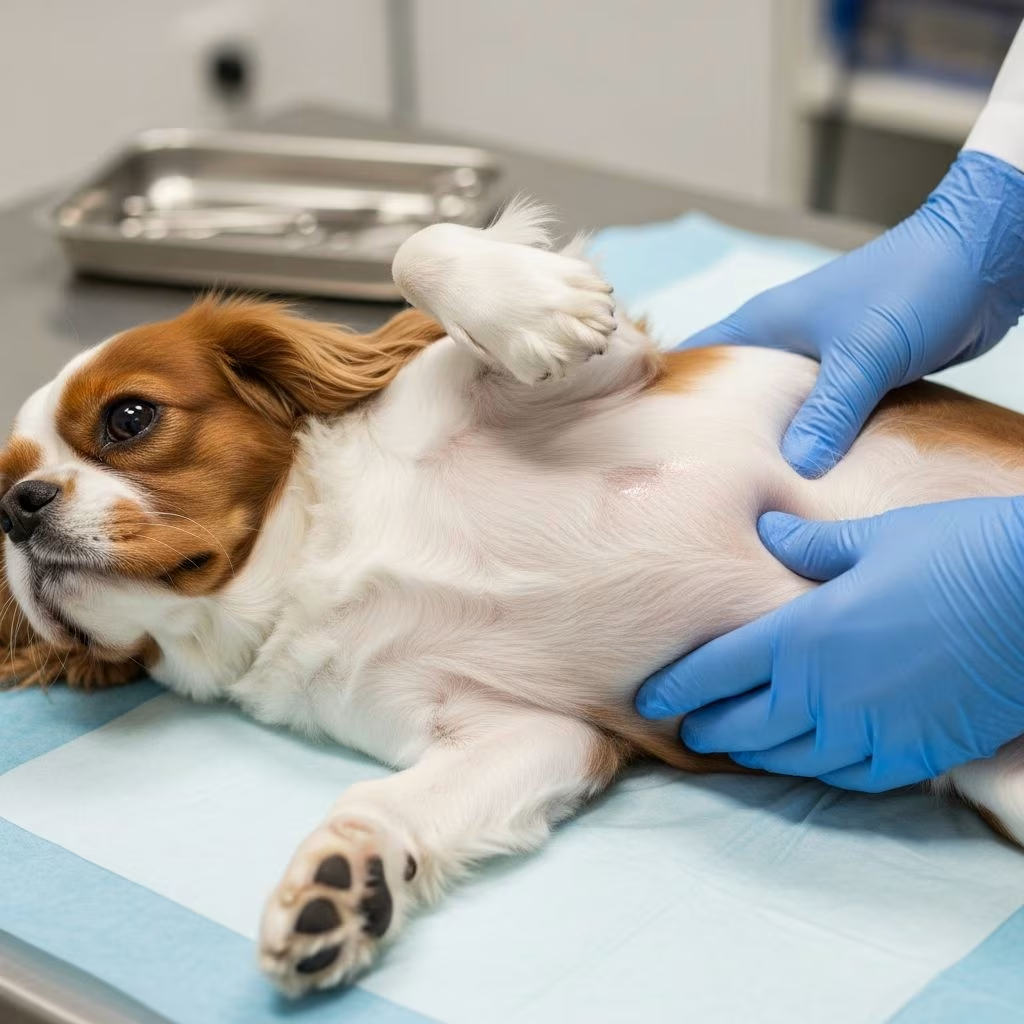
Abdominal fluid buildup, known as ascites, poses a serious challenge in small animal veterinary practice, particularly when linked to hepatic disorders. This condition arises from complex interactions involving elevated pressures in the portal system, reduced protein levels in the blood, and disruptions in fluid balance mechanisms. Dogs and cats suffering from chronic liver conditions often present with this symptom, signaling advanced disease that requires prompt intervention.
The Fundamentals of Ascites Formation
Ascites occurs when excess fluid gathers in the peritoneal cavity, the space surrounding abdominal organs. In healthy animals, fluid dynamics follow Starling’s principles, where hydrostatic and oncotic pressures maintain equilibrium across capillary walls. When liver function falters, this balance shifts dramatically. Portal hypertension, a hallmark of many hepatic pathologies, increases hydrostatic pressure, forcing fluid out of vessels into the abdomen.
Compounding this, hypoalbuminemia—low blood albumin from impaired liver synthesis—lowers oncotic pressure, further promoting leakage. Veterinary studies highlight that while portal issues drive initial formation, protein deficiency sustains it, creating a vicious cycle.
Primary Hepatic Contributors to Portal Hypertension
Liver diseases in small animals trigger ascites through presinusoidal, sinusoidal, or postsinusoidal blockages. Presinusoidal factors, such as congenital anomalies like ductal plate malformations, involve excessive fibrous tissue in portal areas, obstructing low-pressure venous flow. These developmental defects feature malformed bile ducts and dominant arterial supply, leading to early-onset hypertension.
Sinusoidal obstructions stem from chronic inflammation, fibrosis, and remodeling. Progressive scarring narrows vascular channels, elevates resistance, and promotes ultralymph production beyond lymphatic drainage capacity. This excess spills into the peritoneum, often visible as subcapsular weeping. Postsinusoidal causes, like hepatic vein thrombosis, are rarer but equally disruptive.
Congenital vs. Acquired Triggers
- Congenital: Portal vein atresia, arteriovenous fistulas, and ductal plate issues cause innate high pressure, fostering acquired portosystemic shunts (APSS) as compensatory pathways.
- Acquired: Fibrosis from hepatitis, portal thrombi, or tumors compress vessels, mimicking congenital effects over time.
Role of Portosystemic Shunts in Disease Progression
APSS develop as the liver’s response to sustained portal pressure exceeding 12 mm Hg, typically within 4-6 weeks. These shunts connect portal and systemic veins, dilating dormant channels via angiogenesis stimulated by growth factors. While they alleviate splanchnic pressure, incomplete decompression perpetuates hypertension.
In congenital cases, single large shunts bypass the liver, leading to toxin accumulation and hepatic encephalopathy (HE). Acquired shunts in chronic disease correlate with fibrosis and mass loss, worsening hypoalbuminemia and ascites.
Systemic Responses and Complications
Persistent hypertension activates the renin-angiotensin-aldosterone system (RAAS), promoting sodium and water retention. This expands plasma volume, creating a hyperdynamic state with increased cardiac output. However, it overloads the system, culminating in fluid transudation.
Compromised liver mass impairs protein production, exacerbating oncotic deficits. HE emerges from ammonia buildup via shunts, manifesting as neurological signs. Gastrointestinal vulnerabilities increase, with mucosal ectasia risking bleeding in stomach and intestines.
| Factor | Description | Impact on Ascites |
|---|---|---|
| Portal Hypertension | Elevated pressure in splanchnic veins | Increases hydrostatic force, fluid leakage |
| Hypoalbuminemia | Low serum albumin | Reduces oncotic pull-back |
| APSS Formation | Shunts decompressing portal flow | Worsens toxin exposure, sustains pressure |
| RAAS Activation | Sodium retention cascade | Expands volume, perpetuates cycle |
Clinical Presentation and Diagnostic Strategies
Affected pets show abdominal distension, lethargy, inappetence, and respiratory distress from diaphragmatic compression. Ballottement reveals fluid thrill, with pale mucous membranes indicating poor perfusion.
Diagnosis begins with abdominocentesis, yielding straw-colored transudate (protein <2.5 g/dL, low cells). Ultrasound detects free fluid, hepatomegaly, or portal dilation; hyperechoic parenchyma suggests fibrosis. Bloodwork reveals hypoalbuminemia, elevated liver enzymes, and azotemia from vena cava compression.
Advanced Imaging and Tests
- Portography: Visualizes shunts and pressure gradients.
- Biopsy: Confirms fibrosis or neoplasia.
- Ammonia levels: Supports HE diagnosis.
Therapeutic Approaches and Management
Treatment targets undercurrents: reduce portal pressure, correct electrolytes, and support liver function. Diuretics like spironolactone (aldosterone antagonist) and furosemide manage fluid, avoiding overzealous use to prevent prerenal azotemia.
Sodium restriction and colloids bolster oncotic pressure. For shunts, surgical attenuation in select congenital cases improves outcomes. Hepatoprotectants like SAMe aid regeneration.
Monitoring includes serial ultrasound, albumin trends, and clinical scores. Prognosis dims with severe hypoalbuminemia or HE, but early intervention enhances survival.
Preventive Insights and Prognosis Factors
Chronic hepatitis monitoring prevents progression. Breeds prone to congenital shunts (e.g., Yorkshire Terriers) warrant screening. Poor indicators include persistent ascites despite therapy and multiorgan failure.
Frequently Asked Questions (FAQs)
What causes ascites in dogs and cats?
Primarily liver diseases inducing portal hypertension, shunts, or protein loss.
Is ascites always fatal?
No, but advanced cases with HE or fibrosis carry guarded prognosis.
How is ascitic fluid analyzed?
Via cytology for transudate confirmation and culture to rule out infection.
Can diet help manage ascites?
Yes, low-sodium diets reduce fluid retention alongside meds.
When is surgery recommended?
For amenable congenital shunts; less so in diffuse acquired disease.
References
- Ascites in Small Animals — Merck Veterinary Manual. 2023. https://www.merckvetmanual.com/digestive-system/pathophysiology-of-hepatic-disease-in-small-animals/ascites-in-small-animals
- Portal Hypertension and Ascites in Small Animals — MSD Veterinary Manual. 2023. https://www.msdvetmanual.com/digestive-system/hepatic-diseases-of-small-animals/portal-hypertension-and-ascites-in-small-animals
- Multimodal Diagnosis and Management of Canine Ascites — Archives of Razi Institute. 2025-01-01. https://archrazi.areeo.ac.ir/article_132271_8a168e546a5ee97074af5d6b42251a48.pdf
- Ascites — Veterian Key. 2023. https://veteriankey.com/ascites/
- Haematological and Biochemical Observations in Canine Ascites — International Journal of Current Microbiology and Applied Sciences. 2024-11-13. https://www.ijcmas.com/13-11-2024/Jatavath%20Jyothi%20and%20Rishika%20Banerjee.pdf
- Ascites, renal abnormalities, and electrolyte and acid-base… — PubMed (Journal of Veterinary Internal Medicine). 1985. https://pubmed.ncbi.nlm.nih.gov/3872502/



