

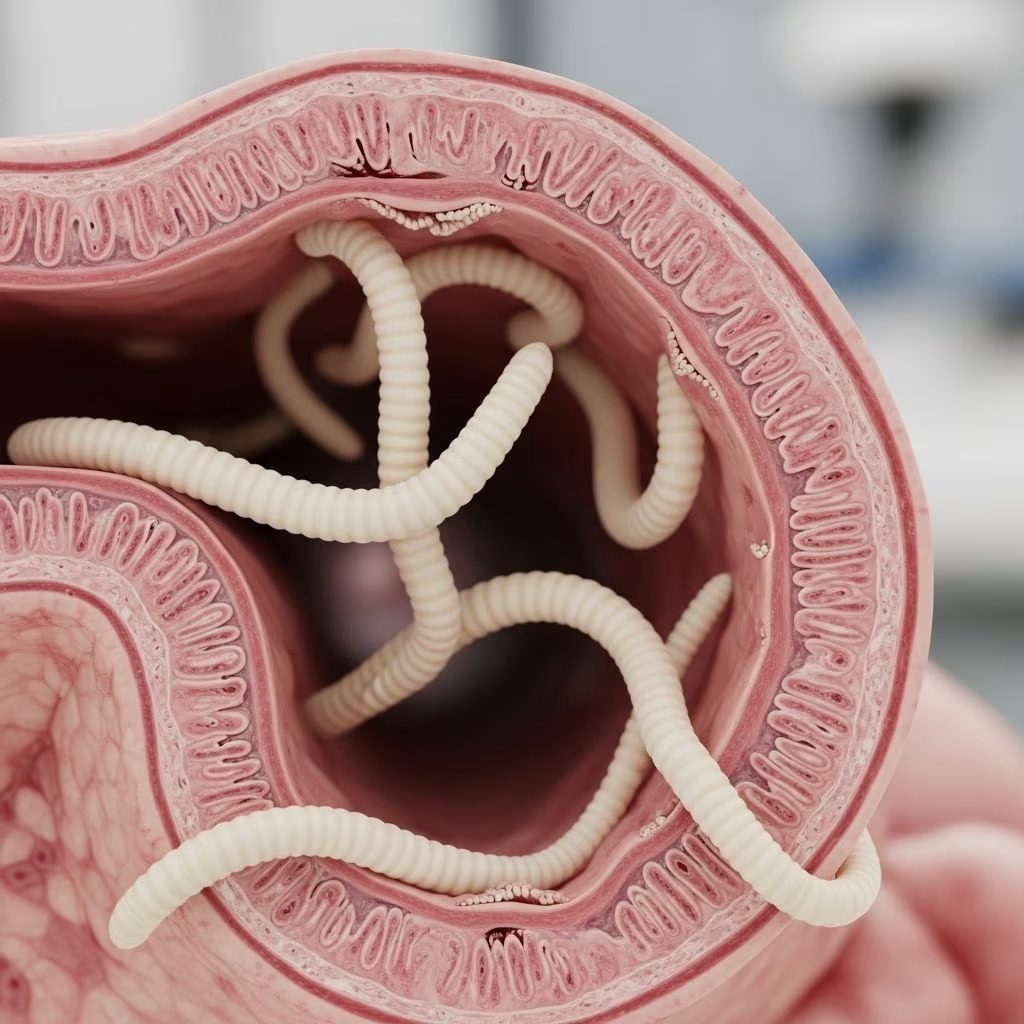
The large roundworm Ascaris suum stands as one of the most ubiquitous gastrointestinal parasites plaguing pig populations across the globe. This nematode infests the small intestines of swine, leading to a cascade of health complications that undermine animal welfare and farm profitability. Young pigs, in particular, suffer from stunted growth, respiratory distress, and organ damage, making proactive management essential in swine operations.
Biological Profile of the Parasite
Adult A. suum worms reside primarily in the small intestine of their porcine hosts. Males measure up to 25 cm in length, while females can reach 40 cm, presenting a thick, whitish appearance that distinguishes them from smaller nematodes. Females exhibit remarkable fecundity, releasing between 200,000 and 1 million eggs daily, though shedding occurs in intermittent bursts. These eggs embryonate in the environment, developing into infective third-stage larvae (L3) within 3-4 weeks under favorable conditions like warmth and moisture.
The resilience of these eggs is noteworthy; they retain infectivity in soil for years, even in temperate climates, posing a persistent contamination risk on pastures and confinement areas.
Complex Life Cycle and Host Migration
Infection initiates when pigs ingest embryonated eggs from contaminated soil, feed, or water. Upon reaching the intestine, larvae hatch, penetrate the mucosal wall—often at the cecum or colon—and enter the portal bloodstream. They traverse the liver, causing tissue disruption, before circulating to the lungs via the venous system.
In the pulmonary capillaries, larvae break into alveolar spaces around 9-10 days post-ingestion. They ascend the bronchial tree, are coughed up, swallowed, and return to the small intestine by days 10-15. Maturation to adulthood follows, with patent egg-laying commencing 6-7 weeks after initial exposure. The worms’ lifespan spans 6-9 months, perpetuating the cycle through fecal egg output.
Paratenic hosts amplify transmission. Earthworms, dung beetles, and even certain poultry amplify larval persistence, transferring infections when consumed by pigs.
- Egg ingestion: From contaminated environments.
- Larval hatching and penetration: Intestine to liver via portal vein.
- Pulmonary phase: Lung migration, cough-swallow mechanism.
- Intestinal maturation: Egg production and shedding.
Health Consequences Across Pig Ages
The migratory journey of A. suum larvae inflicts multi-organ damage. In the liver, burrowing causes hemorrhage, fibrosis, and lymphocytic infiltration, manifesting as white-spotted lesions known as “milk spots.” These appear 7-10 days post-infection and fade within 1-4 weeks, often resulting in organ condemnation at slaughterhouses despite minimal clinical symptoms in adults.
Lung transit provokes edema, consolidation, and heightened susceptibility to secondary bacterial or viral pneumonias, exacerbating conditions like swine influenza. Heavy burdens in naive young pigs can trigger severe, fatal respiratory crises marked by coughing and dyspnea.
Intestinal adults compete for nutrients, impairing feed efficiency and retarding weight gain—especially critical in growing pigs. Malabsorption, nitrogen loss, and reduced appetite compound these effects. Rare massive infestations lead to intestinal obstruction.
| Life Stage | Primary Impact | Affected Pigs |
|---|---|---|
| Larval Migration (Liver) | Milk spots, condemnation | All ages, recent infections |
| Larval Migration (Lungs) | Pneumonia risk, edema | Young, naive pigs |
| Adult Worms (Intestine) | Growth retardation, poor feed conversion | Growing pigs |
Epidemiology and Risk Factors in Swine Herds
Ascariasis thrives wherever pigs are raised, from intensive confinement to outdoor systems. Prevalence peaks in young stock due to behavioral foraging and immature immunity. Older pigs develop resistance, harboring fewer worms and shedding fewer eggs.
Environmental persistence of eggs heightens risks in soiled pens, pastures, or areas with poor drainage. Cross-transmission with human A. lumbricoides remains debated, though pig exposure correlates with human cases in endemic zones.
Herd dynamics influence severity: naive introductions to contaminated sites spark outbreaks, while continuous low-level exposure fosters partial immunity.
Clinical Manifestations and Subclinical Effects
Symptomatic pigs display chronic cough, unthriftiness, and suboptimal gains. Severe cases in piglets involve acute respiratory distress, potentially lethal when compounded by co-infections.
Subclinically, infections erode productivity: diminished feed efficiency translates to higher costs, while milk spots inflate slaughter losses. Liver condemnation serves as an indirect herd infection indicator, though spot counts poorly correlate with overall burden due to immunity-modulated migration.
Diagnostic Approaches for Accurate Detection
Fecal flotation identifies eggs during the patent phase (post-6 weeks), though intermittent shedding demands repeated sampling. Prepatent infections necessitate necropsy, revealing migrating larvae or milk spots.
Quantitative techniques like McMaster chambers gauge worm burdens, guiding deworming decisions. Serology or larval recovery from tissues aids research but sees limited farm use.
- Fecal exam: Routine, cost-effective for patents.
- Necropsy: Gold standard for prepatents and migration damage.
- Liver inspection: Slaughterhouse proxy for recent exposure.
Strategic Prevention and Control Measures
Integrated programs blend sanitation, biosecurity, and pharmacotherapy. Daily pen cleaning, all-in-all-out systems, and concrete flooring minimize egg buildup. Pastured pigs benefit from rotation and harrowing to expose eggs to sunlight and desiccation.
Anthelmintics target intestinal stages effectively: piperazine, levamisole, pyrantel, and macrocyclic lactones (e.g., ivermectin) feature in rotations to curb resistance. Strategic dosing at weaning, pre-mating, and mid-gestation optimizes control without over-reliance.
Vaccines remain developmental; immunity wanes post-deworming, underscoring sanitation primacy. Monitoring via fecal egg counts refines protocols.
Economic Ramifications for Pork Producers
Beyond health, A. suum erodes margins through feed waste (up to 10-15% inefficiency), growth delays (daily gains drop 20-50g), and condemnations (livers rejected in 20-80% of infected herds). Global losses tally millions annually, amplifying in endemics.
Control investments—dewormers (~$0.50/pig), sanitation upgrades—yield high ROI via enhanced gains and carcass value.
Public Health Considerations and Zoonosis
While primarily porcine, A. suum eggs contaminate produce or water, risking human larval migration (though rare maturation). Farm hygiene, cooking pork thoroughly, and handwashing mitigate crossover.
Future Directions in Research and Management
Ongoing studies probe genetic resistance breeding, novel anthelmintics, and egg inactivation via UV or heat. Precision monitoring with biosensors promises tailored interventions.
Frequently Asked Questions (FAQs)
What is the most effective way to prevent Ascaris suum in pigs?
Combine strict sanitation with strategic anthelmintic treatments, focusing on young pigs and high-risk environments.
Can Ascaris suum infect humans?
Cross-infection is possible via contaminated soil or food, but full development in humans is uncommon.
How long do Ascaris suum eggs survive in the environment?
Up to several years in moist soil, resisting many disinfectants.
What are milk spots and why do they matter?
White liver lesions from larval migration, leading to economic loss at slaughter.
Is deworming enough for control?
No; sanitation and management are crucial to break the life cycle.
References
- Ascaris suum — Wikipedia. 2023-10-15. https://en.wikipedia.org/wiki/Ascaris_suum
- Ascaris suum in Pigs – Digestive System — Merck Veterinary Manual. 2023. https://www.merckvetmanual.com/digestive-system/gastrointestinal-parasites-of-pigs/ascaris-suum-in-pigs
- Ascaris suum in Pigs – Digestive System — MSD Veterinary Manual. 2023. https://www.msdvetmanual.com/digestive-system/gastrointestinal-parasites-of-pigs/ascaris-suum-in-pigs
- Ascaris in Pigs: Soil-Transmitted Helminths — Centers for Disease Control and Prevention (CDC). 2023-05-10. https://www.cdc.gov/sth/about/about-ascaris-in-pigs.html
- Ascariasis in people and pigs — Texas A&M University Biology Department. 2020-01-12. https://www.bio.tamu.edu/wp-content/uploads/2020/01/12_pengcriscione_IGE-2012.pdf



