

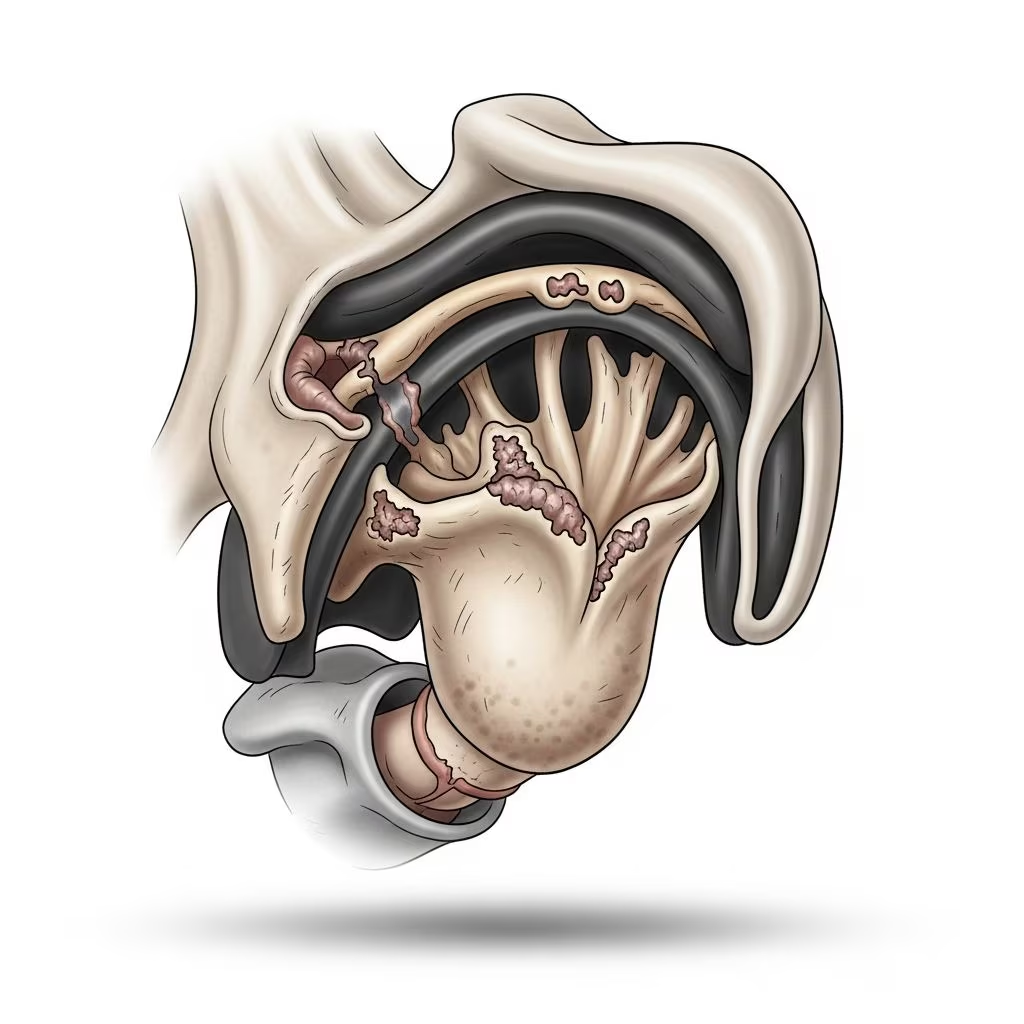
Arytenoid chondropathy represents a significant respiratory condition in horses, primarily affecting the cartilaginous structures of the larynx. This disorder leads to inflammation, swelling, and eventual distortion of the arytenoid cartilages, which guard the tracheal entrance. As a result, affected horses often face compromised airflow, manifesting in audible respiratory noises and diminished athletic capacity. Understanding this condition is crucial for veterinarians and horse owners aiming to preserve performance and welfare.
The Anatomy of Vulnerability: Larynx and Arytenoid Cartilages
The equine larynx serves as a critical junction for air passage and vocalization, housing paired arytenoid cartilages that facilitate airway opening during inhalation. These pyramid-shaped structures, topped by corniculate processes, enable abduction to widen the glottis. When pathology strikes, the cartilages swell and deform, narrowing the airway lumen. This vulnerability stems from their cartilaginous composition, susceptible to infection and trauma, leading to progressive degeneration.
Unraveling the Origins: Causes Behind the Inflammation
The precise etiology of arytenoid chondropathy remains multifaceted, but bacterial ascension following mucosal trauma is a leading theory. Inhalation of irritants, such as dust or foreign particles, compromises the laryngeal mucosa, inviting opportunistic pathogens. Viral infections or mechanical injuries from intubation or forceful coughing may initiate the cascade. Chronic exposure to environmental allergens exacerbates this, fostering persistent inflammation that erodes cartilage integrity. Over time, necrosis sets in, replaced by fibrous tissue and mineralization, distorting arytenoid geometry.
- Bacterial involvement: Common pathogens exploit mucosal breaches.
- Trauma triggers: Endotracheal tubes or harsh feeds contribute.
- Environmental factors: Poor stable ventilation promotes irritant buildup.
Recognizing the Signs: Clinical Manifestations Across Stages
Early detection hinges on subtle cues that escalate with disease progression. In mild phases, horses may exhibit occasional coughing or mild respiratory stridor at rest. As swelling intensifies, dynamic airway collapse becomes evident during exercise, producing a characteristic ‘roaring’ or whistling sound. Advanced cases reveal nasal discharge of feed and water, signaling dysphagia and aspiration risk. Performance horses show exercise intolerance, while pleasure mounts display labored breathing even at walk. Bilateral involvement amplifies severity, potentially causing acute distress.
| Stage | Symptoms | Impact Level |
|---|---|---|
| Mild | Coughing, subtle noise | Minimal at rest |
| Moderate | Stridor during work, intolerance | Reduced performance |
| Severe | Feed regurgitation, distress | Life-threatening obstruction |
Diagnostic Pathways: Confirming the Condition
Definitive diagnosis relies on a multimodal approach starting with history and physical exam. Endoscopy, both static and dynamic, visualizes arytenoid swelling, reduced abduction, and ulceration. Ultrasonography assesses cartilage thickness and abscessation externally. Radiography aids in detecting mineralization, while videoendoscopy captures real-time function during treadmill exercise. Laryngeal ultrasound differentiates from recurrent laryngeal neuropathy by revealing focal lesions. Biopsy, though invasive, confirms chondral necrosis histologically.
Therapeutic Strategies: From Conservative to Surgical Interventions
Treatment tailoring depends on severity and intended use. Mild cases respond to systemic antibiotics (e.g., potentiated sulfonamides) and anti-inflammatories like flunixin meglumine, augmented by topical throat sprays. Temporary tracheostomy relieves acute obstruction, allowing granulation resolution. Refractory or moderate-severe instances necessitate surgery.
Medical Management Essentials
Initial stabilization involves broad-spectrum antimicrobials targeting Streptococcus equi or anaerobes, paired with corticosteroids to curb edema. Owners must remove irritants, ensuring dust-free hay and ventilation. Monitoring via serial endoscopy tracks regression; success rates hover around 20-30% for full resolution.
Surgical Precision: Arytenoidectomy Techniques
Unilateral partial arytenoidectomy is gold standard for unilateral disease, performed via midline laryngotomy under general anesthesia. The necrotic cartilage is excised, preserving viable lateral wall where possible. Postoperative care includes antimicrobials, anti-inflammatories, and frequent endoscopy to excise granulation. Bilateral procedures carry higher risks but restore airflow in desperate cases. Emerging focal medial resection conserves structure for less invasive recovery.
- Pros of surgery: Rapid airway restoration, 60-80% return to work.
- Cons: Cough post-feeding, scar tissue formation.
Post-Treatment Care and Complications
Recovery demands vigilant monitoring. Horses receive stall rest, softened feeds, and prophylactic antibiotics for 7-14 days. Complications like persistent cough (due to laryngeal hypersensitivity) or aspiration pneumonia occur in 10-20% of cases. Granulation tissue excision prevents re-obstruction. Long-term, 67% of racers resume competition post-unilateral surgery.
Prognostic Factors: Predicting Outcomes
Prognosis varies: excellent for early unilateral cases (90% success medically), guarded for chronic bilateral (50% athletic return). Key influencers include disease duration, concurrent neuropathy, and owner expectations. Non-athletic horses fare best, resuming pasture life readily.
Preventive Measures: Safeguarding Equine Airways
Proactive strategies mitigate risk. Maintain pristine stable environments with low-dust bedding and soaked feeds. Routine laryngeal exams for at-risk breeds (e.g., Thoroughbreds) enable early intervention. Vaccination against respiratory pathogens and prompt trauma treatment bolster defenses.
Frequently Asked Questions (FAQs)
What triggers arytenoid chondropathy in horses?
Primarily bacterial infection post-mucosal injury from irritants or trauma.
Can mild cases resolve without surgery?
Yes, with aggressive antibiotics and anti-inflammatories, though surgery is common.
How soon can a horse return to work after arytenoidectomy?
Typically 4-6 weeks, with graded exercise and endoscopic checks.
Is arytenoid chondropathy hereditary?
No direct genetic link, but performance breeds show higher incidence.
What is the cost of treating this condition?
Varies; medical ~$1,000-$3,000, surgery $5,000-$10,000 including aftercare.
Advancements in Equine Laryngeal Care
Ongoing research explores laser ablation for focal lesions and regenerative therapies to rebuild cartilage. Ultrasonographic grading systems refine surgical planning, correlating lesion size with outcomes. Collaborative studies emphasize early dynamic endoscopy for working horses.
References
- Arytenoid Chondritis – Texas A&M Veterinary Medical Teaching Hospital — Texas A&M University. 2023. https://vethospital.tamu.edu/large-animal/equine-soft-tissue-surgery/arytenoid-chondritis/
- Arytenoid Chondritis in Horses: Signs, Treatment & Prevention — HorseDVM. 2024. https://www.horsedvm.com/disease/arytenoid-chondritis-in-horses
- Clinical and Pathological Features in Horses With Arytenoid Chondritis — PubMed (Vet Pathol). 2020-11-13. https://pubmed.ncbi.nlm.nih.gov/33205706/
- Arytenoid Chondritis — Mississippi State University College of Veterinary Medicine. 2017-03-24. https://www.vetmed.msstate.edu/sites/www.vetmed.msstate.edu/files/presentations/3.24.17%20Arytenoid%20Chondritis%20(Josh%20Wells).pdf
- Recognition and Treatment of Arytenoid Lesions — IVIS (WEAS Symposium). 2005. https://www.ivis.org/library/weas/weas-symposium-usa-2005/recognition-and-treatment-of-arytenoid-lesions



