

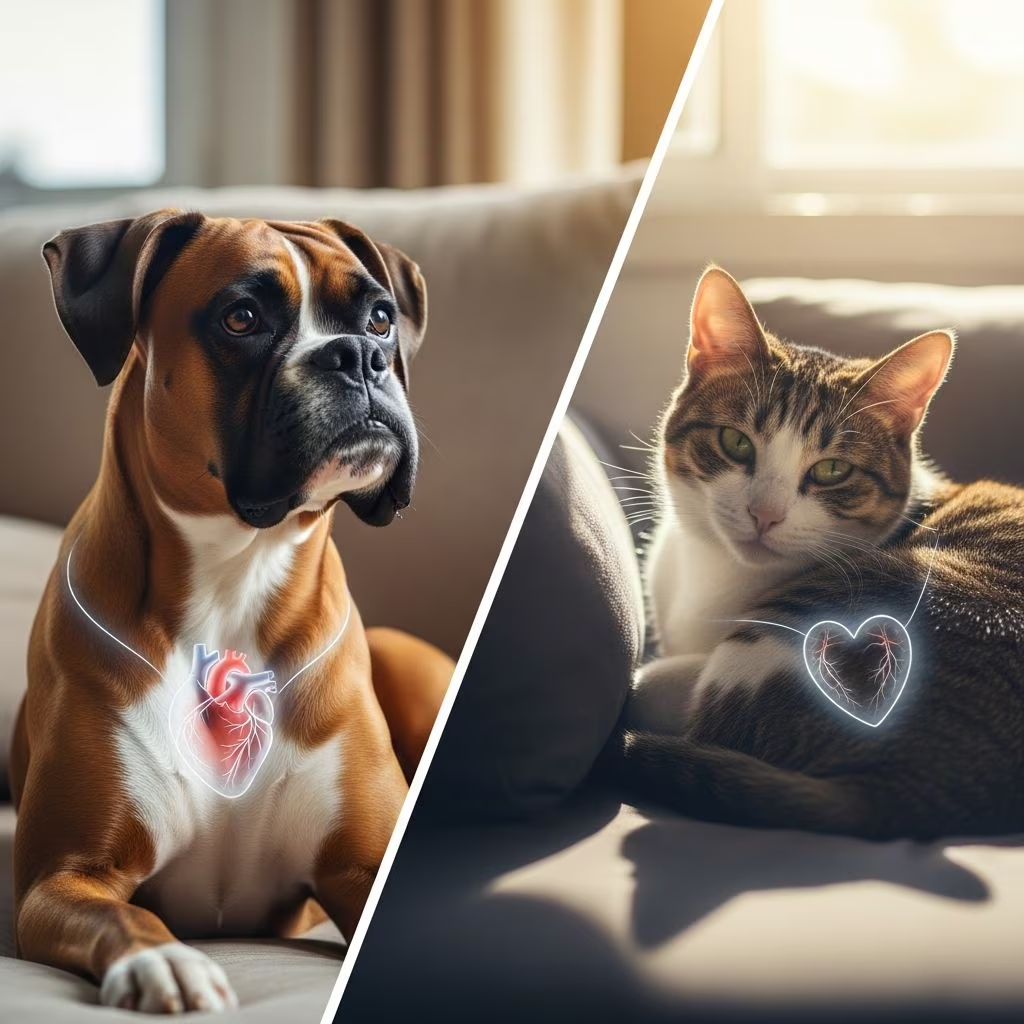
Arrhythmogenic right ventricular cardiomyopathy (ARVC) represents a significant inherited cardiac disorder primarily impacting certain dog breeds, with rarer occurrences in cats. This condition involves progressive replacement of healthy right ventricular muscle with fatty or fibrous tissue, leading to electrical instability and potentially life-threatening arrhythmias.
Understanding the Pathophysiology of ARVC
The core issue in ARVC stems from a genetic mutation affecting desmosomal proteins, crucial for maintaining myocardial cell integrity. In dogs, particularly Boxers, a mutation in the striatin gene disrupts these connections, causing fibrofatty infiltration predominantly in the right ventricle. This infiltration interrupts normal electrical conduction, fostering premature ventricular contractions (PVCs) and ventricular tachycardia (VT).
In affected pets, the right ventricle’s myocardium weakens, impairing coordinated contractions. While the left ventricle usually remains spared initially, about 10% of cases progress to dilated cardiomyopathy (DCM), involving both sides and leading to systolic dysfunction. Cats exhibit a different pattern, often with marked right atrial and ventricular dilation alongside valve incompetence.
- Fibrofatty replacement disrupts desmosomes, key for cell adhesion.
- Electrical signals misfire, causing rapid heart rates over 400 bpm.
- Prolonged VT (6-8 seconds) can halt cerebral blood flow, inducing syncope.
Genetic Foundations and Breed Predispositions
ARVC is hereditary, with Boxers showing the highest prevalence, earning it the nickname ‘Boxer cardiomyopathy.’ A commercial DNA test detects the striatin mutation, present in up to 40% of Boxers, though incomplete penetrance means not all carriers develop disease. Related breeds like English Bulldogs and American Staffordshire Terriers are also susceptible.
In cats, ARVC is uncommon but follows similar genetic principles, potentially involving undiscovered mutations. Human parallels highlight over 50 desmosomal gene variants, suggesting multiple factors in veterinary cases. Breeders should prioritize genetic screening to reduce incidence.
| Breed | Prevalence | Genetic Test Availability |
|---|---|---|
| Boxers | High | Yes (striatin) |
| English Bulldogs | Moderate | Limited |
| Cats (various) | Rare | No commercial test |
Recognizing Clinical Manifestations
The hallmark symptom in dogs is syncope—sudden fainting due to nonsustained VT reducing brain perfusion. Owners often witness collapse during excitement or exercise, with rapid recovery. Other signs include lethargy, exercise intolerance, or sudden death without prior warning.
A subset develops congestive heart failure (CHF) from DCM progression, showing coughing, dyspnea, and fluid accumulation. In cats, presentations differ: right heart failure causes pleural effusion, ascites, tachypnea, anorexia, and tachyarrhythmias with tricuspid regurgitation. Early detection hinges on vigilance for subtle changes like reduced stamina.
- Syncope: Most common in canine ARVC, linked to VT bursts.
- CHF signs: Dyspnea, ascites in advanced cases or felines.
- Sudden death: Risk from sustained arrhythmias.
Diagnostic Approaches for Accurate Identification
Diagnosis relies on multimodal assessment. Routine exams may detect irregular rhythms, but Holter monitoring is gold standard, quantifying PVCs (>100-300/24h diagnostic in Boxers). Thoracic radiographs typically show normal heart size, distinguishing ARVC from DCM.
Echocardiography reveals right ventricular changes in some dogs, but often appears normal; in cats, it shows dilation, thin walls, aneurysms, and severe tricuspid regurgitation (TR velocity >3 m/s indicating pulmonary hypertension). ECG captures PVCs of right ventricular origin, and genetic testing confirms risk in breeding dogs.
- Physical exam and auscultation for murmurs/arrhythmias.
- Holter monitor for arrhythmia burden.
- Echo for structural assessment.
- Genetic screening for at-risk breeds.
Management Strategies and Therapeutic Interventions
Treatment targets arrhythmia control to prevent syncope and death. Sotalol, a class III antiarrhythmic, is first-line, effectively suppressing VT in many Boxers. If ineffective, add mexiletine or switch to amiodarone. Dogs without DCM often thrive for years on therapy.
For CHF, standard DCM protocols apply: diuretics (furosemide), ACE inhibitors (enalapril), pimobendan for systolic support. Cats require aggressive diuresis for effusions. Lifestyle adjustments include exercise restriction and omega-3 supplements for anti-inflammatory benefits. Regular Holter follow-ups monitor efficacy.
Implantable cardioverter-defibrillators (ICDs) are investigational in vets, unlike humans. Prognosis excels for arrhythmia-only cases (good, multi-year survival) but worsens with CHF (months).
Prognosis and Long-Term Outlook
Boxers with isolated ARVC under treatment enjoy favorable outcomes, living several years post-diagnosis. Progression to DCM halves survival time. Feline cases carry guarded prognosis due to rapid heart failure. Early intervention via genetic testing and monitoring improves odds dramatically.
Preventive Measures for Breeders and Owners
Genetic testing guides breeding: avoid pairing two carriers. Even non-carriers can develop ARVC via other mutations, so annual cardiac screens are advised for middle-aged Boxers. Owners should track family history and seek cardiology consults at first syncope episode.
FAQs on ARVC in Pets
What breeds are most at risk for ARVC?
Primarily Boxers, also English Bulldogs and Staffordshire Terriers; rare in cats.
Can ARVC be cured?
No cure exists; management controls symptoms effectively.
How is ARVC diagnosed in dogs?
Holter monitor showing >100-300 PVCs/24h, plus echo and ECG.
What causes fainting in ARVC dogs?
Ventricular tachycardia lasting 6-8 seconds stops brain blood flow.
Is there a genetic test for ARVC?
Yes, for striatin mutation in Boxers.
What’s the treatment for feline ARVC?
Similar to DCM: diuretics, antiarrhythmics for failure and tachyarrhythmias.
Emerging Research and Future Directions
Ongoing studies explore additional mutations and epigenetic factors mirroring human ARVC, where Boxers serve as models. Advances in gene therapy and novel antiarrhythmics promise better control. Vets emphasize multidisciplinary care for optimal results.
References
- Arrhythmogenic Right Ventricular Cardiomyopathy in Dogs and Cats — Merck Veterinary Manual. 2023. https://www.merckvetmanual.com/circulatory-system/cardiomyopathy-in-dogs-and-cats/arrhythmogenic-right-ventricular-cardiomyopathy-in-dogs-and-cats
- ARVC in Dogs and Cats: What to Know and How to Help — Coast-to-Coast Cardiology. 2023. https://cccvetservice.com/news/arvc-in-dogs-and-cats-what-to-know-and-how-to-help/
- Veterinary Echocardiography Newsletter 3: ARVC in Cats — Animal Ultrasound Association. 2023. https://www.animalultrasoundassociation.org/echocardiography-arvc-in-cats/
- Arrhythmogenic right ventricular cardiomyopathy in dogs — PubMed/NC State Vet Med. 2021-09-07. https://pubmed.ncbi.nlm.nih.gov/34503916/
- Arrhythmogenic Right Ventricular Cardiomyopathy — CVC A Vets (PDF). 2023. https://www.cvcavets.com/_files/pdfs/handouts/arvc.pdf
- Arrhythmogenic Right Ventricular Cardiomyopathy (ARVC) In Dogs — UVS Online. 2016-06-23. https://www.uvsonline.com/arvc-in-dogs/
- Arrhythmogenic Right Ventricular Cardiomyopathy (ARVC) in Boxers — NC State Veterinary Hospital. 2023. https://hospital.cvm.ncsu.edu/services/small-animals/genetics/boxer-arvc/



